Imagem

Orquestre insights de IA em ações

Entre na lista de espera da AeroGenie hoje mesmo!

Tendências

Categories

United Airlines 787 Engine Fire Last Month Challenged Firefighting Efforts
April 9, 2026By ePlane AI
United Airlines 787 Engine Fire Last Month Challenged Firefighting Efforts
0
0
United Airlines
Boeing 787-9
Engine Fire

United Airlines 787 Engine Fire Exposes Challenges in Firefighting and Raises Industry Concerns

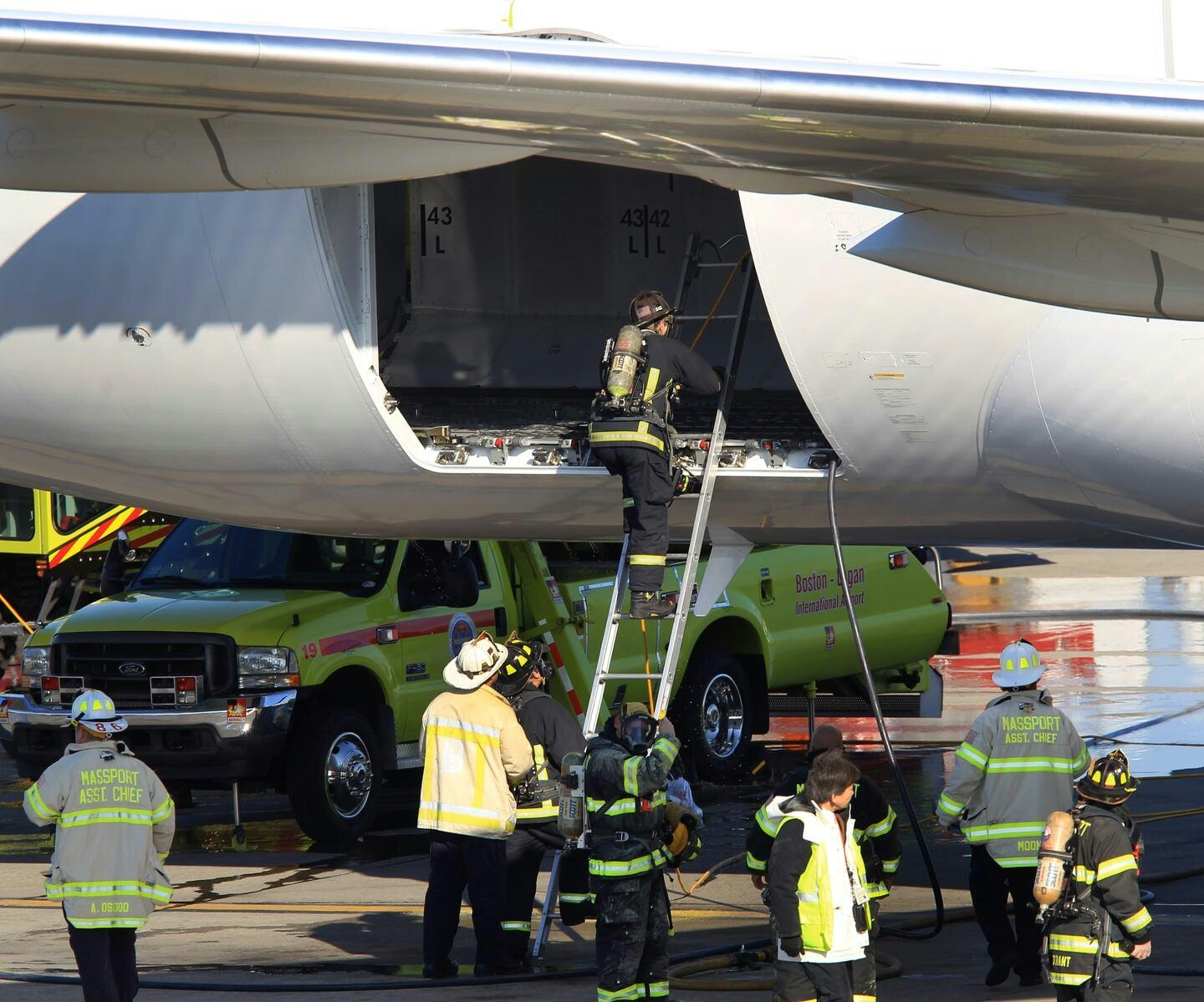
A persistent engine fire aboard a United Airlines Boeing 787-9 last month highlighted significant challenges in extinguishing in-flight blazes, causing extensive damage to critical engine components and prompting scrutiny of engine reliability and firefighting protocols within the aviation sector.

Incident Overview and Immediate Response

On 2 March, United flight 2127, departing Los Angeles International Airport for Newark Liberty, encountered a serious engine malfunction at approximately 17,000 feet. The aircraft, equipped with twin GE Aerospace GEnx-1B76A engines, experienced strong vibrations accompanied by a drop in the left engine’s N2 speed. Shortly thereafter, the flight crew received a “L ENGINE FIRE” warning via the engine indicating and crew alerting system (EICAS), initiating the engine fire checklist.

Despite deploying the first fire extinguisher bottle, the warning briefly ceased but reappeared within 30 seconds. A second fire bottle was discharged, yet the fire warnings persisted. The crew declared an emergency and returned to Los Angeles, ultimately landing safely on a single engine. Following the landing, an evacuation was conducted on the runway using emergency slides. All passengers and crew evacuated without injury.

Damage Assessment and Ongoing Investigation

Subsequent inspections revealed extensive sooting and thermal damage concentrated around the external surfaces of the engine core module, extending toward the pylon connection. Borescope examinations identified damage within the high-pressure turbine, although the thrust reverser halves on both sides showed minimal thermal impact. A flight attendant reported observing flames emanating from the left engine after landing.

The National Transportation Safety Board (NTSB) released a preliminary report detailing these findings but has yet to determine the root cause of the engine failure. The investigation remains active, with Boeing, GE Aerospace, and United Airlines yet to provide official comments.

Industry Implications and Market Reactions

The difficulties encountered in extinguishing the fire have intensified concerns regarding the reliability of the GEnx engine and the adequacy of current firefighting measures. Industry analysts suggest that this incident may prompt airlines and manufacturers to reassess safety protocols and engine design standards. Market responses could include increased scrutiny of fleets powered by GEnx engines and potential revisions to operational procedures at United Airlines and other carriers.

In response to growing safety considerations, some competitors have adjusted their fleet strategies. For instance, All Nippon Airways (ANA) has reportedly converted certain 787-10 orders to the 787-9 variant, reflecting a broader reevaluation of aircraft procurement decisions. Concurrently, United Airlines has recently reduced its capacity by 5% to mitigate rising fuel costs, a development that may further influence market dynamics as the industry balances operational efficiency with safety imperatives.

The NTSB’s investigation continues as the aviation community closely monitors the situation, anticipating potential impacts on engine safety standards and firefighting protocols worldwide.

More news
Six Airlines Offering the Best Narrowbody Business Class in 2026

Six Airlines Offering the Best Narrowbody Business Class in 2026

Six Airlines Offering the Best Narrowbody Business Class in 2026 For many years, narrowbody aircraft were regarded by premium travelers as a compromise—business class in name only, often lacking the privacy, comfort, and sophistication associated with widebody cabins. Recliner seats, limited aisle access, and cramped layouts were typical across most single-aisle fleets. However, this perception is undergoing a significant transformation. In 2026, several airlines have redefined narrowbody business class, elevating it into a genuinely premium long-haul experience. The advent of advanced aircraft such as the Airbus A321LR and A321XLR has empowered carriers to introduce lie-flat suites, direct aisle access, sliding privacy doors, enhanced dining options, and state-of-the-art entertainment systems on routes traditionally served by larger jets. This evolution has positioned premium narrowbody travel as one of the most competitive and innovative segments within the aviation industry. At the same time, this shift presents new challenges. Major carriers including United, American, Delta, and JetBlue are expanding their premium cabins aggressively, often reducing economy seating in the process. This strategy risks alienating price-sensitive travelers and increases operational costs as airlines strive to uphold elevated service standards. While demand for business class continues to grow, some economy passengers may find themselves increasingly priced out. In response, airlines are differentiating their offerings further, with innovations such as United’s “business class plus” and Lufthansa’s award-winning Allegris seat, intensifying competition for premium travelers. This article highlights six airlines that exemplify the new era of narrowbody business class, each adopting a distinct approach—whether through ultra-private suites, network consistency, premium value, or operational innovation. JetBlue Airways: Redefining Narrowbody Luxury JetBlue Airways has revolutionized premium narrowbody flying with its Mint product. At a time when most North American carriers relied on outdated recliner seats for transcontinental and transatlantic routes, JetBlue introduced fully flat suites that rival those of international competitors. Its A321LR fleet features Mint Suites equipped with sliding privacy doors, direct aisle access, wireless charging, lie-flat beds, and large entertainment screens arranged in a spacious 1-1 layout. The Mint Studio seats offer even greater space, delivering an experience approaching first-class standards. JetBlue’s success stems from its ability to combine premium quality with competitive pricing, making high-end business class accessible to a broader range of travelers. Elevated dining options, premium cocktails, and attentive service further distinguish the Mint experience. The airline’s impact has been industry-wide, demonstrating that passengers will choose premium narrowbody products over larger aircraft when the experience is compelling. Etihad Airways: Widebody Sophistication on Single-Aisle Jets Etihad Airways has adopted an ambitious strategy by bringing its renowned long-haul premium standards to the A321LR. Rather than scaling back, Etihad’s narrowbody business class rivals many widebody cabins, featuring suites with direct aisle access, privacy doors, and refined finishes. The airline’s unwavering commitment to luxury and consistency establishes a new benchmark for single-aisle travel, offering passengers an elevated experience that challenges traditional expectations of narrowbody service. --- As airlines continue to innovate and compete, the premium narrowbody business class segment is poised to become increasingly dynamic. This evolution offers travelers unprecedented comfort and choice while simultaneously reshaping the economics and accessibility of air travel.
Fifteen Years On, the Boeing 787 Dreamliner Has Transformed Long-Haul Travel

Fifteen Years On, the Boeing 787 Dreamliner Has Transformed Long-Haul Travel

Fifteen Years On, the Boeing 787 Dreamliner Has Transformed Long-Haul Travel When the Boeing 787 Dreamliner entered service in 2011, the long-haul aviation sector was largely defined by sprawling hub airports and increasingly larger aircraft. Airlines relied heavily on major international hubs such as Heathrow, Dubai, and Frankfurt, as older widebody jets were too expensive to operate on routes with lower passenger demand. Rather than competing directly with Airbus’s superjumbo A380, Boeing pursued a different strategy: developing a midsize, long-range aircraft capable of flying up to 7,565 nautical miles (14,010 kilometers) while delivering significantly improved fuel efficiency. Fifteen years later, Boeing’s strategic gamble has fundamentally reshaped global air travel. The 787 has secured over 2,300 orders and more than 1,000 deliveries, enabling airlines to inaugurate over 370 new nonstop routes that were previously commercially unviable. Its blend of fuel efficiency, reduced operating costs, and passenger-centric cabin design has made direct long-haul flights between secondary cities economically feasible, thereby altering both the economics and geography of international aviation. The Emergence of Long, Thin Routes Prior to the introduction of the 787, airlines faced a challenging dilemma on long-haul routes. Large aircraft such as the Boeing 747 or Airbus A340 could cover intercontinental distances but required consistently high passenger loads to remain profitable. Many city pairs simply lacked sufficient demand to justify daily service with these large jets, compelling travelers from smaller markets to connect through major hubs—even when direct demand existed. The Dreamliner transformed this dynamic by combining long-range capability with moderate seating capacity, typically accommodating between 240 and 330 passengers depending on configuration. Its advanced engineering reduced fuel consumption by approximately 20 to 25 percent compared to older twinjets like the Boeing 767 and early Airbus A330 models. These efficiencies allowed airlines to profitably operate routes that were once considered unrealistic. Since its debut, the 787 family has served more than 2,000 unique city pairs worldwide, making direct flights such as Perth to London, Austin to Heathrow, and San Jose to Tokyo commercially viable. Secondary airports have gained direct intercontinental connections, offering passengers shorter travel times and fewer layovers. Competition and Shifting Market Dynamics The success of the Dreamliner has not gone unchallenged. Increasing competition among long-haul aircraft and the global expansion ambitions of airlines have intensified market dynamics. Carriers such as Alaska Airlines and Delta Air Lines are leveraging the 787 and similar aircraft to broaden their international networks, fueling new “hub wars” as they compete for global market share. In response, competitors have taken steps to enhance their offerings: LATAM Airlines recently reaffirmed its commitment to Rolls-Royce engines for its 787 fleet after addressing durability concerns, while Air New Zealand is introducing innovative bunk bed concepts to improve the long-haul passenger experience. Boeing’s Strategic Divergence from the A380 Era In the early 2000s, Boeing and Airbus envisioned contrasting futures for commercial aviation. Airbus anticipated rising passenger demand and increasing airport congestion, leading to the development of the A380, designed to carry over 500 passengers between major hubs. Boeing, by contrast, prioritized operational flexibility and direct point-to-point connectivity, betting that airlines and passengers would prefer more frequent service on midsize aircraft rather than massive hub operations. Fifteen years on, the impact of the 787 Dreamliner is evident. It has ushered in a new era of long, thin routes, challenged the dominance of traditional hub airports, and stimulated innovation across the aviation industry. As airlines and manufacturers continue to evolve, the Dreamliner’s role as a catalyst for change in long-haul travel remains firmly established.
Canada Leases 10 New Aircraft Ahead of Wildfire Season

Canada Leases 10 New Aircraft Ahead of Wildfire Season

Canada Leases 10 New Aircraft to Strengthen Wildfire Response The Canadian federal government has announced the leasing of ten new firefighting aircraft to enhance its capacity to combat wildfires during the upcoming season. The fleet includes four air tankers, one spotter plane, and five heavy-lift helicopters, which will be made available to provincial and territorial wildfire agencies upon request. Emergency Management Minister Eleanor Olszewski emphasized that this initiative aims to bolster Canada’s ability to respond effectively to periods of intense wildfire activity. Establishing a National Aerial Firefighting Surge Capacity This marks the first occasion on which Ottawa will maintain federally controlled firefighting aircraft that can be loaned to provinces, supported by a new $317-million budget allocation. The government plans to strategically position these aircraft across the country, guided by fire activity forecasts and real-time wildfire developments. The initiative is part of a broader effort to create a national aerial firefighting surge capacity, ensuring rapid deployment of resources where they are most needed. The decision comes amid escalating challenges in wildfire management. The 2025 wildfire season was the second-worst in Canadian history, with nearly 90,000 square kilometres burned by September—an area exceeding the size of New Brunswick. In response, federal authorities have intensified their focus on wildfire preparedness, investing in improved coordination and response mechanisms to mitigate future risks. Operational and Financial Considerations While the addition of new aircraft represents a significant enhancement, it also introduces operational complexities. The high costs associated with running these aircraft, the requirement for skilled pilots and ground crews, and the logistical challenges of integrating new assets into existing firefighting frameworks are critical factors that the government must address. Effective deployment and maintenance will be essential to maximize the impact of these resources. The financial aspects of this initiative have attracted attention from investors and stakeholders, who are closely monitoring the operational efficiency and cost-effectiveness of the expanded aerial fleet. Furthermore, this move may influence global wildfire management strategies, potentially prompting other nations or private entities to adopt similar measures, thereby altering competitive dynamics within the international firefighting services market. As wildfire risks continue to escalate, federal support and reforms remain central to Canada’s strategy. The government underscores that the new aircraft will enhance national surge capacity and improve access for provinces and territories during critical periods, reflecting a sustained commitment to strengthening the country’s wildfire response infrastructure.
Saudi Aviation Regulator Approves First Drone Medicine Delivery Permit for Hajj

Saudi Aviation Regulator Approves First Drone Medicine Delivery Permit for Hajj

Saudi Aviation Regulator Approves First Drone Medicine Delivery Permit for Hajj Pioneering Drone Operations in the Holy Sites The General Authority of Civil Aviation (GACA) of Saudi Arabia has granted its inaugural operational permit for drone-based medicine delivery and medical logistics within the Holy Sites of Makkah during the Hajj season. This authorization, awarded to Terra Drone Arabia, marks a significant advancement in the Kingdom’s efforts to integrate cutting-edge technology into critical service areas for pilgrims. The permit underscores GACA’s dedication to modernizing the aviation sector while enhancing the efficiency and quality of medical support during one of the world’s largest annual religious gatherings. This development is part of a broader strategic initiative by GACA to foster technological innovation and localize advanced solutions within the aviation industry. By enabling drone operations in such a sensitive and densely populated environment, the authority aims to improve operational responsiveness and reduce logistical delays, particularly in medical emergencies. The permit reflects a careful balance between embracing innovation and maintaining rigorous safety and quality standards essential to the unique context of the Holy Sites. Regulatory Framework and Operational Challenges The approval follows a series of operational trials conducted during the previous Hajj season, where drones were tested for their capacity to deliver medical supplies and support logistics. These trials provided valuable insights that informed the establishment of new regulatory and operational frameworks, facilitating the issuance of this first-of-its-kind permit. GACA has emphasized that these efforts align closely with the objectives of the Aviation Program and Saudi Vision 2030, both of which prioritize enhancing system readiness and elevating service quality for millions of pilgrims. Despite the promise of drone technology, deploying such services in the crowded and complex environment of Makkah during Hajj presents considerable challenges. Ensuring strict regulatory compliance is paramount, as drone operations must adhere to comprehensive safety protocols to prevent accidents or disruptions amid the massive influx of worshippers. Navigating congested airspace and coordinating with ground services add further logistical complexity, requiring meticulous planning and real-time management to safeguard public safety. Industry Implications and Future Prospects The introduction of drone delivery services in this context has attracted growing interest from the market, with industry players recognizing the transformative potential of such technologies for medical logistics during large-scale events. Competitors may seek to expand their capabilities or advocate for regulatory frameworks that balance innovation with safety considerations. Additionally, regional geopolitical dynamics and global scrutiny surrounding drone usage could influence public acceptance and operational viability. Nonetheless, GACA’s decision to authorize drone-based medicine delivery during Hajj represents a landmark step in the Kingdom’s pursuit of technological advancement within its aviation and healthcare sectors. By setting new standards for efficiency and responsiveness, Saudi Arabia aims to reinforce its leadership in innovation and service excellence, ensuring that millions of pilgrims receive timely and effective medical support during their sacred journey.
Air India Flight 171 Crash: Did AAIB Overlook Electrical Faults?

Air India Flight 171 Crash: Did AAIB Overlook Electrical Faults?

Air India Flight 171 Crash: Did AAIB Overlook Electrical Faults? Background and Initial Investigation The crash of Air India Flight 171 near Ahmedabad on June 12, 2025, which resulted in the tragic loss of 260 lives, remains one of the deadliest aviation disasters in India’s history. The Aircraft Accident Investigation Bureau (AAIB) released its preliminary report on July 12, 2025, attributing the accident to the simultaneous movement of both engine fuel control switches from “RUN” to “CUTOFF,” leading to a dual engine shutdown. The report also detailed a subsequent attempt to restart the engines, or “relight,” after the switches were reset to RUN at 08:08:52 and 08:08:56 UTC. Relight procedures, which involve restarting engines mid-flight following an unexpected shutdown, are standard protocol in aviation, typically initiated in response to flameouts or adverse weather conditions. The AAIB’s findings, supported by cockpit voice recordings, suggested the possibility of pilot error. Media coverage quickly centered on Captain Sumeet Sabharwal, one of the two pilots, highlighting a cockpit exchange in which one pilot questioned, “why did he cut off,” and the other responded that he had not. Although the conversation did not explicitly mention “fuel” or “switches,” the AAIB’s report referenced these terms repeatedly—19 times within a 15-page document—fueling widespread speculation about pilot responsibility. Challenges to the AAIB’s Narrative Despite the AAIB’s conclusions, aviation engineers and legal representatives for the victims’ families have expressed serious reservations about the investigation’s accuracy. Michael Andrew, a US-based attorney representing 124 families, emphasized that the cockpit dialogue never clearly identified the system or component under discussion. He suggested that the conversation might have referred to the disconnection of the TO/GA (takeoff/go-around) or autothrottle systems rather than a manual fuel cutoff. Technical experts have also identified a critical inconsistency in the AAIB’s timeline. The report indicates that engine N2 values—measuring core rotational speed—dropped below minimum idle at 08:08:47 UTC, but then engine 1’s core deceleration reversed and began to recover. Engineers argue that such a reversal is physically impossible without external starter assistance, such as power from ground battery units, an Auxiliary Power Unit (APU), or a functioning engine. None of these were reportedly available at the time. One engineer explained that “to spin an engine’s core in flight, you need the APU or another live engine,” underscoring the implausibility of the AAIB’s relight scenario. Broader Context and Ongoing Scrutiny The controversy surrounding the AAIB’s findings emerges amid a challenging period for Air India. The airline has been grappling with operational and safety issues, compounded by the recent departure of CEO Campbell Wilson. The past year has been marked by tragedy, geopolitical tensions, and significant financial losses. The depreciation of the Indian rupee against the US dollar has further strained the airline’s finances, complicating efforts to stabilize and turn around its operations. Market reactions to these developments have been mixed. Some investors have voiced concerns about Air India’s operational stability and financial health, while others remain focused on broader regulatory and industry challenges. Competitors have responded variably, with some closely monitoring Air India’s difficulties and others maintaining their strategic trajectories. As scrutiny of the AAIB’s investigation continues, critical questions persist regarding whether electrical faults were overlooked and if the true causes of the crash have yet to be fully uncovered.
Kazakhstan Establishes Regulations for Air Taxis and Urban Air Mobility

Kazakhstan Establishes Regulations for Air Taxis and Urban Air Mobility

Kazakhstan Advances Regulatory Framework for Air Taxis and Urban Air Mobility Kazakhstan is actively developing a comprehensive regulatory framework to support the introduction of air taxis and urban air mobility (UAM) services. The Ministry of Transport has confirmed plans to construct six vertiports by 2028, which will serve as dedicated hubs for electric vertical take-off and landing (eVTOL) aircraft. These facilities are intended to facilitate the integration of eVTOL technology into the country’s urban and regional transport networks. Demonstration and testing flights are already underway in Alatau City, marking a significant step toward operationalizing this new mode of transport. Progress in eVTOL Demonstrations and Market Interest Technical demonstration flights of eVTOL air taxis have underscored Kazakhstan’s commitment to next-generation aerial mobility. Notably, companies such as AutoFlight have conducted uncrewed eVTOL demonstrations within the country and have announced plans to develop an air taxi network linking Almaty with other destinations. The sector is attracting increasing international attention, with competitors like Joby Aviation showcasing their eVTOL technology in global cities including New York. This growing interest signals the potential for heightened competition and innovation within Kazakhstan’s emerging UAM market. Officials emphasize that air taxis, powered by electric propulsion, represent an environmentally sustainable alternative for both urban and intercity travel. These aircraft are designed to achieve speeds of up to 200 kilometers per hour and cover distances of approximately 200 kilometers, offering new opportunities for efficient and green mobility solutions. Regulatory and Infrastructure Challenges Despite the promising outlook, the establishment of air taxi services in Kazakhstan faces several challenges. Ensuring safety and regulatory compliance remains paramount, alongside addressing the infrastructure demands necessary to support eVTOL operations. Integrating these new aerial mobility solutions with existing transportation systems also presents a complex task. Over the past year, Kazakh authorities have been actively working to establish the legal framework for air taxi operations. Draft legislative amendments regulating the use of eVTOL aircraft and facilitating the development of modern air mobility services have been prepared. These proposals are currently under review following inter-agency coordination and public consultation, with adoption anticipated in the near future. The planned vertiports will be strategically located in key urban and transport hubs to enable efficient connectivity and support the expected growth of urban air mobility services. Through these regulatory and infrastructure initiatives, Kazakhstan aims to position itself at the forefront of innovative and sustainable transport solutions, while carefully managing the challenges of safety, integration, and market competition.
Safran Secures New Engine Deal with Air India

Safran Secures New Engine Deal with Air India

Safran Secures New Engine Deal with Air India Amid Geopolitical Challenges Safran S.A. has secured a significant new contract with Air India for CFM International LEAP engines, accompanied by long-term service agreements. Announced jointly by Safran and GE Aerospace, the co-owners of CFM International, in April 2026, the deal will support Air India’s expanding narrowbody fleet. This agreement not only strengthens Safran’s order backlog but also underscores its growing influence in the global aerospace sector. Safran’s Business Model and Market Position Headquartered near Paris, Safran is a leading international high-technology group specializing in aerospace, defense, and space industries. Its core operations encompass the design and manufacture of aircraft engines, landing gear, avionics, and cabin interiors. A substantial portion of Safran’s revenue derives from high-margin maintenance and service contracts, leveraging its extensive installed base of equipment and engines. A key element of Safran’s engine business is its 50/50 joint venture with GE Aerospace, CFM International, which produces the LEAP engine family. These engines power popular aircraft models such as the Airbus A320neo and Boeing 737 MAX. Safran consolidates its share of the joint venture’s results, benefiting from the growing installed base of LEAP engines. As this installed base expands, recurring revenues from maintenance, spare parts, and service contracts are expected to increase, according to Safran’s 2024 universal registration document. Beyond propulsion systems, Safran’s equipment divisions supply major aircraft manufacturers with landing and braking systems, electrical and power systems, avionics, and flight controls. These segments contribute to steady aftermarket sales as airlines replace parts throughout an aircraft’s lifecycle. The interiors business, while more cyclical, provides exposure to trends in cabin upgrades and airline differentiation strategies. Revenue Drivers and Market Outlook Safran’s civil aircraft engine business remains its primary revenue driver, particularly the transition from the legacy CFM56 platform to the newer LEAP engines. As more LEAP-powered aircraft enter service, the aftermarket—comprising maintenance, spares, and services—will become an increasingly important source of revenue. However, Safran faces several challenges in the current environment. The ongoing conflict in the Middle East, including the war involving Iran, has introduced significant uncertainty into the commercial aviation sector. Disruptions to supply chains and fluctuating market demand could affect Safran’s ability to fulfill new contracts and sustain its growth trajectory. These geopolitical risks have elicited mixed reactions from investors, with some expressing concern over potential headwinds, while others remain optimistic about Safran’s strong engine delivery performance and long-term service revenues. Competition in the civil aviation engine market is also intensifying. Rivals such as MTU Aero Engines, active in both military and commercial engine projects, may adopt aggressive strategies to capture market share, further complicating the competitive landscape. Strategic Implications Despite these challenges, the Air India deal highlights Safran’s resilience and its capacity to secure major contracts in a volatile market. The agreement not only bolsters Safran’s backlog but also enhances its visibility in the aftermarket, positioning the group for continued growth as global air travel recovers and airlines modernize their fleets. Safran, listed on Euronext Paris (ticker: SAF), continues to focus on expanding its global footprint across commercial aviation, regional and business jets, and defense sectors, while navigating the complexities of a rapidly evolving geopolitical and competitive environment.
Airbus Delivers First A321XLR Amid Rising Orders and Production Challenges

Airbus Delivers First A321XLR Amid Rising Orders and Production Challenges

Airbus Delivers First A321XLR Amid Rising Orders and Production Challenges Airbus has officially delivered its first A321XLR, with Saudi Arabian flag carrier Saudia becoming the inaugural operator of the aircraft in the Middle East and Africa. The handover ceremony in Toulouse marks a pivotal moment for both Airbus and Saudia, as the airline embarks on a fleet modernization strategy that replaces widebody jets on less dense international routes with the more fuel-efficient, long-range narrowbody. Saudia has placed an order for 15 A321XLRs, with plans to fully integrate the aircraft into its fleet by the end of 2027. The first A321XLR, originally slated for delivery in 2024, is set to commence service on the Jeddah–Madrid route in early June, followed by deployment on the Jeddah–Geneva route, where it will replace an Airbus A330. Saudia’s Premium Configuration and Market Implications Saudia’s A321XLR is configured with 24 fully flat business-class suites arranged in a 1-1 layout, representing the highest premium seat density among current XLR operators. This is complemented by 120 economy seats, bringing the total passenger capacity to 144. This premium-heavy configuration exceeds those of other operators such as American Airlines, Aer Lingus, Iberia, and Air Canada. The A321XLR’s extended range of 4,700 nautical miles—approximately 15% greater than the A321LR—enables airlines to open long, thin routes that would otherwise require the higher operating costs of widebody aircraft. United Airlines is also developing a premium-focused XLR variant, underscoring the aircraft’s growing appeal in lucrative markets. Production Challenges and Supply Chain Disruptions Despite the milestone delivery, Airbus continues to grapple with significant operational challenges. Between January and April, the company secured 405 net orders, including 15 A350-900s from an undisclosed customer. However, deliveries declined to 181 aircraft during the same period, down from 192 a year earlier. In April alone, Airbus delivered 67 planes to 39 clients, maintaining pressure on the manufacturer to accelerate production and meet its annual delivery targets. The military division also contributed to the backlog, with Thailand’s air force ordering two C295 tactical transport aircraft scheduled for delivery in 2029. Production and delivery delays have become an increasing concern for Airbus. Quality issues with fuselage panels and insufficient deliveries of Pratt & Whitney engines have slowed output, contributing to a decline in first-quarter commercial aircraft revenues. These supply chain disruptions have affected both Airbus and its customers. For instance, Air Canada recently received its first A321XLR after enduring years of delays, marking a significant milestone for the carrier. Meanwhile, LATAM Airlines Group is reconsidering its deployment plans for the XLR due to regulatory challenges, including a contentious connection fee imposed in Peru. Strategic Responses and Market Outlook In response to these challenges, Airbus is targeting a 10% reduction in costs and intensifying efforts to resolve supply chain bottlenecks. The company’s ability to ramp up production remains critical to its investment case, particularly as it continues to secure more orders than it can currently fulfill. Investor sentiment remains cautious amid these operational hurdles. Airbus shares closed at €41.60, down 15.1% year-to-date and significantly below their long-term average. The relative strength index has fallen to 10.9, indicating extreme oversold conditions. This divergence highlights the tension between strong commercial momentum and persistent execution delays, which have weighed heavily on the stock. Each timely delivery of the A321XLR—12 more are expected within the next 18 months—will be closely monitored as Airbus seeks to restore market confidence and capitalize on robust demand.
Finnair Awards A350 Landing Gear Overhaul Contract to Liebherr

Finnair Awards A350 Landing Gear Overhaul Contract to Liebherr

Finnair Awards A350 Landing Gear Overhaul Contract to Liebherr Finnair has entrusted Liebherr-Aerospace with the overhaul of the nose landing gear systems for its Airbus A350 fleet, reinforcing a well-established collaboration between the two companies. The maintenance work will be carried out at Liebherr-Aerospace’s facility in Lindenberg, Germany, capitalizing on the company’s unique position as both the original equipment manufacturer (OEM) and a specialist in landing gear maintenance, repair, and overhaul (MRO) services. Expertise and Industry Context Liebherr-Aerospace Lindenberg GmbH, responsible for the development, manufacture, and certification of the Airbus A350 nose landing gear system, functions as the group’s center of competence for flight controls, landing gear systems, gears, gearboxes, and electronics. The company highlighted that this agreement coincides with a new global wave of landing gear overhauls, as airlines increasingly prioritize securing future maintenance capacity amid evolving operational demands. Competitive and Regulatory Environment Finnair’s decision emerges against a backdrop of intensifying competition within the aviation maintenance sector. Competitors such as DAS Aviation have recently broadened their service portfolios to include landing gear repair, overhaul, and exchange, positioning themselves to vie for similar contracts. This heightened competition is likely to drive providers to enhance their service offerings, with airlines like Finnair carefully evaluating the cost-effectiveness and reliability of available MRO solutions. The competitive landscape is further influenced by regulatory developments, notably the European competition authority’s recent approval of a joint venture between Air France and Airbus focused on A350 component services. This development reflects the increasing number of players competing for major maintenance contracts and may have significant implications for airline procurement strategies and the broader market dynamics. By awarding the contract to Liebherr, Finnair not only reinforces its operational support for the A350 fleet but also demonstrates confidence in Liebherr’s technical expertise amid a rapidly evolving and competitive MRO environment.
Liebherr-Aerospace and HAECO Complete First Landing Gear Maintenance on COMAC C909

Liebherr-Aerospace and HAECO Complete First Landing Gear Maintenance on COMAC C909

Liebherr-Aerospace and HAECO Complete First Landing Gear Maintenance on COMAC C909 Landmark Overhaul of COMAC C909 Landing Gear Liebherr-Aerospace and HAECO Landing Gear Services have jointly completed the world’s first major overhaul of the landing gear on the COMAC C909 regional jet, previously known as the ARJ21 or “Soaring Phoenix.” This achievement, marked by the successful final quality acceptance from both partners, represents a significant advancement in local maintenance capabilities within China’s regional commercial aviation sector. The landing gear of the C909, designed by Liebherr, is renowned for its precision and reliability. Overhauling such a critical safety component requires sophisticated technology and extensive product expertise, which is ensured through close collaboration with the Original Equipment Manufacturer (OEM). This partnership not only guarantees technical excellence but also establishes a strong service infrastructure near operators in China and Southeast Asia, supporting the growth of China’s first domestically developed regional jet. Enhancing Regional Maintenance and Market Competitiveness With this milestone, airlines in China and emerging markets such as Indonesia, Vietnam, Laos, and Cambodia gain access to efficient, high-quality maintenance solutions aimed at maximizing fleet availability and extending aircraft service life. The localized maintenance capability developed through this collaboration is expected to provide a dependable foundation for the lifecycle support of the C909 fleet, thereby enhancing operational readiness and competitiveness in the regional market. The project, initiated in 2025 with a focus on capability building and process optimization, culminated in 2026 with joint final acceptance testing by Liebherr, officially delivering the first-ever C909 landing gear overhaul. This accomplishment is anticipated to stimulate demand for specialized landing gear maintenance services across the region, benefiting both Liebherr-Aerospace and HAECO as airlines adapt to evolving regulatory requirements. Liebherr-Aerospace is actively preparing Chinese carriers to meet stricter aviation regulations, positioning itself as a key partner in regulatory compliance and operational excellence. Market analysts suggest that this development may encourage competitors, including Héroux-Devtek, to expand their maintenance offerings in regions where COMAC C909 operators are present. The successful completion of this overhaul not only reinforces Liebherr-Aerospace’s standing in the aerospace aftermarket but also opens potential avenues for additional contracts from COMAC and other aircraft manufacturers. Eric Thévenot, General Manager Aerospace Customer Service at Liebherr (China) Co., Ltd., emphasized the significance of the collaboration, stating, “This cooperation is a significant step forward for the domestic civil aviation industry. By combining our technical Liebherr OEM DNA with HAECO’s MRO excellence, we haven’t just repaired hardware; we have built a sustainable and robust service ecosystem that will benefit several aircraft platforms and airline customers throughout the region.” As the regional aviation market continues its expansion, the establishment of a proven, localized maintenance, repair, and overhaul (MRO) infrastructure is poised to play a vital role in supporting fleet growth and ensuring the long-term success of China’s first advanced regional jet.
line









