
Orquestre insights de IA em ações

Tendências
Categories
Why electric aviation could become the test case for mobility's ecosystem-driven future
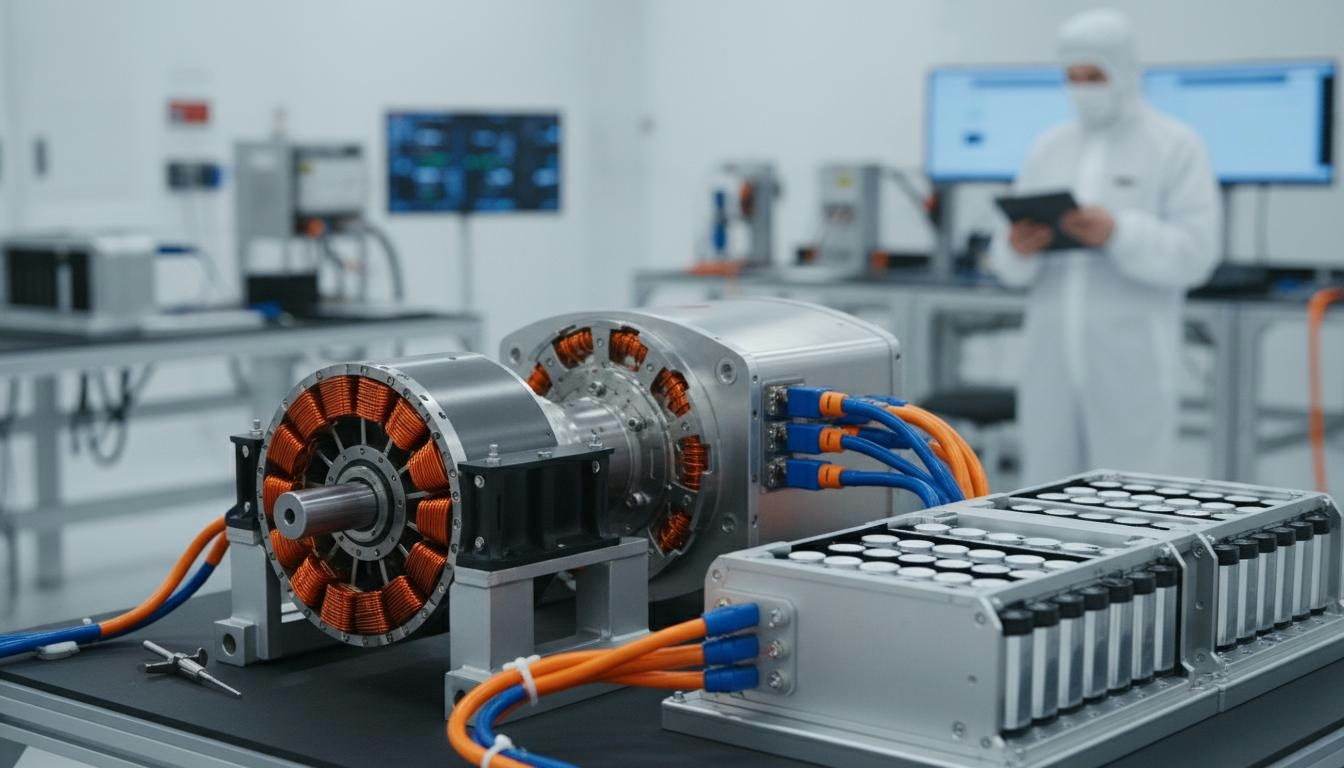
Why Electric Aviation Could Become the Test Case for Mobility’s Ecosystem-Driven Future
As electric aviation emerges as a transformative frontier in the mobility sector, industry leaders contend that its success will depend not only on technological advancements in aircraft design but also on the establishment of comprehensive supporting infrastructure, resilient supply chains, sophisticated digital platforms, and coordinated efforts across the entire ecosystem.
Disruptive Innovation and Market Development
At the ETAutoTech Summit 2026, Satya Chakravarthy, Founder-CEO of The ePlane Co. and Head of the National Centre for Combustion Research & Development at IIT Madras, alongside Anand Chorghade, Senior Industry Advisory Director at Blue Yonder, explored how electric aviation exemplifies the future of integrated mobility systems. They emphasized a paradigm shift from focusing solely on vehicles to embracing entire ecosystems that support new modes of transport.
Chakravarthy underscored that electric aviation should be regarded as a disruptive innovation rather than a direct replacement for conventional aircraft. Unlike combustion-powered planes, electric aircraft face inherent challenges, notably the constant battery weight throughout a flight, in contrast to fuel-powered planes that become lighter as fuel is consumed. This fundamental difference complicates the prospect of long-range electric flights in the near term.
He explained that disruptive innovations typically begin with inferior performance compared to established technologies. Therefore, electric aircraft must initially target new markets through short-distance applications such as air ambulances and urban air mobility services, rather than attempting to compete directly with traditional aviation. The ePlane Co. is actively developing electric vertical take-off and landing (eVTOL) aircraft, currently undergoing ground testing, with plans to commercialize ambulance services before expanding into air taxi operations.
Looking further ahead, Chakravarthy envisions India supporting 100-seater electric or hybrid aircraft designed for domestic routes, where travel distances are shorter than those served by conventional narrow-body jets. He stressed the importance of aligning aviation capabilities with passenger needs, advocating for disruption that meets demand without excess capacity.
Infrastructure, Supply Chains, and Digital Integration
The advancement of electric aviation entails complex challenges beyond aircraft design. Chakravarthy highlighted the necessity of establishing entirely new supply chains, specialized manufacturing processes, charging infrastructure, vertiports, and air traffic management systems. He emphasized that building this ecosystem requires comprehensive efforts to develop the full manufacturing and operational framework.
From a digital infrastructure standpoint, Chorghade pointed out that scaling next-generation mobility businesses hinges on intelligent and resilient supply chains. While startups often prioritize technological innovation, sustainable success depends on efficient management of suppliers, production, inventory, logistics, and customer demand. The integration of AI-driven planning systems is becoming indispensable for optimizing manufacturing schedules, procurement, and logistics in real time, enabling companies to enhance profitability and respond swiftly to market fluctuations.
Regulatory and Commercial Challenges
Despite its promise, electric aviation faces significant regulatory and commercial obstacles. A recent US government report highlights ongoing uncertainty regarding the timeline for electric aircraft entering service, citing operational and safety concerns. The viability of emerging business models, such as air taxis, remains unproven, and airports have expressed reservations about integrating electric aircraft with existing operations.
Advancements in battery technology, including solid-state batteries, offer potential improvements in range and safety but also present technical challenges that must be overcome. Additionally, the competitive landscape is becoming increasingly complex, with established and emerging players such as Electra, Archer Aviation, and new European initiatives vying for market share.
Nonetheless, the potential for electric aviation to revolutionize short-haul regional travel and contribute to decarbonized flying remains compelling. Its development will serve as a critical test case for how future mobility ecosystems can be constructed through integrated, collaborative approaches—contingent on addressing the intertwined regulatory, commercial, and technological challenges.

Etihad and Swissport Extend Global Partnership
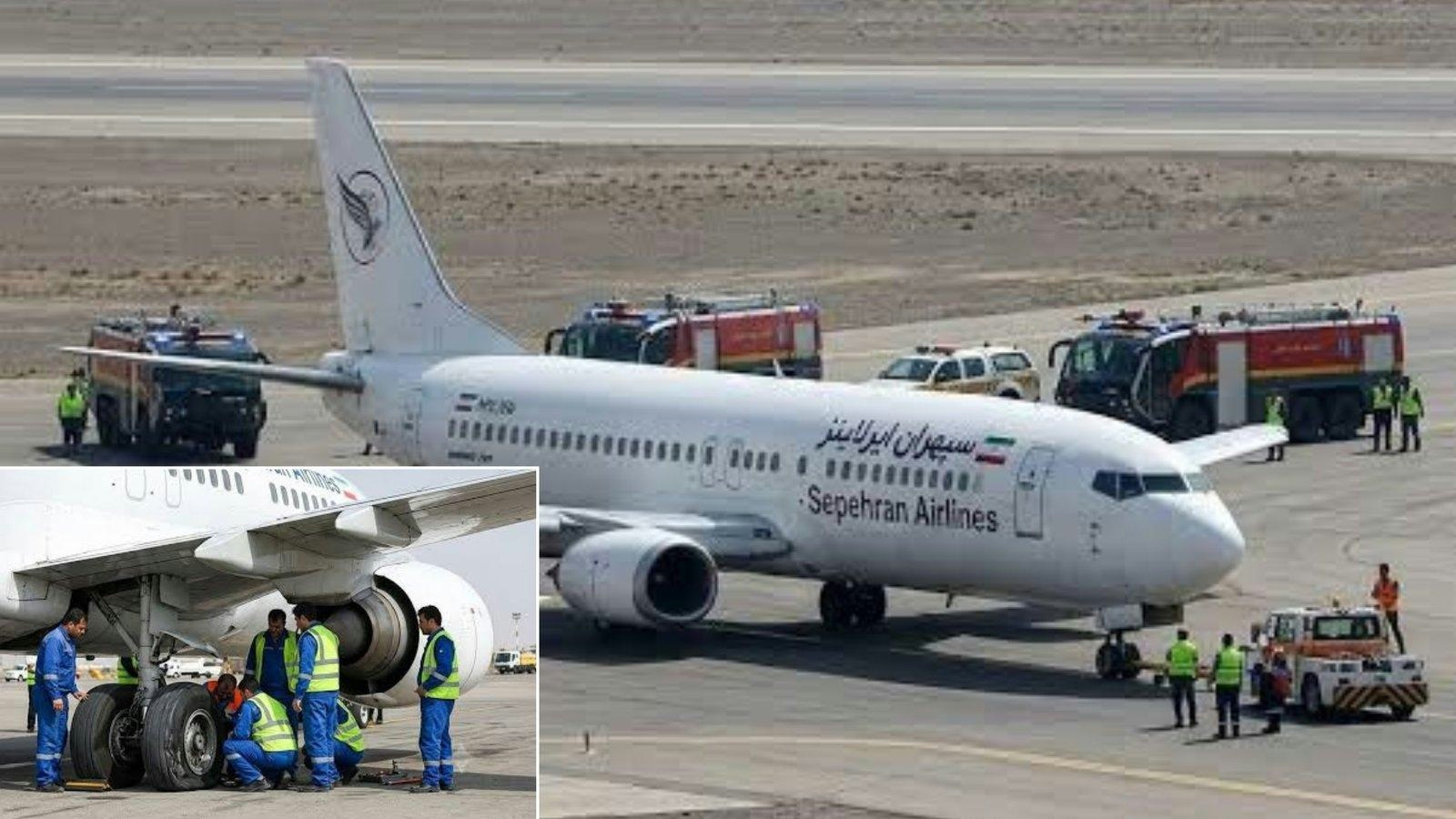
Sepehran Airlines B737 Returns to Mashhad After Tyre and Engine Issues

Etihad Deploys Widebody Fleet to Meet Strong Demand

Korean Air Finalizes $36.2 Billion Deal with Boeing
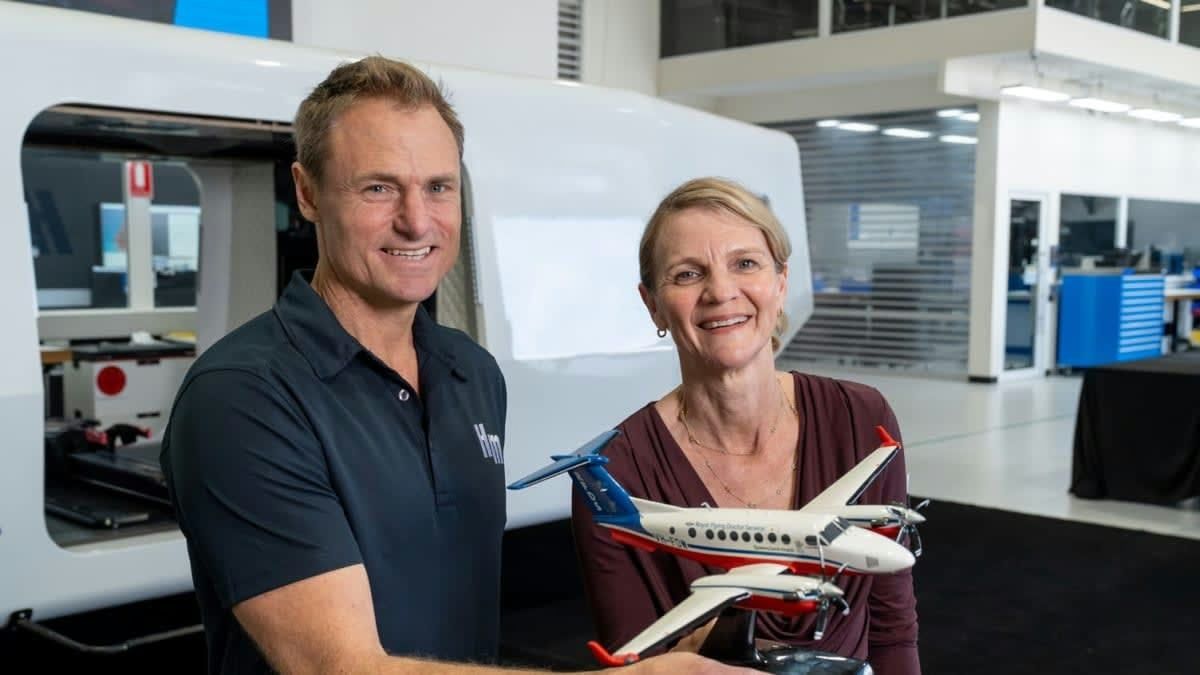
Australia’s RFDS Queensland Section Orders Six King Air 260Cs

Korean Air Finalizes Order for 103 Boeing Jets and Engines
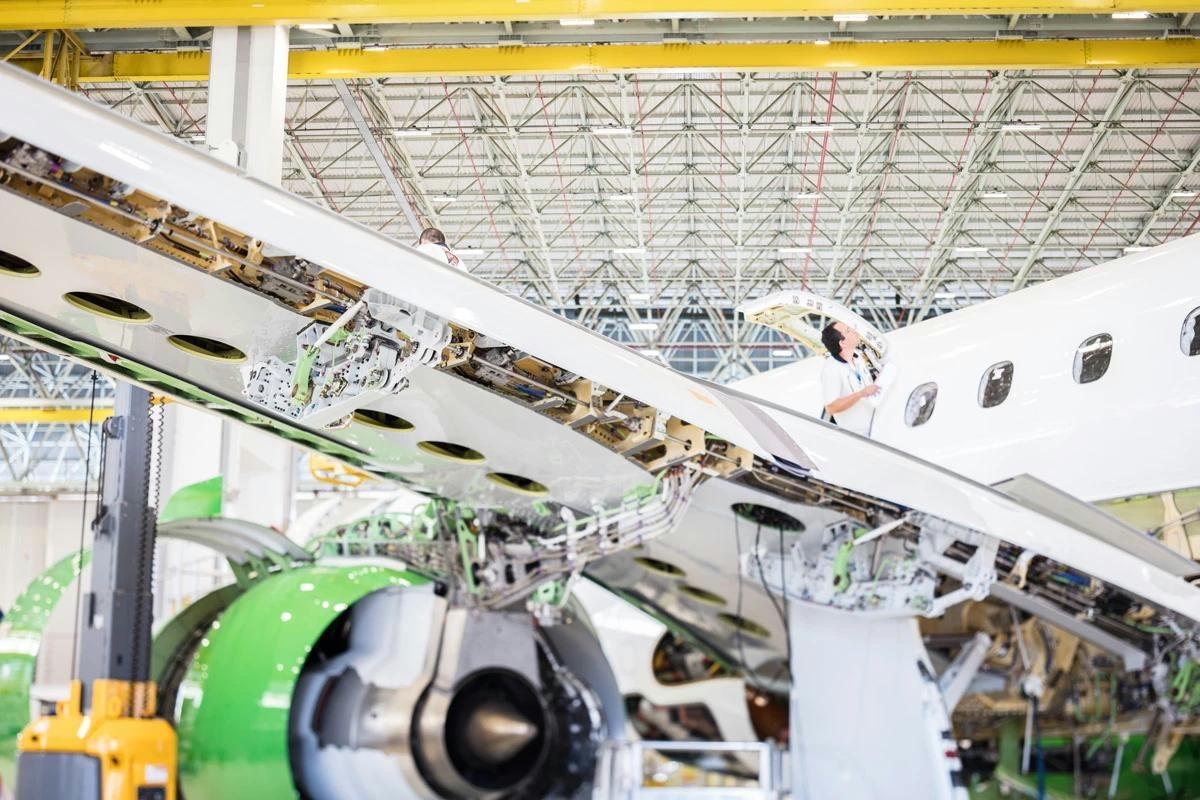
Embraer E195-E2 Features Distinctive Engine Placement Among Regional Jets
What Passengers Can Expect on Boeing’s New 777X Jet

How Ethiopian Airlines Became Africa’s Leading Carrier Amid Gulf Competition
Joby Aviation Extends Autonomous Flight Capabilities with Cross-Country Tour
