
Orquestre insights de IA em ações

Tendências
Categories
Why U.S. Airlines Continue to Use the Boeing 757
Why U.S. Airlines Continue to Use the Boeing 757
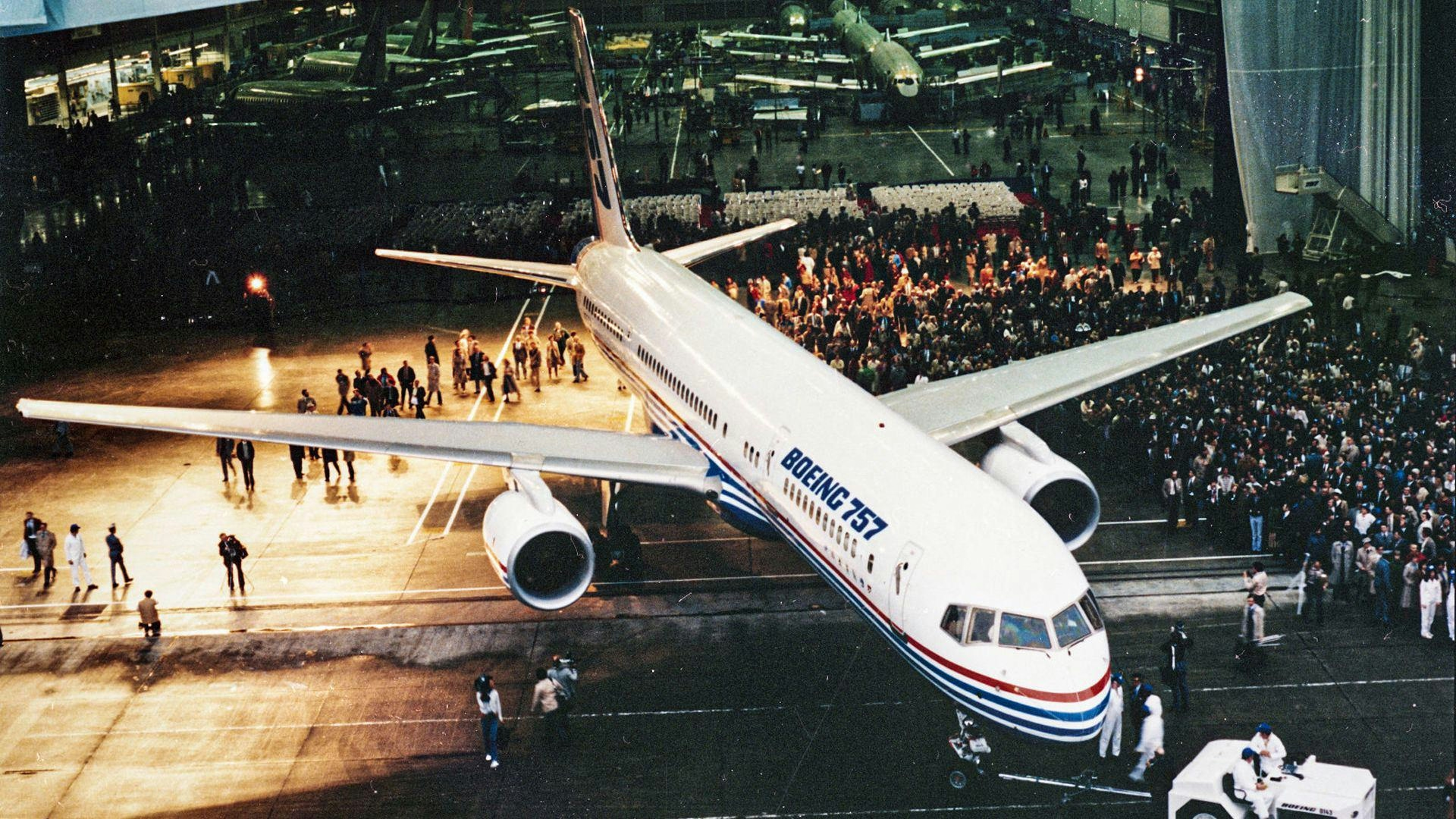
More than twenty years after Boeing ceased production of the 757, this narrowbody aircraft remains a vital component of major U.S. airline fleets. It continues to serve as a cornerstone for key transatlantic and premium domestic routes, maintaining a unique position in the market. Despite the aviation industry's shift toward newer aircraft models and enhanced premium services, the 757’s distinctive combination of range, capacity, and operational efficiency sustains its relevance in a niche that neither modern narrowbodies nor widebodies have fully supplanted.
An Aging Airframe That Still Fits the Mission
The Boeing 757 was engineered with powerful engines and a high maximum takeoff weight, delivering the economics of a single-aisle aircraft with a range approaching that of widebody jets. This design enables airlines to operate routes that are too long or operationally demanding for most narrowbodies, yet insufficiently trafficked to justify deploying larger twin-aisle aircraft. As of 2025, Delta Air Lines operates over 100 passenger 757s, while United Airlines maintains a fleet exceeding 60, underscoring the model’s enduring significance within U.S. mainline operations.
The 757’s moderate seating capacity combined with a strong payload capability makes it particularly well-suited for city pairs characterized by variable business and leisure demand. Airlines can offer full-service cabins, including lie-flat premium seating, without incurring the higher costs and risks associated with widebody aircraft that may be challenging to fill consistently throughout the year. This operational flexibility allows carriers to sustain schedule frequency and nonstop service on markets that might otherwise lose direct connections.
Transatlantic “Long and Thin” Routes
The 757’s strategic value is especially pronounced on transatlantic routes. United Airlines, for example, deploys 757-200s from Newark to secondary European destinations such as Faro, Malaga, and Reykjavik, as well as additional frequencies to Brussels. Seasonal services like Newark to Stockholm further demonstrate the aircraft’s ability to extend the operational reach of narrowbodies, serving airports that may not consistently support widebody operations but experience strong demand during peak travel periods.
This aircraft facilitates daily or near-daily service featuring premium cabins and extra-legroom economy seating, aligning the onboard product with offerings at larger hubs while matching capacity to fluctuating seasonal demand. Analyses of transatlantic schedules reveal that the 757 continues to account for a substantial portion of U.S. carrier departures to secondary European markets each summer. Although new long-range narrowbodies such as the Airbus A321LR and XLR are entering service, delays in delivery and certification mean the 757 will continue to bridge the gap on these “long and thin” routes well into the mid-2020s.
Navigating Market and Regulatory Pressures
The sustained use of the 757 by U.S. airlines also reflects broader market and regulatory dynamics. Rising fuel prices have exerted pressure on airline profit margins, prompting fare increases and contributing to periods of market volatility. The 757’s operational efficiency and cost-effectiveness assist carriers in managing these economic challenges, even as competitors expand premium seating options to attract higher-yield passengers.
Regulatory developments further influence operational decisions. Recent Federal Aviation Administration (FAA) directives, including inspections for winglet cracks on certain 757 models, have necessitated adjustments to maintenance protocols to ensure continued safety and compliance. These factors, combined with the aircraft’s unique operational capabilities, explain why the Boeing 757 remains a mainstay in U.S. airline fleets despite its age and the evolving competitive environment.

Etihad Airways Suspends Airbus A380 Flights on Key Route

Aditya Birla Group Seeks Approval for Aircraft Leasing in GIFT City

Qatar Airways Highlights Innovation and Connectivity at Arabian Travel Market 2026

Hong Kong's Five-Year Plan Includes Andrew Fan's Aircraft Parts Processing Hub Proposal

ACIA Aero Leasing Delivers ATR72-600 to Air Nostrum

RTX Appoints Jill Albertelli as Head of Pratt & Whitney

TAT Technologies Joins Beyond Aero Hydrogen Aircraft Program

AURAK Study Highlights Barriers to Air Taxi Adoption in Emerging Economies

Xiamen Air Selects Altitude for 787 Maintenance at Heathrow

Etihad and Swissport Extend Global Partnership
