
Orquestre insights de IA em ações

Tendências
Categories
Why US Airlines Pay Long-Haul Pilots More to Fly the Boeing 787 Than the 777
Why US Airlines Pay Long-Haul Pilots More to Fly the Boeing 787 Than the 777
Technical Complexity and Pilot Expertise
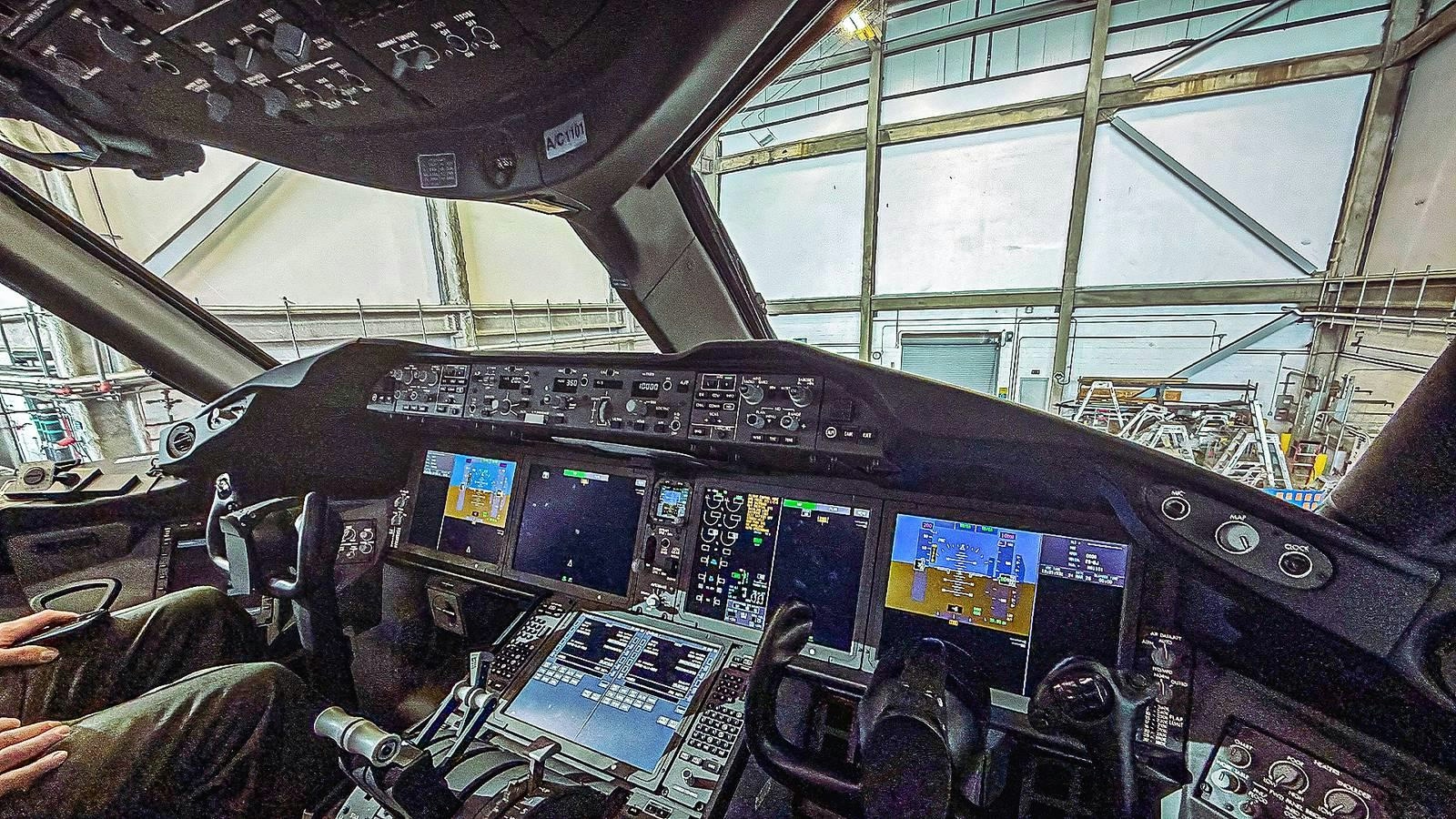
Recent data from United Airlines’ 2025 pilot salary tables indicate that pilots flying the Boeing 787 generally earn higher wages than those operating the Boeing 777. This pay disparity is largely attributed to the advanced technology and operational demands of the 787, commonly known as the Dreamliner. Unlike the 777, the 787 employs a “more-electric” architecture, replacing traditional pneumatic bleed-air systems with electrically driven alternatives. This design shift requires pilots to closely monitor electrical loads, system redundancies, and automated responses, necessitating a greater level of technical proficiency. Consequently, airlines tend to assign their most experienced and senior pilots to the 787, which further elevates the average compensation for those flying this aircraft.
Operational Advantages and Market Position
Beyond its technical sophistication, the Boeing 787 offers significant operational benefits that enhance its appeal to airlines. The aircraft is celebrated for its superior fuel efficiency, lower maintenance costs, and improved passenger comfort. These factors contribute to increased profitability and operational efficiency on long-haul routes, incentivizing airlines to offer higher pay to pilots operating these flights. The competitive edge of the 787 is exemplified by recent route expansions, such as Alaska Airlines’ new Seattle-Rome service, which utilizes the Dreamliner to capitalize on its long-range capabilities and cost advantages.
Pay Structures and Industry Variations
While aircraft type plays a crucial role in pilot compensation, other factors such as seniority, total flight hours, and overall experience remain significant determinants of wages. Additionally, pilots often weigh benefits like 401(k) plans alongside salary when evaluating employment options. The pay gap between 787 and 777 pilots is most pronounced at United Airlines. According to reporting by Simple Flying, a United 777 captain with 12 years of service earns approximately $438 per hour, whereas a 787 captain with similar seniority receives about $465 per hour, reflecting a nearly $30 hourly premium. This difference underscores both the complexity of the 787 and the seniority of the pilots typically assigned to it.
Not all US carriers adopt this differentiated pay model. For instance, American Airlines maintains parity in base salaries for its 777 and 787 pilots. This approach may evolve with the introduction of newer aircraft such as the Boeing 777X, which is expected to command higher pilot salaries due to its increased complexity. However, since no US airline has yet placed orders for the 777X, this factor has not yet influenced current pay structures.
Challenges of Long-Haul Operations
Although the 787’s advanced systems do not necessarily make flying more difficult, the nature of its long-haul missions demands seasoned pilots. Flights often exceed ten hours, requiring crews to manage the cognitive effects of fatigue and jet lag. This operational environment further justifies the assignment of experienced pilots to the Dreamliner, reinforcing the rationale behind the higher compensation offered for these roles.
In essence, the premium pay for Boeing 787 pilots at US airlines reflects a combination of the aircraft’s technological complexity, its operational advantages, and the seniority of the pilots entrusted with its operation, solidifying the Dreamliner’s position as a coveted assignment in the long-haul market.

Etihad Airways Suspends Airbus A380 Flights on Key Route

Aditya Birla Group Seeks Approval for Aircraft Leasing in GIFT City

Qatar Airways Highlights Innovation and Connectivity at Arabian Travel Market 2026

Hong Kong's Five-Year Plan Includes Andrew Fan's Aircraft Parts Processing Hub Proposal

ACIA Aero Leasing Delivers ATR72-600 to Air Nostrum

RTX Appoints Jill Albertelli as Head of Pratt & Whitney

TAT Technologies Joins Beyond Aero Hydrogen Aircraft Program

AURAK Study Highlights Barriers to Air Taxi Adoption in Emerging Economies

Xiamen Air Selects Altitude for 787 Maintenance at Heathrow

Etihad and Swissport Extend Global Partnership
