Imagem

AeroGenie — Seu Copiloto Inteligente.

Pergunte qualquer coisa. Analise tudo. Aja imediatamente.

Tendências

Categories

Willis Lease Finance Signs ConstantThrust Agreement with Nauru Airlines

February 4, 2026By ePlane AI
Willis Lease Finance Signs ConstantThrust Agreement with Nauru Airlines
0
0
Willis Lease Finance
ConstantThrust Program
Nauru Airlines

Willis Lease Finance Secures ConstantThrust® Engine Agreement with Nauru Airlines

Willis Lease Finance Corporation (NASDAQ: WLFC), a prominent global lessor of commercial aircraft engines, has finalized a purchase and leaseback agreement with Nauru Airlines involving seven CFM56-7B engines. This strategic deal will provide Nauru Airlines with ConstantThrust® support for its entire fleet of Boeing 737-700 and 737-800 aircraft over a period exceeding six years.

Enhancing Operational Efficiency through ConstantThrust®

The ConstantThrust® program facilitates the exchange of engines for fully serviceable replacements as they reach major maintenance milestones, thereby minimizing operational disruptions. This initiative capitalizes on Willis Lease Finance’s extensive expertise in spare parts provisioning, technical management, and maintenance, repair, and overhaul (MRO) services. The program is designed to ensure consistent engine performance and reliability for airline clients across the globe.

Austin C. Willis, CEO of Willis Lease Finance, emphasized the significance of the partnership, stating, “This partnership with Nauru Airlines underscores the global reach and adaptability of the ConstantThrust® program. Nauru Airlines operates in a uniquely demanding and remote environment as an island nation in the Pacific. We are excited to support their continued growth and leadership in regional aviation with our investment.”

Echoing this sentiment, Hon. Minister Asterio Appi, Minister for Nauru Air Corporation, remarked, “Working with a global lessor like WLFC will bring us the operational leverage we need. We are thrilled to be leveraging the Willis ecosystem.”

The agreement also includes provisions for extension to accommodate future aircraft deliveries, aligning with Nauru Airlines’ ongoing expansion and its critical role in maintaining air connectivity throughout the Central and South Pacific regions.

Market Context and Industry Implications

This agreement arrives amid intensifying competition within the aircraft engine leasing sector. Key industry players such as Bridgepoint Group and Residco remain active investors, contributing to a dynamic and competitive market environment. Analysts observe that these competitors may pursue more aggressive strategies to secure high-value deals and partnerships, thereby increasing pressure on Willis Lease Finance to sustain its market leadership and profitability.

Willis Lease Finance’s core operations encompass leasing large and regional spare commercial aircraft engines and aircraft to airlines, engine manufacturers, and MRO providers worldwide. The company offers integrated services including engine and aircraft trading, lease pools, asset management, and end-of-life solutions through Willis Aeronautical Services, Inc. Additional capabilities extend to engine maintenance, aircraft disassembly, parking and storage, and ground handling services via subsidiaries such as Willis Engine Repair Center® and Jet Centre by Willis.

As the aviation industry continues its recovery and transformation, the performance of the ConstantThrust® program with Nauru Airlines will serve as a key indicator of Willis Lease Finance’s capacity to navigate a competitive and rapidly evolving market landscape.
More news
Global AI Partners with European Airline to Automate Revenue and Financial Reconciliation
Global AI Partners with European Airline to Automate Revenue and Financial Reconciliation

Global AI Partners with European Airline to Automate Revenue and Financial Reconciliation **New York, Feb. 4, 2026** – Global AI Inc. (OTC: GLAI), a prominent provider of enterprise artificial intelligence solutions, has secured a contract with a leading European commercial airline to automate and streamline its revenue mapping and financial reconciliation processes. This collaboration represents a significant advancement in applying AI technology to manage the complex and high-volume financial workflows that are vital to the airline industry’s operations. Transforming Financial Workflows with AI Through this partnership, Global AI will implement its Agentic AI Platform to fully automate the airline’s revenue mapping lifecycle. The platform replaces fragmented, manual reconciliation procedures with an intelligent, governed orchestration layer designed to function at enterprise scale. This solution aims to enhance the accuracy and timeliness of revenue recognition, mitigate operational risks, and improve financial transparency. The automation is expected to support the airline’s strategic growth initiatives, including route expansion and increased ticket sales. Darko Horvat, Chairman and CEO of Global AI, emphasized the critical nature of efficiency and scalability in the airline sector, which operates with massive transaction volumes and narrow profit margins. He noted that the engagement exemplifies how Global AI transforms complex financial operations into measurable returns on investment. Horvat further highlighted that the deployment model developed through this partnership is highly replicable across airlines, travel platforms, and other transaction-driven digital commerce enterprises. Challenges and Market Context Despite the promising outlook, the partnership underscores ongoing challenges in adopting AI within the financial operations of heavily regulated industries. Research from Protiviti points to regulatory compliance and data governance as significant obstacles, particularly in Europe where stringent data privacy standards prevail. Ensuring that AI platforms comply with these regulations is crucial for the success and scalability of such automation initiatives. The broader market environment also influences industry responses to AI integration. Recent volatility in European software and data analytics stocks, triggered by the launch of Anthropic’s new legal AI model, highlights the disruptive potential of AI on traditional business frameworks. This disruption has compelled competitors to accelerate investments in AI technologies to maintain competitiveness, while simultaneously raising questions about the valuation of AI companies. Coverage by CNBC on firms such as SpaceX, OpenAI, and Anthropic illustrates how rapid AI innovation is generating both opportunities and uncertainties across public and private markets. Global AI positions itself as a provider of secure, high-performance AI solutions with embedded governance and compliance features. The company’s Agentic AI platform is engineered to enable organizations to design, deploy, and scale AI workflows while adhering to regulatory requirements, thereby facilitating accelerated digital transformation and delivering measurable shareholder value. --- **Forward-Looking Statements** This announcement contains forward-looking statements concerning the anticipated performance, benefits, and potential expansion of Global AI’s platform, as well as the company’s future operations and business prospects. These statements involve risks and uncertainties, including regulatory changes and market dynamics, many of which are beyond the company’s control. For further information, visit www.global.ai.
Rolls-Royce Signs Service Agreement with Taiwan's Flag Carrier
Rolls-Royce Signs Service Agreement with Taiwan's Flag Carrier

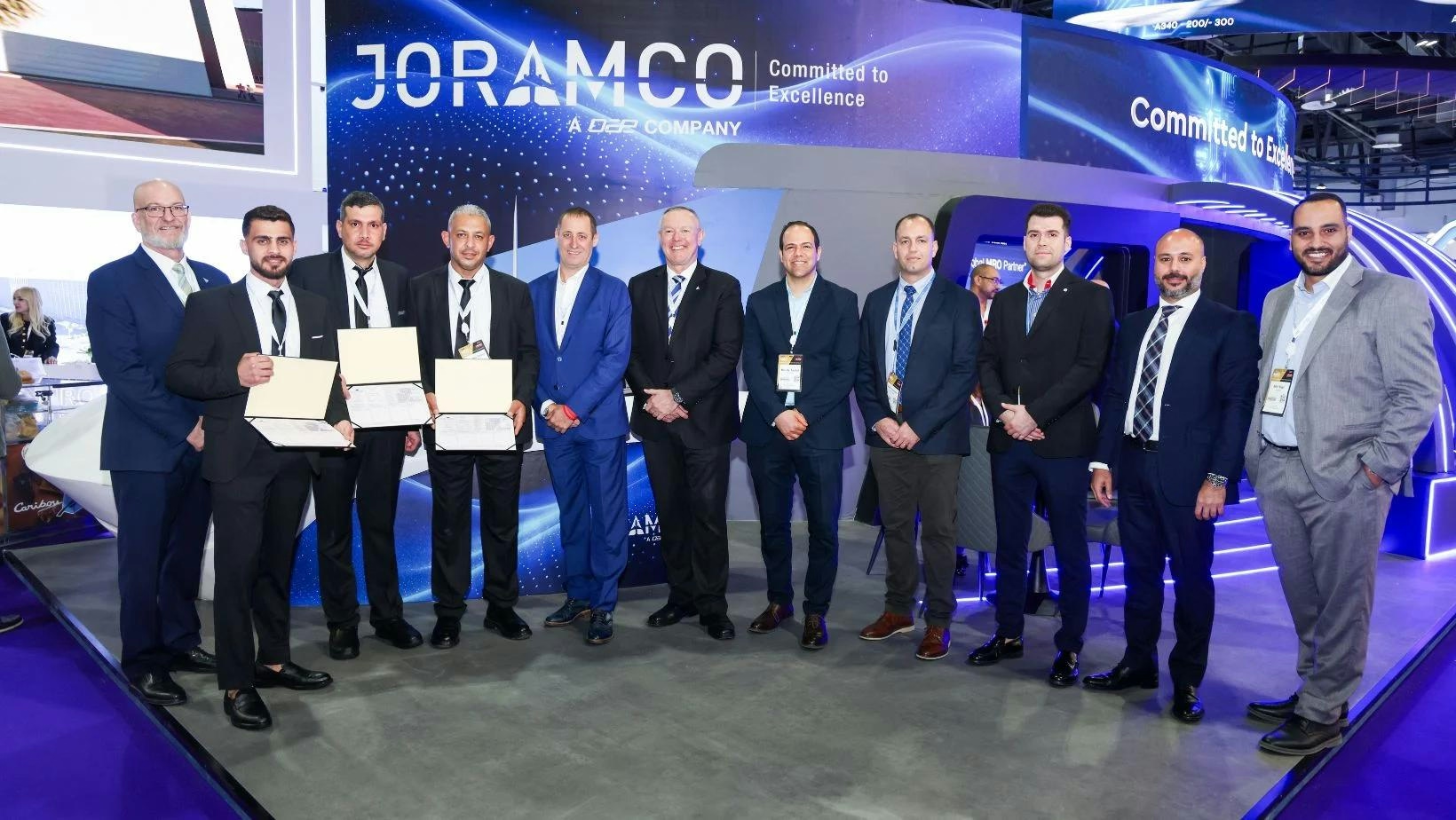
Rolls-Royce Secures Long-Term Engine Service Agreement with Taiwan’s China Airlines Rolls-Royce has formalized a significant long-term maintenance contract with China Airlines, Taiwan’s national carrier, reinforcing its dominant position in the long-haul aircraft engine sector. Announced on Wednesday, the agreement is anchored in Rolls-Royce’s TotalCare service model and encompasses 36 Trent XWB engines that power 18 Airbus A350 aircraft within the airline’s fleet. Strategic Growth and Revenue Stability The contract stipulates that Rolls-Royce will provide maintenance for 30 Trent XWB-97 engines installed on 15 A350-1000 aircraft, as well as six Trent XWB-84 engines for three A350-900s. Notably, the Trent XWB-97 is the exclusive engine for the A350-1000, ensuring a consistent and high-margin revenue stream for Rolls-Royce throughout the operational lifespan of these aircraft. TotalCare, a pivotal element of Rolls-Royce’s business strategy, operates on a fixed fee per engine flight hour basis, with the manufacturer assuming full responsibility for maintenance and spare parts. This approach guarantees predictable cash flow and underpins the company’s ongoing transformation initiatives. This agreement with China Airlines adds to a series of recent successes for Rolls-Royce in the Asia-Pacific region, which is anticipated to be the fastest-growing aviation market over the coming decade. Earlier this year, Malaysia Airlines placed an order for 20 Airbus A330neo aircraft, securing 40 Trent 7000 engines from Rolls-Royce. These developments underscore the company’s expanding presence in a region where demand for maintenance, repair, and overhaul (MRO) services is rapidly increasing. Challenges Amid Competitive Pressures Despite these achievements, Rolls-Royce faces challenges in maintaining competitive pricing for its service agreements. Some airlines have criticized engine manufacturers for capitalizing on ongoing supply chain disruptions, placing pressure on Rolls-Royce to balance profitability with customer satisfaction. The company’s strong financial performance has propelled its shares to record levels, buoyed by robust results in its power systems and defense divisions, yet this success also raises expectations for sustained delivery. Competitors are expected to respond with strategic initiatives aimed at securing similar service contracts in the Asia-Pacific market, intensifying competition within the lucrative MRO sector. Operational Enhancements and Market Outlook Rolls-Royce is actively working to restore confidence among operators of its Trent 1000 engines, which power the Boeing 787 Dreamliner. The introduction of new high-pressure turbine blades is designed to double engine service life and address previous durability concerns. Investor attention is now focused on the company’s full-year 2025 financial results, scheduled for release in late February. Management has projected an underlying operating profit between £3.1 billion and £3.2 billion, with free cash flow expected to reach £3.0 billion to £3.1 billion. These forecasts reflect progress under CEO Tufan Erginbilgic, who has emphasized operational efficiency and margin enhancement. As Rolls-Royce continues to expand its service footprint across Asia-Pacific, the industry will closely monitor whether the company can sustain its positive momentum amid intensifying competition and evolving customer expectations.
MRO Middle East: Joramco celebrates first EASA Type Rating graduates

MRO Middle East: Joramco celebrates first EASA Type Rating graduates

Joramco Marks Milestone with First EASA Type Rating Graduates Amid Regional MRO Challenges Amman-based aircraft maintenance, repair, and overhaul (MRO) provider Joramco, the engineering division of Dubai Aerospace Enterprise (DAE), has celebrated the graduation of its inaugural cohort to receive the European Union Aviation Safety Agency (EASA) Type Rating certification for the Airbus A320. This achievement was formally recognised during a ceremony held at the Aviation Week MRO Middle East 2026 event in Dubai. The milestone arrives at a critical juncture for the Middle East’s MRO sector, which is grappling with a widening skills gap alongside rapidly increasing market demand. The graduates successfully completed Joramco’s Structured On-the-Job Training (SOJT) programme, a curriculum developed in collaboration with FSTC Europe and regulated by the Hellenic Civil Aviation Authority (HCAA). This initiative aims to mitigate the acute shortage of qualified aircraft mechanics in the region—a challenge that industry experts warn could impede the sector’s capacity to support growing global air traffic and provide essential aftermarket services, particularly for ageing fleets. Addressing Workforce Shortages Through Comprehensive Training Adam Voss, Joramco’s chief executive, emphasised the significance of this achievement, stating, “These first EASA Type Rating graduates reflect Joramco’s commitment to building a highly skilled, future-ready workforce. By combining structured on-the-job training with international certification, we are equipping professionals to meet the evolving demands of global aviation and positioning Joramco as a hub for technical excellence.” Joramco’s SOJT programme extends beyond the Airbus A320, encompassing training for Boeing B737 and B777 aircraft as well. This diversified approach is considered essential given projections that widebody aircraft maintenance will dominate the Middle East’s MRO market over the coming decade, driven by unprecedented growth in engine MRO services. As the industry confronts a critical shortage of skilled personnel, initiatives such as Joramco’s SOJT programme are increasingly vital to sustaining the region’s aviation momentum. The graduation of the first EASA Type Rating class not only highlights Joramco’s proactive role in addressing workforce challenges but also reinforces its commitment to supporting the long-term expansion of the Middle East’s aviation maintenance capabilities.
IFS and Albatechnics Partner to Enhance Digital MRO Services in the Middle East
IFS and Albatechnics Partner to Enhance Digital MRO Services in the Middle East

IFS and Albatechnics Partner to Enhance Digital MRO Services in the Middle East Enterprise cloud software provider IFS has formed a strategic partnership with Albatechnics, an Italy-based aviation maintenance and engineering firm, to advance digital maintenance, repair, and overhaul (MRO) services across the Middle East. Announced at the Aviation Week MRO Middle East 2026 event in Dubai, the collaboration aims to improve maintenance execution, increase supply-chain visibility, and accelerate turnaround times by leveraging advanced digital tools and integrated workflows. Driving Digital Transformation in Aviation Maintenance As Albatechnics expands its operational footprint to serve both European and international clients, the company is investing heavily in modern, data-driven MRO capabilities. Mark Buongiorno, president of aerospace and defence at IFS, highlighted the growing trend within the global MRO sector toward adopting digital solutions that enhance efficiency, resilience, and real-time decision-making. He noted that the partnership with Albatechnics underscores a shared commitment to modernizing maintenance operations and delivering measurable value to customers. Alessandro Fagotto, chief executive of Albatechnics, described the alliance as a pivotal milestone in the company’s digital evolution. By integrating advanced and intelligent maintenance technologies, Albatechnics aims to elevate reliability, improve service performance, and streamline operations, ultimately providing a superior experience for its customers. Addressing Industry Challenges Through Innovation The partnership emerges amid significant challenges facing the aviation industry, including supply-chain constraints, aging fleets, and increasing demand for MRO services. By deploying next-generation digital solutions, IFS and Albatechnics seek to equip maintenance teams with enhanced tools for faster planning, coordinated material readiness, and improved predictability in maintenance activities. Nonetheless, integrating sophisticated digital technologies into traditional MRO operations in the Middle East presents considerable challenges. Both companies must navigate the complexities of merging new systems with existing legacy infrastructure, ensure compliance with regional regulatory frameworks, and manage workforce transitions effectively. The move toward digitalization may also encounter skepticism from established MRO providers resistant to change. In response, competitors are likely to accelerate their own digital transformation efforts or pursue acquisitions of complementary technologies to maintain competitive advantage. The success of the IFS-Albatechnics partnership will ultimately depend on its ability to deliver tangible operational improvements tailored to the specific needs of the Middle Eastern aviation sector. Positioned as a significant step toward modernizing MRO services, the collaboration aims to set new standards for efficiency and reliability in the region’s aviation maintenance landscape.
China’s C929 Widebody Secures Engine Partner for Next-Generation Aircraft
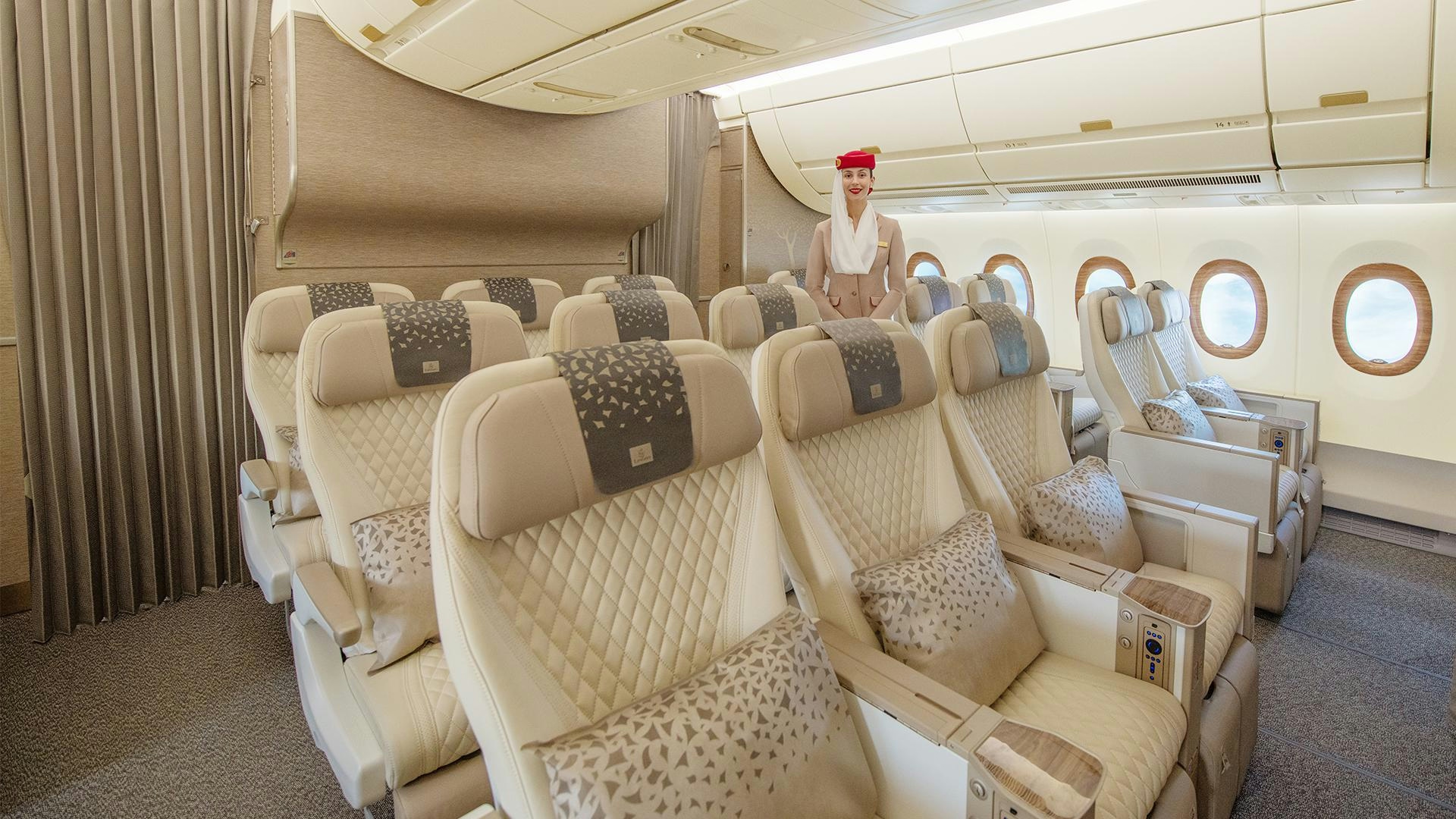
China’s C929 Widebody Secures Engine Partner for Next-Generation Aircraft

China’s C929 Widebody Secures Engine Partner for Next-Generation Aircraft Comac Advances with Key Avionics Partnership The Commercial Aircraft Corporation of China (Comac) has taken a pivotal step in the development of its C929 widebody jet by securing a crucial avionics partner, signaling its intent to challenge the longstanding dominance of Boeing and Airbus in the global commercial aircraft market. This announcement, made during the Singapore Airshow, underscores Comac’s strategic efforts to expand its footprint both domestically and internationally. On Tuesday, Comac disclosed that it had signed a letter of intent with Aviage Systems to supply the core avionics processing system for the C929. Avionics, often regarded as the “brains” of an aircraft, include essential electronic systems responsible for communications, navigation, flight control, and monitoring. Aviage Systems is a joint venture equally owned by GE Aerospace and the Beijing-based Aviation Industry Corporation of China, and it currently provides avionics for Comac’s flagship C919 narrowbody jets. Positioning the C929 in a Competitive Market The C929 is designed to rival the Airbus A350 and Boeing 787, featuring a widebody configuration capable of carrying up to 440 passengers over a range of approximately 12,000 kilometers—the distance between Shanghai and New York. This initiative forms part of China’s broader ambition to penetrate the lucrative widebody segment, which has long been dominated by the Airbus-Boeing duopoly. Despite this progress, Comac faces considerable challenges. The widebody market remains intensely competitive, with Boeing and Airbus maintaining near-exclusive control supported by well-established global supply chains. Industry analysts and investors have expressed reservations about the C929’s prospects, highlighting concerns related to certification processes, after-sales support infrastructure, and acceptance in international markets. Implications for the Global Aviation Industry In response to China’s advances, incumbent manufacturers are likely to intensify efforts to secure additional engine partnerships and enhance their widebody offerings to protect market share. The emergence of the C929 may also prompt other aircraft producers, such as Embraer, to reassess their strategic priorities. Known primarily for its E2 regional jets, Embraer could be compelled to explore the development of a new widebody aircraft to remain competitive amid evolving market dynamics. At the Singapore Airshow, Comac emphasized “further deepened” engagement with clients, reflecting its commitment to broadening its commercial reach. The company also announced that the C919 would perform a flight demonstration during the event, which continues through Sunday. As Comac accelerates the development of the C929, the global aviation sector is closely monitoring whether China’s latest widebody contender can disrupt the entrenched Airbus-Boeing duopoly and influence the future trajectory of commercial air travel.
Emirates Considers Order for Larger Airbus A350 Jets
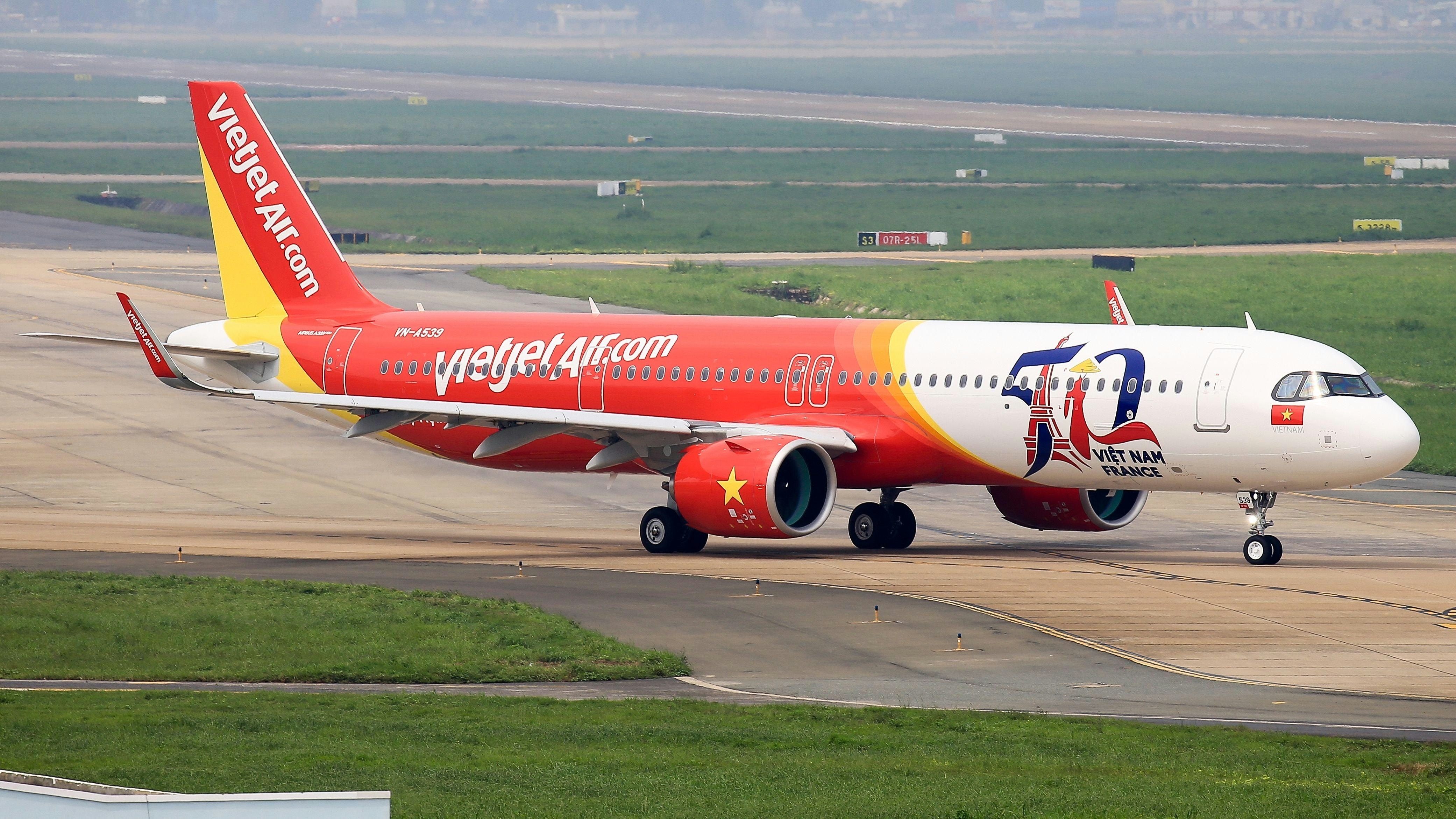
Emirates Considers Order for Larger Airbus A350 Jets

Emirates Considers Larger Airbus A350 Jets Amid Intensifying Industry Rivalry Emirates is evaluating the prospect of ordering a larger variant of the Airbus A350, contingent on Airbus advancing plans to develop a new wide-body model. Tim Clark, President of Emirates, expressed openness to assessing the proposed A350-2000 should Airbus proceed with the project. This new variant would represent one of the largest long-haul passenger aircraft in operation, expanding upon the current A350-1000, which is presently the largest in Airbus’s A350 family. Airbus-Boeing Competition and Emirates’ Position Airbus is exploring the development of the A350-2000 as part of its strategic response to Boeing’s efforts to introduce a larger version of the 777X, following substantial order commitments for the latter. Emirates, which previously declined to purchase the A350-1000 due to concerns over engine durability in the challenging Gulf operating environment, has consistently advocated for the creation of larger long-haul aircraft to accommodate anticipated growth in international travel demand. Industry experts suggest that the introduction of larger wide-body jets could significantly alter the competitive landscape of long-haul aviation. This is particularly relevant as airlines prepare for sustained increases in global passenger volumes, with the Asia-Pacific region driving much of the growth in aircraft demand. However, ongoing supply chain constraints pose challenges to both Emirates’ potential order and the broader deployment of new aircraft models. Market Dynamics and Broader Industry Trends Recent data from Aviation International News underscores the impact of supply chain disruptions on aircraft production timelines. The intensifying competition between Airbus and Boeing is further illustrated by recent significant orders from other major carriers. Air Cambodia and Delta have placed large orders for Boeing 737 Max and Airbus A330/A350 jets, respectively. Meanwhile, FlyDubai is expanding its fleet with up to 300 Boeing 737s and A321s, and Air Europa is shifting its procurement strategy from Boeing to Airbus with an order for up to 40 A350-900s. The potential launch of the A350-2000 and Emirates’ interest in the model underscore the ongoing contest between Airbus and Boeing to secure large aircraft orders from global airlines. While Airbus has yet to confirm the full development of the larger A350 variant, discussions with key customers, including Emirates, remain active.
Vietjet Orders 44 A321 Aircraft Equipped with GTF Engines

Vietjet Orders 44 A321 Aircraft Equipped with GTF Engines

Vietjet Expands Fleet with Order for 44 A321 Aircraft Featuring GTF Engines Vietjet Air has announced a substantial expansion of its Airbus A320neo-family fleet by placing an order for 44 additional A321 aircraft powered by Pratt & Whitney’s Geared Turbofan (GTF) engines. The order includes 24 A321neo and 20 A321XLR jets, with deliveries scheduled to commence in July 2026. This latest acquisition increases Vietjet’s total GTF-powered aircraft orders to 137, underscoring the airline’s aggressive growth strategy across Asia and beyond. Strategic Partnership and Engine Support As part of the agreement, Pratt & Whitney, a division of RTX, will provide long-term engine support through a 12-year EngineWise Comprehensive maintenance service contract. This arrangement is designed to ensure sustained reliability and optimal performance as Vietjet expands its operations. Nguyen Thanh Son, Managing Director of Vietjet, expressed strong confidence in Pratt & Whitney’s latest-generation engine technology, highlighting improvements of up to 20% in fuel efficiency alongside industry-leading operating economics. Industry Challenges and Competitive Dynamics The timing of Vietjet’s order is notable given the increased scrutiny surrounding the GTF engine. Since 2024, technical issues have prompted groundings of GTF-powered aircraft worldwide, raising concerns among investors and customers regarding the engine’s reliability. Vietjet’s decision to reinforce its commitment to the GTF platform reflects a long-term belief in the technology but also places significant pressure on Pratt & Whitney to address these challenges and ensure consistent engine performance. The competitive environment in Southeast Asia is intensifying. Vietjet’s primary competitor, Vietnam Airlines, is reportedly considering dry-leased narrowbody aircraft as an alternative fleet strategy, potentially to mitigate risks linked to engine reliability. Meanwhile, other regional carriers are actively expanding their fleets: Air Cambodia has recently ordered Boeing 737 Max 8s, and Tigerair Taiwan has committed to additional A321neos. These developments illustrate a dynamic and evolving market for narrowbody jets in the region. Vietjet’s Fleet Evolution and Future Outlook Headquartered in Ho Chi Minh City, Vietjet introduced the A321neo to its fleet in 2018 and currently operates 42 GTF-powered A321neo aircraft. Prior to this latest order, the airline had already committed to up to 93 GTF-powered aircraft, reflecting a longstanding partnership with Pratt & Whitney. As Vietjet continues its rapid expansion, this latest order highlights both its growth ambitions and the broader challenges confronting the aviation industry, particularly in terms of engine reliability and fleet modernization. The coming years will be critical in testing the resilience of Vietjet’s strategy and the performance of the GTF engine as the airline seeks to maintain its position as one of Asia’s fastest-growing carriers.
Agentic AI: Evolving from Assistive Tools to Autonomous Airport Management
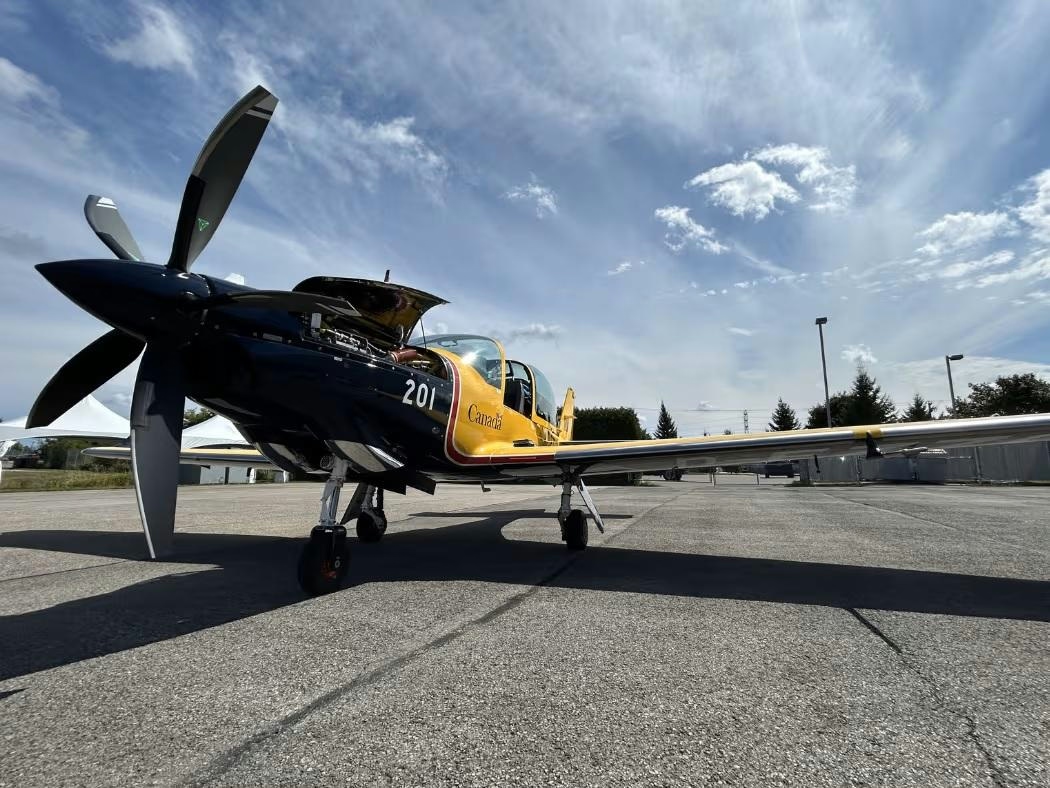
Agentic AI: Evolving from Assistive Tools to Autonomous Airport Management

Agentic AI: Evolving from Assistive Tools to Autonomous Airport Management In 2026, agentic artificial intelligence is revolutionizing airport operations by transitioning from reactive assistance to autonomous orchestration. This shift enables the optimization of aircraft turnaround, enhancement of passenger experiences, and the unlocking of new commercial opportunities. As AI becomes the foundational layer of modern airports, the aviation industry is undergoing a pivotal transformation: artificial intelligence is no longer a supplementary technology but a central operational engine. While the years 2024 and 2025 were marked by the rise of generative AI and chatbots, 2026 heralds the advent of agentic AI—systems capable of independently managing complex, end-to-end travel processes. For technical leaders, this development represents a fundamental change from AI serving as a reactive tool to becoming a proactive orchestrator of the intricate network of airport operations. Given that a single aircraft turnaround can involve over 100 tasks across 70 different organizations, agentic AI offers unparalleled potential to streamline and transform these workflows. Autonomous Decision-Making in Action The hallmark of agentic AI lies in its capacity to operate autonomously within defined parameters, addressing high-stakes operational challenges without human intervention. Within airport operations centers (APOCs), these systems function as digital co-pilots, continuously simulating scenarios and recommending real-time adjustments such as gate swaps, stand re-sequencing, and turnaround prioritization. Unlike traditional predictive tools that merely identify potential issues, agentic AI models can autonomously initiate corrective actions, mitigating delays before human operators detect emerging problems. Recent implementations, as highlighted by Amadeus, demonstrate AI systems that alert airlines when a passenger leaves a bag at a bag-drop point and predict whether the passenger will reach the gate on time. In cases where baggage fails to make a flight, the system automatically notifies the passenger with an apology and a plan for baggage reunion, thereby reducing passenger anxiety and eliminating the need for lost-and-found queues. Agentic Commerce and New Revenue Streams Agentic AI is also transforming airport commerce by leveraging machine learning to understand individual passenger preferences in real time. This capability allows autonomous agents to deliver hyper-personalized recommendations for dining and retail options. Leading technology providers such as OpenAI, Stripe, and PayPal are deploying agentic payment systems that enable passengers to complete transactions—from food orders to lounge bookings—entirely through AI-driven interfaces. This frictionless experience allows airports to capture commercial yield during passengers’ moments of respite after security, bypassing physical queues and manual checkouts. Security, Market Reactions, and Competitive Responses The rise of autonomous agentic AI introduces significant security challenges. The self-directed nature of these systems exposes airports to novel threats that traditional security frameworks are ill-equipped to manage. In response, airports and technology providers are investing heavily in robust AI firewalls and developing detailed taxonomies of agents to monitor activity and enforce precise controls. The market is witnessing increased investment in defensive AI technologies designed to guard against adversarial prompts and unauthorized logic alterations. Competitors are accelerating the development of sophisticated AI governance frameworks and enhancing their AI capabilities to maintain a competitive advantage. This evolving landscape is prompting a fundamental rethinking of industrial models, as AI systems increasingly deliver outcomes directly rather than merely recommending actions. Toward Virtual Expansion By optimizing the flow of passengers, baggage, and aircraft with exceptional precision, agentic AI enables airports to achieve what is described as “virtual expansion” without the need for substantial capital expenditure. As airports embrace this new era, the interplay between autonomy, security, and commercial opportunity will shape the next chapter in aviation innovation.
SkyAlyne Chooses IFS for Digital Maintenance Platform
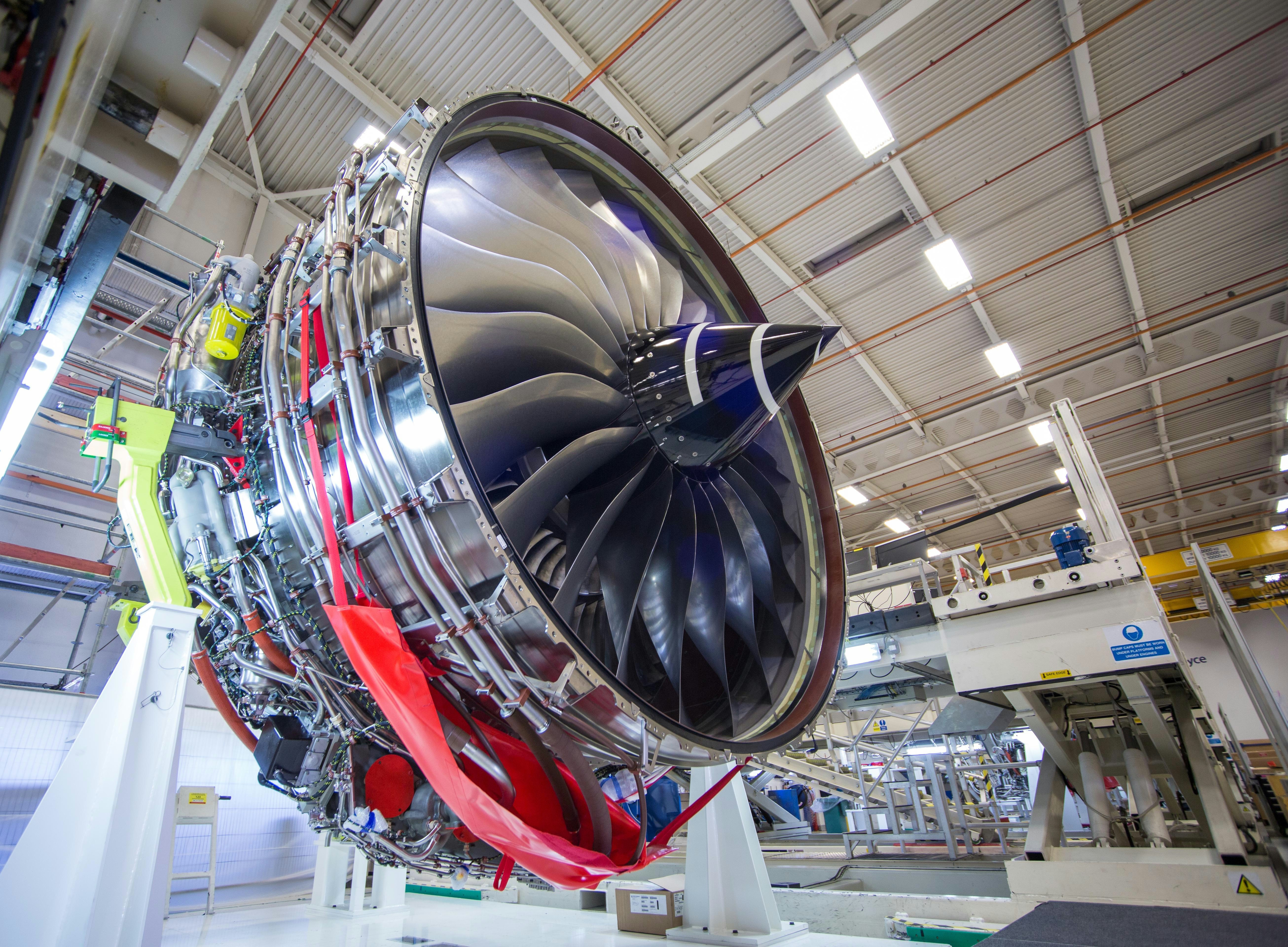
SkyAlyne Chooses IFS for Digital Maintenance Platform

SkyAlyne Selects IFS for Digital Maintenance Platform in RCAF Training Overhaul SkyAlyne has chosen IFS to deliver a fully digital aviation maintenance and asset management platform as part of the Royal Canadian Air Force’s (RCAF) Future Aircrew Training (FAcT) programme. Acting as the prime contractor for this extensive initiative, SkyAlyne will implement IFS Cloud to support the Canadian Department of National Defence’s new training system. This collaboration represents a significant advancement in modernizing Canada’s military pilot and aircrew training infrastructure. Modernizing Maintenance and Training Operations The integration of IFS Cloud will provide SkyAlyne with sophisticated digital tools designed to streamline fleet maintenance, improve airworthiness management, and optimize aircraft availability across training bases nationwide. By enabling real-time visibility into maintenance activities, resource allocation, and compliance monitoring, the platform is expected to reduce aircraft downtime, enhance operational efficiency, and maintain high levels of training readiness—factors critical to the success of the FAcT programme. This 25-year partnership aims to equip the next generation of RCAF pilots and aircrew with world-class operational capabilities. Despite the clear benefits, the transition to IFS’s digital platform poses challenges. SkyAlyne must address potential resistance from personnel accustomed to traditional maintenance practices and invest in comprehensive training to ensure full adoption of the new system. Overcoming these obstacles will be vital to achieving the programme’s ambitious goals for modernization. A Comprehensive Approach to Future Aircrew Training Awarded to SkyAlyne in 2024, the FAcT programme introduces a next-generation approach to military flight training by consolidating leading Canadian aviation, defence, and training organizations within a unified, modernized framework. SkyAlyne’s multidisciplinary team is collaborating closely with the RCAF to develop a comprehensive training ecosystem that incorporates new aircraft, digital technologies, and innovative learning methodologies across multiple bases. The programme covers the full design and implementation of training and in-service support for Pilots, Air Combat Systems Officers, and Airborne Electronic Sensor Operators. It features updated curricula, digital courseware, and supporting infrastructure, all grounded in contemporary adult learning principles and advanced simulation techniques. The training fleet will include a diverse array of aircraft such as the Grob G 120TP, Pilatus PC-21, Airbus H135, Beechcraft King Air 260, and De Havilland Canada Dash 8-400, selected to meet evolving defence and operational requirements. Market Implications and Future Prospects SkyAlyne’s decision to partner with IFS may have broader implications for the defence and aviation technology markets. IFS’s established record of growth and successful artificial intelligence deployments could attract heightened investor interest. Meanwhile, competitors may accelerate their own AI integration efforts or enhance existing offerings to remain competitive with IFS’s specialized industrial AI solutions. As SkyAlyne and IFS collaborate to modernize Canada’s aircrew training, the initiative has the potential to establish new benchmarks in military aviation readiness. The success of this transformation will depend on effective management of the digital transition and the ability of the workforce to fully leverage the new technology.
Rolls-Royce Signs TotalCare Agreements with China Airlines for 36 Trent XWB Engines

Rolls-Royce Signs TotalCare Agreements with China Airlines for 36 Trent XWB Engines

Rolls-Royce Secures TotalCare Agreements with China Airlines for 36 Trent XWB Engines Rolls-Royce has announced that China Airlines, the Taiwan-based carrier, has signed TotalCare agreements covering 36 Trent XWB engines. The contracts include 30 Trent XWB-97 engines designated for 15 Airbus A350-1000 aircraft and six Trent XWB-84 engines for three A350-900 aircraft. The A350-1000 order, previously announced by Airbus, is scheduled for delivery in 2025. With this latest agreement, China Airlines will expand its A350 fleet from 15 to 33 aircraft, all powered by Rolls-Royce Trent XWB engines. Comprehensive Support Under TotalCare Program Under the TotalCare program, Rolls-Royce will provide extensive health monitoring and maintenance services for the new engines, reinforcing its long-term partnership with China Airlines. This agreement underscores the airline’s sustained confidence in Rolls-Royce’s support capabilities and the performance of the Trent XWB, which is widely regarded as one of the most efficient large aero engines globally. Competitive Challenges in the Asia-Pacific Market The deal arrives amid a highly competitive aviation market in the Asia-Pacific region. Rolls-Royce continues to face pressure to maintain competitive pricing against major rivals such as GE Aviation and Pratt & Whitney. Ensuring the reliability and efficiency of the Trent XWB engines remains a critical priority, particularly as the company manages the logistical complexities involved in servicing 36 engines across China. The expansion of Rolls-Royce’s maintenance operations in China and Singapore is expected to attract increased scrutiny from investors monitoring the company’s market share and profitability in the region. Industry analysts observe that competitors may intensify efforts to capture a larger portion of the maintenance, repair, and overhaul (MRO) sector, especially as Rolls-Royce strengthens its foothold in Asia. Despite these challenges, the TotalCare agreements with China Airlines mark a significant advancement for Rolls-Royce in consolidating its position within the Asia-Pacific market. The company’s capacity to deliver reliable engine performance alongside comprehensive aftercare services will be pivotal as it navigates a dynamic and fiercely competitive environment.
line