图像

借助人工智能,让您的报价机会收入提升 3 倍!

欢迎参加我们30分钟的实时演示,了解如何实现报价自动化

热门趋势

Categories

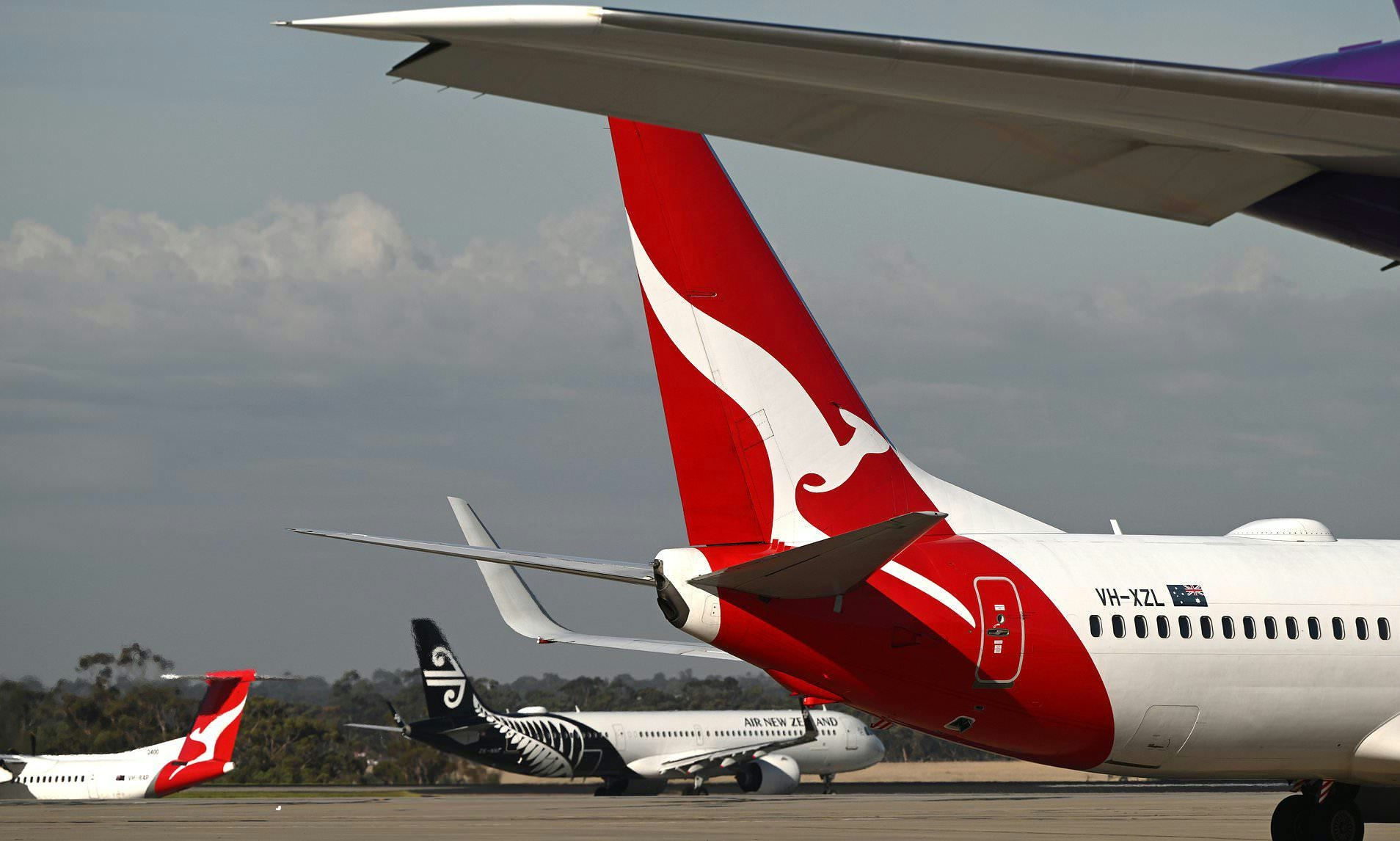
Qantas Reflects on Its $20 Billion Boeing Order
May 2, 2026By ePlane AI
Qantas Reflects on Its $20 Billion Boeing Order
0
0
Qantas
Boeing 777
Fleet Strategy

Qantas Reflects on Its $20 Billion Boeing Order

Historical Context: The 777 Decision

Qantas, the Australian flag carrier, played a significant role in the development of the Boeing 777, collaborating with Boeing alongside seven other major airlines. Despite this involvement, Qantas notably never placed an order for the 777 or its successor, the 777X. This decision has been a subject of considerable debate within the aviation industry and has even drawn reflection from former Qantas CEO Alan Joyce. Instead, in 2000, under then-CEO James Strong, Qantas opted for a mixed fleet strategy that favored Airbus widebodies alongside enhanced Boeing 747 variants. The airline placed a landmark order comprising seven Airbus A330-200s, six A330-300s, twelve Airbus A380-800s (then known as the A3XX), and six Boeing 747-400ERs. This move marked a strategic pivot from Qantas’s traditionally Boeing-dominated fleet, which included 737s, 747s, and 767s, and shaped its long-haul operations for decades.

Market and Operational Considerations

At the time of Qantas’s 2000 order, the Boeing 777 family was still emerging, with the highly successful 777-300ER only recently introduced and yet to prove its operational and economic advantages. The aircraft’s later acclaim, largely driven by the fuel-efficient GE90-115B engine, was not fully apparent when Qantas made its fleet decisions. Concurrently, the collapse of Ansett Australia created an opportunity for Qantas to expand its domestic network, necessitating aircraft that could serve both domestic and regional Asian routes effectively. The Airbus A330-200 and A330-300 models offered the right balance of capacity and fuel efficiency for medium-haul routes, outperforming the 777-200ER in these respects and providing greater operational flexibility across Qantas’s network. For high-capacity, long-haul trunk routes such as Sydney to London, Hong Kong, Singapore, and Los Angeles, Qantas continued to rely on Boeing 747s, which remained the backbone of its ultra-long-haul fleet.

Regulatory and Economic Factors

Regulatory challenges also influenced Qantas’s fleet choices. Although the Boeing 777 entered service with ETOPS 180 approval from the U.S. Federal Aviation Administration, Australia’s Civil Aviation Safety Authority imposed more stringent requirements, including case-by-case certification and higher compliance costs. These regulatory hurdles diminished the attractiveness of twin-engine aircraft like the 777 for ultra-long-haul operations at that time. Economic considerations, including fuel efficiency and operational flexibility, further reinforced Qantas’s preference for a mixed fleet approach.

Current Challenges and Future Outlook

Qantas’s recent $20 billion order with Boeing is now under renewed scrutiny amid evolving geopolitical and economic pressures. Heightened U.S.-China tensions have disrupted Boeing’s delivery schedules and order book in the Asia-Pacific region, potentially complicating Qantas’s fleet renewal plans. Additionally, rising jet fuel prices, exacerbated by ongoing conflicts in the Middle East, are placing further strain on airline profitability and may influence market dynamics and competitor strategies. Despite these headwinds, Boeing’s improving financial position, with forecasts indicating positive free cash flow by 2026, may provide some reassurance to Qantas and its stakeholders as the airline navigates a complex global environment and reflects on its pivotal fleet decisions.
More news
Airbus Addresses Delivery Delays of A320neo Aircraft

Airbus Addresses Delivery Delays of A320neo Aircraft

Airbus Addresses Delivery Delays of A320neo Aircraft Production Challenges and Quality Setbacks Airbus is intensifying efforts to realign its aircraft delivery schedule with production rates by mid-2026, following a series of disruptions affecting its flagship A320neo program. The European aerospace manufacturer has encountered a growing disparity between aircraft output and customer handovers, driven by a combination of manufacturing defects, administrative delays, and persistent engine supply constraints. A significant factor contributing to the delivery shortfall has been a quality issue involving forward fuselage panels on A320neo-family jets. Deviations in panel thickness necessitated extensive inspections and rework, compelling Airbus to temporarily withhold several aircraft that were otherwise ready for delivery. This measure slowed the pace of handovers and created a backlog. Administrative complications further exacerbated the situation, particularly for nearly 20 aircraft destined for China. Regulatory hurdles delayed deliveries to Chinese operators through key hubs such as Shanghai Pudong International Airport. Although deliveries to China have since resumed, the earlier hold-up had a notable impact on Airbus’s quarterly performance. Financial Impact and Inventory Buildup The imbalance between production and deliveries has led to a sharp increase in Airbus’s finished aircraft inventory. In the first quarter of 2026, inventory levels surged by €5.2 billion, reaching €46.9 billion. This rise largely reflects undelivered aircraft awaiting rework or regulatory clearance. The inventory buildup contributed to an 11% decline in commercial aircraft revenues for the quarter, highlighting the financial repercussions of the delivery delays. Despite these challenges, Airbus leadership interprets the inventory increase as an indication that production ramp-up efforts are advancing, even as delivery bottlenecks persist. The company is actively addressing the fuselage panel issue and working to clear the backlog, with the goal of delivering most affected aircraft in the coming months. Market Reactions and Outlook The delivery disruptions have had ripple effects across the aviation industry. Airlines such as Volaris have paused fleet expansion plans until Pratt & Whitney engine supplies stabilize, underscoring the broader impact of supply chain constraints. Meanwhile, competitor Boeing reported a nine-year high in deliveries this February, intensifying competitive pressure on Airbus to recover. Looking forward, Airbus’s ability to meet its 2026 target of approximately 870 aircraft deliveries hinges on resolving technical issues and securing reliable engine supplies. The company aims to restore alignment between production and deliveries by the end of June but acknowledges that the dynamic operating environment—including potential geopolitical risks in the Middle East—could influence future handovers. As Airbus strives to close the gap between output and deliveries, the coming quarters will be pivotal in determining whether the manufacturer can regain delivery momentum and stabilize its financial performance.
NTSB Finds Engine Failure on United Flight 1382 Led to Emergency Evacuation in Houston

NTSB Finds Engine Failure on United Flight 1382 Led to Emergency Evacuation in Houston

NTSB Identifies Engine Failure and Communication Breakdown in United Flight 1382 Emergency Evacuation A routine departure from Houston’s Bush Intercontinental Airport on February 2, 2025, was abruptly disrupted when United Airlines Flight 1382 experienced a critical engine failure, forcing an emergency evacuation. The National Transportation Safety Board (NTSB) has released a detailed report attributing the incident to undetected corrosion in the aircraft’s right engine, compounded by communication failures that escalated passenger panic and complicated the evacuation process. Engine Failure and Maintenance Concerns As Flight 1382 accelerated for takeoff, a loud bang signaled a catastrophic failure in the right engine. The NTSB investigation revealed that extensive corrosion, which had gone unnoticed during prior maintenance inspections, was the root cause of the engine malfunction. This discovery has raised significant concerns regarding the adequacy of current maintenance oversight and inspection protocols. The findings may have far-reaching implications for airline operational standards and insurance policies, prompting calls within the industry for more rigorous preventive maintenance measures. Breakdown in Communication and Evacuation Challenges Inside the cabin, the situation rapidly deteriorated as a passenger’s mistaken shout of “fire” incited widespread panic. Despite crew instructions to remain seated, many passengers stood, retrieved carry-on luggage, and crowded the aisles in a rush toward the exits. This noncompliance severely hindered the evacuation efforts. Compounding the chaos, a flight attendant initiated the evacuation without activating the evacuation alarm, leaving the cockpit crew unaware that passengers were already disembarking. Notably, one engine remained operational during the evacuation, creating additional hazards. When the rear door was opened, the evacuation slide deployed directly into the exhaust of the running engine. The force of the exhaust caused the slide to whip violently and fail after three passengers had used it. Consequently, the crew was forced to block that exit and direct passengers to alternative doors. Firefighters arrived promptly and the remaining engine was eventually shut down. Despite the challenges, all 112 individuals on board evacuated safely without injury. Broader Industry Implications The NTSB’s findings highlight critical vulnerabilities not only in aircraft maintenance but also in emergency communication and passenger management during crises. The presence of undetected corrosion has intensified scrutiny of maintenance practices across the aviation sector. Industry analysts anticipate that United Airlines and other carriers may face increased regulatory oversight and potential insurance repercussions. In response, competitors are expected to implement enhanced safety protocols and reinforce public confidence through transparent communication. This incident underscores the urgent need for improved coordination between cabin crew and flight deck during emergencies, as well as a renewed emphasis on preventive maintenance strategies, particularly in detecting corrosion, to safeguard passenger safety industry-wide. The full NTSB report is available for those seeking comprehensive details on the investigation.
Can the Boeing 737 Dump Fuel?

Can the Boeing 737 Dump Fuel?

Can the Boeing 737 Dump Fuel? Fuel Dumping and Aircraft Design Fuel dumping is a critical safety procedure employed by many large commercial aircraft to reduce landing weight and minimize structural stress during emergency returns to the airport. Pilots are trained to shut down malfunctioning engines, climb to a safe altitude, and jettison fuel if necessary before landing. However, this standard safety measure is not available on the Boeing 737, one of the world’s most widely used commercial jets. From the original 737-100 introduced in 1968 to the latest 737 MAX variants, no model in the 737 family is equipped with a fuel jettison system. This absence often surprises those outside the aviation industry, given the prominence of fuel dumping in high-profile emergencies. Yet, for pilots and industry insiders, it is a well-understood characteristic shared by many smaller and medium-range jets, including the Airbus A220, A320, Boeing 717, and 757, which also lack this capability. Regulatory and Historical Context The reason for this design choice is rooted in regulatory history and aircraft specifications. In the mid-20th century, the Federal Aviation Administration (FAA) mandated that aircraft with a maximum takeoff weight (MTOW) exceeding 105% of their maximum landing weight (MLW) must be equipped with fuel jettison systems. This requirement applied primarily to long-range aircraft such as the Boeing 707 and Douglas DC-8, as well as the medium-range Boeing 727. In contrast, regional and short-haul jets like the Boeing 737 and McDonnell Douglas DC-9 were designed with MLWs much closer to their MTOWs, rendering fuel dumping unnecessary under these regulations. Consequently, these aircraft are certified to perform overweight landings in emergencies, with actual landing weights typically only marginally above certified limits. This approach poses less risk to the airframe compared to larger, long-range jets, where the weight difference is more significant. As the 737 and DC-9 families evolved through the 1960s and 1970s, manufacturers increased their range and gross weight. However, incorporating a fuel jettison system would have introduced additional development costs and complexity. Therefore, the original design philosophy remained intact, and the absence of fuel dumping capability has become standard for most narrowbody and regional jets. Implications Amid the 2026 Fuel Crisis The technical limitation of the Boeing 737’s inability to dump fuel has gained renewed attention amid the ongoing global fuel crisis of 2026. Jet fuel prices have doubled within eight weeks, sharply increasing operating costs for airlines and compelling carriers to reassess fuel management strategies. This crisis has already precipitated significant industry changes; for instance, Ascend Airways recently returned its Boeing 737 MAX fleet and relinquished its UK Air Operator Certificate, citing unsustainable costs and structural challenges. In response, airlines are exploring all possible measures to manage fuel expenses, including theoretical considerations of fuel dumping to reduce weight and consumption. However, for operators of the 737, this option remains unavailable due to the aircraft’s design constraints. The aviation sector continues to grapple with unprecedented supply shortages and limited policy tools, compounded by geopolitical tensions, particularly involving China, which add further uncertainty. While Boeing has not reported any immediate impacts on aircraft deliveries to Middle Eastern customers, the volatile fuel market highlights the operational limitations inherent in aircraft like the 737. As airlines navigate these challenges, the longstanding absence of a fuel dumping system on the Boeing 737 remains a significant, if often overlooked, factor.
Indiana Ethanol Industry Explores Growth in Aviation and Marine Sectors

Indiana Ethanol Industry Explores Growth in Aviation and Marine Sectors

Indiana Ethanol Industry Explores Growth in Aviation and Marine Sectors The ethanol industry in Indiana is actively seeking to expand its reach beyond traditional markets by exploring opportunities within the aviation and marine sectors. This strategic shift comes amid a surge in ethanol production that risks surpassing domestic blending demand, resulting in elevated inventories and a growing dependence on export markets. Challenges in Traditional Markets and Strategic Pivot Industry leaders acknowledge that the current oversupply has significantly altered the agriculture-energy landscape, compelling producers to pursue sustainable fuel alternatives. One prominent area of focus is sustainable aviation fuel (SAF), where ethanol producers aim to meet the increasing demand for low-carbon options in the airline industry. Nevertheless, this transition faces considerable challenges. Rising logistics costs and fuel surcharges threaten to erode the advantages gained from high production volumes, while transportation bottlenecks further complicate supply chain management. In response to these pressures, some Indiana ethanol producers have opted to reduce production rates. Concurrently, others are channeling resources into research and forming partnerships to develop ethanol-based fuels tailored for aviation and marine use. This global trend toward innovation is exemplified by Vale’s recent unveiling of the world’s first ethanol-powered ocean-going vessel, which is projected to cut carbon emissions by approximately 90 percent. Such developments underscore ethanol’s potential to contribute significantly to decarbonizing sectors beyond road transportation. Navigating Market Dynamics and Regulatory Frameworks Despite these promising advancements, industry analysts emphasize that progress will require careful management of complex market dynamics and regulatory environments. The future success of Indiana’s ethanol sector in aviation and marine markets hinges on sustained investment, technological innovation, and effective resolution of logistical challenges. As the industry adapts to evolving demand patterns and explores new applications, stakeholders remain committed to balancing production with sustainable growth. This approach aims to secure Indiana’s position as a vital contributor to the rapidly changing biofuels landscape.
Rolls-Royce Trent XWB Recovery Challenges Valuation and Earnings Forecast

Rolls-Royce Trent XWB Recovery Challenges Valuation and Earnings Forecast

Rolls-Royce Trent XWB Recovery Challenges Valuation and Earnings Forecast Operational Recovery and Market Response Rolls-Royce Holdings has announced that flying hours for its Trent XWB engines have returned to levels seen before recent geopolitical conflicts, marking a pivotal step in the recovery of its widebody engine segment. The company has reaffirmed its profit and cash flow guidance, signaling a stable financial outlook despite persistent macroeconomic challenges and pressures within the airline industry. This operational update coincides with a remarkable surge in Rolls-Royce shares, which have increased nearly sevenfold over the past three years and risen by 54.3% in the last year alone. The current share price of £11.99 reflects strong market optimism, with much of the recovery narrative already incorporated into valuations. Nevertheless, the latest data from the Trent XWB program provides tangible evidence of resilience in a core business area, which is critical for sustaining investor confidence. Further reinforcing this positive momentum, Rolls-Royce has made significant progress in addressing earlier reliability issues with its Trent XWB and Trent 1000 engines. The company recently secured a new order from LATAM Airlines to equip three Boeing 787 aircraft with its upgraded Trent 1000 XE engines. This contract underscores renewed market confidence and highlights the benefits of Rolls-Royce’s ongoing transformation efforts. LATAM’s decision is particularly noteworthy given the initial durability challenges faced by earlier Trent 1000 models, indicating that recent upgrades—such as aligning the Trent 1000 TEN’s durability with that of the XE variant—are gaining traction with customers. Regionally, the recovery is especially pronounced in the Middle East, where Trent XWB flying hours have fully rebounded to pre-conflict levels. Looking ahead, Rolls-Royce maintains an optimistic outlook for 2026, anticipating that large-engine flying hours will surpass 2019 figures by 115 to 120 percent. Valuation and Earnings Outlook Despite the encouraging operational developments, the current valuation of Rolls-Royce shares presents a complex picture. At £11.99, the share price remains approximately 15 percent below the £14.12 analyst target, suggesting a degree of caution among market participants relative to consensus expectations. However, shares are trading roughly 25 percent above estimated fair value, indicating that much of the positive outlook is already priced in. The stock’s momentum has recently stalled, with a modest 0.6 percent decline over the past 30 days following its multi-year rally. Investors will be closely monitoring whether the strength in the engine segment can sustain the company’s price-to-earnings ratio, which currently stands at 17 times—below the industry average of 26.7 times but reflective of elevated expectations. Earnings forecasts present additional challenges. Analysts project a decline of approximately 3.1 percent per year, which, combined with the premium valuation, leaves limited room for error should market conditions worsen. The company’s ability to maintain its profit and cash flow guidance amid these headwinds will be critical in shaping future investor sentiment. Rolls-Royce’s recent operational achievements and new engine orders suggest that its recovery is gaining momentum. However, with much of the positive news already reflected in the share price, market participants will be vigilant in tracking future flying hour trends and any revisions to guidance as the company advances through the next phase of its turnaround.
AIX Report Examines Aircraft Cabin Technologies Derived from Other Industries

AIX Report Examines Aircraft Cabin Technologies Derived from Other Industries

AIX Report Examines Cross-Industry Innovations Transforming Aircraft Cabins The Aircraft Interiors Expo (AIX) has published a comprehensive report titled *“From the Edge to the Aisle,”* which explores ten technologies originally developed for sectors such as space exploration, healthcare, telecommunications, and advanced manufacturing that are now revolutionizing commercial aircraft cabins. Drawing on extensive input from the global cabin community, the report not only reviews current applications but also anticipates emerging solutions poised to shape the next decade of air travel. Innovations Inspired by Space and Healthcare One of the most notable technologies highlighted is circadian lighting, initially engineered by space researchers to help astronauts cope with the absence of natural day-night cycles. By adjusting light to regulate passengers’ internal clocks, these systems enhance alertness, sleep quality, and overall wellbeing in confined environments such as spacecraft and submarines. Today, dynamic LED lighting based on this research is standard on aircraft like the Boeing 787 and Airbus A350, guiding passengers through various flight phases and improving comfort on long-haul journeys. The report notes that 78% of aviation leaders prioritize enhancing onboard sleep and comfort. Seat design has also benefited from insights gained through space science. Microgravity experiments conducted during the Space Shuttle program revealed that the human body naturally assumes a relaxed, neutral posture that minimizes strain. This understanding now informs the engineering of business-class and premium-economy seats, which feature articulated recline and leg elevation to support natural alignment during extended flights. Healthcare innovations have contributed pressure-distributing foams, originally developed for patients confined to beds or chairs, which are now widely used in aircraft seating to alleviate pressure points. Additionally, antimicrobial materials, first created for hospitals and laboratories, are increasingly incorporated into high-touch cabin surfaces such as tray tables and lavatory fittings. This development responds to the 69% of industry leaders advocating for improved cabin cleanliness. Telecommunications, Sustainability, and Emerging Technologies Advances in telecommunications are reshaping the passenger experience through Low Earth Orbit (LEO) satellite constellations. Initially designed to provide broadband access to remote regions, these networks now enable high-speed inflight connectivity with reduced latency, supporting video calls, streaming, and cloud-based work. Major airlines are actively deploying LEO connectivity across their fleets. Sustainability efforts have drawn on materials from other industries to create lighter, more eco-friendly cabins. Natural fiber composites, commonly used in snow sports and automotive interiors, are being tested for cabin panels and seat shells, offering potential weight reductions of up to 20% compared to traditional fiberglass. Furthermore, closed-loop waste systems and vacuum toilets—technologies pioneered in maritime and rail transport—are helping airlines reduce water consumption, lower weight, and enhance hygiene. Despite these advances, integrating cross-industry technologies into aircraft cabins presents challenges. Compliance with stringent aviation safety standards and the costs associated with new materials remain significant obstacles. While initial skepticism from traditional cabin manufacturers was prevalent, enthusiasm is growing as these innovations demonstrate tangible improvements in passenger experience and operational efficiency. Competitors are responding by adopting similar technologies or developing proprietary solutions to maintain a competitive edge. At the most recent AIX event, these trends were prominently displayed. Companies such as Lufthansa Technik and Designworks unveiled modular cabin concepts, while Boeing showcased new approaches to cabin accessibility. Looking forward, the report highlights promising emerging technologies including smart textiles that adjust seat comfort in real time, optical and holographic displays for windows and dividers, and aerogel insulation—originally developed for spacecraft—to reduce cabin noise and enhance energy efficiency. The report concludes by emphasizing that many of the technologies shaping aircraft interiors today were developed and proven in industries where performance is critical, underscoring the growing influence of cross-sector innovation in redefining the future of air travel.
April 2026 Commercial Aircraft Production and Delivery Forecasts for Airbus and Boeing

April 2026 Commercial Aircraft Production and Delivery Forecasts for Airbus and Boeing

April 2026 Commercial Aircraft Production and Delivery Forecasts for Airbus and Boeing Production Overview In April 2026, total commercial aircraft production reached 133 units, marking a modest increase from 128 units in March and continuing the positive trend observed at the close of the first quarter, according to Forecast International. The narrowbody segment remained dominant, accounting for 103 aircraft, although this represented a slight decline of four units compared to the previous month. Conversely, widebody production experienced a notable surge, rising to 24 aircraft from 16 in March. This increase was primarily driven by accelerated output in the Airbus A350 and Boeing 787 programs. Production of regional jets and turboprops remained limited, with three units each. Year-to-date figures through April show a total of 462 commercial aircraft produced, led by 371 narrowbodies and 75 widebodies. Regional jets and turboprops contributed 10 and 6 units respectively. It is important to note that Forecast International defines an aircraft as “produced” once it completes its first test flight, a criterion that may differ from manufacturers’ internal definitions. Changes in Lead Times April also saw significant shifts in production-to-delivery lead times across different aircraft segments. Narrowbody lead times increased to an average of 31 days, up from 24 days in March. This extension was largely attributed to bottlenecks within the A320neo family, where delivery delays have resulted in a buildup of undelivered inventory and exerted pressure on Airbus’s delivery rates. These operational challenges were reflected in Airbus’s first-quarter earnings, which reported an 11% revenue decline. The downturn was partly linked to insufficient deliveries of Pratt & Whitney engines and panel quality issues affecting A320neo production, factors that have collectively slowed deliveries and impacted the company’s adjusted earnings. In contrast, widebody lead times improved significantly, falling to an average of 23 days. This improvement followed enhanced production performance from both Airbus and Boeing, as earlier bottlenecks—particularly the backlog of stored Boeing 787s—have largely been resolved. The smoother transition from factory to customer has contributed to stabilizing widebody deliveries. Turboprop lead times remained extended at 161 days, consistent with the segment’s traditionally longer delivery cycles. No lead-time data was available for regional jets in April. Across all segments, the average production-to-delivery lead time stood at 72 days. Delivery Estimates and Market Challenges Forecast International estimates that Airbus and Boeing collectively delivered approximately 107 aircraft in April, an increase from 99 in March. Airbus is projected to have delivered 60 aircraft, with narrowbodies constituting the majority of these deliveries. Looking forward, both manufacturers face distinct challenges. Airbus continues to contend with supply chain disruptions and quality control issues, particularly within the A320neo program, which have adversely affected its financial performance and delivery pace. Meanwhile, Boeing confronts geopolitical headwinds, notably ongoing tensions between the United States and China. These frictions pose risks to Boeing’s delivery schedules and long-term order book in the Asia-Pacific region, as aircraft sales to China remain intertwined with broader trade negotiations. Consequently, Boeing’s financial outlook remains sensitive to shifts in U.S. foreign policy. Despite these challenges, April’s production and delivery figures underscore the resilience of the commercial aircraft sector, with widebody programs demonstrating particular strength as manufacturers work to overcome persistent supply and delivery obstacles.
New AI Tool Assists Pilots in Securing Aircraft Rental Insurance

New AI Tool Assists Pilots in Securing Aircraft Rental Insurance

New AI Tool Assists Pilots in Securing Aircraft Rental Insurance Skywatch, a digital aviation insurance platform, has launched a new application powered by ChatGPT aimed at simplifying the process of obtaining aircraft renters insurance. This innovative tool enables pilots to receive instant insurance quotes directly through ChatGPT, eliminating the need to complete traditional, often complex insurance forms. Coverage can be purchased for periods ranging from a single day to an entire year by responding to a few straightforward questions within the app. Ori Blumenthal, Chief Technology Officer of Skywatch, emphasized the convenience of the new system, stating, “With our ChatGPT copilot, renters coverage starts with a conversation and finishes in minutes. Pilots already rely on technology in the cockpit. Insurance should be just as intuitive.” The app is currently accessible through the ChatGPT app directory. Industry Implications and Challenges The integration of artificial intelligence into the insurance process exemplifies a broader industry trend toward leveraging technology to improve efficiency and enhance user experience. Nevertheless, the adoption of AI-driven tools such as Skywatch’s ChatGPT app presents regulatory and operational challenges. Regulatory authorities are intensifying scrutiny over the use of AI in insurance underwriting, focusing on issues related to data privacy and the accuracy of risk assessments. Concerns have also been raised about potential legal disputes arising if AI tools fail to adequately evaluate risk, which could lead to disagreements over coverage. Market responses to this innovation have been varied. While some traditional insurers remain cautious about the disruptive potential of AI on established business models, others recognize the opportunity to enhance broker services and streamline operations. In light of developments like Skywatch’s app, competitors may accelerate the creation of their own AI-powered solutions or upgrade existing platforms to maintain market relevance. Despite these complexities, the introduction of AI-based insurance tools marks a significant step toward more accessible and user-friendly options for pilots. As artificial intelligence continues to transform the insurance landscape, industry observers will closely monitor the performance of such technologies and the evolution of regulatory frameworks designed to address emerging risks.
Cyber Spies Target Russian Aviation Firms for Satellite and GPS Data

Cyber Spies Target Russian Aviation Firms for Satellite and GPS Data

Cyber Spies Target Russian Aviation Firms for Satellite and GPS Data A sophisticated cyber-espionage group known as HeartlessSoul has been actively targeting Russian government agencies and aviation companies to exfiltrate sensitive geospatial and satellite data, according to a recent report by cybersecurity firm Kaspersky. Operating since at least September 2025, the group has concentrated its efforts on organizations and individuals involved in aviation, aiming to obtain geographic information system (GIS) files that contain detailed information about infrastructure, terrain, and potentially strategic facilities. Methods of Infiltration and Malware Distribution Kaspersky’s analysis highlights that GIS data, widely used across engineering, government, and industrial sectors, holds highly detailed mapping information that is of significant interest to attackers. The HeartlessSoul group primarily gains access through phishing emails containing infected archive files. Additionally, the group has orchestrated malicious advertising campaigns that impersonate legitimate aviation software websites, deceiving victims into downloading compromised installers. The attackers have also registered domains mimicking aviation resources to distribute malware disguised as trusted software. Once these files are downloaded, they automatically initiate the infection process. Researchers uncovered that HeartlessSoul exploited the legitimate software hosting platform SourceForge to disseminate malware by uploading a counterfeit version of GearUP, a tool designed to enhance online gaming connections. Users searching for GearUP could inadvertently download spyware capable of capturing screenshots, keystrokes, browser data, and files stored on the infected system. The malware is also capable of extracting Telegram login credentials and determining the device’s physical location. Links to Other Threat Actors and Broader Implications Kaspersky’s investigation revealed connections between HeartlessSoul and another hacking group known as Goffee, previously implicated in stealing sensitive files from flash drives connected to infected Russian computers. This overlap suggests possible coordination or shared tactics between the two groups. The campaign emerges amid escalating challenges for Russian aviation firms, which are increasingly subjected to GPS jamming and spoofing attacks that jeopardize navigation systems and risk operational disruptions. The sector’s heavy reliance on satellite data has raised market concerns, including the potential for increased insurance costs and interruptions to flight operations. In response, some industry players are bolstering cybersecurity defenses and pursuing collaboration with international organizations to counter electronic warfare threats. Reflecting these global concerns, the U.S. Federal Aviation Administration (FAA) recently updated its GPS interference guidelines, emphasizing the need for improved detection and mitigation of such threats. While Kaspersky identified the aviation sector as the primary target, independent Russian cybersecurity analyst Oleg Shakirov noted that the malware was also distributed through files disguised as FPV drone simulators and tools designed to bypass restrictions on the Starlink satellite internet service. If confirmed, this would indicate that HeartlessSoul’s campaign may also be targeting drone operators, communications specialists, and potentially military personnel. The ongoing attacks highlight the increasing risks faced by Russian aviation and related sectors as cyber-espionage groups continue to exploit vulnerabilities in satellite and GPS-dependent systems.
American Airlines Collaborates with FAA, DFW Airport, and Major Carriers to Enhance AI Safety in Aviation

American Airlines Collaborates with FAA, DFW Airport, and Major Carriers to Enhance AI Safety in Aviation

American Airlines Collaborates with FAA, DFW Airport, and Major Carriers to Enhance AI Safety in Aviation American Airlines has entered into a significant partnership with Delta Air Lines, United Airlines, Southwest Airlines, the Federal Aviation Administration (FAA), and Dallas Fort Worth International Airport (DFW) to advance aviation safety through the integration of artificial intelligence (AI) and sophisticated data-sharing technologies. This collaborative effort seeks to revolutionize the air travel experience by improving flight reliability, reducing delays, and reinforcing safety protocols for millions of passengers worldwide. Leveraging AI to Transform Aviation Safety and Efficiency The aviation industry is increasingly harnessing AI to predict maintenance requirements, streamline air traffic control, and anticipate weather disruptions. These technological advancements promise to deliver smoother and more efficient flights, thereby enhancing traveler confidence amid the resurgence of global tourism. By optimizing operational efficiency, the participating airlines aim not only to elevate safety standards but also to promote more sustainable and cost-effective travel. This initiative represents a notable development for both the airline and hospitality sectors, as it aligns with broader efforts to modernize and future-proof air travel. Regulatory and Market Challenges Despite the promising potential of AI-driven safety measures, the initiative faces several challenges. Regulatory oversight remains a critical concern, particularly as the FAA has recently imposed limits on flight arrivals at major airports such as San Francisco and Chicago due to safety considerations. These restrictions could complicate coordination among carriers and regulatory agencies, potentially causing operational disruptions. Furthermore, the partnership may encounter resistance from other airlines if it is perceived to disproportionately benefit American Airlines. Market dynamics also present complexities. The Department of Transportation’s Office of Aviation Consumer Protection is expected to closely monitor the collaboration, with the possibility of antitrust scrutiny should the partnership be viewed as consolidating market power among the involved carriers. Competitors may respond with either cooperative engagement or more aggressive strategies to safeguard their market positions. Early Benefits and Implications for Travelers Despite these obstacles, the integration of AI into aviation safety systems is already producing measurable benefits. American Airlines and its partners are deploying AI-powered predictive maintenance tools designed to prevent technical failures, alongside AI-driven air traffic control systems that optimize flight operations. The capacity of AI to analyze vast quantities of real-time data enables more precise forecasting of equipment malfunctions, weather conditions, and air traffic patterns, thereby reducing delays and enhancing overall safety. For passengers, these technological innovations translate into a more reliable and enjoyable flying experience, particularly as international tourism rebounds in key destinations such as Spain, France, and the United Kingdom. Improved safety and operational efficiency are expected to make air travel more accessible and attractive, supporting the ongoing recovery of the global tourism industry. As the aviation sector contends with regulatory, operational, and competitive challenges, the collaboration between American Airlines, the FAA, DFW Airport, and major carriers represents a pivotal advancement toward a safer, smarter, and more resilient future for air travel.
line