
KI-Erkenntnisse in konkrete Maßnahmen überführen

Trends
Categories
A Firsthand Look at the Three Leading Flying Taxi Competitors
A Firsthand Look at the Three Leading Flying Taxi Competitors
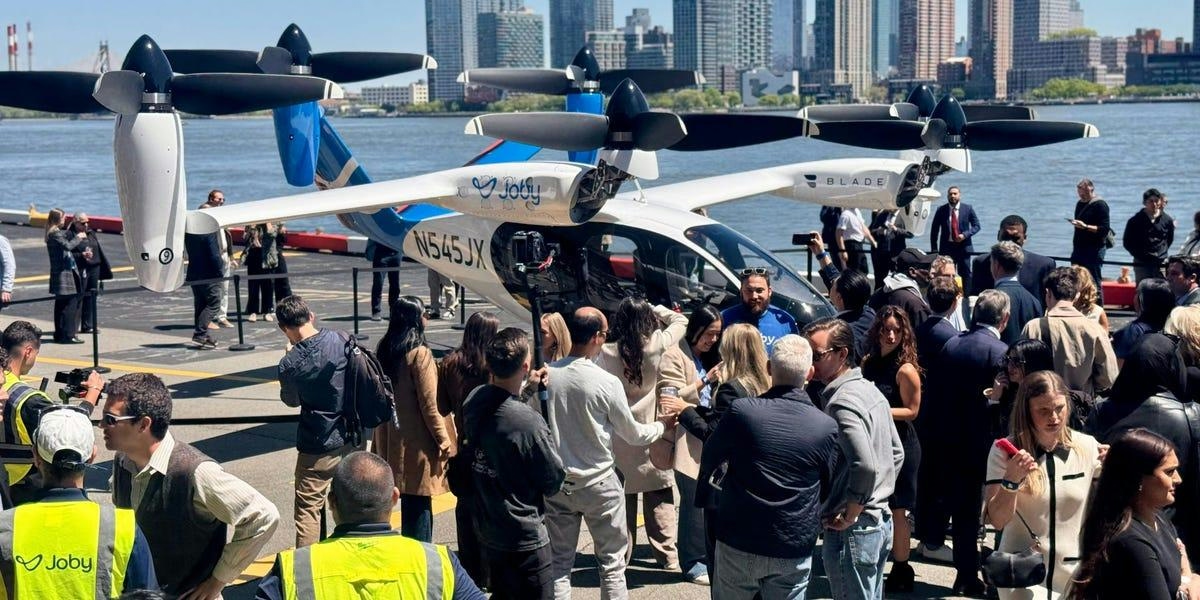
Three American aerospace startups—Joby Aviation, Archer Aviation, and Beta Technologies—are engaged in a competitive race to realize the promise of flying taxis, each presenting a unique vision for the future of urban air mobility. Over recent years, these companies have showcased their electric vertical takeoff and landing (eVTOL) prototypes at global industry events, positioning their aircraft as quieter, cleaner, and potentially more cost-effective alternatives to traditional helicopters.
Having observed all three vehicles both on the ground and in flight, it is evident how these wide-winged, trunk-like aircraft could revolutionize daily commutes or provide rapid transit from congested city centers to airports. The eVTOLs demonstrate smooth flight characteristics and operate with significantly less noise than conventional helicopters or fuel-powered airplanes. The overarching concept envisions a network of low-altitude air corridors connecting airports, neighboring towns, and major events such as the Olympics.
Progress and Challenges in Certification and Commercialization
Despite promising technological advancements, substantial obstacles remain. None of the three aircraft have yet secured full certification from aviation authorities, a prerequisite for regular passenger service. Joby Aviation and Archer Aviation aim to commence commercial operations as early as this year, while Beta Technologies projects a longer timeline extending several years into the future. All three companies are participants in a U.S. Department of Transportation initiative designed to accelerate the integration of electric air taxis into national airspace.
The path to certification and commercialization is further complicated by legal disputes among the companies, which threaten to delay regulatory approvals and have dampened investor confidence. Although the Trump administration’s eVTOL Integration Pilot Program sought to expedite development, shares of Joby, Archer, and Beta have declined sharply this year—falling between 30% and 40% since January—as financial markets shift focus from technological milestones to concrete evidence of certification and commercial viability.
Divergent Strategies and Market Outlook
Each company is pursuing a distinct strategy. Joby Aviation, with a market capitalization near $9 billion, has made significant strides, including securing Federal Aviation Administration (FAA) approval for flights in ten states and securing an exclusive agreement to operate in Dubai beginning in 2026. Archer and Beta, each valued at approximately $4 billion, continue to refine their prototypes and advance through rigorous testing and regulatory scrutiny.
Beyond certification, these startups face the challenge of raising substantial capital, developing the necessary infrastructure, and gaining public acceptance. Achieving affordable fares and establishing comprehensive infrastructure will be critical for flying taxis to become a viable option for urban travel, whether for daily errands or commuting to work.
As these companies advance, the race to launch flying taxis remains fraught with uncertainty. The coming years will determine whether Joby, Archer, or Beta can surmount the legal, regulatory, and financial challenges to transform the futuristic vision of urban air mobility into reality.

Etihad Airways Suspends Airbus A380 Flights on Key Route

Aditya Birla Group Seeks Approval for Aircraft Leasing in GIFT City

Qatar Airways Highlights Innovation and Connectivity at Arabian Travel Market 2026

Hong Kong's Five-Year Plan Includes Andrew Fan's Aircraft Parts Processing Hub Proposal

ACIA Aero Leasing Delivers ATR72-600 to Air Nostrum

RTX Appoints Jill Albertelli as Head of Pratt & Whitney

TAT Technologies Joins Beyond Aero Hydrogen Aircraft Program

AURAK Study Highlights Barriers to Air Taxi Adoption in Emerging Economies

Xiamen Air Selects Altitude for 787 Maintenance at Heathrow

Etihad and Swissport Extend Global Partnership
