
KI-Erkenntnisse in konkrete Maßnahmen überführen

Trends
Categories
A. Lulki Design Bureau Awaits Development of Anti-Gravity Engines for Fighters
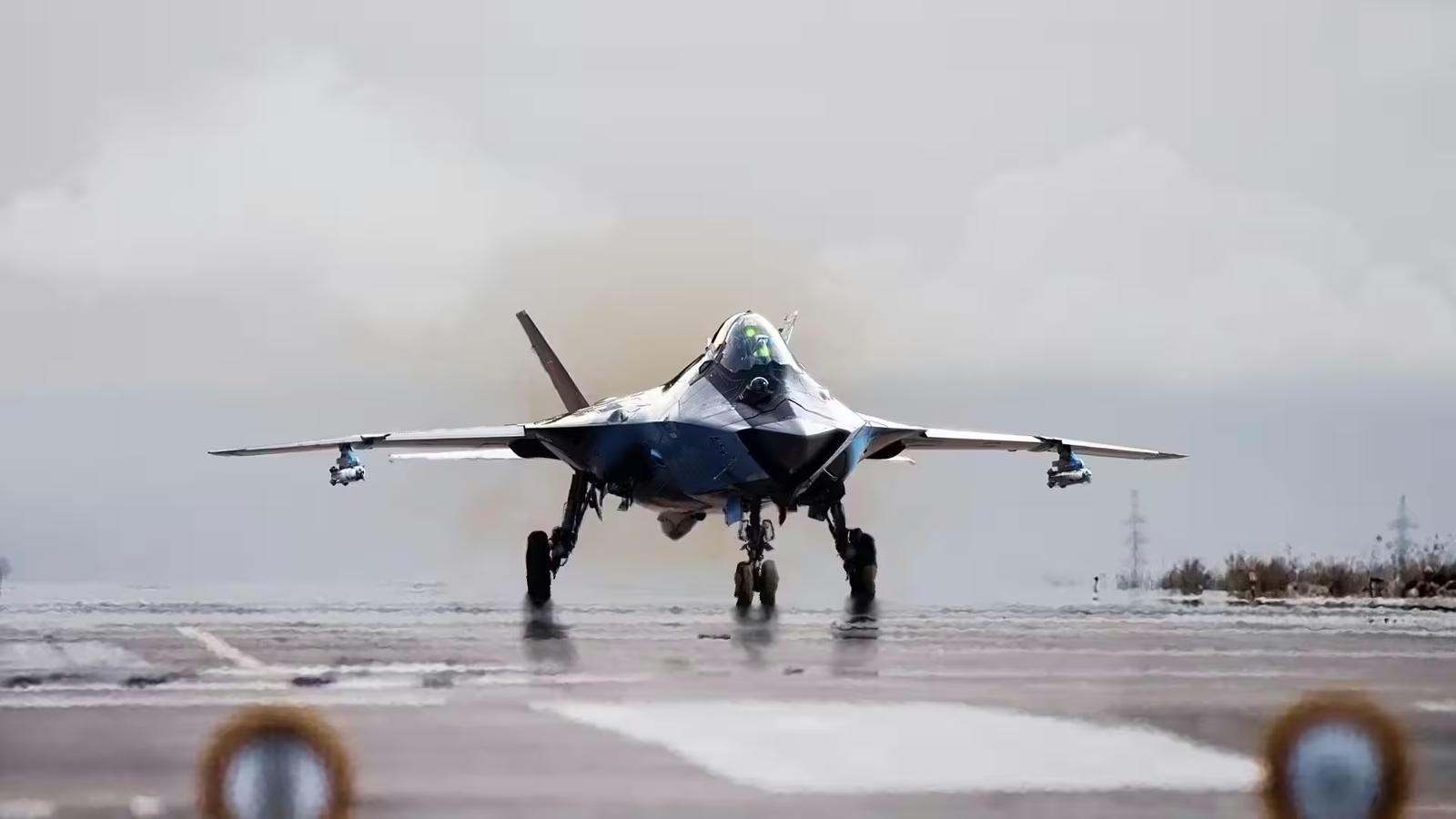
A. Lulki Design Bureau Anticipates Breakthroughs with Anti-Gravity Engines for Fighter Aircraft
The A. Lulki Design Bureau, a prominent division within the United Engine Corporation (UEC), is preparing for a transformative shift in fighter aircraft propulsion. Evgeny Marchukov, the bureau’s General Designer, emphasized that while current combat aircraft engines have service lives extending up to 50 years, the future of aviation power plants lies in fundamentally new physical principles. He envisions anti-gravity engines—operating not through conventional reactive thrust but via the interaction of fields—as the next significant advancement in aerospace technology.
Marchukov drew parallels between this prospective innovation and the revolutionary insights of Einstein, underscoring the necessity of forward-looking research in engine development. “It is already necessary to look into the future and think about promising engines,” he stated, highlighting the bureau’s commitment to pioneering technologies beyond the present paradigm.
Technological Achievements and Ongoing Challenges
The bureau has made notable progress in propulsion technology, including the development of controlled thrust vectoring, a capability credited to domestic engineers. Despite these advances, Marchukov acknowledged persistent technical challenges, particularly in maintaining the stable operation of the low-pressure compressor and the engine as a whole. He remarked on the complexity of these tasks, noting that such engineering feats are rare even among foreign competitors. “Perhaps, therefore, I assume that our foreign colleagues do not have such pirouettes on airplanes. It’s not that simple, but we succeeded, and we will continue to develop this technology,” he explained.
Currently, Russia’s most advanced fighter engine, known as “Product 30” or the “second stage” engine, exemplifies the bureau’s capabilities. This engine achieves a thrust-to-weight ratio of 1.36 and delivers 18,000 kgf in afterburner mode, setting a high benchmark for modern combat aircraft propulsion.
Competitive and Collaborative Landscape
Despite its ambitions, the Lulki Design Bureau faces significant competition from established aerospace firms such as Dassault, which is advancing its Vortex spaceplane project. Market responses to anti-gravity propulsion remain cautious, with some investors expressing skepticism regarding its feasibility and practical application in conventional fighter jets. Meanwhile, traditional aerospace companies continue to invest heavily in proven propulsion technologies, even as they explore emerging concepts like hypersonic engines.
International collaboration further complicates the bureau’s prospects. The challenges encountered by the French-German fighter program illustrate the difficulties inherent in multinational defense projects, potentially impacting Lulki’s partnerships and funding avenues.
As the aerospace sector advances, the Lulki Design Bureau’s pursuit of anti-gravity engines embodies both the ambition and uncertainty that accompany efforts to redefine the future of aviation technology.

Etihad Airways Suspends Airbus A380 Flights on Key Route

Aditya Birla Group Seeks Approval for Aircraft Leasing in GIFT City

Qatar Airways Highlights Innovation and Connectivity at Arabian Travel Market 2026

Hong Kong's Five-Year Plan Includes Andrew Fan's Aircraft Parts Processing Hub Proposal

ACIA Aero Leasing Delivers ATR72-600 to Air Nostrum

RTX Appoints Jill Albertelli as Head of Pratt & Whitney

TAT Technologies Joins Beyond Aero Hydrogen Aircraft Program

AURAK Study Highlights Barriers to Air Taxi Adoption in Emerging Economies

Xiamen Air Selects Altitude for 787 Maintenance at Heathrow

Etihad and Swissport Extend Global Partnership
