
KI-Erkenntnisse in konkrete Maßnahmen überführen

Trends
Categories
AAIB Remains Silent on Stabilizer Motor Failure Hours Before Air India Flight 171 Crash
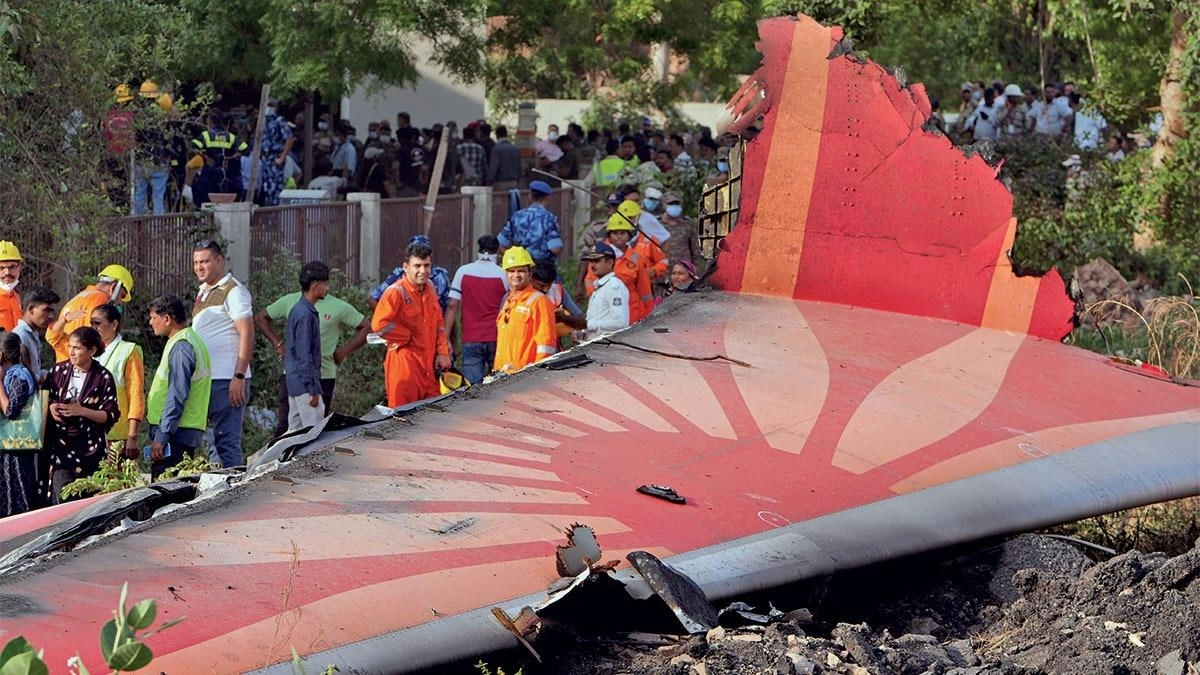
AAIB Omits Key Stabilizer Motor Failure in Air India Flight 171 Investigation
The Aircraft Accident Investigation Bureau (AAIB) has come under scrutiny for its failure to disclose a significant stabilizer motor fault that occurred just hours before the crash of Air India Flight 171. This omission raises serious questions about the thoroughness and transparency of the official investigation into the disaster.
Unreported Mechanical Faults Prior to the Crash
On June 12, 2025, the Boeing 787 Dreamliner registered as VT-ANB, operating as Air India Flight 171, had previously experienced a hard landing in Ahmedabad earlier that day while flying as AI 423 from Delhi. Maintenance records reviewed reveal a pattern of recurring faults throughout the day, beginning with the morning flight’s landing and culminating in electrical faults detected mere minutes before Flight 171’s ill-fated departure.
The AAIB report acknowledges a stabilizer trim sensor issue, referencing a Pilot Defect Report entry for a “STAB POS XDCR” status message. This sensor, known as the Stabilizer Position Transducer (SPT), plays a crucial role in providing flight computers and pilots with real-time data on the aircraft’s tail position, essential for maintaining pitch control during takeoff and landing. Faults in this sensor can severely compromise aircraft handling.
However, exclusive evidence obtained reveals that the problem extended beyond the sensor alone. The Aircraft Health Management (AHM) report sent to Boeing at 9:48 am IST on the day of the crash indicated that the electronic control box powering the right stabilizer motor was also malfunctioning and required replacement. This critical mechanical failure was notably absent from the AAIB’s published findings, prompting concerns about the completeness of the investigation.
Implications for Aviation Safety and Public Trust
The omission of the stabilizer motor fault has sparked widespread criticism from aviation experts and the public alike, who question whether all contributing factors to the crash have been fully disclosed. This lack of transparency risks undermining confidence not only in the investigative process but also in Air India’s operational safety standards.
Market analysts suggest that competing airlines may leverage this moment of uncertainty to emphasize their own safety protocols and incident response capabilities, aiming to reassure passengers and distinguish themselves amid growing apprehension.
Meanwhile, the human cost of the tragedy remains deeply felt. Vishwashkumar Ramesh, the sole survivor of the crash, has described himself as the “luckiest man alive,” yet his ongoing struggle with trauma highlights the enduring impact of the disaster and the pressing need for accountability in aviation safety.
As the investigation proceeds, the unresolved issue of the stabilizer motor failure stands as a pivotal concern. Its handling will likely influence regulatory actions and shape public confidence in India’s aviation sector moving forward.

Etihad Airways Suspends Airbus A380 Flights on Key Route

Aditya Birla Group Seeks Approval for Aircraft Leasing in GIFT City

Qatar Airways Highlights Innovation and Connectivity at Arabian Travel Market 2026

Hong Kong's Five-Year Plan Includes Andrew Fan's Aircraft Parts Processing Hub Proposal

ACIA Aero Leasing Delivers ATR72-600 to Air Nostrum

RTX Appoints Jill Albertelli as Head of Pratt & Whitney

TAT Technologies Joins Beyond Aero Hydrogen Aircraft Program

AURAK Study Highlights Barriers to Air Taxi Adoption in Emerging Economies

Xiamen Air Selects Altitude for 787 Maintenance at Heathrow

Etihad and Swissport Extend Global Partnership
