
KI-Erkenntnisse in konkrete Maßnahmen überführen

Trends
Categories
Advances in Aerospace Engineering Enhance Jet Engine Efficiency
Advances in Aerospace Engineering Enhance Jet Engine Efficiency
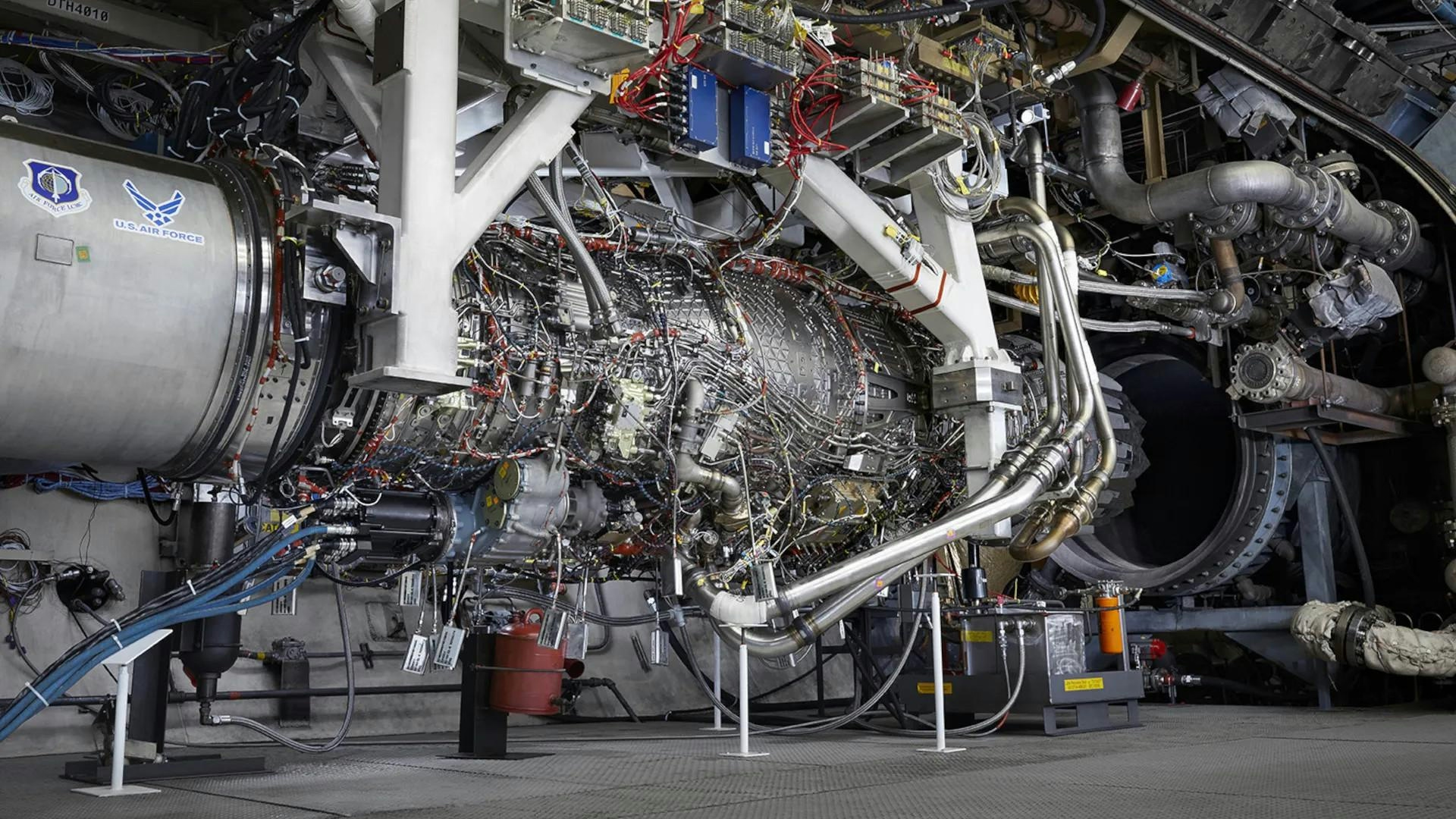
Modern aviation increasingly depends on the development of more efficient jet engines to reduce fuel consumption, lower operational costs, and promote environmental sustainability. Recent breakthroughs in aerospace engineering have transformed the design, manufacturing, and maintenance of jet engines. Engineers have introduced advanced technologies and innovative materials that enable engines to generate greater power while consuming less fuel. These improvements not only benefit airlines economically but also enhance passenger safety and overall flight performance.
Engineering Innovations and Material Advances
Aerospace engineering combines principles from physics, thermodynamics, material science, and mechanical engineering to optimize aircraft systems, with a particular focus on jet engine development. Engineers strive to increase thrust, reduce drag, and maximize fuel efficiency by meticulously designing every engine component to endure extreme temperatures and pressures. The use of advanced computer simulations and aerodynamic testing has refined airflow through compressors, turbines, and combustion chambers, where even minor enhancements can significantly boost engine performance and reduce fuel waste.
A pivotal advancement in this field is the adoption of lightweight, heat-resistant materials. Modern jet engines increasingly incorporate titanium alloys, ceramic coatings, and composite materials such as titanium aluminide, which withstand the harsh conditions of engine operation. These materials contribute to reducing engine weight, lowering fuel consumption, and enhancing durability, thereby minimizing maintenance requirements. For instance, turbine blades now feature specialized heat-resistant coatings that allow engines to operate at higher temperatures, achieving greater thermal efficiency.
Despite these benefits, integrating advanced materials presents considerable manufacturing and cost challenges. The aerospace industry is accelerating the adoption of materials like titanium aluminide, with significant growth anticipated by 2036. Manufacturers must carefully balance the efficiency gains against the complexities and expenses associated with new production processes.
Aerodynamics, Market Dynamics, and Digital Integration
Aerodynamics remain central to improving jet engine efficiency. Engineers design compressor blades, fan systems, and air intake sections to optimize airflow, with modern high-bypass turbofan engines moving larger volumes of air more efficiently. This results in increased thrust, reduced fuel consumption, and lower noise emissions. Enhanced blade geometry minimizes turbulence, ensuring stable airflow and smoother engine operation. These aerodynamic improvements contribute to making engines more efficient and environmentally friendly.
The market has responded positively to these technological advances. Companies such as Safran report robust engine shipment figures and maintain an optimistic outlook despite geopolitical tensions. Meanwhile, competitors like General Electric are pursuing innovations including foam wash systems and hybrid-electric powertrains to further enhance operational efficiency and maintain market share.
In addition to mechanical and material innovations, aerospace engineers are advancing combustion technologies to maximize energy output while minimizing emissions. Modern engines employ precise fuel injection systems that enable cleaner and more complete combustion, assisting airlines in reducing fuel costs and complying with stringent environmental regulations. The industry is also exploring sustainable aviation fuels and hybrid engine technologies as avenues for future improvement.
Digital technologies and artificial intelligence have become integral to jet engine performance management. Contemporary engines are equipped with sensors that continuously monitor parameters such as temperature, pressure, vibration, and fuel consumption in real time. This data-driven approach facilitates proactive maintenance and ongoing optimization of engine efficiency.
As aerospace engineering continues to evolve, the integration of advanced materials, aerodynamic innovations, and digital technologies is poised to further enhance jet engine efficiency, shaping the trajectory of sustainable aviation.

Etihad Airways Suspends Airbus A380 Flights on Key Route

Aditya Birla Group Seeks Approval for Aircraft Leasing in GIFT City

Qatar Airways Highlights Innovation and Connectivity at Arabian Travel Market 2026

Hong Kong's Five-Year Plan Includes Andrew Fan's Aircraft Parts Processing Hub Proposal

ACIA Aero Leasing Delivers ATR72-600 to Air Nostrum

RTX Appoints Jill Albertelli as Head of Pratt & Whitney

TAT Technologies Joins Beyond Aero Hydrogen Aircraft Program

AURAK Study Highlights Barriers to Air Taxi Adoption in Emerging Economies

Xiamen Air Selects Altitude for 787 Maintenance at Heathrow

Etihad and Swissport Extend Global Partnership
