
KI-Erkenntnisse in konkrete Maßnahmen überführen

Trends
Categories
Air Canada Increases Widebody Flights to the U.S. by 35% This Summer
Air Canada Increases Widebody Flights to the U.S. by 35% This Summer
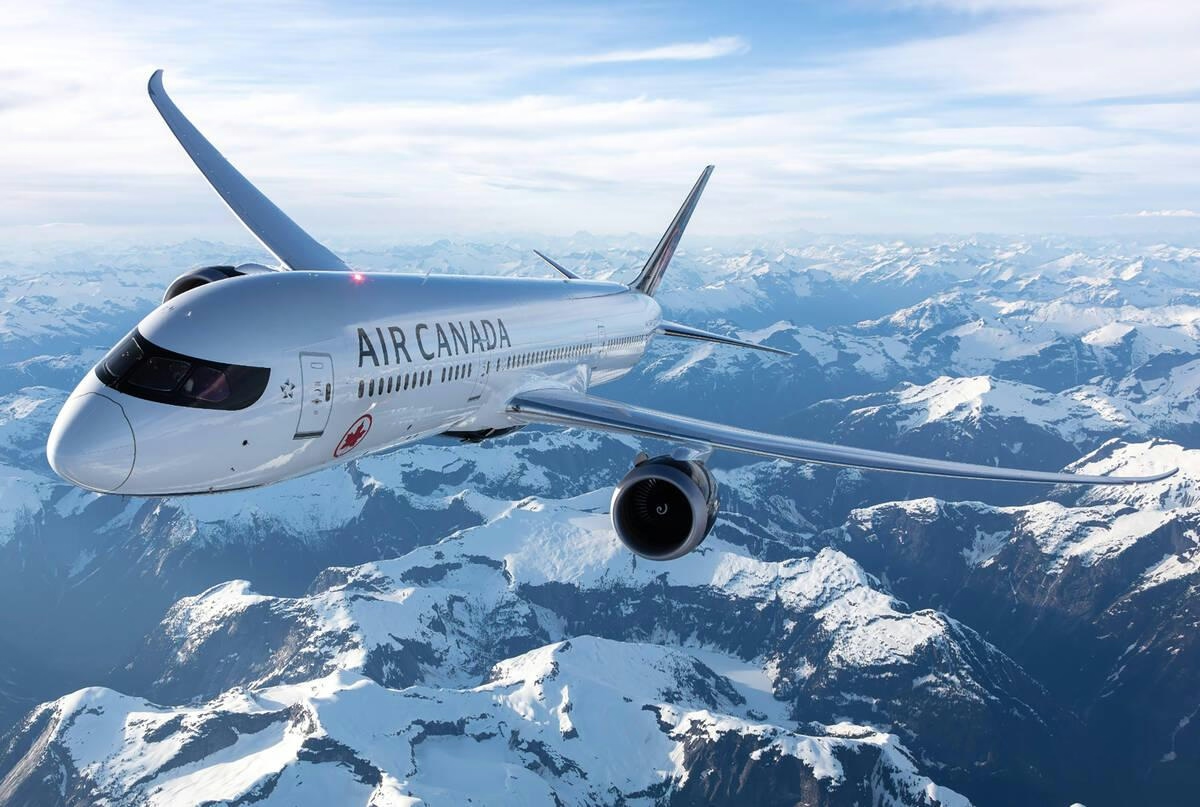
Air Canada is significantly expanding its widebody flight operations to the United States this summer, increasing capacity by 35 percent compared to the same period last year. Data from aviation analytics firm Cirium reveals that the Canadian flag carrier will operate 188 one-way widebody flights on transborder routes in the third quarter of 2024, up from 139 in the third quarter of 2023. This growth, concentrated primarily on two key routes, underscores Air Canada’s strategic effort to bolster its presence in the highly competitive U.S. market amid ongoing industry challenges.
Focused Expansion on Vancouver–Newark and Toronto–Los Angeles Routes
The majority of Air Canada’s increased widebody service will be deployed on the Vancouver–Newark and Toronto–Los Angeles corridors. Between Vancouver International Airport (YVR) and Newark Liberty International Airport (EWR), Air Canada will operate daily Boeing 787-9 flights. Covering a distance of 2,961 miles in just over five hours, these flights depart Vancouver in the morning and arrive in Newark by late afternoon. This route faces direct competition from JetBlue’s year-round Vancouver–JFK service and United Airlines’ seasonal Vancouver–Newark flights, highlighting the competitive dynamics Air Canada must navigate.
On the Toronto Pearson International Airport (YYZ) to Los Angeles International Airport (LAX) route, Air Canada will offer up to two daily widebody flights on select days, utilizing Boeing 787-8, 787-9, or 777-200LR aircraft. This corridor, one of Toronto’s busiest transborder routes, also features service from Porter Airlines, which operates narrowbody Embraer E195-E2 jets. The non-stop journey spans 2,172 miles and takes up to five hours, making it a critical link in Air Canada’s transborder network.
Operational Challenges and Competitive Landscape
Air Canada’s widebody expansion occurs amid a complex industry environment marked by intense competition and operational hurdles. Major U.S. carriers, including American Airlines, are reportedly considering substantial widebody aircraft orders to keep pace with rivals such as Delta Air Lines and United Airlines. Internationally, Etihad Airways is also expanding its widebody fleet in anticipation of returning to pre-pandemic capacity levels.
At the same time, Air Canada is facing delays in the delivery of its new Airbus A321XLR jets. These setbacks may constrain the airline’s ability to fully capitalize on its increased widebody capacity, particularly as it seeks to optimize its fleet deployment across both transborder and long-haul international routes.
Market Outlook and Strategic Implications
Despite these challenges, Air Canada and other Canadian carriers remain optimistic about growth prospects in the U.S. market. This positive outlook persists even as overall travel demand shows signs of softening, partly influenced by ongoing political tensions between Canada and the United States. Cirium data indicates that in the third quarter of 2025, Air Canada operated a comparable number of widebody flights to the U.S., with the Toronto–Los Angeles route continuing to be a focal point, including select dates featuring double-daily widebody service.
As Air Canada expands its widebody footprint south of the border, its ability to manage competitive pressures and operational complexities will be critical to sustaining momentum throughout the busy summer travel season.

Hong Kong's Five-Year Plan Includes Andrew Fan's Aircraft Parts Processing Hub Proposal

ACIA Aero Leasing Delivers ATR72-600 to Air Nostrum

RTX Appoints Jill Albertelli as Head of Pratt & Whitney

TAT Technologies Joins Beyond Aero Hydrogen Aircraft Program

AURAK Study Highlights Barriers to Air Taxi Adoption in Emerging Economies

Xiamen Air Selects Altitude for 787 Maintenance at Heathrow

Etihad and Swissport Extend Global Partnership

Sepehran Airlines B737 Returns to Mashhad After Tyre and Engine Issues

Etihad Deploys Widebody Fleet to Meet Strong Demand

Korean Air Finalizes $36.2 Billion Deal with Boeing
