
KI-Erkenntnisse in konkrete Maßnahmen überführen

Trends
Categories
Air Canada Orders Airbus A350-1000 to Update Fleet
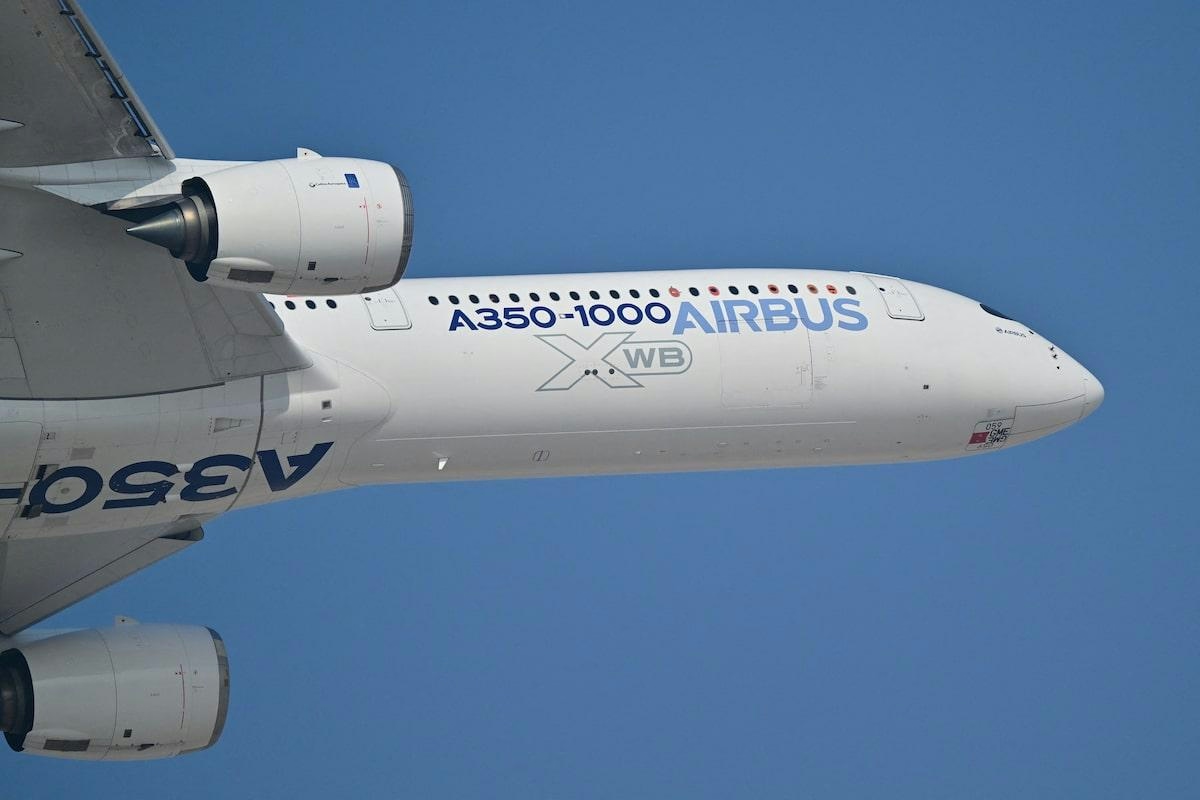
Air Canada Orders Airbus A350-1000 to Modernize Fleet Amid Financial and Competitive Pressures
Air Canada has announced a significant fleet modernization initiative with an order for eight Airbus A350-1000 aircraft, along with options for an additional eight planes. The deal, valued at up to $3 billion if fully exercised, aims to enhance the airline’s cost efficiency and passenger experience. Deliveries are expected to commence in the second half of 2030. This acquisition complements Air Canada’s existing commitments to 30 Airbus A321XLRs, 23 Airbus A220s, and 14 Boeing 787-10 Dreamliners, reflecting a comprehensive strategy to update its fleet and maintain competitiveness in the global aviation market.
As Canada’s largest airline, Air Canada, together with its low-cost subsidiary Rouge and regional partners, serves nearly 50 million passengers annually. The carrier plays a pivotal role as a sixth-freedom operator, facilitating long-haul travel between the United States and international destinations through Canadian hubs.
Financial Health and Market Position
Air Canada’s recent financial performance reveals a mixed outlook. The airline has experienced a robust revenue growth of 48.1% over the past three years, indicating a strong recovery trajectory following pandemic-related disruptions. Despite this growth, profitability remains constrained, with a gross margin of 21.14%, an operating margin of 1.55%, and a net margin of -1.35%. The company’s financial leverage is considerable, as evidenced by a debt-to-equity ratio of 5.4. Liquidity ratios, including a current ratio of 0.59 and a quick ratio of 0.56, suggest potential short-term financial constraints. Furthermore, an Altman Z-Score of 0.64 places Air Canada within the financial distress zone, signaling possible challenges ahead.
From a valuation standpoint, the airline’s price-to-sales ratio stands at 0.3, below its historical median of 0.4, indicating modest undervaluation. The price-to-book ratio of 2.66 also remains below its historical median. Analyst consensus reflects a moderate buy sentiment, with an average recommendation rating of 2.2. Technical indicators, such as a relative strength index (RSI) of 59.44 and a slightly elevated 20-day simple moving average (SMA-20), point to a neutral trading trend.
Competitive and Operational Challenges
The introduction of the Airbus A350-1000 aircraft entails substantial upfront capital expenditure and ongoing maintenance costs, which may place additional pressure on Air Canada’s balance sheet. The integration of these new widebody jets will require extensive logistical coordination and staff retraining, adding layers of operational complexity.
The order also occurs within a highly competitive environment. Other major carriers, including Delta Air Lines, have similarly invested in Airbus A350 aircraft, intensifying competition on key international routes. Additionally, rival airlines such as Air Cambodia have pursued fleet modernization through orders for Boeing 737 Max aircraft, underscoring a broader industry trend toward upgrading fleets to improve efficiency and passenger appeal.
Risk Assessment
Investors should be mindful of Air Canada’s elevated risk profile. The stock exhibits high volatility, with a beta of 2.09, and the airline remains vulnerable to sector-specific risks such as fluctuating fuel prices and evolving regulatory frameworks. The Beneish M-Score of -2.94 indicates a low probability of earnings manipulation, yet the company’s financial metrics and the challenging industry environment warrant cautious consideration.
As Air Canada advances its fleet renewal program, its capacity to manage costs effectively, integrate new aircraft seamlessly, and navigate an increasingly competitive landscape will be crucial to sustaining its recovery and achieving long-term growth.

Etihad Airways Suspends Airbus A380 Flights on Key Route

Aditya Birla Group Seeks Approval for Aircraft Leasing in GIFT City

Qatar Airways Highlights Innovation and Connectivity at Arabian Travel Market 2026

Hong Kong's Five-Year Plan Includes Andrew Fan's Aircraft Parts Processing Hub Proposal

ACIA Aero Leasing Delivers ATR72-600 to Air Nostrum

RTX Appoints Jill Albertelli as Head of Pratt & Whitney

TAT Technologies Joins Beyond Aero Hydrogen Aircraft Program

AURAK Study Highlights Barriers to Air Taxi Adoption in Emerging Economies

Xiamen Air Selects Altitude for 787 Maintenance at Heathrow

Etihad and Swissport Extend Global Partnership
