
KI-Erkenntnisse in konkrete Maßnahmen überführen

Trends
Categories
Air Canada Suspends Airbus A321XLR Transatlantic Service After Weeks of Operation
Air Canada Suspends Airbus A321XLR Transatlantic Service After Weeks of Operation
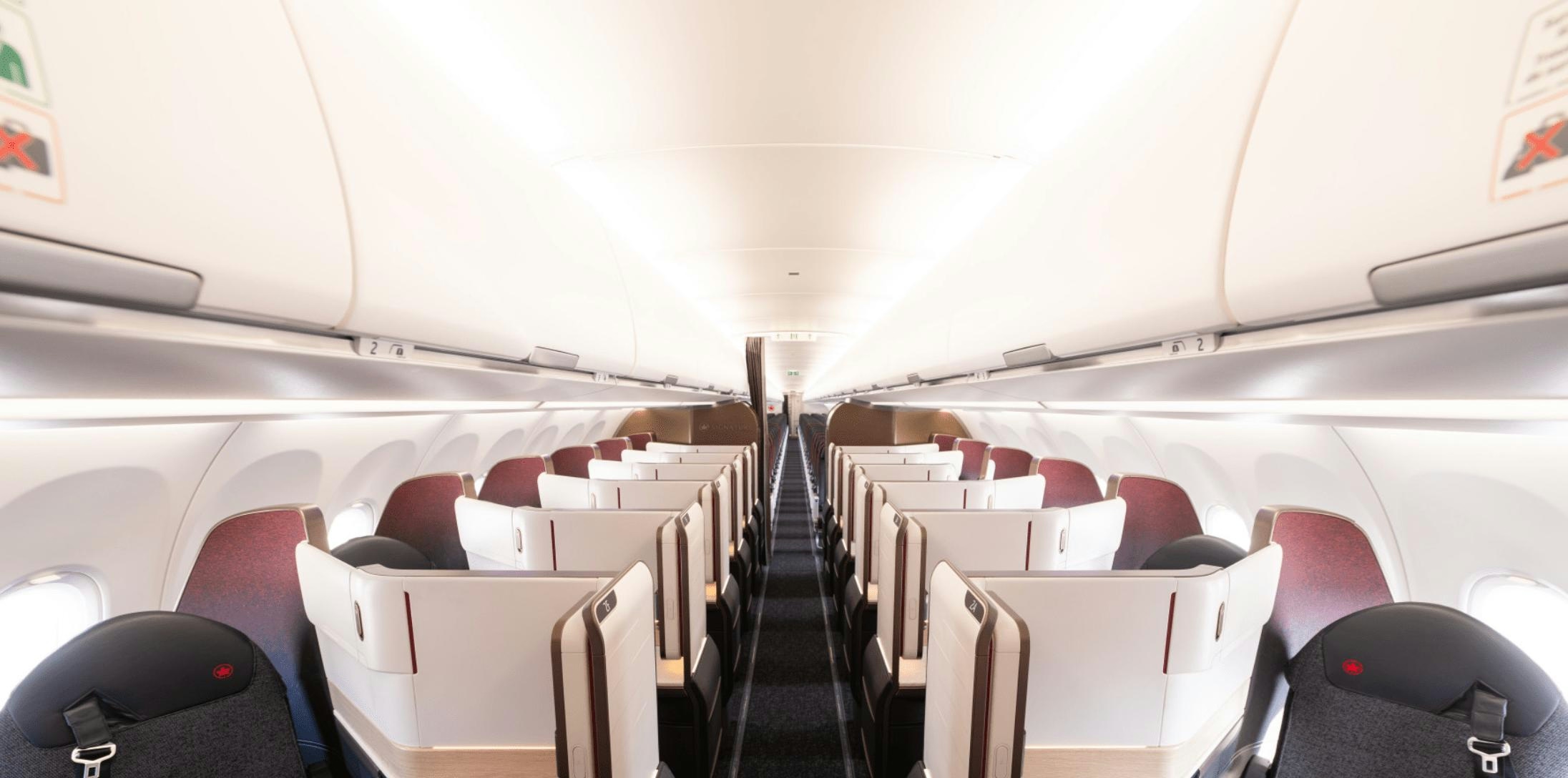
Air Canada has quietly withdrawn the Airbus A321XLR from its prominent Toronto Pearson (YYZ) to London Heathrow (LHR) route, mere weeks after introducing the single-aisle aircraft on this key transatlantic corridor. This decision reinstates the use of twin-aisle Boeing 777 and 787 Dreamliner aircraft, underscoring the operational challenges airlines encounter when attempting to replace widebody jets with long-range narrowbodies on established, high-demand routes.
Operational Challenges and Capacity Constraints
The initial deployment of the A321XLR on flight AC852 was regarded as a progressive move aimed at enhancing fuel efficiency and reducing operational costs. The aircraft’s design offers up to 30% lower fuel consumption per seat compared to older long-haul jets, and its extended range of 4,700 nautical miles (8,704 km) promised increased flexibility for route planning. However, the practicalities of operating at congested mega-hubs such as London Heathrow soon revealed significant limitations.
The A321XLR’s dual-class layout accommodates only 182 passengers, a substantial decrease from the 297 to 400 seats available on the widebody Boeing 777-300ER and Airbus A330-300 previously serving the route. This reduction in seating capacity directly restricts revenue potential on a corridor characterized by robust business travel and extensive connecting traffic from across Canada. More importantly, the single-aisle aircraft lacks the underfloor cargo capacity inherent to widebodies, curtailing its ability to transport high-margin, palletized freight—a vital revenue source on major transatlantic routes.
Industry Implications and Market Dynamics
Air Canada’s experience highlights a broader industry dilemma: while single-aisle long-haul aircraft like the A321XLR offer attractive economics on thinner or secondary routes, they fall short of matching the revenue-generating capabilities of widebodies on mature trunk lines. The combination of limited passenger capacity and reduced cargo space diminishes the viability of narrowbodies on routes where maximizing every seat and cargo slot is critical.
This strategic withdrawal also emphasizes the importance of meticulous dispatch planning and dynamic seasonal route management when integrating long-range single-aisle jets into an airline’s network. The A321XLR’s advantages may be better leveraged on routes with inconsistent widebody demand or in secondary markets where fewer seats and lower operating costs can yield profitability.
Competition further complicates the transatlantic market landscape. Carriers such as Air Transat continue to adjust their offerings, while North American airlines including United and American closely monitor Air Canada’s experience as they evaluate the deployment of their own A321XLR fleets. The outcomes of these decisions on flagship routes like Toronto–London are likely to influence the broader strategy for single-aisle international expansion across the North Atlantic.
Ultimately, Air Canada’s suspension of the A321XLR on its premier transatlantic service signals that widebody aircraft remain indispensable for capturing both passenger and cargo revenues on the busiest corridors. The future role of long-range narrowbodies appears to lie in carefully selected markets rather than as direct replacements for widebodies on high-yield, slot-constrained routes.

Etihad Airways Suspends Airbus A380 Flights on Key Route

Aditya Birla Group Seeks Approval for Aircraft Leasing in GIFT City

Qatar Airways Highlights Innovation and Connectivity at Arabian Travel Market 2026

Hong Kong's Five-Year Plan Includes Andrew Fan's Aircraft Parts Processing Hub Proposal

ACIA Aero Leasing Delivers ATR72-600 to Air Nostrum

RTX Appoints Jill Albertelli as Head of Pratt & Whitney

TAT Technologies Joins Beyond Aero Hydrogen Aircraft Program

AURAK Study Highlights Barriers to Air Taxi Adoption in Emerging Economies

Xiamen Air Selects Altitude for 787 Maintenance at Heathrow

Etihad and Swissport Extend Global Partnership
