
KI-Erkenntnisse in konkrete Maßnahmen überführen

Trends
Categories
Airbus Adjusts 2025 Delivery Targets Due to Supply Issues
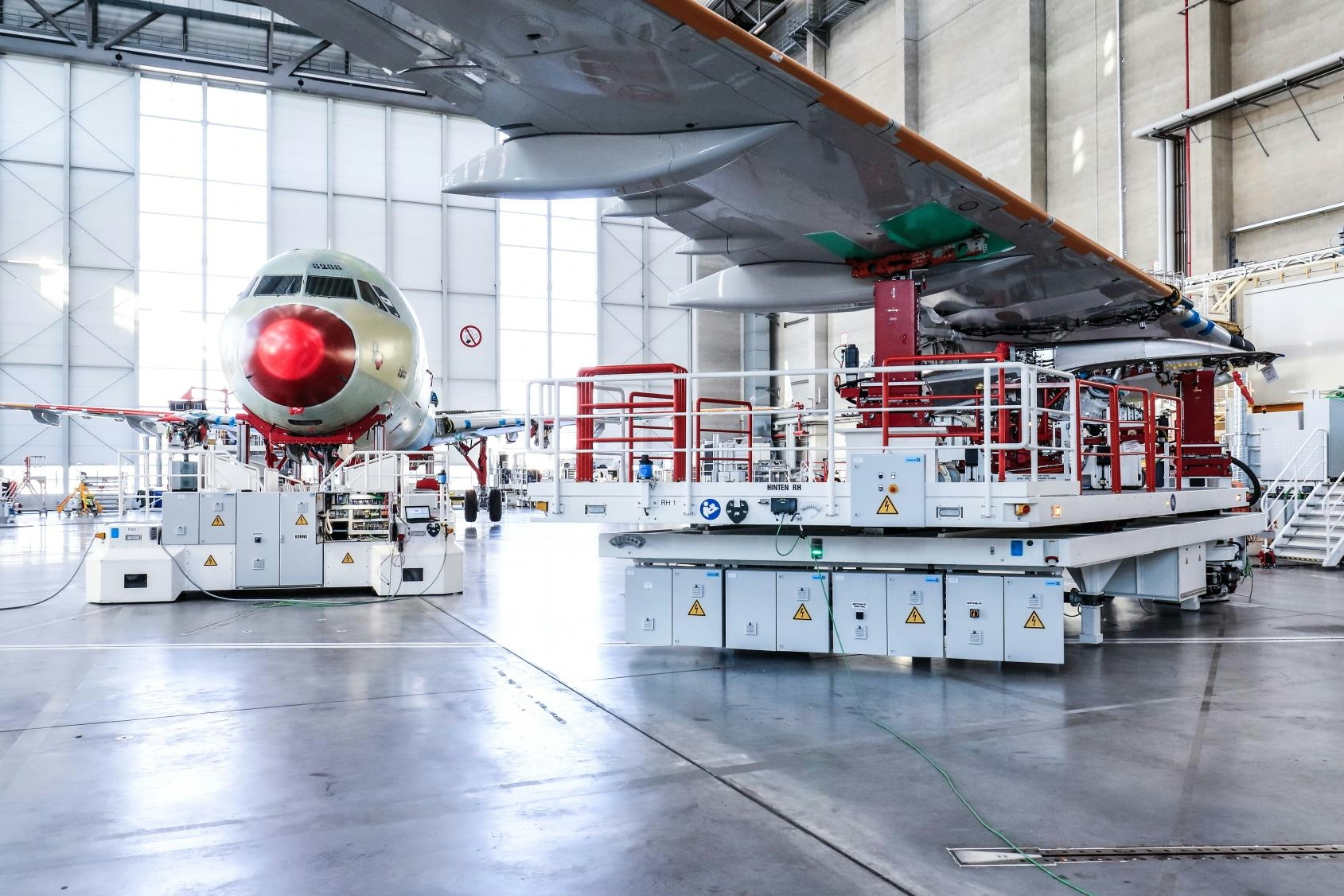
Airbus Revises 2025 Delivery Forecast Amid Supply Chain Disruptions
Airbus has announced a downward revision of its commercial aircraft delivery target for 2025, adjusting the figure to approximately 790 units. This reduction, representing 40 fewer aircraft than initially planned, is attributed to a supplier quality issue involving fuselage panels for its A320 Family jets. Although the problem has been identified and contained, it is expected to slow the delivery pace throughout the coming year.
Despite this adjustment, Airbus has maintained its financial outlook for 2025, reaffirming expectations for an adjusted EBIT of around €7.0 billion and free cash flow before customer financing near €4.5 billion. The company emphasized that the delivery shortfall is primarily a consequence of supply chain disruptions, particularly with fuselage panel suppliers, rather than a decline in market demand.
Supply Chain Challenges and Market Response
While engine deliveries from CFM and Pratt & Whitney have improved, supporting higher production rates for single-aisle aircraft, the fuselage panel issue has created a significant bottleneck. Airbus has achieved a production rate of 75 aircraft per month; however, the gap between production and actual deliveries has persisted throughout the year. This discrepancy has contributed to the need to revise the annual delivery target.
The market reacted swiftly to the announcement, with Airbus shares falling by as much as 10% amid investor concerns over the company’s ability to meet its revised goals. In contrast, Boeing’s stock rose following its pledge of positive cash flow in 2026, highlighting the contrasting trajectories of the two aerospace leaders.
Demand Outlook and Production Challenges
Demand for Airbus aircraft remains strong, with airlines competing for delivery slots well into the next decade. The company’s substantial backlog suggests that the reduction in deliveries for 2025 will likely result in a shift of revenue and cash flow to subsequent years rather than a permanent loss. Airbus has indicated that the primary constraint is industrial capacity rather than market appetite.
To meet the revised target, Airbus will need to accelerate deliveries significantly in the final weeks of 2025, aiming to deliver approximately 150 aircraft—double the recent monthly average. While this presents a formidable challenge, ongoing improvements in the supply chain and engine availability provide some grounds for cautious optimism.
As the aerospace sector continues its recovery and suppliers adjust to heightened demand, Airbus remains focused on stabilizing production flow. The company’s capacity to manage supply chain pressures will be crucial in fulfilling its order backlog and sustaining its competitive position against Boeing.
Airbus is scheduled to release its commercial aircraft orders and deliveries data for November 2025 on December 5, a key indicator of its progress toward the revised annual target.

Etihad Airways Suspends Airbus A380 Flights on Key Route

Aditya Birla Group Seeks Approval for Aircraft Leasing in GIFT City

Qatar Airways Highlights Innovation and Connectivity at Arabian Travel Market 2026

Hong Kong's Five-Year Plan Includes Andrew Fan's Aircraft Parts Processing Hub Proposal

ACIA Aero Leasing Delivers ATR72-600 to Air Nostrum

RTX Appoints Jill Albertelli as Head of Pratt & Whitney

TAT Technologies Joins Beyond Aero Hydrogen Aircraft Program

AURAK Study Highlights Barriers to Air Taxi Adoption in Emerging Economies

Xiamen Air Selects Altitude for 787 Maintenance at Heathrow

Etihad and Swissport Extend Global Partnership
