
KI-Erkenntnisse in konkrete Maßnahmen überführen

Trends
Categories
Airbus Advances Efforts to Make Aviation Manufacturing More Sustainable
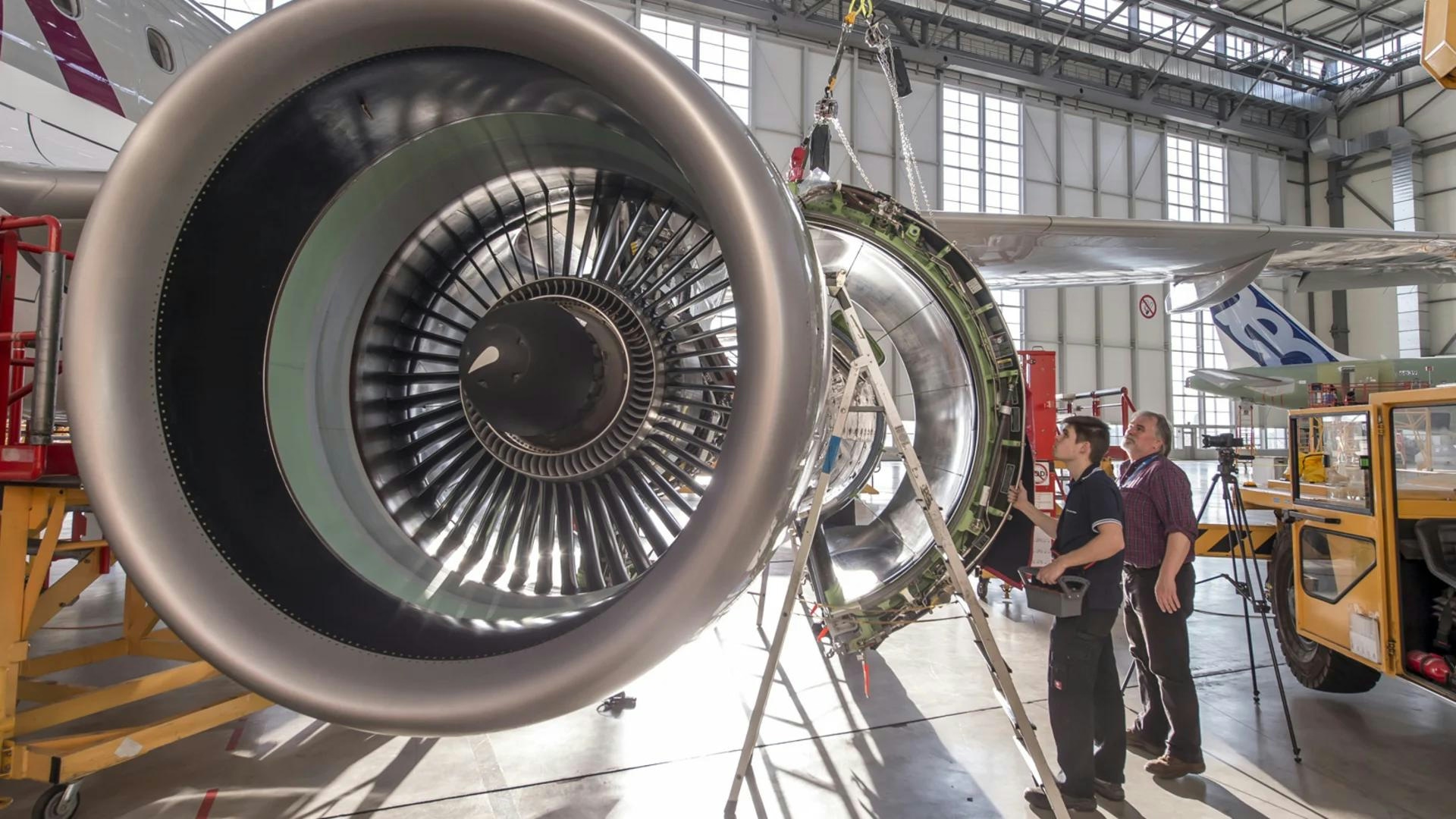
Airbus Advances Efforts to Make Aviation Manufacturing More Sustainable
Ambitious Emission Reduction Targets
Airbus is reinforcing its dedication to sustainability by setting rigorous environmental goals validated by the Science Based Targets initiative (SBTi), as outlined in its 2025 Pioneering Sustainable Aviation report. The company aims to reduce its absolute Scope 1 and 2 greenhouse gas emissions by 63% by 2030, with a commitment to neutralize any remaining emissions thereafter. Furthermore, Airbus targets a 46% reduction in Scope 3 greenhouse gas emissions intensity by 2035, using 2015 as the baseline year. These targets underscore the company’s strategic focus on minimizing its environmental footprint across all operational dimensions.
Commitment to Safety and Sustainable Innovation
Safety remains a fundamental pillar of Airbus’s operations, embedded throughout the design, testing, and production phases of its aircraft, helicopters, and satellites. The company maintains that safeguarding employees, products, and services is an uncompromising priority. Alongside this, Airbus is actively contributing to the aerospace sector’s broader ambition of achieving net zero emissions by 2050. CEO Guillaume Faury emphasized the critical role of expanding production of new, fuel-efficient aircraft to accelerate fleet renewal among airlines. He also highlighted Airbus’s advocacy and investment in sustainable aviation fuels (SAF), which are essential for immediate emissions reductions. Faury reaffirmed that the company’s core values—safety, quality, integrity, compliance, and security—will continue to guide its sustainability initiatives.
Challenges and Industry Implications
Despite its progress, Airbus faces considerable challenges in securing a reliable supply of sustainable aviation fuel and scaling sustainable manufacturing processes. These obstacles remain significant barriers to the company’s sustainability ambitions. Nevertheless, the market response has been encouraging, with airlines increasingly adopting fuel-efficient aircraft. This trend is exemplified by a recent firm order of 30 additional A350-900 jets from an Indian carrier, signaling growing demand for greener aviation solutions.
As Airbus advances its sustainability agenda, competitors such as Boeing and other manufacturers are expected to launch comparable initiatives, reflecting a wider industry shift toward environmentally responsible practices. The race to develop more sustainable aviation technologies is intensifying, with manufacturers, airlines, and regulators collectively shaping the future trajectory of the aviation sector.

Etihad Airways Suspends Airbus A380 Flights on Key Route

Aditya Birla Group Seeks Approval for Aircraft Leasing in GIFT City

Qatar Airways Highlights Innovation and Connectivity at Arabian Travel Market 2026

Hong Kong's Five-Year Plan Includes Andrew Fan's Aircraft Parts Processing Hub Proposal

ACIA Aero Leasing Delivers ATR72-600 to Air Nostrum

RTX Appoints Jill Albertelli as Head of Pratt & Whitney

TAT Technologies Joins Beyond Aero Hydrogen Aircraft Program

AURAK Study Highlights Barriers to Air Taxi Adoption in Emerging Economies

Xiamen Air Selects Altitude for 787 Maintenance at Heathrow

Etihad and Swissport Extend Global Partnership
