
KI-Erkenntnisse in konkrete Maßnahmen überführen

Trends
Categories
Airbus Delivers First A321XLR Amid Rising Orders and Production Challenges
Airbus Delivers First A321XLR Amid Rising Orders and Production Challenges
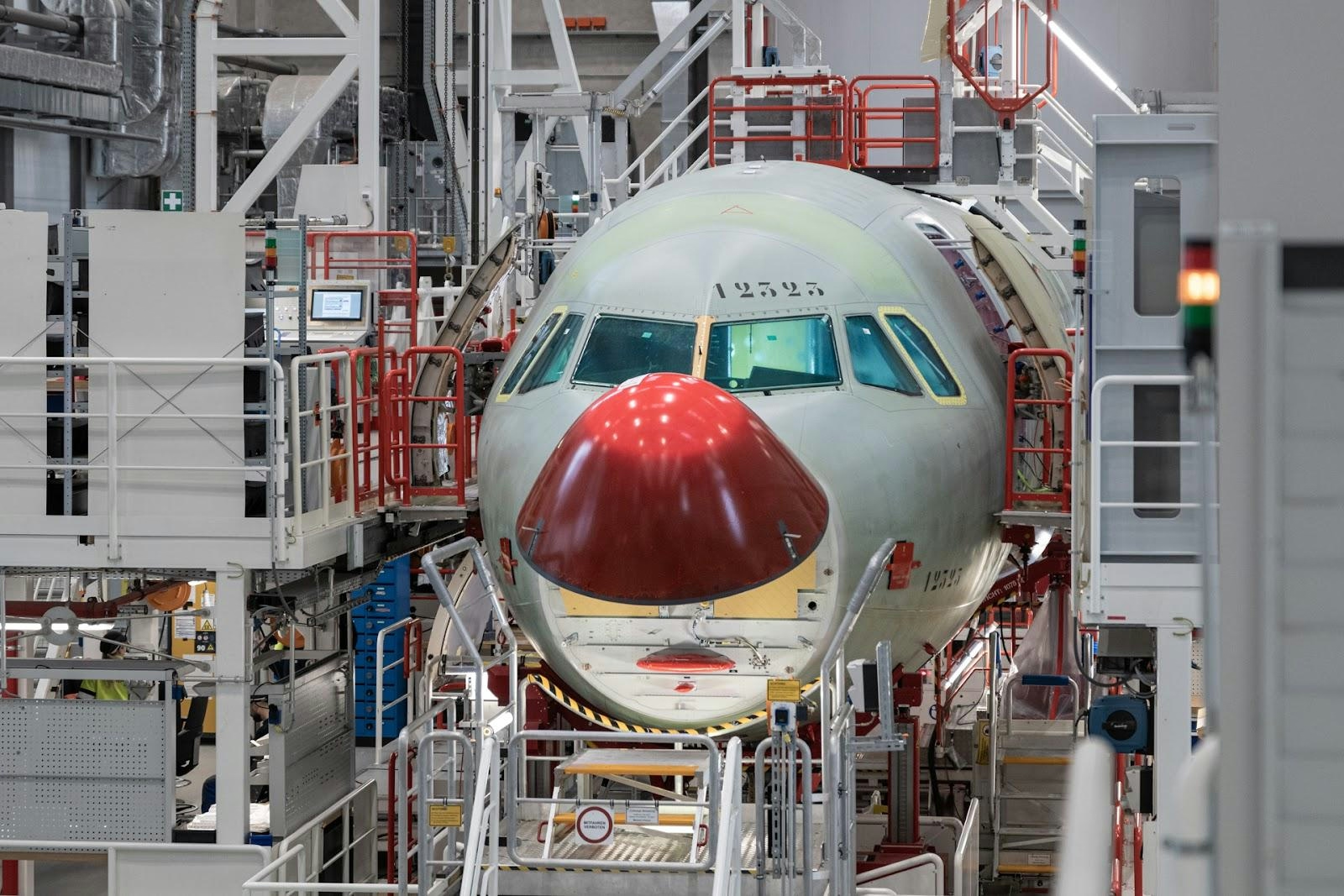
Airbus has officially delivered its first A321XLR, with Saudi Arabian flag carrier Saudia becoming the inaugural operator of the aircraft in the Middle East and Africa. The handover ceremony in Toulouse marks a pivotal moment for both Airbus and Saudia, as the airline embarks on a fleet modernization strategy that replaces widebody jets on less dense international routes with the more fuel-efficient, long-range narrowbody. Saudia has placed an order for 15 A321XLRs, with plans to fully integrate the aircraft into its fleet by the end of 2027. The first A321XLR, originally slated for delivery in 2024, is set to commence service on the Jeddah–Madrid route in early June, followed by deployment on the Jeddah–Geneva route, where it will replace an Airbus A330.
Saudia’s Premium Configuration and Market Implications
Saudia’s A321XLR is configured with 24 fully flat business-class suites arranged in a 1-1 layout, representing the highest premium seat density among current XLR operators. This is complemented by 120 economy seats, bringing the total passenger capacity to 144. This premium-heavy configuration exceeds those of other operators such as American Airlines, Aer Lingus, Iberia, and Air Canada. The A321XLR’s extended range of 4,700 nautical miles—approximately 15% greater than the A321LR—enables airlines to open long, thin routes that would otherwise require the higher operating costs of widebody aircraft. United Airlines is also developing a premium-focused XLR variant, underscoring the aircraft’s growing appeal in lucrative markets.
Production Challenges and Supply Chain Disruptions
Despite the milestone delivery, Airbus continues to grapple with significant operational challenges. Between January and April, the company secured 405 net orders, including 15 A350-900s from an undisclosed customer. However, deliveries declined to 181 aircraft during the same period, down from 192 a year earlier. In April alone, Airbus delivered 67 planes to 39 clients, maintaining pressure on the manufacturer to accelerate production and meet its annual delivery targets. The military division also contributed to the backlog, with Thailand’s air force ordering two C295 tactical transport aircraft scheduled for delivery in 2029.
Production and delivery delays have become an increasing concern for Airbus. Quality issues with fuselage panels and insufficient deliveries of Pratt & Whitney engines have slowed output, contributing to a decline in first-quarter commercial aircraft revenues. These supply chain disruptions have affected both Airbus and its customers. For instance, Air Canada recently received its first A321XLR after enduring years of delays, marking a significant milestone for the carrier. Meanwhile, LATAM Airlines Group is reconsidering its deployment plans for the XLR due to regulatory challenges, including a contentious connection fee imposed in Peru.
Strategic Responses and Market Outlook
In response to these challenges, Airbus is targeting a 10% reduction in costs and intensifying efforts to resolve supply chain bottlenecks. The company’s ability to ramp up production remains critical to its investment case, particularly as it continues to secure more orders than it can currently fulfill.
Investor sentiment remains cautious amid these operational hurdles. Airbus shares closed at €41.60, down 15.1% year-to-date and significantly below their long-term average. The relative strength index has fallen to 10.9, indicating extreme oversold conditions. This divergence highlights the tension between strong commercial momentum and persistent execution delays, which have weighed heavily on the stock. Each timely delivery of the A321XLR—12 more are expected within the next 18 months—will be closely monitored as Airbus seeks to restore market confidence and capitalize on robust demand.

Etihad Airways Suspends Airbus A380 Flights on Key Route

Aditya Birla Group Seeks Approval for Aircraft Leasing in GIFT City

Qatar Airways Highlights Innovation and Connectivity at Arabian Travel Market 2026

Hong Kong's Five-Year Plan Includes Andrew Fan's Aircraft Parts Processing Hub Proposal

ACIA Aero Leasing Delivers ATR72-600 to Air Nostrum

RTX Appoints Jill Albertelli as Head of Pratt & Whitney

TAT Technologies Joins Beyond Aero Hydrogen Aircraft Program

AURAK Study Highlights Barriers to Air Taxi Adoption in Emerging Economies

Xiamen Air Selects Altitude for 787 Maintenance at Heathrow

Etihad and Swissport Extend Global Partnership
