
KI-Erkenntnisse in konkrete Maßnahmen überführen

Trends
Categories
Airbus Faces Challenges Securing Additional Leap Engines Amid Shortage
Airbus Faces Challenges Securing Additional Leap Engines Amid Shortage
Supply Constraints Impacting Production Targets
Airbus is encountering significant difficulties in securing additional CFM International Leap engines to offset a shortfall in Pratt & Whitney powerplants for its A320neo family. This shortage threatens the company’s production and delivery targets for 2026. During a full-year briefing on 19 February, Airbus CEO Guillaume Faury expressed dissatisfaction with the “low level of volume” Pratt & Whitney has committed for 2026, describing it as “insufficient.” He revealed that Airbus has begun enforcing its contractual rights with Pratt & Whitney and has initiated a process related to contractual disputes, though he refrained from providing further specifics.
The supply challenges primarily arise from durability issues with Pratt & Whitney’s PW1100G engine, which have compelled the manufacturer to balance in-service repairs alongside ongoing engine deliveries. This situation has constrained Pratt & Whitney’s ability to meet Airbus’s demand, exacerbating the production bottleneck.
Limited Availability of Leap-1A Engines
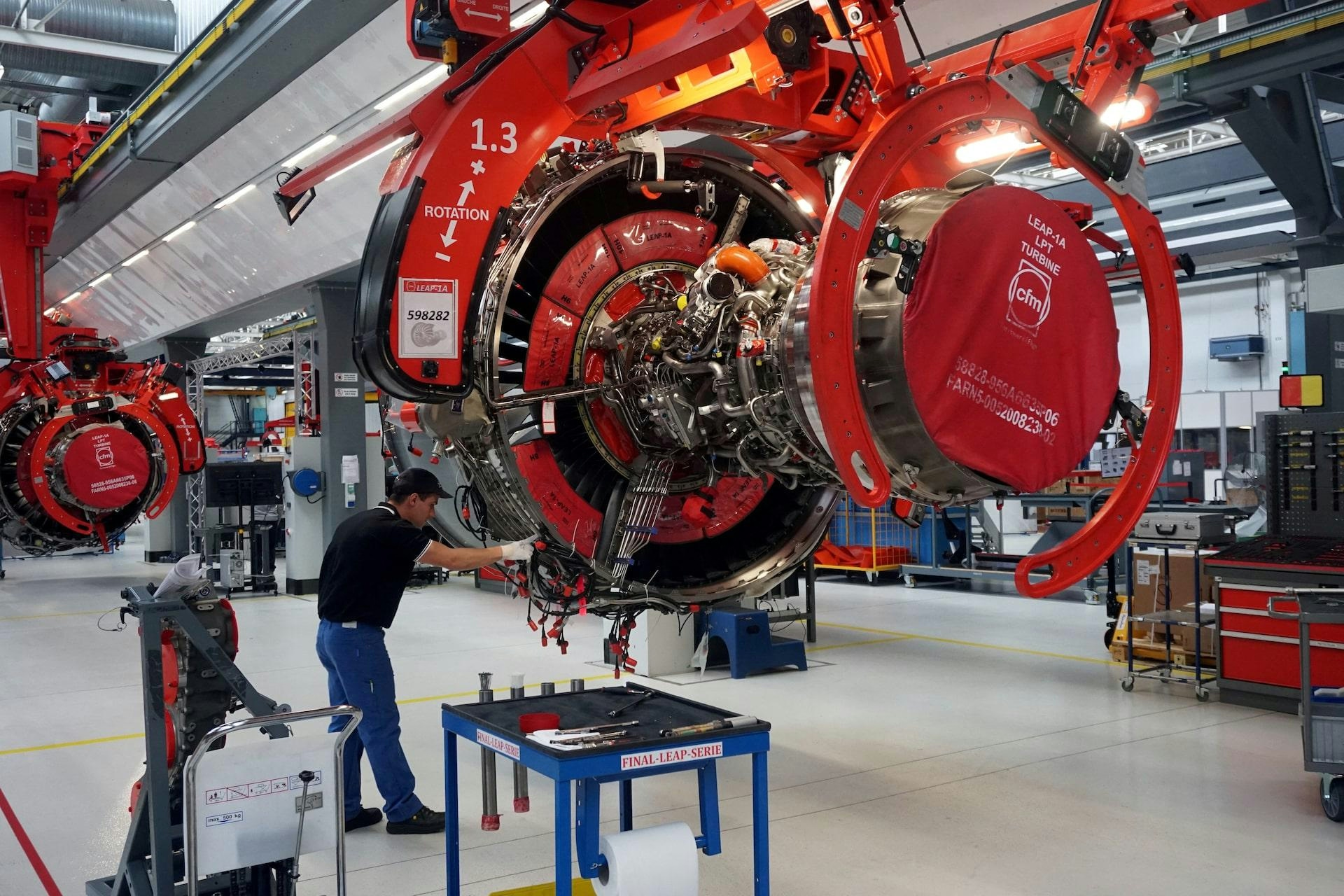
Compounding the problem, Airbus is also facing restrictions in obtaining additional Leap-1A engines from CFM International, the competing supplier for the A320neo. Although a delivery delay experienced last year was resolved by November, Faury emphasized that CFM is currently prioritizing support for its in-service fleet. This focus limits CFM’s capacity to increase engine supply to Airbus beyond previously agreed levels. “They don’t want to [produce] more now for 2026 than what they’d accepted,” Faury stated, noting that discussions with CFM about raising engine volumes have not resulted in additional commitments for the year.
As a consequence, Airbus may be forced to park “gliders”—fully assembled aircraft awaiting engines—throughout 2026, although Faury did not specify the number of affected airframes. This shortage has compelled Airbus to revise its ramp-up forecast for the A320neo family, directly impacting its delivery goals for the year.
Outlook Amid Industry and Geopolitical Challenges
Despite these setbacks, Airbus remains committed to its long-term production ambitions, targeting a monthly output of 75 A320neo aircraft by the end of 2027. Faury indicated that CFM might provide “a bit more” support in 2027 to help achieve this objective but acknowledged that for 2026, “CFM has been quite clear that 2026 comes with little hope.”
The engine supply constraints occur against a backdrop of broader industry risks, including escalating trade tensions and geopolitical uncertainties. These external pressures have contributed to an unprecedented number of crises for Airbus in 2026, further complicating efforts to stabilize the supply chain and meet production targets.
Meanwhile, rival Boeing has demonstrated signs of financial recovery and has increased its production rates, potentially gaining a competitive advantage as Airbus contends with ongoing engine shortages and delivery delays. Airbus continues to engage in dialogue with its engine suppliers in hopes of improving the outlook for future years while navigating a complex landscape shaped by both internal supply challenges and external global risks.

Etihad Airways Suspends Airbus A380 Flights on Key Route

Aditya Birla Group Seeks Approval for Aircraft Leasing in GIFT City

Qatar Airways Highlights Innovation and Connectivity at Arabian Travel Market 2026

Hong Kong's Five-Year Plan Includes Andrew Fan's Aircraft Parts Processing Hub Proposal

ACIA Aero Leasing Delivers ATR72-600 to Air Nostrum

RTX Appoints Jill Albertelli as Head of Pratt & Whitney

TAT Technologies Joins Beyond Aero Hydrogen Aircraft Program

AURAK Study Highlights Barriers to Air Taxi Adoption in Emerging Economies

Xiamen Air Selects Altitude for 787 Maintenance at Heathrow

Etihad and Swissport Extend Global Partnership
