
KI-Erkenntnisse in konkrete Maßnahmen überführen

Trends
Categories
Airbus Faces Challenges with A220 in China
Airbus Faces Challenges with A220 in China
Limited Market Penetration Despite Industrial Presence
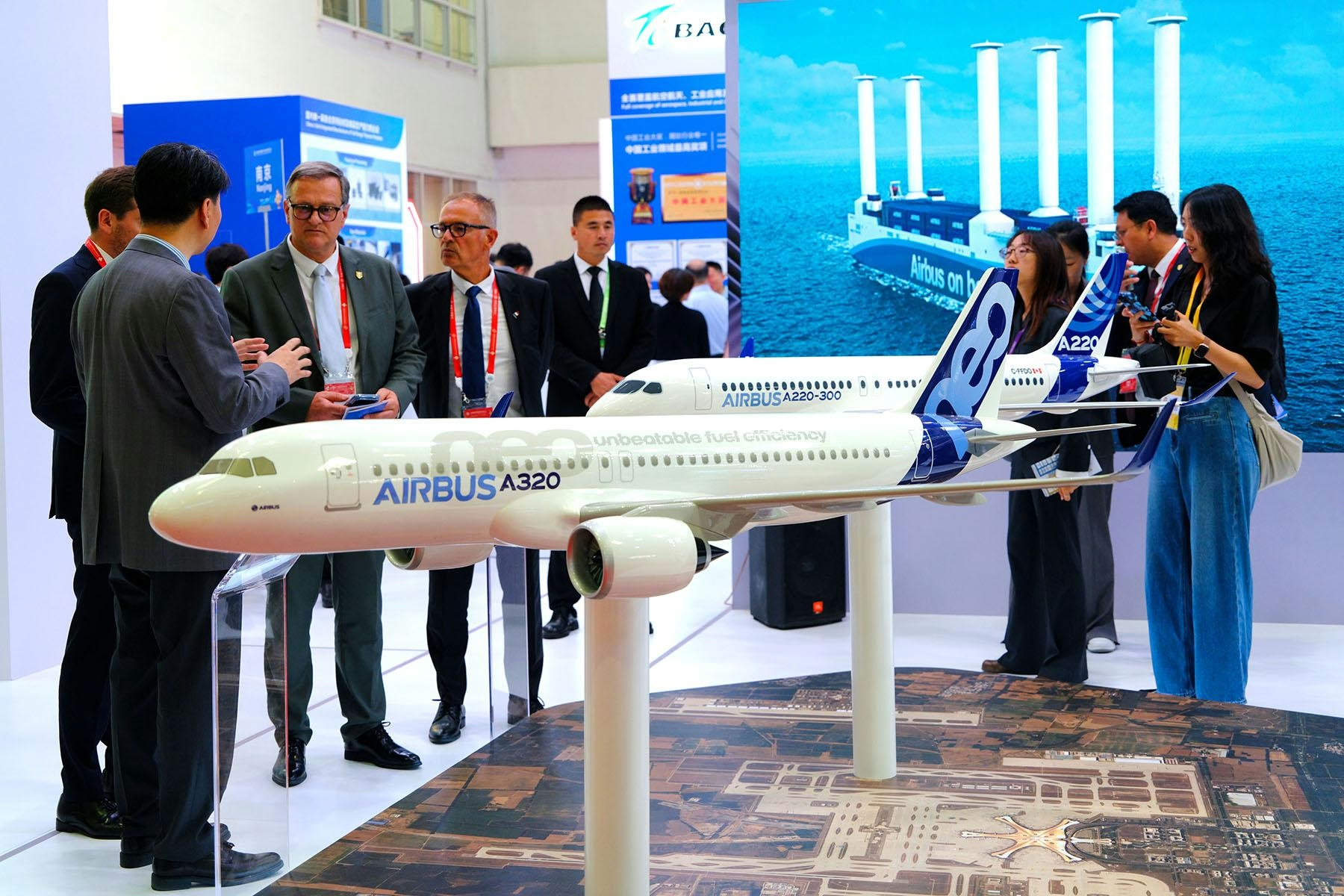
Airbus is intensifying efforts to promote its A220 aircraft in China, a market where the model’s footprint remains minimal. Currently, the A220’s involvement in China is confined to the Shenyang facility, which produces fuselage sections that are then shipped to Mirabel, Quebec, for final assembly. This limited presence contrasts sharply with Airbus’s broader industrial engagement in China, which includes an A320neo family assembly line in Tianjin, an A330 finishing center, and an extensive supplier network. Despite China’s position as one of the world’s largest aviation markets and its substantial orders for other Airbus models, the A220 has yet to secure a single order from Chinese airlines or leasing companies.
Political and Commercial Barriers
The absence of A220 orders in China stems from a combination of political sensitivities and commercial challenges. The Shenyang plant has been involved with the program since its origins as Bombardier’s C Series, but Bombardier itself was unable to attract Chinese customers before selling the program to Airbus in 2017. Airbus executives acknowledge that lingering resentment in Beijing over the failed acquisition attempt continues to affect the aircraft’s prospects. Christian Kley, head of single-aisle market development at Airbus, noted during a media briefing at the company’s Mirabel headquarters that “the Chinese were involved in the bidding contest at the time when Airbus ended up taking over the former C Series, so there's certainly some resentment there. That's ten years ago. They have long memories.”
Commercially, the A220 faces skepticism from leasing companies and potential customers who debate the aircraft’s range and performance capabilities. The program itself remains unprofitable and has recently lost orders to Brazilian competitor Embraer, further complicating Airbus’s efforts to gain traction in the region.
Operational Concerns and Future Prospects
In response to market feedback, Airbus is exploring a “simple” stretch of the A220 to better meet customer demands, though the timeline for this development remains uncertain. Some key customers, including Air France-KLM, have expressed concerns that a stretched variant may arrive too late to influence their fleet planning.
Operational issues have also emerged, exemplified by Swiss International Air Lines’ recent retirement of two A220-100 aircraft to support its larger A220-300 fleet amid ongoing engine reliability problems. These challenges highlight the operational hurdles Airbus must address to position the A220 as a competitive option in China’s demanding aviation market.
Despite Airbus’s established industrial partnerships and success with other aircraft families in China, the company faces a complex interplay of political, commercial, and operational obstacles as it seeks to establish the A220 in this critical market.

Etihad and Swissport Extend Global Partnership

Sepehran Airlines B737 Returns to Mashhad After Tyre and Engine Issues

Etihad Deploys Widebody Fleet to Meet Strong Demand

Korean Air Finalizes $36.2 Billion Deal with Boeing

Australia’s RFDS Queensland Section Orders Six King Air 260Cs

Korean Air Finalizes Order for 103 Boeing Jets and Engines

Embraer E195-E2 Features Distinctive Engine Placement Among Regional Jets

What Passengers Can Expect on Boeing’s New 777X Jet

How Ethiopian Airlines Became Africa’s Leading Carrier Amid Gulf Competition

Joby Aviation Extends Autonomous Flight Capabilities with Cross-Country Tour
