
KI-Erkenntnisse in konkrete Maßnahmen überführen

Trends
Categories
Airbus, MTU to develop emissions-free fuel cell engines for aircraft
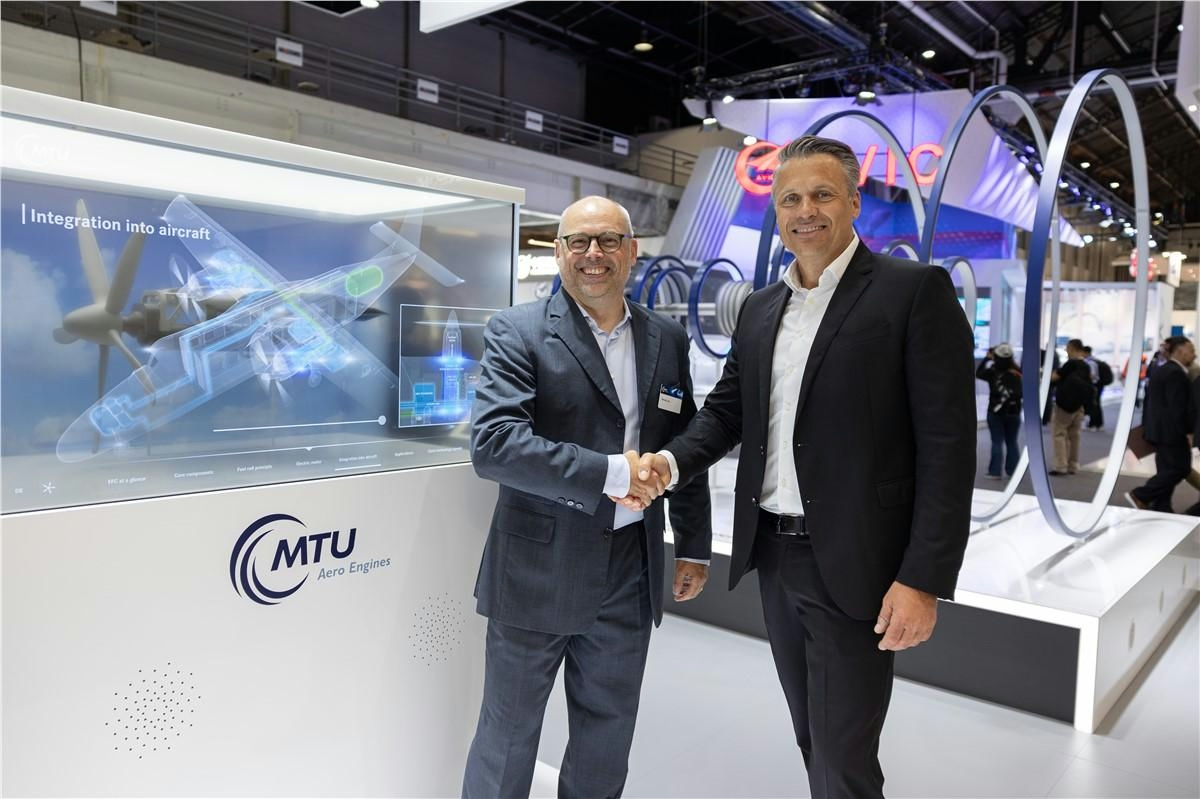
Airbus and MTU Collaborate on Emissions-Free Fuel Cell Engines for Aviation
Airbus and German engine manufacturer MTU have announced a strategic partnership to develop emissions-free fuel cell engines for aircraft, marking a pivotal advancement in the pursuit of sustainable aviation. The two companies plan to establish a joint venture dedicated to the development and commercialization of hydrogen-powered engines, with operations anticipated to commence in 2027.
Partnership Framework and Technological Ambitions
The collaboration is set to formalize following the signing of a memorandum of understanding in 2025, after which the joint venture will be officially launched. Both Airbus and MTU have highlighted that the initiative remains subject to regulatory approvals and consultations with employee representative bodies. This partnership builds on the independent efforts both companies have made in fuel cell technology, aiming to accelerate the maturation of fuel cell propulsion systems and assert European leadership in advanced aviation technologies.
Fuel cell engines operate by generating electricity onboard through a chemical reaction between hydrogen and oxygen, offering a promising alternative to conventional jet engines that emit significant greenhouse gases, particularly at high altitudes. While electric battery propulsion has been explored, it remains impractical for larger aircraft due to the weight constraints of current battery technologies. Hydrogen fuel cells, therefore, present a viable pathway toward zero-emission flight.
Challenges and Industry Implications
Despite its potential, the development of commercially viable hydrogen fuel cell powertrains faces considerable challenges. Significant technological innovation and substantial upfront investment will be required to bring these systems to market. Furthermore, aviation regulators must certify the new technology to ensure safety in commercial operations. The limited state of hydrogen infrastructure and questions surrounding the economic feasibility of such systems contribute to skepticism within parts of the aviation industry.
Market responses to the announcement have been varied. Some airlines have expressed optimism about the potential for emissions reduction and alignment with tightening environmental regulations. Conversely, others remain cautious, citing concerns over the financial costs and the need to develop new fueling infrastructure at airports.
The announcement by Airbus and MTU is likely to prompt competitors in the aerospace sector to intensify their research and development efforts in alternative propulsion technologies, including sustainable aviation fuels and hybrid-electric systems. This move occurs amid ongoing consolidation within the European aviation market and increasing pressure to adopt environmentally sustainable technologies.
If successful, the joint venture could position Airbus and MTU at the forefront of the aviation industry's transition toward sustainability, contributing significantly to efforts aimed at reducing the sector’s environmental footprint.
Comments

Hong Kong's Five-Year Plan Includes Andrew Fan's Aircraft Parts Processing Hub Proposal

ACIA Aero Leasing Delivers ATR72-600 to Air Nostrum

RTX Appoints Jill Albertelli as Head of Pratt & Whitney

TAT Technologies Joins Beyond Aero Hydrogen Aircraft Program

AURAK Study Highlights Barriers to Air Taxi Adoption in Emerging Economies

Xiamen Air Selects Altitude for 787 Maintenance at Heathrow

Etihad and Swissport Extend Global Partnership

Sepehran Airlines B737 Returns to Mashhad After Tyre and Engine Issues

Etihad Deploys Widebody Fleet to Meet Strong Demand

Korean Air Finalizes $36.2 Billion Deal with Boeing
