
KI-Erkenntnisse in konkrete Maßnahmen überführen

Trends
Categories
Airbus Shares Stable as Syrian Airlines Receives New A320 Jets
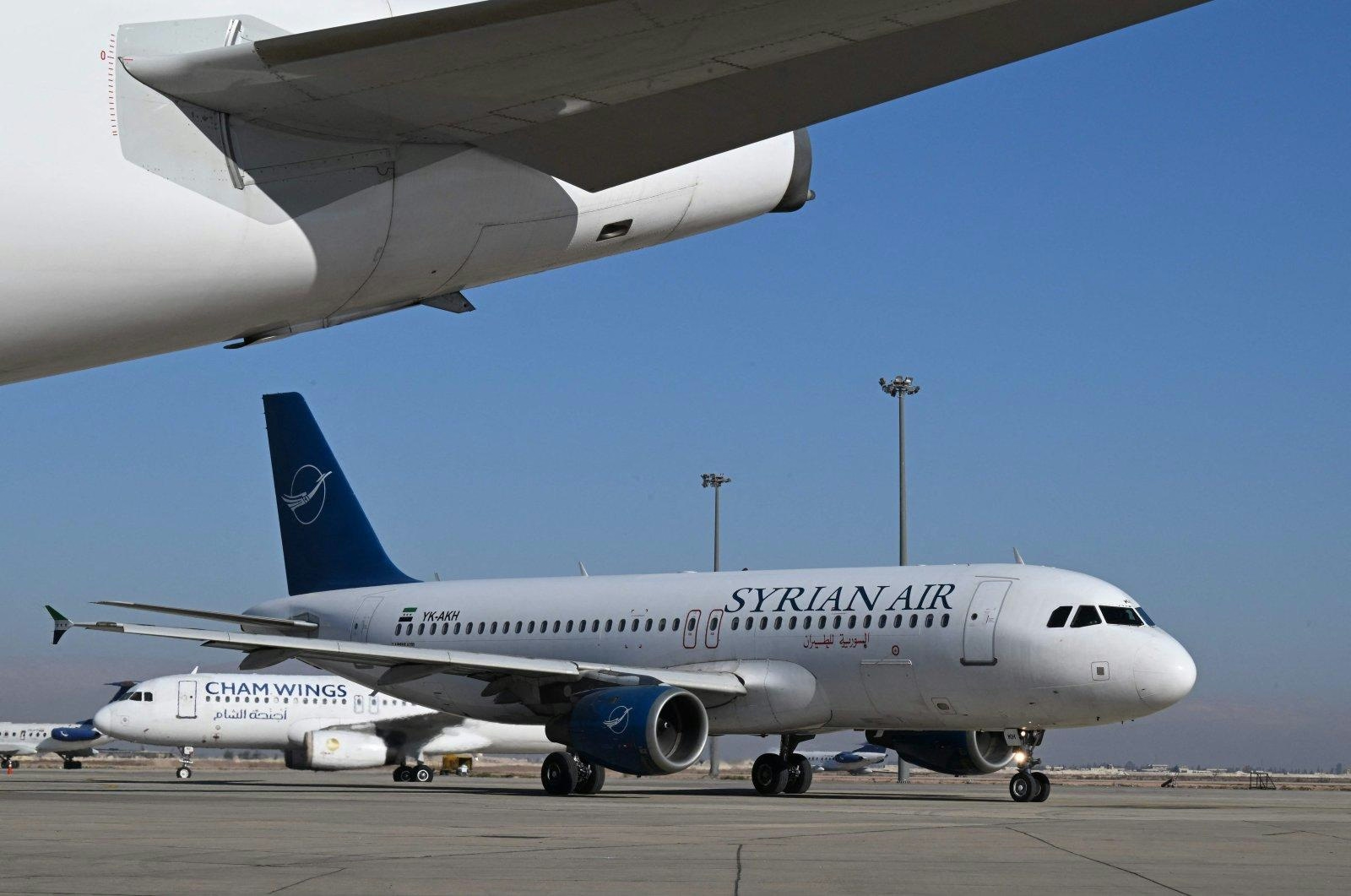
Airbus Shares Stable as Syrian Airlines Receives New A320 Jets
Airbus shares (ISIN NL0000235190) held steady following the delivery of two new A320-family aircraft to Syrian Airlines, marking the commencement of a fleet renewal program announced on August 30, 2026. The handover took place at Damascus International Airport on August 29 and forms part of a broader initiative to modernize Syria’s national carrier and upgrade its airport infrastructure. According to the Syrian state news agency SANA, these aircraft are the first of eight A320-family jets scheduled to join the airline’s fleet, underscoring sustained demand for Airbus’s flagship narrowbody series in the Middle East and beyond.
Strategic Significance for Syrian Airlines and Airbus
The introduction of the new jets represents a significant milestone for Syrian Airlines, which seeks to improve passenger services and operational reliability after years of limited resources and infrastructure challenges. The modern A320-family aircraft offer enhanced fuel efficiency and increased seating capacity compared to older models, advantages that are particularly critical for carriers operating in financially and logistically constrained environments.
For Airbus, the delivery is a concrete step toward converting its substantial order backlog into revenue, even through relatively modest contracts. Each aircraft handover not only supports immediate revenue recognition but also opens avenues for long-term aftermarket services, including maintenance, training, and parts supply. This is especially pertinent amid a tight market for critical components such as aircraft windows—a shortage that has affected both new aircraft production and ongoing maintenance across the aviation industry. Competition for these parts is intensifying among manufacturers, airlines, and repair facilities, adding complexity to Airbus’s supply chain management.
Geopolitical and Market Context
The Syrian deal carries both geopolitical and operational significance. Supplying modern aircraft to a market emerging from prolonged sanctions demonstrates Airbus’s readiness to engage with recovering carriers, provided all transactions comply with international regulations. It also highlights the adaptability of the A320-family platform in markets characterized by limited capital and complex regulatory environments.
Market reactions to Syrian Airlines’ acquisition have been cautiously optimistic, reflecting hopes for a recovery in the airline’s operations following years of conflict. Nonetheless, Airbus continues to face competitive pressure, particularly as rival Boeing prepares to unveil its latest innovations at the forthcoming Farnborough International Airshow—an event that could shift industry focus and influence customer sentiment.
Despite these challenges, demand for A320-family jets remains a cornerstone of Airbus’s commercial aircraft business. Airlines worldwide continue to select these models to replace aging fleets, reduce fuel consumption, and lower maintenance costs. While the Syrian Airlines delivery is modest in scale, it reinforces the global appeal and operational flexibility of the A320 line amid ongoing supply chain constraints and evolving competitive dynamics.

Etihad Airways Suspends Airbus A380 Flights on Key Route

Aditya Birla Group Seeks Approval for Aircraft Leasing in GIFT City

Qatar Airways Highlights Innovation and Connectivity at Arabian Travel Market 2026

Hong Kong's Five-Year Plan Includes Andrew Fan's Aircraft Parts Processing Hub Proposal

ACIA Aero Leasing Delivers ATR72-600 to Air Nostrum

RTX Appoints Jill Albertelli as Head of Pratt & Whitney

TAT Technologies Joins Beyond Aero Hydrogen Aircraft Program

AURAK Study Highlights Barriers to Air Taxi Adoption in Emerging Economies

Xiamen Air Selects Altitude for 787 Maintenance at Heathrow

Etihad and Swissport Extend Global Partnership
