
KI-Erkenntnisse in konkrete Maßnahmen überführen

Trends
Categories
Airbus Showcases Defence and Civil Aviation Advances at ILA 2026
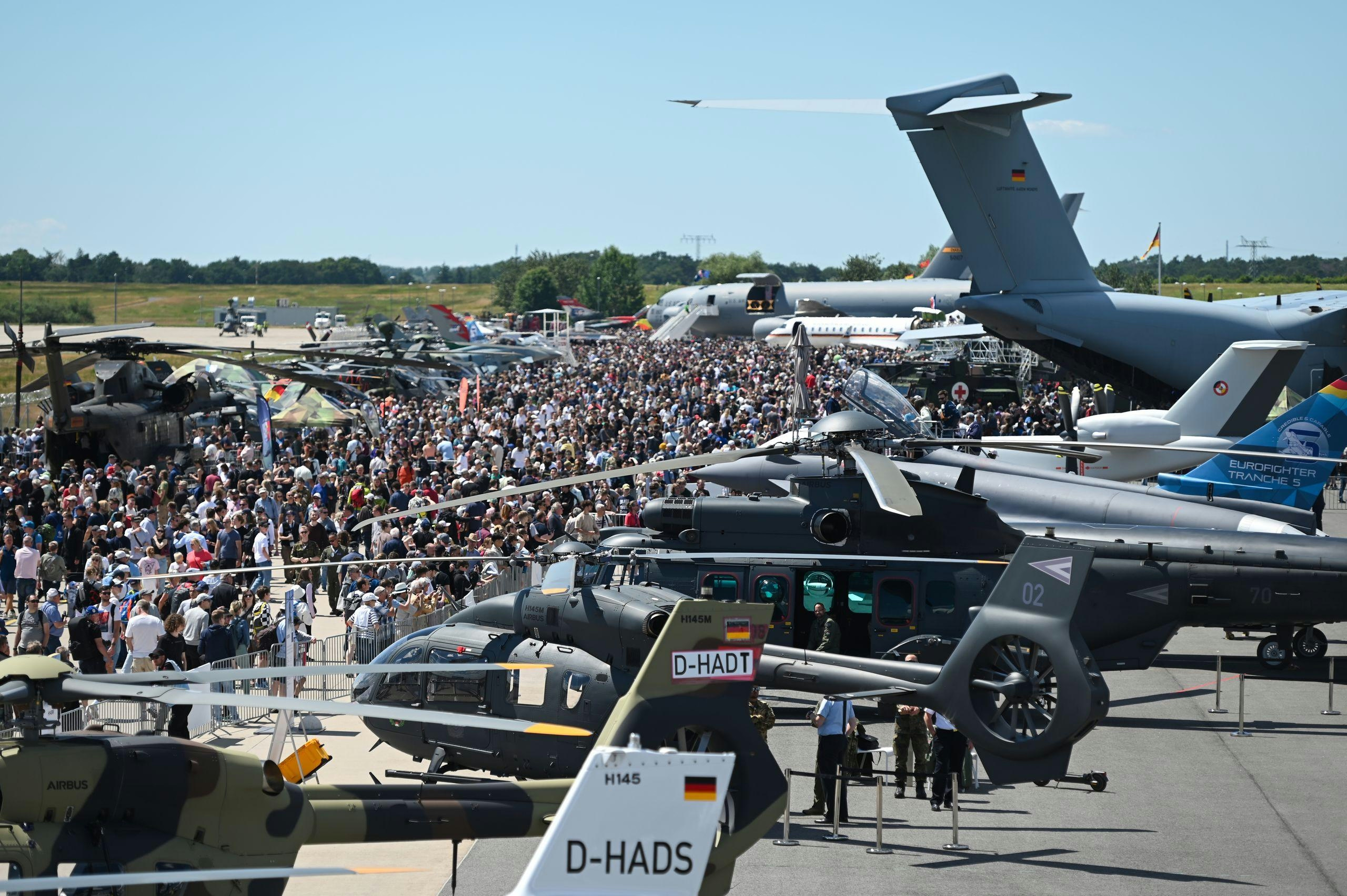
Airbus Showcases Defence and Civil Aviation Advances at ILA 2026
The ILA Berlin Air Show 2026 has emerged as a critical forum for aerospace innovation, convening industry leaders, civil and military operators, and technology pioneers to confront the intertwined challenges of technological transformation and strategic resilience. As Europe’s foremost aerospace event, ILA 2026 provides Airbus with a prominent platform to reaffirm its dedication to decarbonising aviation and enhancing European defence capabilities.
Advancing European Defence and Strategic Autonomy
In the context of evolving geopolitical tensions, strategic autonomy has become a paramount objective for Europe. Airbus plays a central role in supporting these defence ambitions, particularly as a key partner for Germany. The company’s portfolio includes vital technologies such as the Eurofighter, which safeguards European airspace, the SatcomBw satellite system that ensures mission-critical communications, and the H225 and NH90 helicopters deployed for security operations and troop mobility. These assets are integral to the German Armed Forces, federal police, and emergency services.
Airbus continues to upgrade its existing platforms, including the A400M transport aircraft, H145M light utility helicopter, and A330 MRTT tanker, incorporating advanced capabilities to meet evolving operational demands. Simultaneously, the company is developing next-generation variants tailored for maritime patrol and electronic warfare missions. These innovations are designed to integrate seamlessly into a future combat air system, envisioned as a collaborative ‘system of systems’ where diverse assets are interconnected through a unified digital network, enhancing operational effectiveness across domains.
Uncrewed Aerial Systems and Emerging Market Trends
At ILA 2026, Airbus is positioning itself as a leader in the rapidly expanding field of Uncrewed Aerial Systems (UAS). The company is showcasing a range of platforms, including the Eurodrone, engineered for long-endurance strategic intelligence missions, and tactical assets such as Capa-X, Flexrotor, and Aliaca, which offer agility and versatility. The U145 uncrewed rotorcraft variant, optimized for logistics and firefighting applications, has attracted particular market interest. Additionally, the Bird of Prey interceptor drone represents a cost-effective solution for neutralising aerial threats swiftly.
Despite these advancements, Airbus faces significant regulatory and operational challenges in integrating these sophisticated uncrewed systems into both civilian and military frameworks. Navigating these complexities will be essential for the company to fully realise the potential of its UAS portfolio.
Competitive Pressures and Technological Innovation
The competitive environment at ILA 2026 is intensifying, with companies such as Elbit Systems unveiling new airborne laser and drone technologies targeted at German and broader European military customers. These developments present a potential challenge to Airbus’s dominance in military applications, underscoring the imperative for continuous innovation and strategic adaptability within the aerospace sector.
Collaborative Combat and the Future of Defence Operations
Airbus is articulating a forward-looking vision for collaborative combat through its Tactical Operating Centre demonstration at ILA. This exhibit highlights how interoperable platforms can enable European forces to operate cohesively in contested environments. The company’s software-driven, platform-agnostic systems facilitate multi-domain operations, with artificial intelligence enhancing capabilities beyond conventional connectivity.
A notable example is the crewed-uncrewed teaming concept, where rotorcraft such as the H145M are networked with tactical UAS platforms via Airbus’s H-Teaming solution. This integration transforms helicopters into flying command posts within secure data networks. In fixed-wing operations, the Valkyrie platform, equipped with the Multiplatform Autonomous Reconfigurable and Secure (MARS) Mission System, positions Airbus to deliver an operational sovereign uncrewed collaborative combat aircraft (UCCA) with air-to-ground capabilities by 2029. This platform is intended to operate in tandem with the Eurofighter, forming a potent crewed-uncrewed team for the German Air Force.
As Airbus awaits a pivotal decision on the Future Combat Air System (FCAS) program, expected to be announced during ILA 2026, the company’s strategic trajectory in defence aviation stands to be significantly influenced by the outcomes of this year’s event.

Etihad Airways Suspends Airbus A380 Flights on Key Route

Aditya Birla Group Seeks Approval for Aircraft Leasing in GIFT City

Qatar Airways Highlights Innovation and Connectivity at Arabian Travel Market 2026

Hong Kong's Five-Year Plan Includes Andrew Fan's Aircraft Parts Processing Hub Proposal

ACIA Aero Leasing Delivers ATR72-600 to Air Nostrum

RTX Appoints Jill Albertelli as Head of Pratt & Whitney

TAT Technologies Joins Beyond Aero Hydrogen Aircraft Program

AURAK Study Highlights Barriers to Air Taxi Adoption in Emerging Economies

Xiamen Air Selects Altitude for 787 Maintenance at Heathrow

Etihad and Swissport Extend Global Partnership
