
KI-Erkenntnisse in konkrete Maßnahmen überführen

Trends
Categories
Airbus Wins Air China Cargo Order Despite Boeing Share Gains
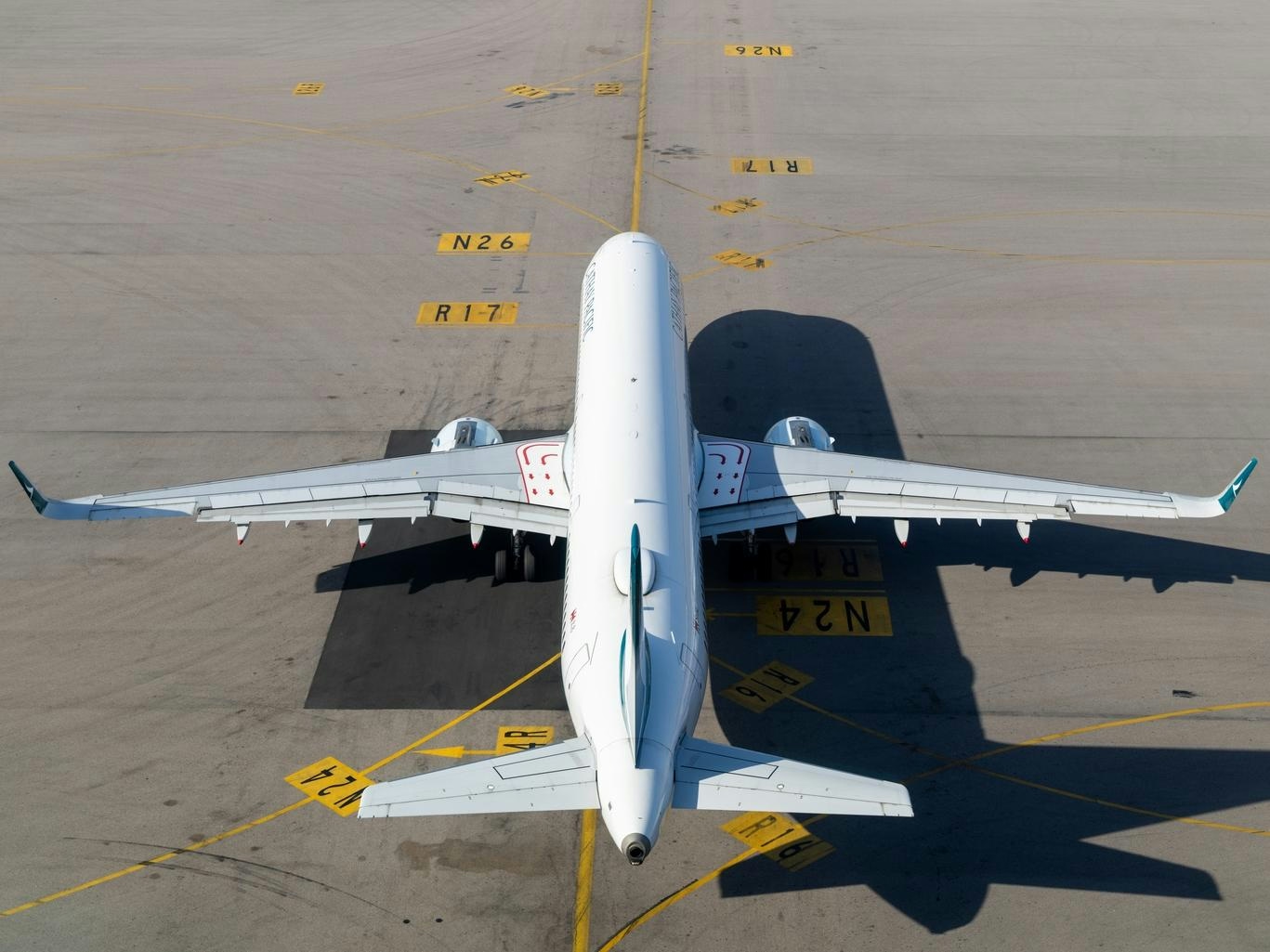
Airbus Secures Major Air China Cargo Order Amid Intensifying Competition with Boeing
Air China Cargo has placed a significant order for up to ten Airbus A350 freighters, marking a notable development in the ongoing rivalry between Airbus and Boeing. This deal, reportedly secured at a substantial price discount, highlights the increasingly aggressive pricing strategies and shifting airline preferences that are reshaping the global widebody freighter market.
Air China Cargo’s Strategic Shift to Airbus
The agreement involves six firm orders for Airbus A350F aircraft, with options for an additional four, carrying a list price valuation exceeding $4 billion. However, Air China Cargo has emphasized that the final negotiated price reflects a considerable reduction from the list figures, offering rare insight into the commercial pressures affecting widebody freighter sales. The A350F, expected to enter service later this decade, is positioned as a next-generation freighter designed to meet stringent emissions regulations while delivering improved fuel efficiency and payload capabilities.
This acquisition represents a strategic diversification for Air China Cargo, which currently operates a fleet dominated by Boeing 777 freighters. By incorporating the A350F, the airline is broadening its fleet composition, signaling a shift in procurement strategy that challenges Boeing’s historical dominance in the cargo sector, particularly with its 747 and 777 freighter models. The deal underscores how competitive pricing and delivery availability can influence airline decisions, even when existing fleet loyalties might suggest otherwise.
Boeing’s Resilience Amid Market Challenges
Despite losing this high-profile contract, Boeing’s shares have risen in recent trading sessions, reflecting investor confidence in the company’s broader operational and financial outlook. The firm’s performance in February, which saw deliveries reach a nine-year high, alongside ongoing efforts to stabilize production lines, has bolstered market sentiment. Boeing is also intensifying production of its 737 MAX to maintain competitiveness in the single-aisle segment, while focusing on generating positive free cash flow and reducing debt levels.
These initiatives are critical as Boeing navigates supply chain challenges and responds to sustained demand for both passenger and cargo aircraft. The company’s ability to restore margins and ramp up output will be pivotal in maintaining its market position amid Airbus’s aggressive pricing and delivery strategies.
Broader Market Implications and Competitive Dynamics
The Air China Cargo order is part of a wider trend in the aviation industry, with other carriers such as Atlas Air Worldwide Holdings also opting for Airbus freighters. This shift reflects Airbus’s success in leveraging delivery performance and competitive pricing to capture market share in segments traditionally dominated by Boeing.
For investors, the modest appreciation in Boeing’s stock price suggests confidence in the company’s long-term fundamentals, including the recovery of global air travel and ongoing fleet renewal demands. The evolving strategies of both manufacturers—Airbus’s discounting approach and Boeing’s production ramp-up—are set to continue shaping the competitive landscape as airlines adapt to new regulatory requirements and operational priorities.

Etihad Airways Suspends Airbus A380 Flights on Key Route

Aditya Birla Group Seeks Approval for Aircraft Leasing in GIFT City

Qatar Airways Highlights Innovation and Connectivity at Arabian Travel Market 2026

Hong Kong's Five-Year Plan Includes Andrew Fan's Aircraft Parts Processing Hub Proposal

ACIA Aero Leasing Delivers ATR72-600 to Air Nostrum

RTX Appoints Jill Albertelli as Head of Pratt & Whitney

TAT Technologies Joins Beyond Aero Hydrogen Aircraft Program

AURAK Study Highlights Barriers to Air Taxi Adoption in Emerging Economies

Xiamen Air Selects Altitude for 787 Maintenance at Heathrow

Etihad and Swissport Extend Global Partnership
