
KI-Erkenntnisse in konkrete Maßnahmen überführen

Trends
Categories
Aircraft Academy Receives EASA Part 66 Certification
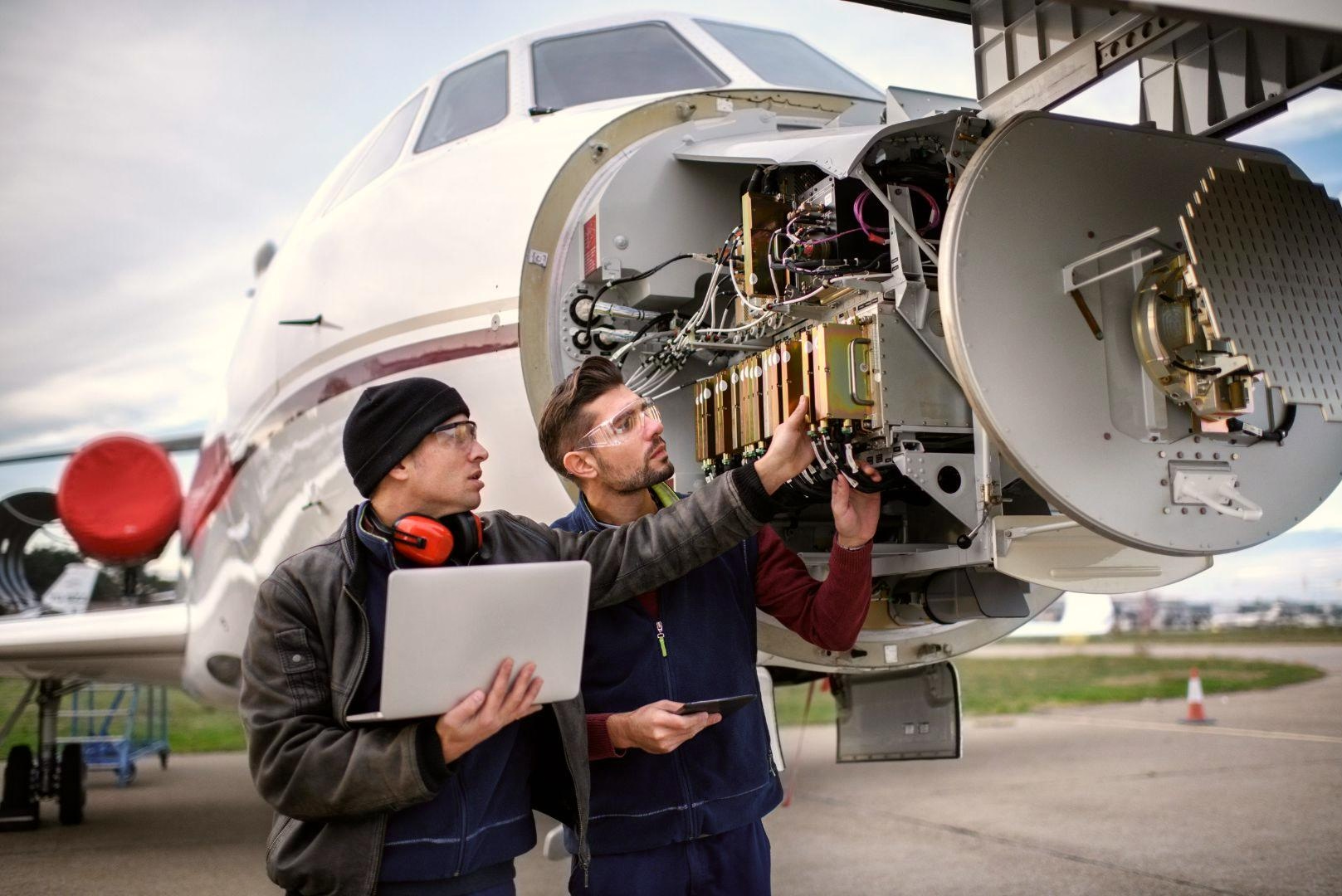
Aircraft Academy Secures EASA Part 66 Certification, Expanding Global Training Capabilities
Aircraft Academy, a subsidiary of the Vallair Group and a prominent provider of aviation training solutions, has obtained formal approval from the European Union Aviation Safety Agency (EASA) to deliver EASA Part 66 training and examinations. This significant certification builds upon the academy’s existing status as an EASA Part-147 approved training organisation, authorising it to offer comprehensive training and assessment services for aircraft maintenance engineers across multiple categories.
Enhancing Training Standards and Global Reach
EASA Part 66 certification represents an internationally recognised benchmark, ensuring that licensed aircraft maintenance engineers meet stringent competence and regulatory standards. With this new approval, Aircraft Academy is now authorised to provide both theoretical and practical training, alongside conducting approved examinations in line with EASA’s rigorous requirements. The training encompasses key categories such as Category B1 (mechanical) and Category B2 (avionics), among others.
Armel Jezequel, CEO of Aircraft Academy, emphasised the academy’s commitment to addressing the evolving demands of the aviation sector. He noted the substantial global interest in aircraft mechanic training, highlighting enrolments from diverse regions including the Philippines and India, alongside European students of varying ages seeking qualifications or upskilling opportunities for new aircraft and engine types.
Responding to Industry Demand and Embracing Innovation
The EASA Part 66 certification arrives amid increasing worldwide demand for qualified maintenance engineers. Industry analysts expect that Aircraft Academy’s expanded capabilities will drive higher enrolment figures, particularly from operators prioritising certified training providers. This development may prompt competitors to enhance their own training offerings or pursue additional certifications to sustain their market positions.
Further demonstrating its dedication to innovation, Aircraft Academy is integrating mixed-reality training devices into its curriculum following EASA’s recent approval of such technologies. This adoption of advanced training tools aims to improve learning effectiveness and positions the academy as a forward-looking leader in aviation education, potentially opening avenues for new partnerships and advanced training solutions.
Despite these opportunities, the academy faces the ongoing challenge of maintaining high training standards and adapting swiftly to evolving regulatory requirements to preserve its reputation for quality and safety.
With the addition of EASA Part 66 approval, Aircraft Academy reinforces its ambition to establish a benchmark for excellence in aviation training. Its focus on quality, regulatory compliance, and innovation equips the institution to meet the needs of a rapidly changing industry and a diverse, global student population.

Etihad Airways Suspends Airbus A380 Flights on Key Route

Aditya Birla Group Seeks Approval for Aircraft Leasing in GIFT City

Qatar Airways Highlights Innovation and Connectivity at Arabian Travel Market 2026

Hong Kong's Five-Year Plan Includes Andrew Fan's Aircraft Parts Processing Hub Proposal

ACIA Aero Leasing Delivers ATR72-600 to Air Nostrum

RTX Appoints Jill Albertelli as Head of Pratt & Whitney

TAT Technologies Joins Beyond Aero Hydrogen Aircraft Program

AURAK Study Highlights Barriers to Air Taxi Adoption in Emerging Economies

Xiamen Air Selects Altitude for 787 Maintenance at Heathrow

Etihad and Swissport Extend Global Partnership
