Bild

KI-Erkenntnisse in konkrete Maßnahmen überführen

Trage dich noch heute in die AeroGenie-Warteliste ein!

Trends

Categories

Airlines With the Densest Economy Cabins in 2026
February 25, 2026By ePlane AI
Airlines With the Densest Economy Cabins in 2026
0
0
Economy Cabin Density
Airbus A320 Family
Boeing 737
Ryanair

Airlines With the Densest Economy Cabins in 2026

Narrowbody Aircraft: Maximizing Capacity Through Seat Pitch

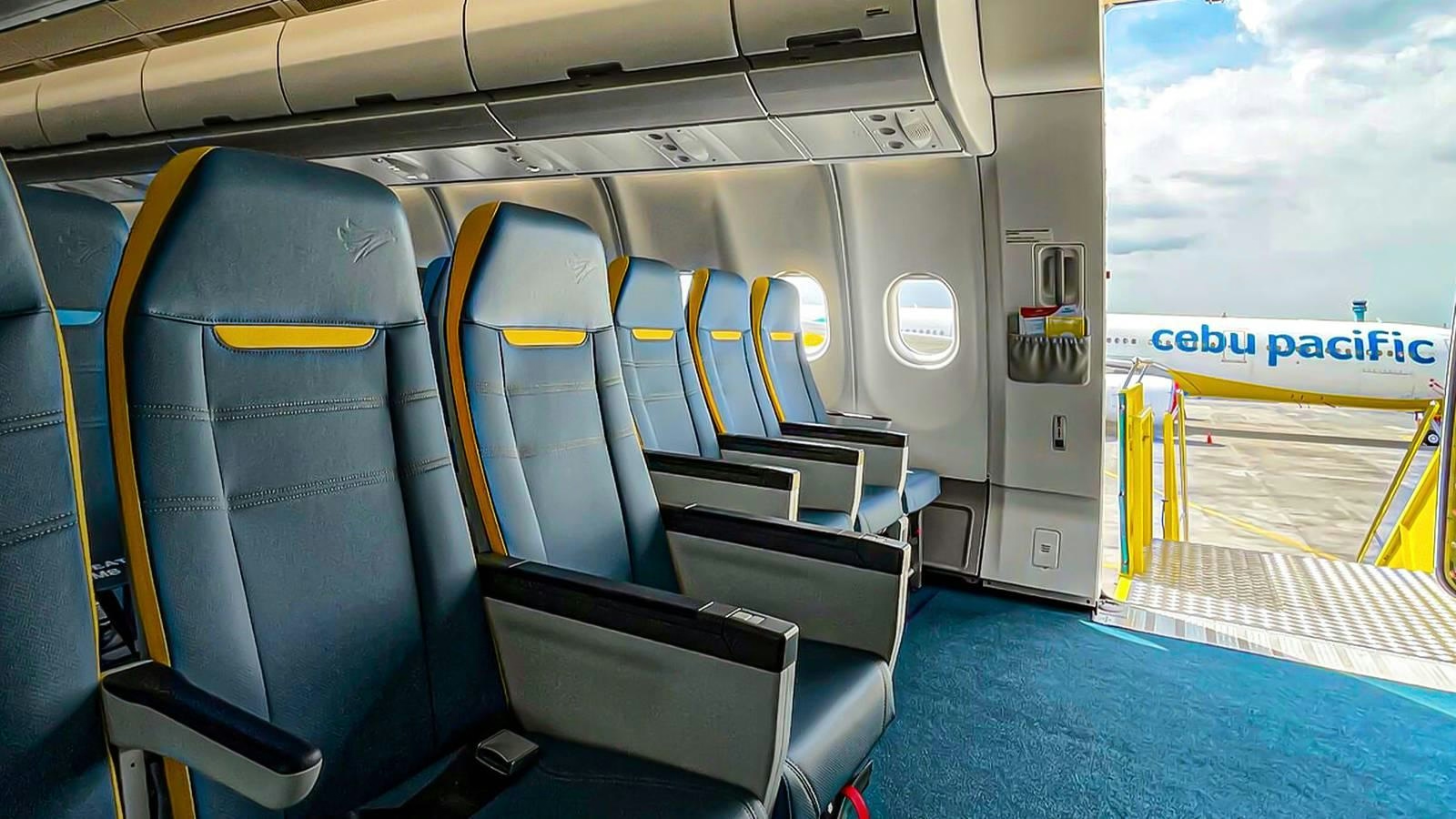
The airline industry’s ongoing trend toward denser seating arrangements remains particularly evident in narrowbody aircraft, where the Boeing 737 and Airbus A320 families dominate the fleets of most low-cost and ultra-low-cost carriers. These aircraft are almost universally configured with six seats abreast in economy class, leaving limited scope for variation in width. Consequently, the primary determinant of cabin density in this segment is seat pitch—the distance between rows—rather than the number of seats across.

Ryanair serves as a prominent example of this strategy, reducing seat pitch to approximately 28 to 29 inches to increase the number of rows and overall passenger capacity. While the aircraft design restricts the addition of seats across the cabin, Ryanair compensates by minimizing premium seating and optimizing the cabin layout to accommodate more travelers. Regulatory requirements, however, impose limits on maximum capacity, mandating that all occupants must be evacuated within 90 seconds in an emergency. To comply, Boeing developed the 737 MAX 8-200 variant, which includes additional emergency exits to legally support a higher passenger count. Although the aircraft can theoretically seat up to 210 passengers, Ryanair typically configures its MAX 8-200s with 197 seats plus crew, adhering to European safety standards.

Widebody Aircraft: Expanding Width and Seating Configurations

Widebody aircraft such as the Airbus A350 and Boeing 777 offer greater flexibility in cabin layouts, allowing airlines to experiment with denser seating arrangements. The A350 was initially designed with nine-abreast economy seating, but some carriers have adopted ten-abreast configurations to boost capacity. In response, Airbus introduced a new production standard that widens the A350’s cabin by four inches, facilitating these denser layouts without compromising safety.

Similarly, the Boeing 777, which features a wider cabin than the A350, has seen a near-universal shift to ten-abreast seating in economy, despite its original design for nine seats across. These modifications reflect airlines’ efforts to maximize revenue potential while navigating the physical constraints of aircraft design.

Balancing Revenue and Passenger Comfort

Airlines implementing these dense seating configurations face a complex challenge in balancing increased revenue with passenger comfort. Market responses have been mixed: some travelers welcome the greater availability of seats and enhanced space for carry-on luggage, while others express concerns about diminished personal space and overall comfort. Competitive responses vary accordingly; some carriers adopt similarly dense cabins to maintain cost competitiveness, whereas others differentiate themselves by offering more spacious seating to attract passengers prioritizing comfort.

Recent industry developments underscore these divergent approaches. Ryanair has upgraded its fiscal 2026 outlook, citing strong demand and improved deliveries of Boeing aircraft. In contrast, Frontier Airlines has opted to reduce its annual growth rate to focus on profitability, signaling a more cautious stance on capacity expansion.

As airlines continue to explore the limits of cabin density, the sector is poised for ongoing shifts in passenger experience and competitive dynamics, with each carrier carefully weighing the trade-offs between operational efficiency and customer satisfaction.

More news
Aircraft Leasing Industry Does Not Prioritize Sustainable Aviation

Aircraft Leasing Industry Does Not Prioritize Sustainable Aviation

Aircraft Leasing Industry Does Not Prioritize Sustainable Aviation Sustainability Remains a Low Priority Among Executives A recent report from Deloitte Ireland reveals that sustainability is not a primary focus for most executives in Ireland’s aircraft leasing sector. The 2026 Aviation Finance Leaders Survey, which collected insights from senior industry leaders, indicates that zero and low-emission aircraft are largely absent from current strategic priorities despite increasing global demands for greener aviation solutions. Ireland holds a dominant position in the global aircraft leasing market, with 19 of the world’s top 20 lessors based in the country and Irish firms managing approximately 60% of the leased fleet worldwide. Nevertheless, the survey found that only 55% of executives have incorporated zero or low-emission aircraft into their strategies. Among these, a mere 5% expect to deploy such aircraft within the next five years, while 36% anticipate this transition may take a decade or longer. Although half of the respondents are tracking developments in sustainable aviation fuel (SAF) and low- or zero-emission aircraft, they currently lack concrete investment plans. Industry Challenges and Limited Investment in Sustainable Technologies The report further highlights a surprising disconnect between the industry’s awareness of environmental regulations and its response. None of the surveyed executives identified environmental compliance or sustainability mandates as significant challenges. Investment intentions in SAF or helicopter-related sustainable opportunities remain low, with only 9% planning to allocate resources over the next three years. This cautious stance persists despite widespread expectations of increased airline defaults and restructurings in the coming two years, driven by volatile fuel prices, geopolitical instability, and fragile airline financials. Ron Doyle, a Deloitte partner with nearly two decades of experience advising the sector, acknowledged the Irish government’s Sustainable Aviation Fuel Policy Roadmap as a positive development but stressed the need for enhanced support to stimulate SAF production and adoption. Doyle emphasized that further incentives for SAF training and education, some of which are already emerging in Irish universities and leasing firms, could accelerate progress. He also pointed to the potential impact of more accessible research and development tax credits in encouraging investment in SAF technologies. Doyle noted that the current fuel crisis underscores the growing importance of alternative fuels, despite the immature supply chains and challenging economics surrounding SAF. Risks and Outlook for the Leasing Sector The industry’s slow advancement on sustainability issues exposes it to multiple risks. Increasing regulatory pressure to reduce carbon emissions could lead to financial penalties for non-compliance, while reputational damage may arise if the sector is perceived as lagging in climate action. Investor preferences are shifting toward companies with robust sustainability credentials, potentially increasing capital costs for leasing firms that fail to adapt. At the same time, competitors investing in sustainable technologies may secure a competitive edge. Despite these challenges, the survey found that 68% of executives are more optimistic about their company’s financial outlook compared to the previous year, with 27% expressing slight pessimism. David McCaffrey, head of aviation finance and leasing services at Deloitte Ireland, highlighted the sector’s resilience amid external shocks such as the Covid-19 pandemic, supply chain disruptions, and geopolitical crises. However, the report suggests that resilience alone may not suffice as the industry confronts mounting pressure to embrace sustainable aviation practices.
Czech Republic Orders 11 Airbus H145 Helicopters for Police Use

Czech Republic Orders 11 Airbus H145 Helicopters for Police Use

Czech Republic Orders 11 Airbus H145 Helicopters to Modernize Police Fleet The Czech Ministry of Interior has formalized a contract with Airbus Helicopters for the acquisition of 11 five-bladed H145 helicopters, marking a pivotal advancement in the country’s efforts to upgrade its public safety aviation capabilities. These new aircraft, accompanied by a comprehensive training and logistics package, will be deployed by the Czech Police Aviation Service to support law enforcement, search and rescue, and emergency medical operations. Thomas Hein, head of Airbus Helicopters’ Europe region, emphasized the significance of the contract, stating that the selection of the H145 underscores its versatility as a multi-mission platform capable of seamlessly transitioning between demanding police tasks and critical rescue missions. Modernization Within a Broader Security Framework This procurement forms part of a wider modernization strategy within the Czech Republic’s security and defense sectors. Recently, the government extended its lease of Saab Gripen fighter jets until 2035, maintaining a reduced but upgraded fleet to bridge the interim period before the arrival of 24 Lockheed Martin F-35A fighters. In parallel, the Czech Republic has also entered into an agreement with Embraer for two C-390 Millennium transport aircraft, with the first delivery anticipated in 2025. The new H145 helicopters will replace the existing fleet of nine H135 family helicopters currently operated by the Czech police. The transition is expected to be efficient due to the high degree of commonality between the two models, which will facilitate crew training and maintenance integration. Globally, the H145 family boasts over 1,800 helicopters in service and more than 8.5 million flight hours. The latest five-bladed variant is equipped with Safran Arriel 2E engines featuring FADEC, a Helionix digital avionics suite, and a high-performance 4-axis autopilot. It also claims the lowest acoustic footprint and CO2 emissions in its class. Market Challenges and Regional Context Despite the promising outlook, the procurement may encounter challenges typical of the current aerospace market, including potential supply chain disruptions and delivery delays. The global demand for advanced police helicopters is increasing, prompting competitors such as Bell and Leonardo to enhance their offerings in an effort to maintain market share. Additionally, the integration of emerging technologies, such as drone collaboration demonstrated by Airbus in recent trials with the Spanish navy, could influence operational capabilities and future procurement decisions for police forces adopting these helicopters. The Czech order aligns with similar acquisitions by other European law enforcement agencies, including the German state police, the French Gendarmerie, and the Lithuanian Border Guards. Notably, Germany has recently expanded its H145M light attack helicopter fleet by ordering an additional 20 aircraft, bringing its total to 82. As the Czech Republic advances its aviation modernization program, the successful integration and timely delivery of the H145 helicopters will be closely monitored by industry experts and other police forces contemplating comparable upgrades.
Chinese Lab Flies World’s First Megawatt-Class Hydrogen Turboprop Engine Amid Airbus Delays

Chinese Lab Flies World’s First Megawatt-Class Hydrogen Turboprop Engine Amid Airbus Delays

Chinese Lab Achieves World’s First Megawatt-Class Hydrogen Turboprop Flight Amid Airbus Delays On April 4, 2026, a significant milestone in aviation was reached in Zhuzhou, a midsized industrial city in China’s Hunan province. The W5000, a 7.5-ton unmanned cargo aircraft, completed a 16-minute flight covering 36 kilometers at an altitude of 300 meters and a cruising speed of 220 kilometers per hour. Unlike conventional aircraft powered by Jet A fuel, the W5000 was propelled by liquid hydrogen stored at minus 253 degrees Celsius, which was fed directly into a turboprop engine known as the AEP100. This engine was developed by the Hunan Aviation Powerplant Research Institute, a subsidiary of the state-owned Aero Engine Corporation of China (AECC). This flight marks the world’s first airborne demonstration of a hydrogen turboprop engine in the megawatt class. The AEP100 produces over one megawatt of shaft power, approximately 1,340 horsepower, positioning China at the forefront of hydrogen propulsion technology. This achievement comes at a time when European aerospace giant Airbus is facing setbacks in its own hydrogen-powered aircraft initiatives. Recent delays in the delivery of the A350 and A320neo models, coupled with a sharp decline in first-quarter profits due to engine supply shortages, highlight the challenges established manufacturers encounter as they transition to new propulsion systems. Technical Innovation and Industry Implications The AEP100 is a gas turbine engine rather than a fuel cell system. Liquid hydrogen is stored cryogenically in a vacuum-insulated tank and metered into a combustion chamber, where it combusts with oxygen from ambient air. The expanding gases then drive a turbine, which, through a reduction gearbox, spins a propeller. This mechanical design is reminiscent of Pratt & Whitney Canada’s PT6 and PW100 engine families, which have powered regional turboprops for decades. However, the AEP100 distinguishes itself through an advanced fuel system, a modified combustor, and sophisticated thermal management techniques that enable the safe handling and combustion of hydrogen at extremely low temperatures. While the engine’s output of one megawatt is a notable technical achievement, it remains insufficient for powering larger regional airliners. For context, a Bombardier Q400 typically uses two engines rated at approximately 5,000 shaft horsepower each. Nevertheless, China’s successful demonstration represents a significant leap forward in hydrogen propulsion technology and has the potential to reshape the competitive landscape. The AECC’s development roadmap anticipates technology validation by 2028, the introduction of regional aircraft powered by hydrogen engines by 2035, and mainstream commercial adoption by 2050. China’s progress in hydrogen propulsion may compel other manufacturers to accelerate their research and development efforts in this domain. As Airbus and other industry leaders grapple with the complexities of new propulsion technologies, the successful flight of the AEP100 underscores both the technical challenges involved and the evolving dynamics in the race toward cleaner aviation. The gap between laboratory innovation and commercial application is narrowing, signaling an accelerating pace of change within the aerospace sector.
Air China Cargo Increases Airbus A350F Order

Air China Cargo Increases Airbus A350F Order

Air China Cargo Expands Airbus A350F Order Amid Growing Market Demand Air China Cargo has announced an expansion of its Airbus A350F fleet, placing an order for four additional aircraft and increasing its total commitment to ten. This development follows an initial agreement signed last November and reflects the Chinese carrier’s ongoing efforts to modernize and diversify its cargo operations. Fleet Modernization and Market Context Currently, Air China Cargo operates a mixed fleet comprising eight A330-200P2Fs—passenger-to-freighter converted aircraft—alongside two 747-400Fs and thirteen 777Fs. The introduction of the A350F is expected to enhance the airline’s capacity with freighters that offer improved fuel efficiency and reduced environmental impact. This move aligns with a broader industry trend, as demand rises for next-generation, fuel-efficient cargo aircraft. Competitors such as Cathay Pacific have also expressed interest in the A350F, underscoring a robust market appetite for this model. Airlines are increasingly focused on fleet modernization to boost operational efficiency, with the A350F’s advanced technology and lower emissions serving as significant advantages. Industry Challenges and Competitive Dynamics Despite the positive momentum, Air China Cargo’s expanded order arrives amid ongoing challenges in the aviation sector. Supply chain disruptions and escalating production costs pose risks to delivery schedules and overall program expenses for Airbus. Nevertheless, the increase in orders is likely to be welcomed by Airbus shareholders, reinforcing confidence in the manufacturer’s freighter program. The competitive landscape remains dynamic, with rival airlines potentially responding by augmenting their own orders or exploring alternative fuel-efficient aircraft to safeguard market share. As demand for modern freighters intensifies, both manufacturers and carriers are strategically positioning themselves to capitalize on the growing need for efficient and sustainable cargo solutions. Through this latest order, Air China Cargo reaffirms its commitment to fleet renewal and operational efficiency, while Airbus consolidates its presence in the global freighter market.
Two Injured in Emergency Landing After Engine Failure in Ontario

Two Injured in Emergency Landing After Engine Failure in Ontario

Two Injured in Emergency Landing After Engine Failure in Ontario A small aircraft was forced to make an emergency landing in a field near Fergus, Ontario, on Tuesday evening, resulting in two individuals sustaining minor injuries. The Ontario Provincial Police reported that the general aviation plane experienced engine trouble at approximately 5:15 p.m. while flying over Centre Wellington Township. In response, the pilot executed a precautionary landing along Beatty Line, between Sideroad 10 and Sideroad 5. Emergency Response and Medical Assessment Emergency services arrived promptly at the scene, providing immediate assistance to the aircraft’s occupants. Both individuals were transported to a nearby hospital for medical evaluation. Authorities confirmed that the injuries sustained were minor and not life-threatening. Investigation and Industry Implications Transport Canada has been notified and is currently investigating the circumstances surrounding the engine failure. Aviation safety regulators are expected to scrutinize the incident closely, focusing on the cause of the malfunction and whether additional safety measures are warranted for similar aircraft models. The outcome of the investigation may influence insurance claims and could affect the reputation of the airline or operator involved. Industry experts highlight that such incidents often trigger broader market reactions, including heightened regulatory oversight and potential increases in insurance premiums for operators of comparable aircraft. In response, competitors may adopt enhanced safety protocols and issue public statements to reassure stakeholders about the reliability of their fleets. The investigation into the engine malfunction remains ongoing.
ATPS Mega Event 2026: Aviation Insights on the Challenges of AI

ATPS Mega Event 2026: Aviation Insights on the Challenges of AI

ATPS Mega Event 2026: Aviation Insights on the Challenges of AI At the ATPS Mega Event 2026 held in Dublin, industry experts issued a stark warning to airlines and travel companies about the growing influence of artificial intelligence platforms on their visibility and market presence. Mark Lenahan, an independent consultant, addressed the critical question of whether AI is set to “eat travel distribution,” describing a future dominated by a few powerful AI platforms that could fundamentally alter how consumers discover and engage with travel brands. The Rise of AI Platforms and Industry Implications Lenahan drew parallels between the potential dominance of AI platforms and Google’s control over internet search, invoking Cory Doctorow’s concept of “enshittification.” This phenomenon describes a technology lifecycle where initial consumer benefits give way to prioritizing advertisers, eventually exploiting both groups as platforms seek profitability. He cautioned that if travel companies’ data, services, and products are not transparent and easily interpretable by developers or consumers, they will likewise be opaque to AI systems. This lack of explainability risks rendering offerings invisible in an AI-driven marketplace. Despite these challenges, Lenahan underscored the travel industry’s intrinsic value in connecting people to cultures, families, and meaningful experiences. He stressed that this core strength remains a vital asset that companies must protect rather than discard. To thrive, travel businesses need to clearly understand their unique value propositions, devise strategies for customer acquisition in an AI-centric environment, and invest in technology that ensures their continued discoverability. Broader Industry Challenges and the Future of AI Investment The discussion unfolded against a backdrop of wider industry pressures. Key players in AI infrastructure, such as Nvidia, are confronting intensifying competition and shrinking profit margins. Market volatility may increase if growth slows or if major clients reduce their AI expenditures. Additionally, shifts in data partnerships—exemplified by deals like Publicis-LiveRamp—are reshaping how travel and aviation companies access and utilize consumer information, prompting rival agencies to reconsider their alliances. Operational challenges persist as well, with ongoing supply chain disruptions and geopolitical tensions complicating event logistics and participant engagement at forums like ATPS. These factors add complexity to the sector’s transition toward AI-driven business models. Lenahan predicted that while AI might not completely supplant traditional travel distribution channels, the emergence of one or two dominant technology companies is probable, mirroring patterns observed in mobile phones and web browsers. He warned that these entities will likely be positioned to extract significant fees from any company seeking direct customer interaction. Finally, Lenahan questioned the sustainability of the current wave of AI investment, emphasizing that the influx of funding cannot continue indefinitely without tangible returns. As AI platforms increasingly mediate user interactions—potentially replacing conventional search engines for shopping and purchasing—travel companies must adapt swiftly to maintain accessibility and relevance in an evolving digital landscape.
India Linked to Supply Chains Supplying Sanctioned Aircraft Parts to Russia

India Linked to Supply Chains Supplying Sanctioned Aircraft Parts to Russia

India Linked to Supply Chains Supplying Sanctioned Aircraft Parts to Russia Sustaining Russian Aviation Amid Sanctions Despite extensive international sanctions imposed following Russia’s full-scale invasion of Ukraine, the country has managed to maintain its commercial aviation sector at near pre-war operational levels. According to *The Moscow Times*, as of May 2024, Russia’s domestic passenger fleet remains largely functional, comprising 838 aircraft, including 460 models from Airbus and Boeing. This resilience is largely attributed to complex international re-export networks that continue to funnel restricted Western aircraft components into Russia. Data from Big Trade Data reveals that over the past year, at least 30 companies across China, India, Turkey, the United Arab Emirates, Thailand, Kyrgyzstan, and Kazakhstan have exported aviation parts to Russia. China alone accounted for approximately $961 million in aviation component exports between March 2022 and February 2024, marking a fourfold increase compared to the four years prior to the invasion. India’s Role in the Supply Chain Indian firms have emerged as significant contributors within these supply chains. The Marine Equipments Centre, based in Cochin, notably expanded its aviation parts trade in the years preceding the conflict, importing $1.3 million and exporting $172,000 worth of components. Following the imposition of Western transport sanctions, the company began selling parts at elevated prices, primarily to Aeroflot group companies. Initial shipments were directed to Pobeda Airlines, and within two months, engines were transferred to Rossiya Airlines, an Aeroflot subsidiary, for $23.6 million—despite contractual clauses explicitly prohibiting re-export to Russia. In total, the Cochin-based firm supplied $37 million in components to Aeroflot and its subsidiaries, alongside an additional $4.4 million to other Russian carriers. The illicit supply chain extends beyond major propulsion units, encompassing auxiliary power units, landing gear shock absorbers, multi-functional display blocks, and even cabin galley coffee machines. These alternative acquisition channels have enabled Russia’s internal and international passenger flight capacities to reach 122 million seats in 2024, effectively matching levels seen in 2021. International Scrutiny and Industry Impact These activities have increasingly drawn scrutiny from Western governments, raising serious questions about compliance with sanctions and exposing Indian firms to reputational risks. Potential disruptions in global supply chains loom as market reactions could trigger volatility in the stock prices of implicated companies and prompt shifts in international trade policies. Competitors may respond by diversifying their supply chains and intensifying adherence to international regulations. While the broader fleet of standard Boeing and Airbus models remains resilient, the Airbus A320neo family has experienced a sharp decline, with active aircraft numbers dropping by approximately three-quarters. This decline is largely attributed to the specialized maintenance required for Pratt & Whitney engines, which cannot be legally serviced for Russian operators. Industry analysts, including Alexander Lanetsky of Lithuanian consulting firm Friendly Avia Support UAB, observe that early forecasts predicting a rapid collapse of Russian aviation underestimated the adaptability of these re-export networks. Alexander Burilkov, a Russia specialist at Leuphana University of Lüneburg, emphasizes that the primary objective remains to ensure the longest possible operation of Boeing and Airbus aircraft models. Meanwhile, Russia’s attempts to replace Western aerospace technology with domestic alternatives have encountered significant technical setbacks, underscoring the country’s continued dependence on complex international supply chains to sustain its aviation sector.
Katie Higgins Named CFO of Air Transport Components Group

Katie Higgins Named CFO of Air Transport Components Group

Katie Higgins Appointed Chief Financial Officer of Air Transport Components Group Air Transport Components Group has announced the appointment of Katie Higgins as its new Chief Financial Officer, marking a significant leadership change during a critical period for both the company and the wider transportation industry. Higgins assumes responsibility for the company’s financial strategy, risk management, and operational efficiency, bringing extensive experience in financial leadership to the role. Navigating a Challenging Industry Landscape Higgins steps into her position amid a complex environment characterized by ongoing global supply chain disruptions, fluctuating demand, and economic pressures impacting transportation and industrial markets. As a prominent player in the sector, Air Transport Components Group faces intensified competition from lower-cost suppliers, heightening the importance of robust financial stewardship. Higgins’ role will be pivotal in ensuring the company’s financial resilience and guiding strategic growth initiatives. Industry analysts emphasize that Higgins’ performance will be closely monitored by investors seeking strong leadership to manage persistent market volatility. Her capacity to implement stringent financial controls and adapt to rapidly evolving conditions is expected to be crucial as the company strives to maintain its competitive position and leverage emerging opportunities. Strategic Leadership and Market Implications The appointment of Higgins is anticipated to prompt competitors to strengthen their own financial strategies, underscoring the critical role of experienced financial leadership in the current market environment. Beyond safeguarding the company’s financial health, Higgins will be charged with advancing initiatives aimed at long-term value creation. Air Transport Components Group’s leadership expressed strong confidence in Higgins’ capabilities. In an official statement, the company highlighted her proven track record in financial management and strategic vision as key factors in her selection to lead the company through this transformative phase. Higgins’ elevation to CFO reflects the company’s commitment to reinforcing its financial foundation amid ongoing industry challenges. Her leadership is expected to play a central role as Air Transport Components Group navigates global uncertainties and positions itself for sustainable growth.
American Airlines Adds Starlink Wi-Fi, Excluding Older Jets

American Airlines Adds Starlink Wi-Fi, Excluding Older Jets

American Airlines to Introduce Starlink Wi-Fi on Airbus Narrowbodies, Excluding Older Jets American Airlines has announced plans to equip over 500 of its narrowbody Airbus aircraft with Starlink satellite Wi-Fi, aiming to provide passengers with faster and more reliable inflight internet connectivity. The installation is scheduled to begin in the first quarter of 2027 and will include both existing Airbus narrowbody models and new deliveries of the A321XLR and A321neo. Notably, the airline’s older Boeing jets and widebody aircraft, which frequently serve long-haul international routes, will not be part of this initial upgrade. Enhancing the Passenger Experience with Starlink Starlink, operated by SpaceX, is recognized for delivering high-speed, low-latency satellite internet capable of supporting bandwidth-intensive activities such as streaming, online gaming, and real-time collaboration. American Airlines has indicated that the new service will be available on domestic and short-haul international flights, promising passengers an inflight Wi-Fi experience comparable to that of home internet. Heather Garboden, American’s Chief Customer Officer, emphasized the strategic importance of the partnership, stating, “As a premium global airline, we are continuously seeking out world-class partners like Starlink to deliver what our customers need and want. The addition of Starlink solidifies American as a leading airline in keeping passengers connected in flight.” Limitations and Industry Implications Despite the positive reception to the announcement, the decision to limit the rollout to Airbus narrowbodies has drawn scrutiny. Many of American’s long-haul international flights, which often experience the most significant connectivity challenges, are operated by widebody aircraft equipped with Panasonic Wi-Fi systems. The absence of Starlink on these planes leaves a notable gap in service quality for passengers on transatlantic and transpacific routes. This selective implementation may also pose operational and customer service challenges. Passengers could face inconsistent Wi-Fi experiences depending on the aircraft, potentially leading to dissatisfaction as expectations for seamless connectivity continue to rise. Furthermore, integrating Starlink technology into only a portion of the fleet may introduce technical complexities and increase operational costs. The move is expected to intensify competition within the airline industry as carriers strive to offer superior inflight connectivity. With Starlink setting a new benchmark for speed and reliability, other airlines may accelerate their own technology upgrades or adopt similarly selective strategies, potentially driving up costs across the sector. Market dynamics are likely to reflect growing passenger demand for high-quality Wi-Fi and increased pressure on airlines to provide consistent service across all aircraft types. While challenges remain, American Airlines’ adoption of Starlink represents a significant advancement in inflight connectivity. By 2027, fast and reliable internet access is anticipated to become standard rather than a premium feature, and American’s investment positions it to meet evolving passenger expectations—at least on its Airbus narrowbody fleet. Passengers traveling on older Boeing and widebody jets, however, may need to wait longer for comparable improvements.
Aptus Aero Names Maria Breton CFO to Support Aviation MRO Expansion Strategy

Aptus Aero Names Maria Breton CFO to Support Aviation MRO Expansion Strategy

Aptus Aero Appoints Maria Breton as CFO to Advance MRO Expansion Strategy Aptus Aero has announced the appointment of Maria Breton as its new chief financial officer, entrusting her with a central role in supporting the company’s ambitious growth plans within the maintenance, repair, and overhaul (MRO) sector. Backed by private equity firm Stephens Group, Aptus Aero is pursuing rapid expansion through acquisitions and operational scaling, aiming to establish itself as a leading platform in aviation component MRO services. Leadership and Industry Context Maria Breton brings extensive experience in aviation finance, having previously served as CFO at First Aviation Services, a company specializing in component MRO and manufacturing for both military and private aircraft operators. Her career encompasses financial leadership roles across aviation services, manufacturing, and private equity-backed enterprises. At Aptus Aero, Breton will collaborate closely with CEO Dale Gabel to execute the company’s long-term vision of consolidating specialized maintenance providers and broadening operational capabilities. This appointment arrives at a critical juncture for the aviation aftermarket. Demand for MRO services is intensifying as airlines grapple with aging fleets, supply chain disruptions, and delays in new aircraft deliveries. Providers face increasing pressure to reduce turnaround times and maintain component availability while managing workforce and inventory challenges. The sector’s significance has grown as carriers strive to maximize aircraft utilization and control maintenance costs amid persistent parts shortages. Strategic Expansion Amid Market Challenges Aptus Aero’s growth strategy aligns with broader consolidation trends in aerospace services, where operators seek to enhance procurement leverage, labor efficiency, and maintenance coordination across diverse aircraft systems and geographies. Established in 2026 by Stephens Group, the company focuses on acquiring specialized MRO businesses and integrating them into a scalable platform designed to support a wider customer base and expanded technical capabilities. Despite these ambitions, Aptus Aero’s expansion faces notable challenges. Sustaining high growth rates in the MRO sector requires navigating ongoing global supply chain constraints and geopolitical uncertainties. Industry observers are closely monitoring how Breton’s expertise in acquisition integration and operational finance will enable the company to overcome these obstacles. Meanwhile, competitors such as Héroux-Devtek and Textron Aviation are intensifying efforts to expand their service networks and capabilities, heightening competition within the fragmented MRO market. Stephens Group Managing Director Jack Nadal highlighted Breton’s blend of operational knowledge, transaction experience, and finance transformation skills as vital to Aptus Aero’s platform development. He noted that the aviation aftermarket remains active despite broader aerospace supply chain disruptions, driven by increased aircraft utilization and continued reliance on older fleets requiring extensive maintenance. For MRO operators like Aptus Aero, success increasingly hinges on effective workforce management, inventory coordination, repair-cycle efficiency, and the seamless integration of acquisitions. Breton emphasized that the company’s combination of long-term capital support, aviation expertise, and acquisition-driven growth strategy positions it to build a differentiated platform in the evolving MRO landscape. Stephens Group currently manages over $2 billion in private equity assets and has invested in more than 50 companies since 2006 across industrial services, specialty distribution, and software sectors.
line










