Bild

Erschließen Sie sich mit KI das Dreifache Ihres Umsatzes bei der Angebotserstellung!

Nehmen Sie an unserer 30-minütigen Live-Demo zur Angebotsautomatisierung teil.

Trends

Categories

Arik Air Boeing 737-700 Diverts to Benin Following Engine Failure; No Injuries Reported
February 11, 2026By ePlane AI
Arik Air Boeing 737-700 Diverts to Benin Following Engine Failure; No Injuries Reported
0
0
Arik Air
Boeing 737-700
Engine Failure

Arik Air Boeing 737-700 Diverts to Benin Following Engine Failure; No Injuries Reported

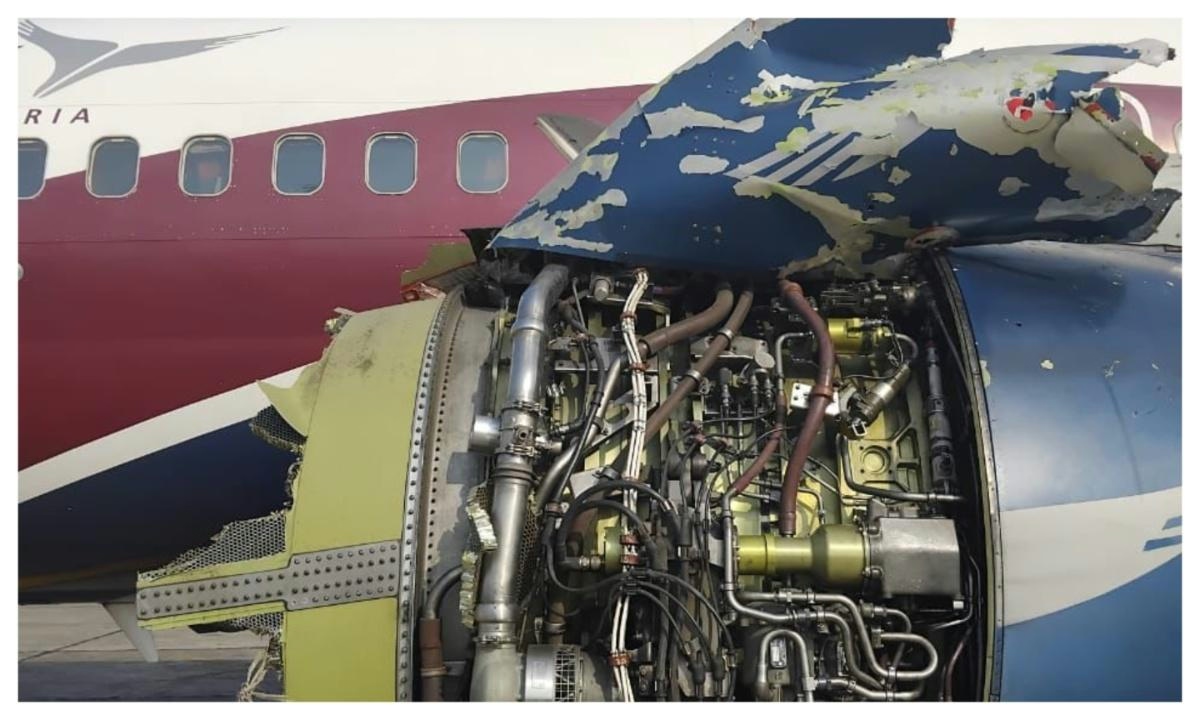
An Arik Air Boeing 737-700 was compelled to divert to Benin Airport on February 11 after experiencing a left-engine failure during its descent. The aircraft, registered 5N-MJF and operating flight W3 740 from Lagos to Port Harcourt, encountered the issue when the flight crew reported hearing a loud bang emanating from the left engine. Acting prudently, the crew shut down the affected engine and redirected the flight to Benin, where it landed safely without further incident.

Incident Details and Immediate Response

All 80 passengers and crew members disembarked normally, with no injuries reported. Arik Air promptly arranged onward transportation for the affected passengers to continue their journey. The Nigerian Safety Investigation Bureau (NSIB) confirmed the occurrence of an in-flight engine anomaly. Preliminary inspections conducted at Benin revealed significant damage to the left engine, including the separation of parts of the engine cowling. Debris from the engine struck the fuselage and vertical stabilizer; however, investigators found no evidence of structural damage severe enough to compromise the aircraft’s control.

Investigation and Aircraft Background

In line with its statutory mandate and International Civil Aviation Organization (ICAO) Annex 13 standards, the NSIB has launched a comprehensive investigation into the incident. An assessment team has been deployed to secure the aircraft, document evidence, interview the crew and witnesses, and recover data from the flight data recorder and cockpit voice recorder. A preliminary report is anticipated within 30 days.

The aircraft involved is a Boeing 737-7GL(WL), manufacturer serial number 34762, powered by two CFM International CFM56-7B22 engines. It first flew in October 2007 and was delivered to Arik Air in December of the same year.

Implications for Arik Air and the Boeing 737 Fleet

This engine failure poses potential challenges for Arik Air, including increased maintenance costs and possible disruptions to flight schedules as the airline manages the incident’s aftermath. The event may also invite heightened scrutiny of Arik Air’s operational reliability and safety protocols, potentially affecting passenger confidence. Industry observers suggest that competitors might leverage the situation by emphasizing their own safety records and operational dependability in marketing campaigns.

The incident also renews attention on the Boeing 737 series, which has faced ongoing scrutiny in recent years. Despite such setbacks, the model remains in demand; notably, the U.S. Air Force is reportedly considering acquiring a used 737-700 for VIP transport, underscoring sustained interest in this aircraft type.

The NSIB’s investigation aims to determine the root cause of the engine failure and to recommend measures to prevent similar incidents in the future.

Comments

  • D

    Dennis

    If the engine failed, that's not on Boeing. The engines are supplied by the airline and Boeing installs them for the airline. Lack of or poor maintenance?

More news
Soji AI and Active Partners Explore AI Applications for MRO Records

Soji AI and Active Partners Explore AI Applications for MRO Records

Soji AI and Active Partners Collaborate to Enhance AI Integration in Aircraft MRO Records Soji AI and Active Partners have announced a strategic partnership aimed at advancing the application of artificial intelligence to improve the efficiency of aircraft and engine delivery, re-delivery, inspections, and transitions. Central to this collaboration is the integration of Soji AI’s platform, which converts fragmented aircraft data into automated workflows and actionable insights, into Active Partners’ operational framework. Transforming Aircraft Maintenance and Records Management By implementing Soji AI’s technology, Active Partners anticipates significant reductions in downtime, optimized resource allocation, and enhanced value delivery to its clients, including aircraft owners, lease managers, and operators. Rob de Klerk, Director of Technical Services at Active Partners, described the partnership as a pivotal step in the company’s digital transformation. He emphasized that the adoption of AI-driven engineering management not only improves efficiency and reliability but also establishes new benchmarks for innovation and safety within the aviation sector. De Klerk highlighted that the collaboration goes beyond mere digitization of documents; it streamlines manual document searches and accelerates record processing by identifying inconsistencies at earlier stages. The partnership is designed to empower engineers with validated information, thereby reducing reliance on manual interpretation of raw data. Florian Falk, CEO of Soji AI, underscored the broader industry trend toward intelligent, AI-powered operations. He noted that the decision by Active Partners to adopt Soji AI’s platform reflects a shift away from traditional, document-heavy processes toward scalable, digital-first aircraft lifecycle management. Falk stressed that human-AI collaboration remains central to the solution, with engineers maintaining final decision-making authority. The partnership aims to demonstrate how AI can be effectively embedded within certified environments to support this transition. Challenges and Industry Implications Despite the promising outlook, the partnership faces several challenges in scaling AI applications for maintenance, repair, and overhaul (MRO) records. Key obstacles include ensuring that existing infrastructure can support AI agents in production settings and addressing issues related to data scarcity. Furthermore, as the aviation industry increasingly explores AI-driven solutions, there is potential skepticism regarding the tangible operational return on investment, especially in the context of complex fleet management decisions. The competitive landscape is expected to intensify as rivals enhance their own AI capabilities, focusing on real-time workflow adjustments and improved data integration for AI agents. This environment underscores the necessity for robust and scalable solutions capable of delivering measurable improvements in operational efficiency and safety. As Soji AI and Active Partners advance their collaboration, their efforts may serve as a benchmark for the wider adoption of AI in aviation MRO, potentially setting new standards for digital transformation and operational excellence across the industry.
Tecalemit Aerospace Group Marks 100 Years of Innovation in Fluid Circulation

Tecalemit Aerospace Group Marks 100 Years of Innovation in Fluid Circulation

Tecalemit Aerospace Group Marks 100 Years of Innovation in Fluid Circulation Founded over a century ago, the French-based Tecalemit Aerospace Group has become a global leader in the development and manufacturing of advanced piping systems designed for the most demanding environments. The group’s expertise encompasses flexible, semi-rigid, and rigid piping solutions, serving key players in aerospace, space, defense, and nuclear sectors by securing and optimizing critical fluid circulation systems. Integrated Strategy and Technological Excellence Tecalemit Aerospace Group’s competitive advantage stems from the seamless integration of its subsidiaries, which collectively manage the entire value chain—from raw materials to finished products. The core company, Tecalemit Aerospace, specializes in high-technology piping systems, while Tecalemit Aerospace Composites contributes advanced braiding technologies that enhance both durability and weight efficiency, crucial for aerospace applications. Complementing these capabilities, Tecalemit Tubes manufactures precision tubes from high-performance materials such as aluminum, titanium, Inconel, and stainless steel. The group’s integrated design office plays a pivotal role, enabling not only manufacturing but also collaborative co-design of bespoke solutions. Whether operating under “Build to Print” or “Build to Specification” frameworks, Tecalemit Aerospace Group tailors its products to meet the exacting requirements of industry leaders including Airbus, Safran, Dassault Aviation, and ArianeGroup. Navigating Industry Challenges and Commitment to Quality Operating within highly strategic and complex markets, Tecalemit Aerospace Group contends with a dynamic environment shaped by geopolitical tensions, supply chain disruptions, and rapid technological evolution. The group must continuously adapt to fluctuations in global demand, economic volatility, and international trade uncertainties. Across the sector, competitors have responded with strategic initiatives such as talent acquisitions and mergers, exemplified by recent moves from firms like Spencer Fane and CNH Industrial, highlighting the critical importance of agility and innovation. Tecalemit Aerospace Group employs 500 staff members across specialized industrial sites located in France—Lyon, Luceau, and Chârost—and Morocco, in Casablanca. These facilities are equipped with state-of-the-art technological infrastructure, ensuring both operational responsiveness and technical excellence. This network enables the group to serve all segments of the aerospace and space industries, including civil and military aviation, helicopters, business jets, launch vehicles, and missile systems. Joining Tecalemit Aerospace means becoming part of a century-old French group deeply embedded in sectors where precision, reliability, and innovation are essential. As the aerospace industry continues to evolve amid global uncertainties and technological shifts, Tecalemit Aerospace Group remains steadfast in its commitment to excellence, adaptability, and supporting its clients in meeting the challenges of the future.
VTU Advances Aerospace Industry Collaboration

VTU Advances Aerospace Industry Collaboration

VTU Advances Aerospace Industry Collaboration Strengthening Academic-Industry Partnerships Visvesvaraya Technological University (VTU) is intensifying its collaboration with the aerospace sector through a recent delegation visit led by Vice Chancellor Dr. S. Vidyashankar. The team toured the Center for Invention, Innovation, Incubation and Training (CIIIT) and Indamer Aviation’s Aerospace Maintenance, Repair, and Overhaul (MRO) facilities in Nagpur. This initiative highlights VTU’s strategic focus on bridging the gap between academia and industry, aiming to equip students and faculty with skills aligned to the rapidly evolving aerospace landscape. At CIIIT, an institution established by Tata Technologies in partnership with the Government of Maharashtra, the delegation examined industry-oriented models designed to foster innovation, entrepreneurship, and technology-driven education, particularly benefiting students in the Gadchiroli region. Discussions centered on collaborative opportunities in emerging domains such as artificial intelligence, aerospace and defence technologies, unmanned aerial vehicle (UAV) systems, smart manufacturing, battery management systems, quantum communication, and advanced materials. The delegation explored potential avenues for joint research projects, faculty development programs, student internships, innovation centres, and industry-integrated skilling initiatives to enhance the capabilities of VTU-affiliated institutions. The subsequent visit to Indamer Aviation’s MRO facilities provided the delegation with valuable insights into aviation maintenance, repair, and overhaul operations, underscoring the sector’s increasing demand for hands-on technical expertise. This exposure is expected to inform VTU’s curriculum development and training programs, ensuring alignment with industry requirements. Navigating Global Challenges and Opportunities VTU’s efforts to deepen industry collaboration occur against a backdrop of a complex and dynamic global aerospace environment. Geopolitical tensions, such as those impacting Boeing’s operations in the Asia-Pacific region amid U.S.-China frictions, present potential challenges for Indian institutions seeking to expand international partnerships. Market volatility is also evident; for example, Unimech Aerospace has experienced mixed technical signals despite a recent upgrade in its investment rating, reflecting broader uncertainties within the industry. In parallel, competitor strategies are evolving rapidly. Initiatives like NASA’s Aeronautics Flight Accelerator aim to accelerate the development of revolutionary aerospace technologies through strengthened industry partnerships. Additionally, international collaborations, exemplified by the joint mission of the European Space Agency (ESA) and the Japan Aerospace Exploration Agency (JAXA) to study asteroid Apophis, highlight the growing importance of global cooperation in aerospace research and innovation. Addressing these developments, Dr. Vidyashankar emphasized the critical role of robust collaboration among universities, industries, and innovation centres. He stated, “Experiential learning, interdisciplinary research, and technology-driven education are vital to nurturing future-ready technologists, researchers, and entrepreneurs.” As VTU advances its academic-industry engagement, it remains cognizant of both the opportunities and challenges presented by the global aerospace sector. The university reaffirms its commitment to developing industry-ready talent through practical training and fostering international collaboration.
Malaysia Targets RM55 Billion Aerospace MRO Market by 2030

Malaysia Targets RM55 Billion Aerospace MRO Market by 2030

Malaysia Targets RM55 Billion Aerospace MRO Market by 2030 Malaysia’s aerospace maintenance, repair, and overhaul (MRO) industry has set an ambitious goal to reach RM55 billion in revenue by 2030, as outlined in the Malaysia Aerospace Industry Blueprint (MAIB) 2030. This target would position Malaysia to capture approximately 25% of the Asia-Pacific MRO market, which is expected to exceed US$60 billion by the end of the decade. Strategic Focus and Industry Development Deputy Investment, Trade and Industry Minister Sim Tze Tzin, speaking at the MRO Southeast Asia 2026 event, emphasized Malaysia’s current standing as the third largest MRO player in the Asia-Pacific region. He highlighted a strategic shift towards higher-value segments within the industry, particularly component and engine maintenance, to secure a larger share of the rapidly expanding aviation market. Under the MAIB 2030 framework, the government is prioritizing the enhancement of critical industry enablers such as infrastructure, talent development, and technology adoption. Key initiatives include the regeneration of Subang Airport and the expansion of the Selangor Aero Park ecosystem, both designed to support scalable growth for MRO operators and Tier-1 aerospace suppliers. Sim also underscored the government’s commitment to workforce development, aiming to create over 30,000 high-skilled jobs by 2030. Efforts to accelerate the integration of advanced technologies, including predictive maintenance and digitalized MRO tools, are central to this vision. Challenges and Competitive Landscape Despite these positive developments, Malaysia faces significant challenges in achieving its RM55 billion target. The country must navigate intense competition from established MRO providers in the Middle East, a region poised to become the second fastest-growing MRO market globally. This competitive pressure has spurred increased investment in local MRO capabilities, exemplified by Malaysia Aviation Group’s recent expansion at Kuala Lumpur’s Sultan Abdul Aziz Shah Airport. Meanwhile, regional competitors are strengthening their market positions through strategic partnerships and expansions, such as GMF’s collaborations with Aerotranscargo and Air One Technics. On the geopolitical front, Sim noted that the ongoing conflict in West Asia has had a limited impact on Malaysia’s aerospace sector to date. While airlines may face challenges from rising jet fuel prices, the availability of aircraft components remains stable, and maintenance demand continues to grow in line with industry expansion. Industry Collaboration and Outlook The MRO Southeast Asia 2026 event, hosted by Malaysia Airports Holdings Bhd in partnership with Aviation Week Network, convened over 350 participants from across the global aviation supply chain. The gathering provided a platform to discuss growth opportunities and challenges within Southeast Asia’s aerospace sector, reinforcing Malaysia’s commitment to advancing its position in the global MRO market.
Trip.com Group Highlights AI and Digital Identity at Airline Global Conference

Trip.com Group Highlights AI and Digital Identity at Airline Global Conference

Trip.com Group Highlights AI and Digital Identity at Airline Global Conference Embracing Artificial Intelligence to Transform Travel On May 13, 2026, Trip.com Group hosted its flagship Airline Global Conference (AGC) in Amsterdam, gathering leaders from the aviation and travel industries to explore how technology, trust, and collaboration are driving the future of travel. The event, held at Passenger Terminal Amsterdam, convened airline partners, airports, global distribution systems, technology firms, corporate travel executives, and organizations such as the International Air Transport Association (IATA) to discuss the next phase of industry growth. The conference’s theme, “Co-Creating Value: Leading the Future of Travel Through Intelligence, Trust, and Partnership,” placed artificial intelligence (AI) at the forefront of the conversation. Xing Xiong, Chief Operating Officer of Trip.com Group, delivered the keynote address titled “Travelling Into the New World,” emphasizing AI’s accelerating influence in reshaping the online travel agency (OTA) landscape. He outlined how Trip.com is harnessing AI to improve internal efficiencies and elevate customer service on a large scale. Xiong also highlighted the transformative potential of Agentic AI within the aviation sector. Amy Wei, Senior Product Director at Trip.com, demonstrated practical AI applications, including TripGenie, an AI-powered assistant designed to personalize and streamline the traveler experience. Wei underscored the importance of human-AI collaboration in customer service, noting that this synergy fosters trust and reduces uncertainty for users navigating complex travel arrangements. Advancing Digital Identity for Seamless Travel In addition to AI innovations, Trip.com Group is advancing digital identity initiatives in partnership with IATA. The companies are piloting a Customer ID digital identity project that leverages secure credentials stored in mobile wallets such as Google Wallet and Apple Wallet. This technology enables travelers to autofill booking details with a single click, aiming to reduce friction, minimize errors, and enhance user control over personal data. The initiative reflects a broader industry movement toward seamless, end-to-end digital travel experiences. Nick Careen, IATA’s Senior Vice President of Operations, Safety, and Security, emphasized the significance of digital identity as a key enabler of smoother travel. He noted that the pilot with Trip.com explores how wallet-based credentials can simplify the booking process while empowering travelers with greater data autonomy. Industry Challenges and Strategic Outlook Despite its technological advancements, Trip.com Group faces considerable challenges. The company is currently under regulatory scrutiny, including an antitrust investigation in China that has recently impacted its stock performance. Moreover, evolving market demands around digital identity and AI require continuous adaptation to maintain competitive advantage. The competitive landscape is intensifying, with rivals such as Amadeus expanding their offerings in biometric identity and AI-driven solutions. Additionally, the growing sophistication of AI-enabled fraud presents new cybersecurity risks, complicating Trip.com’s strategic planning. Trip.com Group and its partners remain engaged in evaluating the future development and phased rollout of the Customer ID functionality, potentially involving select user groups in upcoming stages. As the travel industry continues to evolve, Trip.com’s focus on AI and digital identity highlights both the opportunities and complexities that lie ahead.
Boeing 737 MAX Software Issues Prompt Changes in Global Aviation Safety

Boeing 737 MAX Software Issues Prompt Changes in Global Aviation Safety

Boeing 737 MAX Software Issues Prompt Changes in Global Aviation Safety The Boeing 737 MAX crisis has fundamentally altered global aviation safety standards by revealing significant deficiencies in software transparency and regulatory oversight. Central to the controversy was the Maneuvering Characteristics Augmentation System (MCAS), a software feature that Boeing failed to fully disclose to pilots, airlines, and regulatory authorities. This lack of transparency came to light following two catastrophic crashes—Lion Air Flight 610 in Indonesia and Ethiopian Airlines Flight 302—that resulted in the deaths of 346 people and led to the unprecedented global grounding of the 737 MAX fleet for nearly 20 months. Concealed Software and Catastrophic Consequences MCAS was engineered to automatically lower the aircraft’s nose to prevent aerodynamic stalls. However, Boeing’s failure to inform flight crews about the system left pilots unprepared to recognize or counteract its malfunction. In both fatal incidents, erroneous activation of MCAS repeatedly forced the aircraft into unrecoverable dives. These tragedies exposed not only critical design flaws but also systemic failures in Boeing’s communication and the regulatory approval process. Regulatory Scrutiny and Industry-Wide Reform The aftermath of the 737 MAX disasters prompted comprehensive reforms throughout the aviation industry. The Federal Aviation Administration (FAA) and other global regulators revised certification protocols, imposing stricter software testing requirements, enhanced pilot training standards, and demanding greater transparency from manufacturers. Airlines worldwide instituted extensive retraining programs before reintroducing the 737 MAX into service. Boeing itself faced intense regulatory scrutiny, criminal investigations, and substantial financial penalties. The company continues to grapple with ongoing lawsuits, including investor class actions linked to the safety crisis. Additionally, LOT Polish Airlines publicly accused Boeing of concealing safety issues to secure sales, further intensifying regulatory and market pressures. Market Impact and Competitive Landscape The crisis has significantly affected Boeing’s market position. The company’s stock price has experienced volatility amid safety concerns, legal challenges, and delays in implementing FAA-mandated software updates. Despite temporary delivery suspensions, Boeing continues to supply aircraft and anticipates new 737 MAX certifications later this year. Meanwhile, competitor Airbus has maintained its market share as Boeing works to rebuild confidence and comply with regulatory demands. Long-Term Implications for Aviation Safety The 737 MAX crisis underscored the critical importance of full information sharing among manufacturers, regulators, and operators. While devastating, the incident has established new standards for transparency and accountability within the aviation sector. The aircraft’s return to service in late 2020 followed an exhaustive recertification process, marking one of the most scrutinized comebacks in aviation history.
Air India Faces Growing Crisis Ahead of Ahmedabad Crash Report

Air India Faces Growing Crisis Ahead of Ahmedabad Crash Report

Air India Faces Growing Crisis Ahead of Ahmedabad Crash Report Air India is confronting a deepening crisis as it awaits the imminent release of the Ahmedabad crash report. The airline’s ambitious five-year transformation plan, launched following its privatisation, is increasingly under threat from a series of operational and financial challenges that have hindered progress. Strategic Vision Undermined by Operational Challenges The airline had set out a clear roadmap to revamp its operations and restore its standing in the global aviation market. However, according to Jitendra Bhargava, a former executive director at Air India, the journey has been fraught with difficulties. “They needed a clear vision right now. Air India had given itself a five-year plan to revamp itself after the privatisation. But one can't really say that it's been a happy ride so far. Between their plan and its implementation, there have been big and growing gaps,” Bhargava remarked. This disconnect between strategy and execution has become increasingly apparent as the airline struggles to meet its objectives. Financial Pressures and Geopolitical Strains The airline’s challenges have been exacerbated by rising fuel prices and geopolitical tensions, particularly the recent conflict in Iran. Airspace restrictions resulting from this conflict have forced Air India to curtail several long-haul international routes, many of which have become financially unsustainable. Compounding these difficulties is the depreciation of the Indian rupee against the US dollar, which has significantly increased the cost of dollar-denominated expenses such as fuel. These financial pressures have placed considerable strain on the airline’s operational viability. Leadership Vacuum and Safety Concerns Further complicating the situation is the abrupt departure of a key executive, leaving a leadership void at a critical moment. Air India continues to grapple with persistent operational lapses and safety violations, issues that have undermined efforts to rehabilitate its brand image and restore passenger confidence. The airline’s ongoing struggles with safety and management oversight have heightened scrutiny from regulators and industry observers alike. As the Ahmedabad crash report draws near, the pressure on Air India to confront and resolve these multifaceted challenges intensifies. The airline’s ability to bridge the widening gap between its strategic ambitions and operational realities will be crucial in determining its future trajectory.
Brownsburg, Indiana, Emerging as a Center for Aviation and Defense Innovation

Brownsburg, Indiana, Emerging as a Center for Aviation and Defense Innovation

Brownsburg, Indiana, Emerging as a Center for Aviation and Defense Innovation Brownsburg, Indiana, traditionally recognized for its scenic parks and peaceful lifestyle, is undergoing a significant transformation into a prominent hub for global aviation and defense innovation. This evolution is exemplified by the recent inauguration of a 65,000-square-foot aerospace campus, a landmark achievement for AeroCore Technologies and ReNu Technologies. Situated on a five-acre site, the facility represents five years of strategic growth and firmly establishes Brownsburg as a leader in advanced manufacturing within the region. Advanced Manufacturing and Engine Technology The new campus was designed to support the expanding global operations of both companies, with all products manufactured domestically to meet stringent Defense and Department of Homeland Security regulations. A notable technological advancement developed by AeroCore is its patented nucleated foam cleaning process, which restores aircraft engine performance without requiring engine removal from the wing. This innovation, now recognized internationally, allows airlines to avoid costly and time-intensive engine disassembly, thereby significantly enhancing operational efficiency. With service volumes projected to double annually, AeroCore plans to introduce more than 30 new operations in the coming year. This expansion will further solidify Brownsburg’s status as an international center for aviation maintenance and technological development. Digital Infrastructure and Defense Applications In addition to manufacturing capabilities, the campus boasts a sophisticated digital infrastructure powered by an artificial intelligence-based analytics platform. This system delivers advanced performance and fleet analytics tailored specifically to the needs of defense and energy sector clients. By integrating digital solutions with physical maintenance processes, the platform optimizes engine health and extends operational longevity. ReNu Technologies utilizes the facility to broaden its engineering and sustainment services for ground-based turbine installations and energy producers. The site also supports chemical and refinery operations across the United States, attracting a diverse workforce of engineering professionals and industrial laborers to the Brownsburg area. Economic Impact and Emerging Challenges Brownsburg’s rise as a center for aviation and defense innovation brings substantial economic benefits but also introduces challenges. The influx of aerospace and defense enterprises is expected to place pressure on local infrastructure, necessitating significant investments in transportation networks, housing, and utilities. While increased competition among local businesses may spur innovation, it also risks economic displacement as the market adjusts to the demands of these emerging industries. Responses from competitors at both local and national levels are anticipated as firms recalibrate strategies to either capitalize on or counter Brownsburg’s growing influence. The establishment of new facilities, such as H.B. Fuller’s Aerospace Manufacturing Center of Excellence, is poised to reshape supply chains and alter the economic landscape of the region. Workforce Development and Community Collaboration Sustaining this growth will require close collaboration with educational institutions to develop a skilled workforce capable of meeting the advanced technological demands of the aviation and defense sectors. Industry leaders and local officials alike emphasize the importance of workforce development as a critical component of the region’s continued success. Executives from both AeroCore and ReNu Technologies express pride in the new campus, underscoring the dedication of their teams and the broader positive impact on the community. As Brownsburg continues its transformation, it exemplifies Indiana’s unique blend of traditional values and cutting-edge innovation within the global aviation and defense industries.
KLM Flight from New York to Amsterdam Turns Back Mid-Air

KLM Flight from New York to Amsterdam Turns Back Mid-Air

KLM Flight from New York to Amsterdam Returns Mid-Air Due to Engine Malfunction Technical Issue Forces Turnback Over Irish Airspace On Tuesday, May 12, 2026, a KLM Royal Dutch Airlines Boeing 787-10 Dreamliner operating flight KL643 from Amsterdam Schiphol Airport (AMS) to New York’s John F. Kennedy International Airport (JFK) was compelled to return to its departure airport following a technical malfunction. Approximately one hour and 45 minutes into the transatlantic flight, while cruising at flight level 360, the flight crew detected a fault in the right engine’s bleed air system. Specifically, the Bleed Air Inlet valve was closed and could not be reopened, a critical failure affecting wing anti-icing, cabin pressurization, and air conditioning systems. Despite repeated attempts to reset the system, the issue persisted, prompting the crew to coordinate with KLM operations and air traffic control to reverse course. The aircraft reached its furthest point west near 53.7°N, 9.0°W, just off the west coast of Ireland, before executing a 180-degree turn and returning safely to Amsterdam Schiphol. The Dreamliner, registered PH-BKF and six years old, landed without incident at approximately 20:10 local time. No injuries were reported, and affected passengers were rebooked on alternative flights. Broader Industry Context Amid Rising Fuel Costs This incident occurs against a backdrop of significant operational challenges for KLM and the wider airline industry, driven largely by escalating jet fuel prices amid ongoing geopolitical tensions. In response to these pressures, KLM recently announced a reduction of 80 return flights to and from Amsterdam Schiphol in May, citing the unsustainable cost of fuel. Like many of its competitors—including United Airlines, Lufthansa, and Cathay Pacific—the airline is cutting less profitable routes and grounding less efficient aircraft to manage rising expenses. To alleviate some of the financial strain on carriers, Amsterdam Schiphol’s airport operator has implemented a temporary 10% reduction in airport charges. These measures reflect a broader industry trend as airlines adjust schedules and operations to mitigate the impact of volatile fuel markets. The affected Dreamliner had earlier completed a transatlantic flight from Los Angeles (KL604) without incident. PH-BKF is part of KLM’s long-haul fleet, which also includes Boeing 777s and Airbus A330s. KLM has initiated a technical investigation into the bleed air system fault to determine the root cause of the malfunction.
Fiji Airports Launches AI Training Program to Enhance Workforce Skills and Operations

Fiji Airports Launches AI Training Program to Enhance Workforce Skills and Operations

Fiji Airports Launches AI Training Program to Enhance Workforce Skills and Operations Fiji Airports has initiated a specialised Artificial Intelligence (AI) training program as a central component of its digital transformation strategy. The initiative seeks to strengthen workforce capabilities, improve operational efficiency, and sustain competitiveness within the rapidly evolving aviation sector. Advancing Workforce Capabilities Through AI The training program, conducted in Nadi, involved over 30 employees from diverse departments including Air Traffic, Safety and Risk, Airside Operations, Electrical and Mechanical, and Airport Management. Led by Caribbean AI and data transformation expert Leslie Fook, the sessions concentrated on practical AI applications, workplace innovation, and technology-driven decision-making. Participants engaged with AI tools designed to streamline operational tasks, enhance data analysis, accelerate risk identification, and support more effective airport management practices. This initiative arrives at a pivotal moment for Fiji’s labour market, which has been challenged by significant workforce migration. Approximately 15,500 Fijians have left the country seeking better opportunities abroad, underscoring a persistent disconnect between education, training, and industry requirements. Fiji Airports’ AI program directly addresses this gap by fostering digital literacy and equipping employees with the skills necessary to meet the future demands of aviation technology. Addressing the AI Skills Gap and Fostering Innovation Industry data highlights the urgency of such workforce development efforts. Despite considerable investments in AI infrastructure, many organisations—including those in Fiji—face challenges in workforce readiness. The AI Skills Gap Score reveals that only 14% of graduates are able to apply AI effectively in real-world workflows. Fiji Airports’ program aims to bridge this divide by delivering comprehensive training that extends beyond theoretical knowledge to practical implementation. Human resources leaders have stressed the importance of humility and agility as organisations adapt to the impact of AI on employment and workplace culture. Fiji Airports’ approach seeks to cultivate a culture of innovation and adaptability, thereby maintaining employee trust and addressing concerns related to technological change. Enhancing Airport Operations with AI The training underscored AI’s potential to support airport operations through predictive analytics, operational planning, and improved customer service systems. Employees were introduced to AI-driven tools for decision-making, risk assessment, safety management, and performance monitoring. These technologies are expected to reduce response times during operational disruptions, enhance workflow management, and optimise resource allocation across departments. As airports worldwide increasingly adopt smart technologies, Fiji Airports is positioning itself to align with international trends and meet growing passenger expectations. The organisation views AI as a critical enabler for smarter airport management, increased productivity, and sustainable business growth. By investing in workforce development and digital skills, Fiji Airports aims not only to elevate operational standards but also to confront broader national challenges related to workforce readiness and talent retention. This AI training program represents a significant step toward cultivating a future-ready workforce capable of navigating the complexities of modern aviation.
line










