Bild

AeroGenie — Ihr intelligenter Copilot.

Fragen Sie alles. Analysieren Sie alles. Handeln Sie sofort.

Trends

Categories

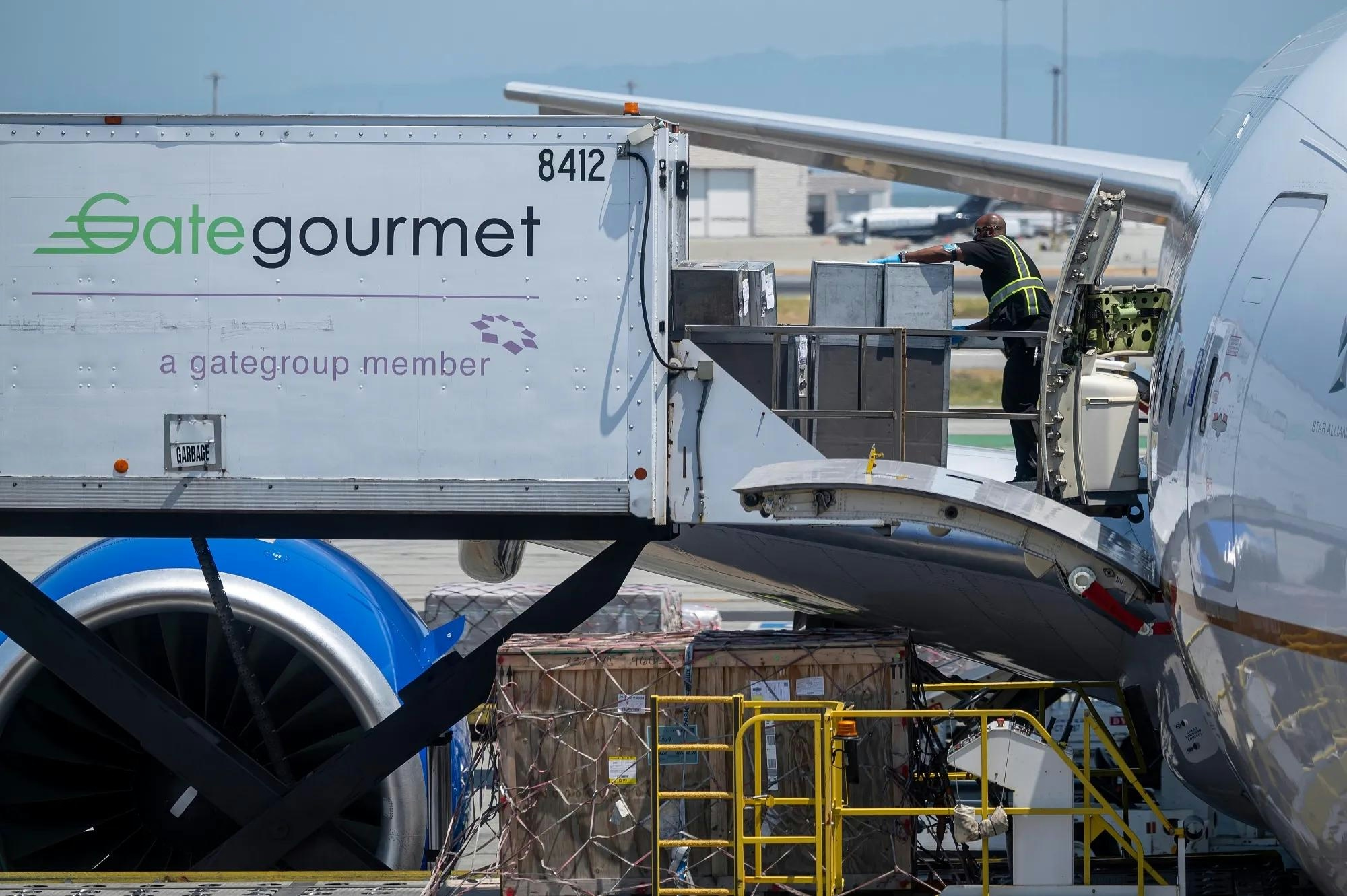
Asia-Pacific Aviation Growth Boosts Airport Catering Truck Market
March 24, 2026By ePlane AI
Asia-Pacific Aviation Growth Boosts Airport Catering Truck Market
0
0
Asia-Pacific Aviation
Airport Catering Trucks
Air Traffic Recovery

Asia-Pacific Aviation Growth Boosts Airport Catering Truck Market

The global airport catering truck market is witnessing significant expansion, driven primarily by the resurgence of air travel and the rapid growth of the aviation sector in the Asia-Pacific region. Valued at approximately USD 950 million in 2025, the market is expected to exceed USD 1.6 billion by 2035, reflecting a compound annual growth rate (CAGR) of around 5.5%, according to industry analysts.

Drivers of Market Growth: Air Traffic Recovery and Service Enhancement

The swift recovery of global air passenger traffic, especially within the Asia-Pacific region, is a key catalyst for the rising demand in the airport catering truck market. Airlines are increasingly focusing on enhancing onboard services to distinguish themselves through premium in-flight dining experiences, which necessitates advanced catering logistics. This demand is further supported by the steady increase in global air passenger numbers and flight frequencies, the expansion of airline fleets encompassing both low-cost and full-service carriers, and substantial investments in airport modernization and ground handling infrastructure. Additionally, stringent hygiene and safety standards in food handling have become critical, compelling airlines to rely on efficient ground support equipment such as catering trucks to maintain operational excellence.

Technological Innovations and Sustainability Initiatives

The market is undergoing notable technological advancements aimed at improving sustainability and operational efficiency. There is a growing adoption of electric and hybrid catering trucks designed to reduce emissions, alongside the integration of hydraulic lifting systems equipped with enhanced safety features. Manufacturers are also focusing on developing lightweight, modular truck designs and implementing Internet of Things (IoT)-enabled fleet management systems to optimize operations. Noise reduction and energy efficiency remain important considerations in these innovations. While electric catering trucks have gained considerable traction in Europe and North America—regions prioritizing carbon neutrality—the Asia-Pacific market is rapidly advancing as airports modernize their fleets to align with global sustainability trends.

Market Segmentation and Regional Dynamics

High-lift catering trucks currently dominate the market due to their capability to service large, wide-body aircraft commonly used on long-haul routes. Although diesel-powered trucks continue to hold a significant share, electric variants are swiftly gaining ground as environmental concerns become increasingly prominent.

The Asia-Pacific region emerges as the fastest-growing market, propelled by expanding aviation infrastructure and surging passenger traffic in countries such as China and India. China leads with extensive airport expansion projects, while India’s burgeoning domestic and international air travel further accelerates growth. The region’s momentum is exemplified by AirAsia X’s projected 11% revenue increase in 2026 and the consolidation of AirAsia’s air operator certificates, developments that are expected to intensify competition and stimulate more competitive pricing and service offerings within the catering truck sector.

Regulatory and Safety Considerations

Despite promising growth prospects, the market faces challenges related to regulatory compliance and safety. Recent incidents, including a collision between a regional jet and an airport rescue and firefighting (ARFF) truck at New York’s LaGuardia Airport, have heightened industry awareness regarding safety protocols and operational standards. These events are likely to prompt airports and airlines to invest more heavily in advanced and safer catering truck solutions to mitigate risks and enhance ground operations.

Competitive Landscape and Industry Outlook

The airport catering truck market is moderately consolidated, with key players such as Mallaghan Engineering Ltd., JBT Corporation, Global Ground Support LLC, and ALVEST Group leading the charge. These companies are prioritizing technological innovation, sustainability, and global expansion. Their strategic focus includes the development of electric and automated vehicles as well as comprehensive fleet modernization efforts to meet evolving industry requirements.

As the Asia-Pacific aviation sector continues its robust expansion, the demand for efficient, safe, and sustainable airport catering trucks is poised to grow, shaping the future of ground support logistics on a global scale.

More news

Merlin Included in Fast Company’s 2026 List of Most Innovative Companies

Merlin Included in Fast Company’s 2026 List of Most Innovative Companies **Boston, March 24, 2026** – Merlin, Inc. (NASDAQ: MRLN) has been named to Fast Company’s esteemed 2026 list of the World’s Most Innovative Companies, joining prominent industry leaders such as Google, Nvidia, Adidas, and Walmart. This annual list highlights organizations that are transforming industries and culture through pioneering innovation, with 720 honorees selected across 59 sectors and regions worldwide. Innovation in Autonomous Flight Technology Merlin’s recognition stems from its flagship product, the Merlin Pilot—an AI-powered autonomous flight system capable of operating any aircraft, military or civilian, from takeoff to landing, with or without human intervention. Developed from first principles, the Merlin Pilot is designed for scalability and adaptability, supporting a diverse range of aircraft including cargo turboprops, tankers, commercial freighters, and military transports such as the C-130J. Each autonomous flight generates valuable data that continuously enhances the system’s intelligence and resilience, creating a technology that is increasingly difficult to replicate. The company has accumulated hundreds of hours of autonomous flight across multiple aircraft types, demonstrating the system’s operational maturity. Merlin’s recent $200 million public offering will support ongoing development of its AI autopilot technology. The company has also secured significant contracts, including a $16 million agreement with the U.S. Air Force, and projects revenues of $32 million for 2026. With plans to invest $30.3 million in research and development this year, Merlin signals a strong commitment to advancing autonomous aviation. “Being recognized by Fast Company just days after our NASDAQ listing underscores the momentum behind what we’re building: an AI-powered operating system for autonomous flight,” said Matt George, CEO and founder of Merlin. “Aviation’s first 100 years were built around pilots. We’re laying the foundation for the next 100—built on autonomy—with the operating system of record for the sky, designed to power the next generation of both military and civil aviation.” Fast Company’s Recognition and Industry Impact Fast Company’s Most Innovative Companies list is one of the publication’s most anticipated annual features. Honorees are selected through a rigorous evaluation process, with editors and writers reviewing thousands of submissions to identify organizations that drive progress and deliver measurable impact. Brendan Vaughan, editor-in-chief of Fast Company, remarked, “Our list of the Most Innovative Companies is about spotlighting organizations that don’t just adapt to change—they drive it. The companies we honor this year are redefining what leadership looks like in 2026, pairing bold ideas with measurable impact and turning breakthrough innovation into real-world value.” Merlin’s advancements are expected to influence the broader aviation sector, encouraging competitors to increase investment in AI technologies and pursue strategic partnerships to maintain their market positions. Industry analysts anticipate a surge in interest and investment in AI-driven aviation solutions as a result. The full list of Fast Company’s Most Innovative Companies will be available at fastcompany.com and will appear on newsstands beginning March 31, 2026. Honorees will be celebrated at the Most Innovative Companies Summit and Gala on May 19 in New York City.
Can AI Improve Aviation Insurance Challenges?

Can AI Improve Aviation Insurance Challenges?

Can AI Improve Aviation Insurance Challenges? The private aviation sector experienced an unexpected surge during the COVID-19 pandemic, reversing one of the longest soft-market cycles in recent memory. Industry insiders have noted that the pandemic ultimately proved beneficial for aviation, driven by increased demand for discretionary assets such as private aircraft. As the market adjusts to this transformed landscape, attention is increasingly focused on the potential of artificial intelligence (AI) to address enduring challenges within aviation insurance. AI’s Potential and Implementation Challenges Experts suggest that AI could play a pivotal role in mitigating the cyclical volatility characteristic of private aviation insurance. By streamlining underwriting processes, enhancing risk assessment, and improving claims management, AI promises to introduce greater efficiency and precision. However, the path to integration is fraught with obstacles. One significant challenge lies in managing workforce dynamics amid growing automation and data-driven decision-making. Insurers face the delicate task of balancing technological innovation with the retention and retraining of skilled professionals. Moreover, many companies contend with outdated legacy systems that complicate the seamless adoption of AI technologies. Determining the appropriate scale and scope for AI implementation—often referred to as tech-scoping—remains a critical hurdle. These technological and organizational complexities must be addressed to fully harness AI’s potential in aviation insurance. Market Dynamics and Competitive Landscape The aviation insurance market’s response to AI adoption has been measured, particularly as signs of market softening emerge. Insurers are becoming more selective in underwriting, cautious about overextension in an environment marked by rapid change. Concurrently, competition within the sector is intensifying. The recent launch of a specialist aviation division by Acrisure, led by Jonny Rowling, exemplifies a broader trend of both established firms and new entrants seeking to capitalize on emerging opportunities through innovation and specialization. AI as a Strategic Advantage Contrary to concerns that AI might disrupt traditional commercial insurance broking, industry observers view it primarily as a strategic opportunity. Early adopters of AI stand to gain a significant competitive advantage, potentially widening the gap with slower-moving rivals. Rather than threatening the existence of brokers and underwriters, AI is expected to augment their capabilities, enabling the delivery of more tailored solutions and more responsive client service. Future Outlook As private aviation continues to evolve in the post-pandemic era, the successful integration of AI into insurance practices could facilitate smoother navigation of market cycles. Nonetheless, realizing these benefits will depend on overcoming substantial technological and organizational challenges. The coming years will be critical in determining whether AI can truly transform aviation insurance or if the industry’s longstanding difficulties will endure.
Airlines Remain Central to Travel Solutions, New Platform Demonstrates

Airlines Remain Central to Travel Solutions, New Platform Demonstrates

Airlines Remain Central to Travel Solutions, New Platform Demonstrates The Growing Importance of E-Commerce Logistics Global e-commerce continues to expand rapidly, with online retail sales expected to exceed $8 trillion by 2026. Cross-border transactions are growing at nearly twice the rate of domestic sales, reflecting a significant shift in consumer behavior. Approximately 60% of shoppers worldwide now purchase from retailers outside their home countries. Despite the sophistication of digital storefronts, the logistics of international parcel delivery remain fragmented, slow, and lacking transparency. This disconnect poses a serious threat to customer satisfaction and the growth potential of retailers operating on a global scale. Airlines have traditionally provided the physical infrastructure necessary to move goods swiftly across continents. However, their systems were primarily designed for palletized freight and bulk shipments rather than the high-volume, small-parcel flows generated by e-commerce. This gap between digital commerce and physical delivery is precisely where SmartKargo, a new logistics platform, seeks to make a significant impact. By enabling airlines to modernize cargo operations, SmartKargo supports the development of domestic e-commerce delivery networks—such as Delta Cargo’s DeliverDirect—and facilitates more efficient cross-border parcel movement. The platform integrates booking APIs, automates customs documentation, optimizes routing, and offers real-time tracking, effectively transforming airline cargo capacity into a structured and transparent logistics network tailored to the demands of modern e-commerce. Challenges in Meeting Consumer Expectations Consumer expectations for speed and transparency in delivery are increasingly shaped by domestic benchmarks, with same-day and next-day delivery now standard in major cities like London, New York, and São Paulo. When shopping internationally, customers anticipate similar levels of service. However, the traditional cross-border delivery process involves multiple handoffs—from fulfillment centers to consolidators, freight forwarders, airlines, customs brokers, and local last-mile providers. Each stage introduces potential delays and reduces visibility, often resulting in cart abandonment, negative reviews, and diminished customer loyalty. As delivery speed and reliability become critical factors influencing purchase decisions, brands are actively seeking smarter logistics solutions to enhance the customer experience. Structural, Regulatory, and Sustainability Challenges Airlines face considerable structural and regulatory obstacles in adapting to this evolving role. In Brazil, for instance, Azul’s CEO has pointed to the country’s underdeveloped aviation market and its disproportionate share of global passenger lawsuits as factors that impede operational efficiency and innovation. In the Middle East, the aviation network’s dependence on just three major carriers makes it vulnerable to geopolitical disruptions that can destabilize logistics chains. European airlines such as IAG benefit from strong hub geographies and premium travel demand but must contend with intense competition and a complex regulatory environment. Sustainability also presents a growing challenge. Europe’s push for sustainable aviation fuel (SAF) is hindered by the slow pace of scaling production and difficulties in securing financing for projects like Ineratec’s Era One plant. Airlines striving to modernize their logistics capabilities must balance environmental objectives with operational demands, a task that remains complex and multifaceted. Despite these challenges, platforms like SmartKargo illustrate that airlines can assume a central role in the future of global e-commerce logistics. By bridging the divide between digital commerce and physical delivery and addressing both technological and structural barriers, airlines are positioned to become indispensable partners in the evolving landscape of international retail.
Why Airlines Continue Refurbishing Boeing 777-300ER Cabins Instead of Replacing Them

Why Airlines Continue Refurbishing Boeing 777-300ER Cabins Instead of Replacing Them

Why Airlines Continue Refurbishing Boeing 777-300ER Cabins Instead of Replacing Them Airlines worldwide are increasingly choosing to refurbish the cabins of their Boeing 777-300ER aircraft rather than replacing the jets entirely. This strategy provides a cost-effective means to extend the operational life of a well-established widebody aircraft while simultaneously enhancing passenger comfort and maintaining operational efficiency. Amid growing industry commitments to achieve net-zero carbon emissions by 2050, refurbishing existing fleets has emerged as a practical approach that balances economic viability, environmental responsibility, and competitive pressures. Production Challenges and Fleet Management The cessation of Boeing 777-300ER production in December 2024, after more than two decades, is a significant factor influencing this trend. Boeing’s decision to end production was driven by manufacturing challenges, evolving market demands, and the anticipated introduction of the next-generation 777X. However, the 777X program has encountered substantial certification delays and engineering difficulties, postponing its initial deliveries until at least 2027. This delay has left over 15 major airlines, including Emirates, Qatar Airways, and Cathay Pacific, in a holding pattern as they await replacements for their aging 777-300ER fleets. Alternative aircraft such as the Boeing 787-9 and 787-10 present operational compromises. The 787-9 accommodates fewer passengers—between 280 and 296 compared to the 777-300ER’s 350 to 400—while the 787-10 offers reduced range and cargo capacity. These limitations pose challenges to existing fleet strategies and operational requirements for many carriers. Consequently, refurbishing the 777-300ER cabins remains the most pragmatic and financially sound option for maintaining capacity and service standards. Industry Adoption and Market Dynamics The refurbishment of 777-300ER cabins has become a widespread practice across the aviation industry. Data from Cirium’s Ground Events indicates that 98 aircraft have undergone cabin upgrades since 2020, with many airlines leveraging the reduced flight schedules during the COVID-19 pandemic to modernize interiors. El Al’s plan to refurbish all six of its 777 aircraft by early 2027 exemplifies the ongoing relevance of this model. Market trends are also influencing refurbishment strategies. Airlines are responding to increased demand for premium seating options, with carriers such as United Airlines focusing on expanding first-class and premium economy cabins to attract high-yield customers. Similarly, Delta Air Lines intends to increase premium seating on its international routes by 2026 to align with evolving passenger expectations. These shifts necessitate cabin upgrades that enhance the overall travel experience and support revenue growth. Operational and Environmental Implications Operationally, the 777-300ER continues to be a vital asset. As of April 2025, Cirium data shows that the aircraft accounted for 14% of all widebody flights globally, with 757 units still in active service. Refurbishing these aircraft enables airlines to sustain capacity and operational flexibility amid ongoing airspace restrictions and other external challenges. From an environmental standpoint, upgrading existing aircraft supports sustainability objectives by minimizing the need for new aircraft production and maximizing the lifecycle of current assets. This approach aligns with broader industry efforts to reduce emissions while maintaining high standards of service and competitiveness. With the 777X’s delayed entry into service and limited suitable alternatives, refurbishing the Boeing 777-300ER cabins offers airlines a balanced solution that delivers financial, operational, and environmental benefits. As demand for premium travel grows and fleet planning becomes increasingly complex, strategic investments in cabin upgrades ensure the 777-300ER remains a cornerstone of global aviation.
Southern Sky Aviation Opens U.S. Customs Facility in Mississippi

Southern Sky Aviation Opens U.S. Customs Facility in Mississippi

Southern Sky Aviation Establishes U.S. Customs Facility at Trent Lott International Airport Southern Sky Aviation has officially opened a U.S. Customs facility at Trent Lott International Airport (KPQL) in Pascagoula, Mississippi, marking the airport’s designation as a point of entry for international flights. The newly renovated customs facility commenced operations on March 19, inaugurated with a ribbon-cutting ceremony, and now offers on-site customs clearance for international arrivals. Enhancing International Access and Services As a fixed-base operator (FBO) participating in the U.S. Customs and Border Protection Reimbursable Services Program, Southern Sky Aviation provides 24/7 customs services for arriving aircraft. Darryl Brewer, president of FBO operations for Southern Sky Aviation, emphasized the significance of this development, stating, “We are proud to welcome U.S. Customs and Border Protection to Southern Sky Aviation at Trent Lott International Airport. Its presence transforms PQL into a true port of entry and positions our airport to serve international aviation operations.” This strategic expansion aims to bolster Southern Sky Aviation’s competitive standing within the aviation and logistics sectors. The introduction of customs services at KPQL is expected to influence established industry players, including major logistics companies such as FedEx, potentially prompting adjustments in their transshipment capabilities or service offerings to maintain market share. The development may also trigger shifts in logistics partnerships and operational strategies as companies respond to the evolving regional landscape. Infrastructure and Operational Capabilities To accommodate anticipated increases in traffic, Southern Sky Aviation is undertaking construction of an additional 121,500 square feet (11,288 square meters) of ramp space, which will include a second connector point for fuel transfer. The FBO currently operates 67,000 square feet (6,224 square meters) of hangar space, capable of housing aircraft up to the size of a Gulfstream G650. The facility offers comprehensive ground handling services for large aircraft, including belt loading, airstairs, and ground power units, alongside cargo and freight handling, on-site maintenance, and fueling. Passenger amenities include a lounge, a 10-seat conference room, and a café, enhancing the overall service experience. Headquartered at Birmingham-Shuttlesworth International Airport in Alabama, Southern Sky Aviation provides a broad portfolio of services encompassing aircraft charter, FBO operations, management, maintenance, and sales. As the company expands its international footprint in Mississippi, it faces new regulatory and competitive challenges within the region’s dynamic aviation and logistics environment.
Key Differences Noted by Cabin Crew Between Boeing 787 and Airbus A350

Key Differences Noted by Cabin Crew Between Boeing 787 and Airbus A350

Key Differences Noted by Cabin Crew Between Boeing 787 and Airbus A350 The Airbus A350 and Boeing 787 Dreamliner represent two of the most advanced widebody aircraft currently in service, frequently compared for their technological innovation, fuel efficiency, and passenger comfort. Both models incorporate extensive use of lightweight carbon fiber composites and are engineered for long-haul operations with twin-engine configurations. While the Boeing 787 is widely recognized for its operational versatility, the newer Airbus A350 is distinguished by its unique "raccoon mask" cockpit window design. Design and Operational Characteristics Despite their many similarities, cabin crew members often identify notable differences between the two aircraft. The A350 boasts a longer range and greater passenger capacity, measuring 243 feet (74 meters) in length, compared to the 787’s 207 feet (63 meters). The 787 is lighter and slightly smaller, featuring highly flexible wings that visibly flex during flight, enhancing aerodynamic efficiency. Its fuselage is constructed from barrel sections, whereas the A350 employs a four-panel fuselage design. These structural distinctions contribute to differing flight characteristics and maintenance considerations. From the perspective of cabin crew, adapting to the distinct cabin layouts and onboard systems of each aircraft can present operational challenges. Variations in galley arrangements, safety systems, and overall cabin configuration often necessitate additional training for crew members transitioning between the two types. Such differences influence crew preferences and can impact airline decisions when selecting new aircraft for their fleets. Economic and Market Considerations Economically, the A350 and 787 are closely matched but exhibit subtle distinctions. According to Air Insight, the A350’s extended range and higher seating capacity translate into a lower seat-to-mile cost of $0.1210 per seat mile. Conversely, the 787’s lighter weight results in a lower cost per aircraft mile and a reduced cost per block hour—$16,899 compared to the A350’s $18,370. While the A350’s cost per seat mile is approximately three percent lower, the 787 offers an eight percent advantage in block hour costs. Purchase prices for both aircraft overlap, with the A350 ranging from $300 million to $366 million and the 787 from $248 million to $338 million. Both aircraft target similar market segments but differ in variant offerings. Boeing provides three 787 variants—the 787-8, 787-9, and 787-10—serving as replacements for older models such as the Airbus A330 and Boeing 767. Airbus offers two primary A350 versions—the A350-900 and A350-1000—aimed at supplanting larger aircraft like the Boeing 777-300ER. The 787-9 and A350-900 are particularly popular among airlines and are frequently compared directly. Impact on Airline Decisions and Manufacturer Strategies Market responses to these differences can be significant. Airlines often weigh crew feedback regarding onboard systems and operational ease when choosing between the two aircraft, influencing future fleet compositions. In turn, both Boeing and Airbus continue to refine their designs, emphasizing enhancements that improve crew experience and operational efficiency to maintain competitiveness in the widebody market. While the Airbus A350 and Boeing 787 remain closely matched in terms of performance and economics, nuanced differences in design, crew experience, and operational flexibility continue to shape strategic decisions by airlines and manufacturers alike.
Radio Call Reports Engine Trouble Before Fatal Boynton Beach Helicopter Crash

Radio Call Reports Engine Trouble Before Fatal Boynton Beach Helicopter Crash

Radio Call Reveals Engine Trouble Before Fatal Boynton Beach Helicopter Crash A helicopter that crashed into a warehouse in Boynton Beach on Monday, resulting in the deaths of both occupants, was experiencing engine trouble shortly before the accident, according to recently released air traffic control radio transmissions. The 43-second recording, obtained by NBC6, captures a voice from the helicopter alerting controllers: “We’re gonna be landing out here in one of these fields, we’ve got something going on with the helicopter.” When the message was not immediately understood, a second voice clarified, “He said he’s gonna be landing in one of the fields, there’s a problem with his engine.” The crash occurred around 12:30 p.m. near the 3800 block of South Congress Avenue, when the Robinson R44 helicopter collided with a vacant warehouse. Aerial footage showed the wreckage protruding from the roof of the building. Both individuals aboard the aircraft were killed, though their identities have not yet been released by authorities. Investigation and Industry Implications Federal Aviation Administration (FAA) records indicate that the helicopter was registered to Palm Beach Helicopters, a flight school based in Lantana. The school’s owner confirmed that the flight was a training mission. While flight tracking data from FlightAware suggests the helicopter departed from Fort Lauderdale-Hollywood International Airport, officials have not officially confirmed the point of origin. The National Transportation Safety Board (NTSB) was scheduled to arrive at the crash site on Tuesday to initiate a comprehensive investigation into the cause of the accident, with particular focus on the reported engine malfunction. This incident occurs amid increased scrutiny of helicopter safety, following a similar crash in Arizona where engine trouble was also suspected. Investigators face significant challenges in determining the exact mechanical failure and assessing whether existing safety protocols were adequate. The crash is expected to prompt a thorough review of maintenance and training procedures, not only at Palm Beach Helicopters but across the broader aviation industry. Public concern regarding helicopter safety may intensify, leading to heightened examination of service providers and their safety records. Market responses could include increased regulatory scrutiny of helicopter operators and potential insurance claims related to the crash. Competitors in the flight training and charter sectors may respond by emphasizing enhanced safety measures and launching public relations campaigns to reassure clients and maintain confidence. As the investigation progresses, officials and industry stakeholders will be under pressure to address the mechanical and procedural factors that contributed to the tragedy and to implement measures aimed at preventing similar incidents in the future.
Jazeera Airways Opens Key Supply Chain Corridor to Kuwait

Jazeera Airways Opens Key Supply Chain Corridor to Kuwait

Jazeera Airways Opens Key Supply Chain Corridor to Kuwait Jazeera Airways, Kuwait’s foremost low-cost carrier, has inaugurated a vital supply chain corridor into Kuwait through Qaisumah Airport (AQI) in Saudi Arabia. This development represents a significant advancement in maintaining the country’s access to essential goods amid ongoing regional challenges. The airline recently completed its inaugural multimodal shipment, transporting 4.5 tonnes of fresh fruits and vegetables from Chennai, India, to Kuwait. The cargo was flown into Qaisumah and subsequently transported overland to Kuwait, ensuring the uninterrupted delivery of perishable goods despite prevailing airspace and operational restrictions. Addressing Regional Logistics Challenges This initiative emerges at a time when traditional logistics channels across the Middle East are under considerable strain due to geopolitical tensions and regional conflicts. These disruptions have affected travel flows and connectivity throughout the Gulf, exposing the fragility of the region’s global supply networks. The establishment of this new corridor is particularly critical for essential commodities with limited shelf life, such as fresh produce. By creating an alternative route, Jazeera Airways not only meets immediate supply demands but also enhances Kuwait’s resilience against future disruptions. Barathan Pasupathi, CEO of Jazeera Airways, emphasized the broader significance of the operation, stating, “In the current environment, connectivity is not only about moving people, it is also about ensuring the continued flow of essential goods into Kuwait. Establishing this supply chain corridor via Qaisumah allows us to support the national food reserves at this critical time. This is a responsibility we have embraced as Kuwait’s national carrier, and one we will continue to build on.” Operational Coordination and Strategic Implications The successful execution of this supply chain corridor required meticulous coordination among multiple stakeholders across Kuwait, Saudi Arabia, and India. Aviation authorities, customs officials, ground handling teams, and logistics partners collaborated closely to manage the shipment from its origin in Chennai to its final delivery in Kuwait. The operation was conducted under stringent timelines to preserve the freshness and quality of the perishable cargo. Jazeera Airways’ decision to utilize Qaisumah Airport follows the closure of Kuwait’s airspace, demonstrating the airline’s operational agility and dedication to national priorities. This strategic adaptation also positions Jazeera Airways to compete more effectively with other regional carriers, which may be compelled to adjust their operations amid increasing pressures on Gulf aviation hubs. By integrating air and overland transport, Jazeera Airways has expanded its capabilities beyond passenger services to include cargo operations, thereby reinforcing Kuwait’s food security and supply chain continuity. The airline’s efforts highlight the growing necessity for flexible and responsive logistics networks in a region marked by instability. As the Gulf navigates complex geopolitical risks and intensifying competition among carriers, Jazeera Airways’ new supply chain corridor lays the groundwork for more robust and adaptable logistics solutions, reaffirming its commitment to maintaining Kuwait’s supply lines and supporting its communities.
Expansion in Muskegon Boosts Production of CFM LEAP Parts for GE Aerospace

Expansion in Muskegon Boosts Production of CFM LEAP Parts for GE Aerospace

Expansion in Muskegon Enhances Production of CFM LEAP Components for GE Aerospace GE Aerospace has announced a significant investment of $1 billion in U.S. manufacturing by 2026, underscoring its commitment to expanding domestic production capabilities and supporting the American aviation industry. At the heart of this initiative is the expansion of its Muskegon, Michigan facility, which will increase the output of critical components for the CFM LEAP engine—a cornerstone product serving both commercial and military aviation sectors. Strategic Investment to Meet Growing Demand This substantial investment forms part of GE Aerospace’s broader strategy to bolster its U.S. customer base and contribute to the revitalization of the nation’s manufacturing sector. The expansion in Muskegon is designed to address the rising demand within the aviation industry, driven by a resurgence in air travel and the ongoing modernization of airline fleets worldwide. By scaling up production, GE Aerospace aims to position itself to better serve its clients and capitalize on the sector’s recovery. Operational Challenges and Market Implications While the expansion presents significant growth opportunities, it also introduces operational challenges. Increasing production capacity will necessitate stringent quality control measures and the seamless integration of new technologies into existing manufacturing processes. Additionally, the company must remain vigilant against potential supply chain disruptions, which have posed difficulties across various industries in recent years. Investor response to the announcement has been predominantly positive, reflecting confidence in GE Aerospace’s domestic growth strategy. However, some analysts have expressed caution, highlighting the risks associated with rapid scale-up, particularly if supply chain constraints persist or if quality standards are compromised. The competitive dynamics within the aerospace engine market are also expected to evolve as a result of this expansion. Competitors may accelerate their own production and investment efforts to maintain or enhance their market positions amid intensifying competition. Industry Engagement and Future Outlook Earlier this year, GE Aerospace sought to deepen industry engagement by inviting last-minute applications to its 2026 L.I.F.T Summit, an event aimed at attracting students and professionals. This initiative reflects the company’s commitment to fostering talent and collaboration ahead of its planned production increase. As GE Aerospace advances its domestic manufacturing focus through the Muskegon expansion, the company faces both the opportunity to grow and the challenge of managing the complexities inherent in large-scale industrial development within a rapidly changing market environment.
FAA Approves Swift Fuels 100R for Use in 840 Engines

FAA Approves Swift Fuels 100R for Use in 840 Engines

FAA Expands Approval of Swift Fuels 100R to 840 Aircraft Engines The Federal Aviation Administration (FAA) has significantly broadened its approval of Swift Fuels’ 100R unleaded aviation gasoline, now authorizing its use in 840 different aircraft engines. The update, effective March 11, 2026, amends the FAA’s Approved Model List (AML) for Swift Fuels’ Supplemental Type Certificate (STC), encompassing a wide range of engines from 65-horsepower Continentals to high-performance Lycoming 540s, as well as models from Franklin, Pratt & Whitney, and several radial engines. This development marks a crucial advancement in the aviation industry’s transition away from leaded fuels. Since introducing its UL94 unleaded avgas in 2015, Swift Fuels has supplied this 94-octane fuel to over 100 airports across the United States. While UL94 has served lower-compression engines—covering approximately 65 to 70 percent of the piston engine fleet—high-performance engines have continued to depend on leaded 100LL fuel for detonation protection. The expanded approval of 100R aims to address this gap by providing a high-octane unleaded alternative suitable for a broader range of engines. Progress Toward Unleaded Aviation Fuel The path to wider adoption of 100R began in late 2024 when the FAA granted a limited STC for its use in Cessna 172 R and S models equipped with Lycoming IO-360-L2A engines. Over the following 18 months, 100R was employed as a “test-bed” fuel by ten flight schools across the United States and Europe. A significant milestone occurred in September 2025 when ASTM International published a production specification for 100R, facilitating broader acceptance and distribution of the fuel. Swift Fuels has underscored the importance of ASTM certification, emphasizing that a global specification is vital for international distribution and securing approvals from Original Equipment Manufacturers (OEMs). Leveraging its existing UL94 infrastructure, the company plans to expand the rollout of 100R, gradually replacing the lower-octane fuel as additional engine approvals are secured. Implications for Operators and the Market Aircraft owners wishing to use 100R must obtain an STC. Swift Fuels offers a “Forever STC” for $100, which includes ongoing notifications, placards, licensing rights, and all necessary FAA documentation at no extra cost. This streamlined approach is intended to facilitate a smoother transition for operators as 100R becomes available at more airports. The FAA’s expanded approval is expected to have a significant impact on the general aviation fuel market. As eligibility for 100R use grows, demand is likely to increase, potentially accelerating its distribution throughout the United States and Europe. However, this transition also presents challenges, including market acceptance and the need for airports and operators to adapt to new fuel specifications and infrastructure requirements. Competitive Landscape in Unleaded Avgas Competition in the unleaded aviation gasoline market remains intense. Swift Fuels is among three companies striving to deliver a viable unleaded 100-octane fuel for general aviation by 2030. General Aviation Modifications Inc. (GAMI) secured FAA approval for its G100UL fuel in 2022, which covers every spark-ignition piston engine and airframe listed in the FAA’s Type Certificate database. Meanwhile, LyondellBasell continues to develop its UL100E fuel. As the industry navigates these changes, the expanded FAA approval of Swift Fuels’ 100R represents a pivotal moment in efforts to eliminate lead from aviation fuel and modernize the energy landscape of general aviation.
line










