
KI-Erkenntnisse in konkrete Maßnahmen überführen

Trends
Categories
Autonomous Helicopter Completes Maiden Flight
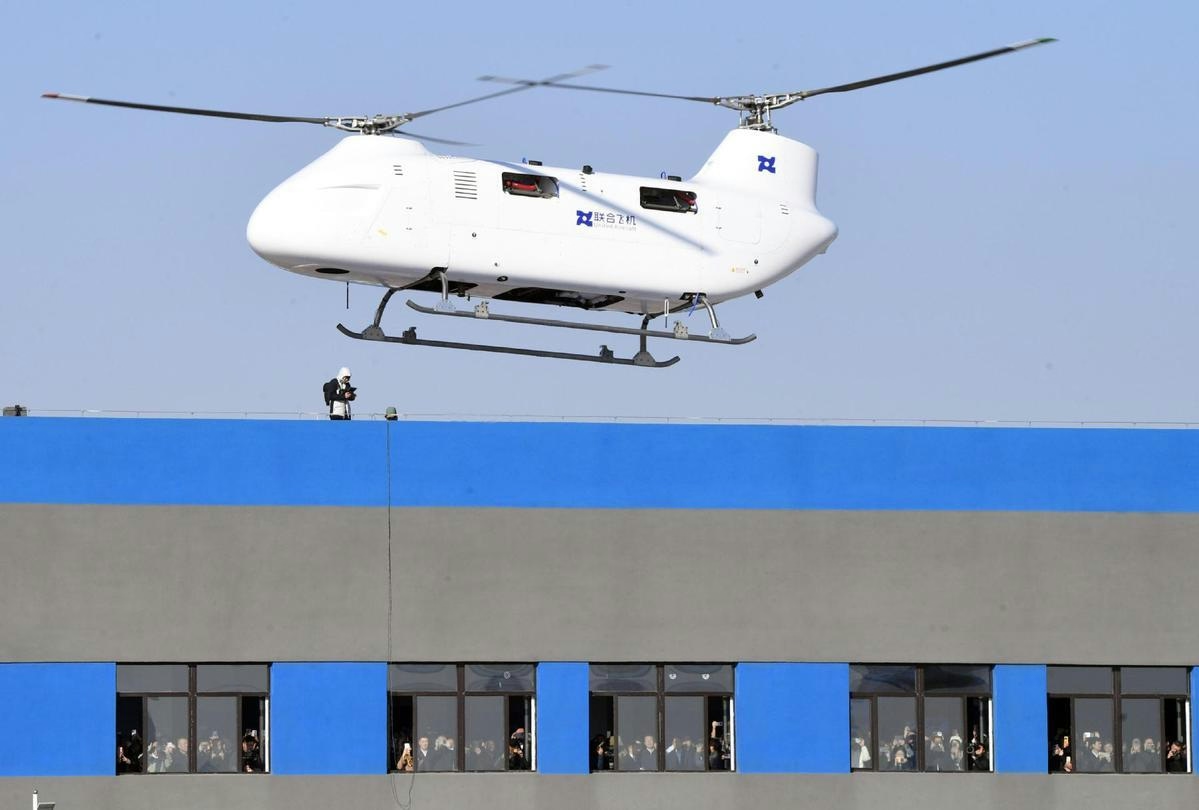
Autonomous Helicopter Proteus Completes Maiden Flight, Advancing UK Defense Capabilities
The United Kingdom has achieved a significant milestone in defense technology with the successful maiden flight of Proteus, the country’s first autonomous full-size helicopter. Developed by Leonardo in Yeovil under a £60 million program commissioned by the Royal Navy, Proteus is designed to unlock the potential of uncrewed aerial systems, marking a pivotal advancement in British military innovation.
A Historic Flight and Its Strategic Significance
Proteus completed its inaugural flight at Predannack Airfield in Cornwall after extensive ground trials at Leonardo’s Yeovil facility. During this initial mission, the helicopter operated its flying controls independently, without human intervention, executing a short test routine that validated the performance of its systems, sensors, and engines. This autonomous operation underscores the aircraft’s capability to function reliably in complex environments.
Luke Pollard, Minister for Defence Readiness and Industry, hailed the event as a proud moment for British innovation, emphasizing the critical role autonomous systems will play in national security. Pollard highlighted that such technologies are essential for protecting maritime domains while minimizing risks to personnel. Commodore Steve Bolton further elaborated on the broader implications, stating that Proteus represents the Royal Navy’s commitment to technological leadership, enhancing operational effectiveness amid increasingly complex maritime threats.
Nigel Colman, managing director at Leonardo, expressed satisfaction with the collaboration, noting the company’s unique position as the UK’s sole end-to-end rotary wing manufacturer and the significance of seeing Proteus take flight for the first time.
Challenges and Industry Implications
While the successful flight marks a technological breakthrough, it also introduces new challenges for the defense sector. Regulatory complexities remain a significant hurdle, with internal divisions within regulatory bodies and fluctuating market valuations posing potential risks to sector stability. The emergence of Proteus is likely to intensify competition, prompting other defense programs such as the U.S. Army’s Future Long-Range Assault Aircraft and the U.S. Air Force’s Collaborative Combat Aircraft initiatives to accelerate their autonomous platform developments.
Market responses to these advancements are expected to be mixed, with heightened sensitivity to policy shifts. Changes in tariffs, interest rates, or economic indicators could amplify market volatility, reflecting the broader financial impact of innovation within the defense industry.
Proteus’s maiden flight not only demonstrates the UK’s commitment to maintaining technological leadership in defense but also signals evolving strategic priorities and market dynamics within the global defense landscape.

Etihad Airways Suspends Airbus A380 Flights on Key Route

Aditya Birla Group Seeks Approval for Aircraft Leasing in GIFT City

Qatar Airways Highlights Innovation and Connectivity at Arabian Travel Market 2026

Hong Kong's Five-Year Plan Includes Andrew Fan's Aircraft Parts Processing Hub Proposal

ACIA Aero Leasing Delivers ATR72-600 to Air Nostrum

RTX Appoints Jill Albertelli as Head of Pratt & Whitney

TAT Technologies Joins Beyond Aero Hydrogen Aircraft Program

AURAK Study Highlights Barriers to Air Taxi Adoption in Emerging Economies

Xiamen Air Selects Altitude for 787 Maintenance at Heathrow

Etihad and Swissport Extend Global Partnership
