
KI-Erkenntnisse in konkrete Maßnahmen überführen

Trends
Categories
Autonomous System Developed for Pilotless Cargo Aircraft
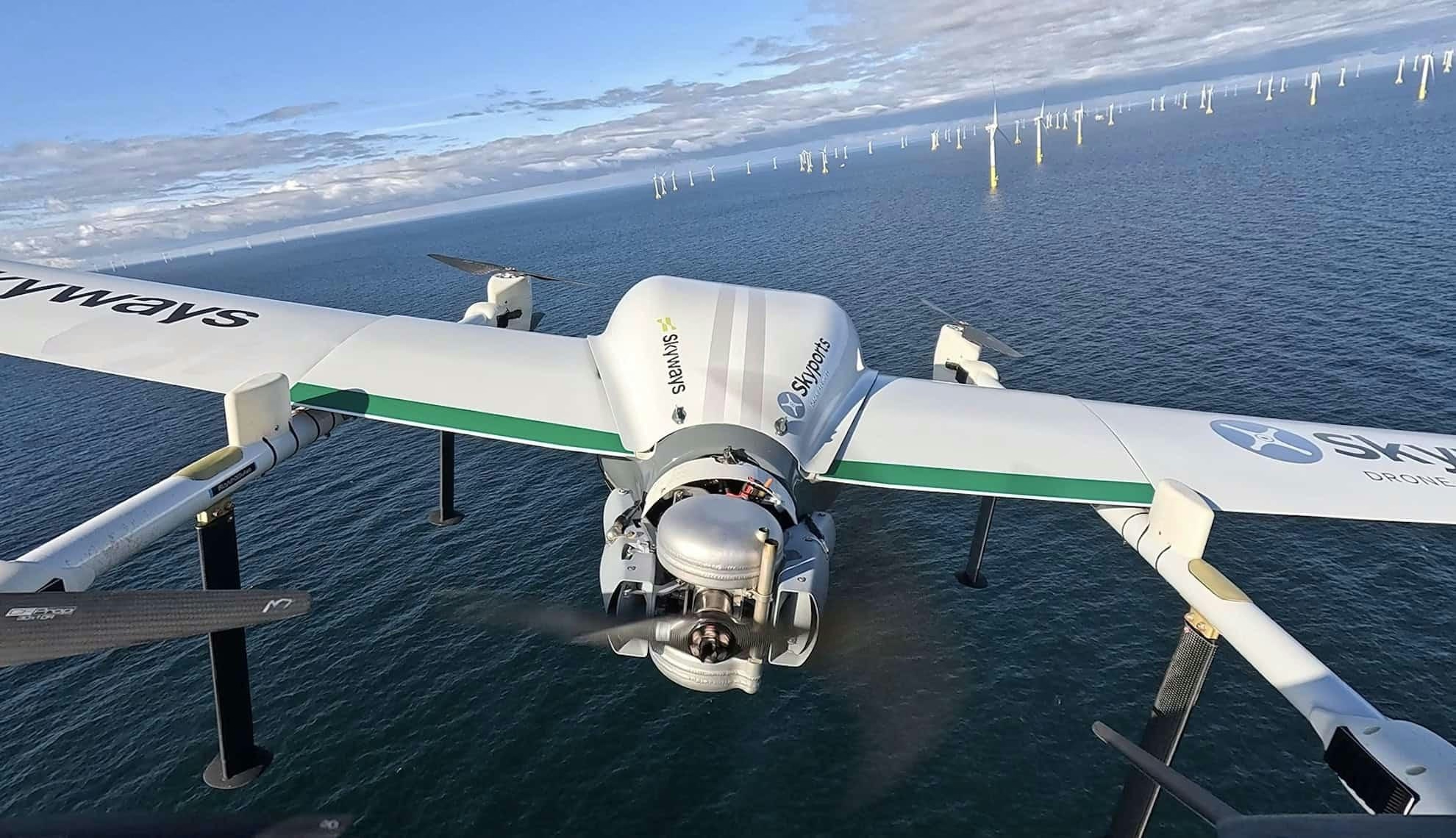
Autonomous System Developed for Pilotless Cargo Aircraft
Advancing Autonomous Aviation for Heavy Cargo
Merlin, Inc. has announced a significant breakthrough in autonomous aviation with the introduction of the Merlin Pilot for Commercial Cargo, an AI-driven flight system engineered to enable pilotless operations in large cargo aircraft. While autonomous flight technology has made considerable strides in recent years, the primary challenge has evolved beyond achieving uncrewed flight to ensuring these systems can safely navigate complex, real-world airspaces alongside traditional aircraft and air traffic control.
Historically, autonomous flight systems have been confined to smaller aircraft such as the Cessna 150 and the Cessna 208B Grand Caravan. However, the expanding market for heavy cargo planes, exemplified by models like the Lockheed Martin Hercules, represents the true growth opportunity. Boeing projects a demand for approximately 2,800 new builds and conversions of large cargo aircraft over the next two decades. This surge coincides with a critical shortage of qualified pilots, raising concerns about staffing the growing fleet. While public acceptance of pilotless passenger flights remains limited, cargo operations offer a more immediate and pragmatic application for autonomous technology.
Development and Capabilities of the Merlin Pilot
Founded in 2018 and headquartered in Boston, Merlin has dedicated several years to developing and testing its autonomous system across five different aircraft types, including real-world commercial route trials in Alaska and New Zealand. The Merlin Pilot, part of the company’s Condor product family designed for large, multi-crew aircraft, is aircraft-agnostic and can be retrofitted into existing airframes. Its sophisticated multi-sensor suite integrates GPS, inertial guidance, radar, radio altimeters, and environmental sensors. The system’s flight software supports autonomous control, collision avoidance, and obstacle detection. A notable feature is its integrated natural language processing model, which enables the system to comprehend and respond to air traffic control communications in a manner akin to a human pilot.
Despite these technological advancements, significant challenges remain. Regulatory approval for autonomous flight systems is complex, with stringent safety requirements and the necessity for seamless integration into existing logistics and air traffic management frameworks. Merlin is addressing these challenges through a phased deployment strategy, initially introducing the system as an advanced cognitive co-pilot working alongside a human safety pilot. This approach aligns with regulatory expectations and facilitates the collection of operational data critical for the eventual certification of fully autonomous flight.
Market Response and Industry Competition
The market’s reaction to autonomous cargo aircraft has been mixed. Traditional logistics companies have expressed skepticism, citing concerns over reliability, safety, and integration with established supply chains. Concurrently, competition within the sector is intensifying. Firms such as Near Earth Autonomy are developing comparable autonomous systems, accelerating development timelines and driving increased investment as companies vie to establish a foothold in this emerging market.
Matt George, CEO and founder of Merlin, emphasized the urgency of the moment: “The pilot shortage is structurally impacting operators and comes at a time when the conversion market is at record volume. The window to integrate autonomy, both during the Passenger-to-Freighter (P2F) conversion and in aircraft being currently built, is open, making this a particularly pivotal moment.”
As Merlin and its competitors advance, the future of autonomous cargo aviation will hinge not only on technological innovation but also on overcoming regulatory, operational, and market acceptance challenges.

Etihad Airways Suspends Airbus A380 Flights on Key Route

Aditya Birla Group Seeks Approval for Aircraft Leasing in GIFT City

Qatar Airways Highlights Innovation and Connectivity at Arabian Travel Market 2026

Hong Kong's Five-Year Plan Includes Andrew Fan's Aircraft Parts Processing Hub Proposal

ACIA Aero Leasing Delivers ATR72-600 to Air Nostrum

RTX Appoints Jill Albertelli as Head of Pratt & Whitney

TAT Technologies Joins Beyond Aero Hydrogen Aircraft Program

AURAK Study Highlights Barriers to Air Taxi Adoption in Emerging Economies

Xiamen Air Selects Altitude for 787 Maintenance at Heathrow

Etihad and Swissport Extend Global Partnership
