
KI-Erkenntnisse in konkrete Maßnahmen überführen

Trends
Categories
Aviation Fuel Disruptions Continue to Challenge the Luxury Travel Sector
Aviation Fuel Disruptions Continue to Challenge the Luxury Travel Sector
Impact on Luxury Travel and Hospitality
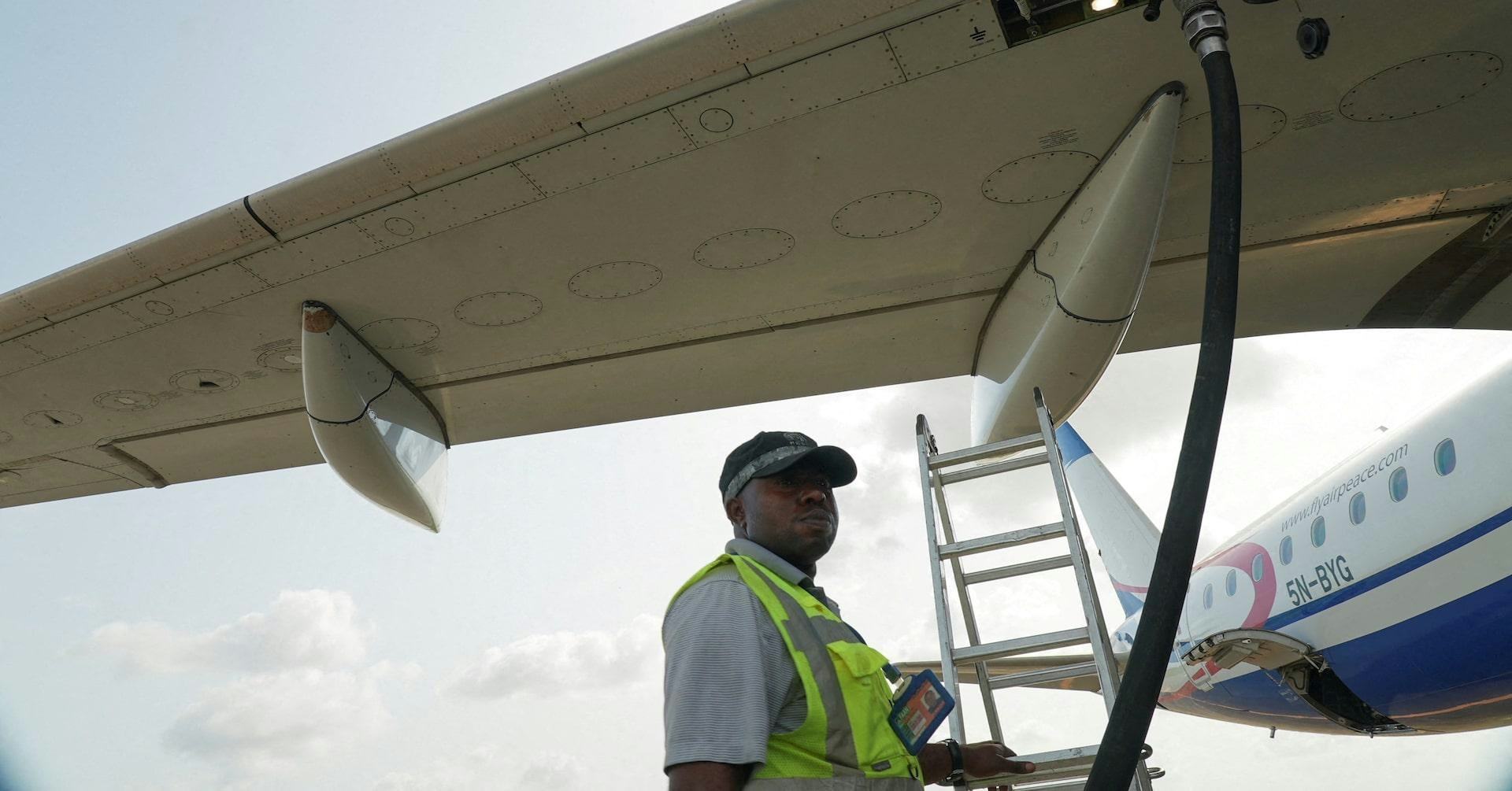
The recent cancellation of a private jet flight for international Afrobeats star Davido in May, due to difficulties in securing aviation fuel, has brought into sharp focus the growing challenges faced by even the wealthiest travelers amid the ongoing jet fuel crisis. This incident highlights the vulnerability of the luxury travel and hospitality sectors to disruptions in the global aviation supply chain. Despite the reopening of the Strait of Hormuz easing some immediate concerns over fuel availability and oil prices returning to pre-conflict levels, the episode underscores the persistent exposure of luxury tourism to geopolitical uncertainties.
Luxury destinations such as the Maldives, Seychelles, Mauritius, the Caribbean, and parts of the Middle East depend heavily on long-haul air travel, making them particularly susceptible to fluctuations in fuel supply. Any increase in fuel costs that drives up premium airfares, reduces flight frequencies, or compromises the reliability of private aviation can swiftly affect the arrival of high-value guests. For luxury resorts, which often rely on a limited number of affluent visitors, even minor disruptions in flight schedules can significantly impact revenue streams, including the sales of branded residences.
Broader Supply Chain Vulnerabilities and Industry Response
The crisis has also exposed deeper structural weaknesses in the global jet fuel supply chain. The extended closure of the Strait of Hormuz revealed the heavy reliance of many regions, especially Europe, on imported jet fuel, as domestic production fails to meet demand. Airlines are now contending with an estimated $100 billion increase in jet fuel costs this year, a burden that is inevitably passed on to consumers through higher ticket prices. Willie Walsh, director general of the International Air Transport Association (IATA), has cautioned that sustained high oil prices will continue to drive up fares, raising concerns about the limits of consumer and commercial tolerance for these increases.
The repercussions extend beyond luxury travel. In regions such as Crimea, fuel shortages have triggered a surge in booking cancellations, disrupting the summer tourism season and illustrating the immediate and widespread consequences of aviation fuel supply constraints.
In response, major European carriers including Lufthansa and Air France-KLM are consolidating their market positions to navigate the challenging environment. Concurrently, the industry is intensifying efforts to enhance sustainability, with European airlines targeting a 2% adoption of green fuels as part of a broader strategy to build more resilient and environmentally sustainable operations.
Accessibility and Sustainability as Competitive Factors
As luxury destinations increasingly emphasize exclusivity and remoteness, accessibility is emerging as a critical competitive factor amid ongoing geopolitical disruptions. Properties located within a few hours of major source markets or served by multiple airlines may demonstrate greater resilience compared to those dependent on limited long-haul routes. For branded residences, the assurance of seamless global mobility remains a fundamental selling point, now tested by the fragility of the aviation fuel supply chain.
The persistent fuel disruptions are compelling the luxury travel sector to reassess its assumptions regarding reliability, accessibility, and sustainability in an evolving global landscape marked by uncertainty and change.

Hong Kong's Five-Year Plan Includes Andrew Fan's Aircraft Parts Processing Hub Proposal

ACIA Aero Leasing Delivers ATR72-600 to Air Nostrum

RTX Appoints Jill Albertelli as Head of Pratt & Whitney

TAT Technologies Joins Beyond Aero Hydrogen Aircraft Program

AURAK Study Highlights Barriers to Air Taxi Adoption in Emerging Economies

Xiamen Air Selects Altitude for 787 Maintenance at Heathrow

Etihad and Swissport Extend Global Partnership

Sepehran Airlines B737 Returns to Mashhad After Tyre and Engine Issues

Etihad Deploys Widebody Fleet to Meet Strong Demand

Korean Air Finalizes $36.2 Billion Deal with Boeing
