
KI-Erkenntnisse in konkrete Maßnahmen überführen

Trends
Categories
Aviation Fuel Prices Set Between N1,760 and N2,037 per Litre

Aviation Fuel Prices Projected Between N1,760 and N2,037 per Litre
The Federal Government of Nigeria has announced that aviation fuel prices are expected to range between N1,760 and N2,037 per litre. This projection follows a series of high-level meetings aimed at stabilising fuel supply and addressing the escalating debt crisis within the country’s aviation sector.
Stakeholder Engagement and Pricing Recommendations
The price forecast emerged from a two-day summit held on April 22 and 23, 2026, convened by the Minister of Aviation and Airspace Management. The meeting brought together key representatives from the aviation and petroleum industries, including officials from the Ministry of Aviation, Ministry of Petroleum Resources, Nigerian Midstream and Downstream Petroleum Regulatory Authority (NMDPRA), Federal Airports Authority of Nigeria (FAAN), Nigerian Airspace Management Agency (NAMA), Nigerian Civil Aviation Authority (NCAA), airline operators, and aviation fuel marketers.
Following these discussions, a technical committee was established to investigate ongoing supply and pricing challenges and to propose actionable solutions. Meeting on April 24, the committee recommended that the indicative end-user price of aviation turbine kerosene (ATK) be set between N1,760 and N1,988 per litre in Lagos, and between N1,809 and N2,037 per litre in Abuja. These figures were derived from Platts average rates recorded between April 17 and 23, 2026. The committee, however, cautioned that prices may fluctuate beyond these ranges due to market volatility, geopolitical tensions, and differing operational costs among suppliers.
Impact on the Aviation Sector and Policy Responses
The sharp rise in aviation fuel prices—doubling within an eight-week period—has placed considerable strain on airline operating budgets, with fuel costs now constituting 20 to 30 percent of total expenses. This surge threatens to increase airfares and exacerbates financial pressures on airlines already contending with rising operational costs. Given the global nature of energy markets, domestic fuel prices remain heavily influenced by international rates, while ongoing supply disruptions in Europe and Asia further complicate the situation. The absence of policy instruments such as a Strategic Petroleum Reserve has limited the government’s capacity to mitigate these impacts.
To address these challenges, the committee recommended that the NMDPRA instruct marketers to sell aviation fuel directly to airline operators during the specified period to enhance distribution efficiency. It also called for regulatory reviews of pricing components, including recent premium adjustments and refinery cost variations, to promote greater price stability.
Further recommendations included enhanced collaboration among the NMDPRA, FAAN, and NCAA to streamline airside operations by validating distributors with adequate infrastructure and reducing the number of operators based on agreed criteria. Regarding the mounting debts within the sector, the Ministry of Aviation was urged to facilitate consultative meetings between oil marketers and airline operators to resolve outstanding financial obligations. The committee also proposed that marketers consider offering a 30-day credit window to alleviate financial pressures on airlines.
Industry Responses and Future Considerations
In response to the fuel price crisis, airlines are exploring various strategies to mitigate the impact, including fare adjustments and the potential adoption of alternative sustainable aviation fuels (SAF). However, uncertainties remain regarding the pricing and availability of SAF. The current situation is regarded as unprecedented, with unique logistical challenges and limited policy flexibility potentially resulting in prolonged effects on demand and industry operations.
The committee further proposed incorporating aviation fuel into the Federal Government’s naira-for-crude initiative as part of broader efforts to stabilise supply and pricing within the sector.

Daily Update on Miles, Points, and Premium Travel
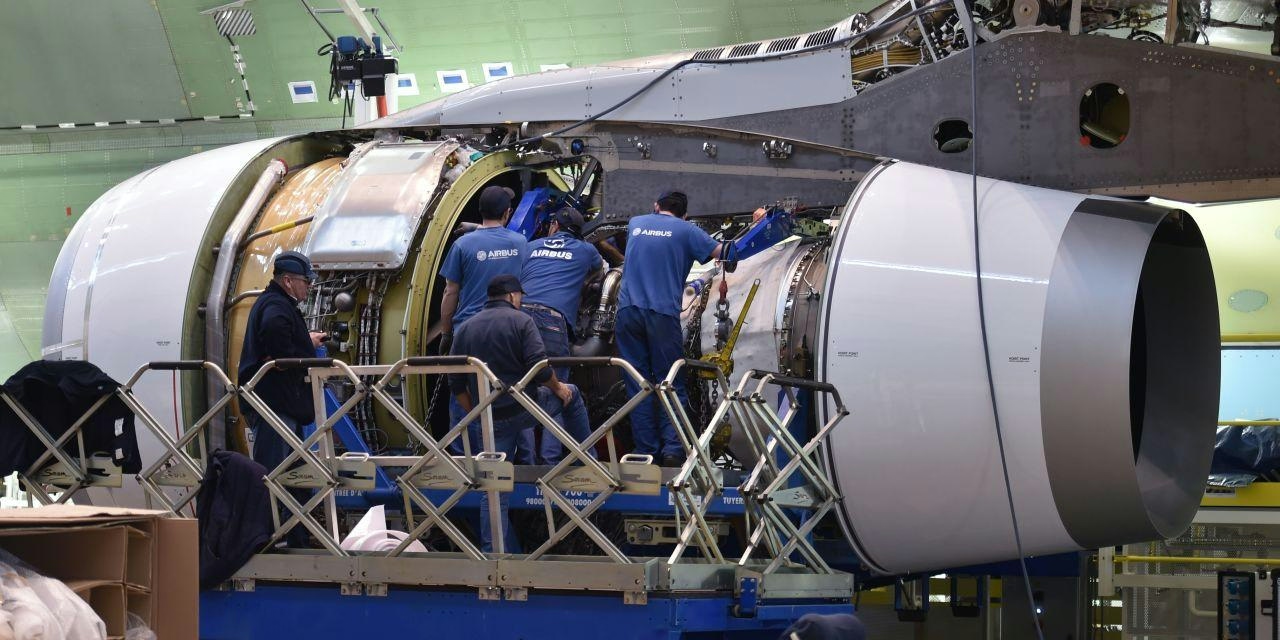
Rolls-Royce Used Airbus A330neo Engine Technology to Address Boeing 787 Engine Issues

Manoj Chacko Compares Aviation to a Test Match Rather Than a T20
SITA says AI tool can save airlines $50,000 per aircraft a year
Kazakhstan Aims to Reduce Shadow Economy Using AI; SCAT Airlines to Start Cargo Flights
Farnborough News Summary, July 26, 2026

Anthem Cockpit System’s Hivemind Could Pave Way for Certified AI-Piloted Planes
Honeywell Aerospace and Shield AI Partner on Autonomous Aircraft Development
Bluebox Enhances ROI for Connected Jets
Tracep L410 Missing Near Kitshanga/Walikale After Engine Failure on July 24, 2026
