
KI-Erkenntnisse in konkrete Maßnahmen überführen

Trends
Categories
Axion: A Jet-Engine Powered Flying Microcar
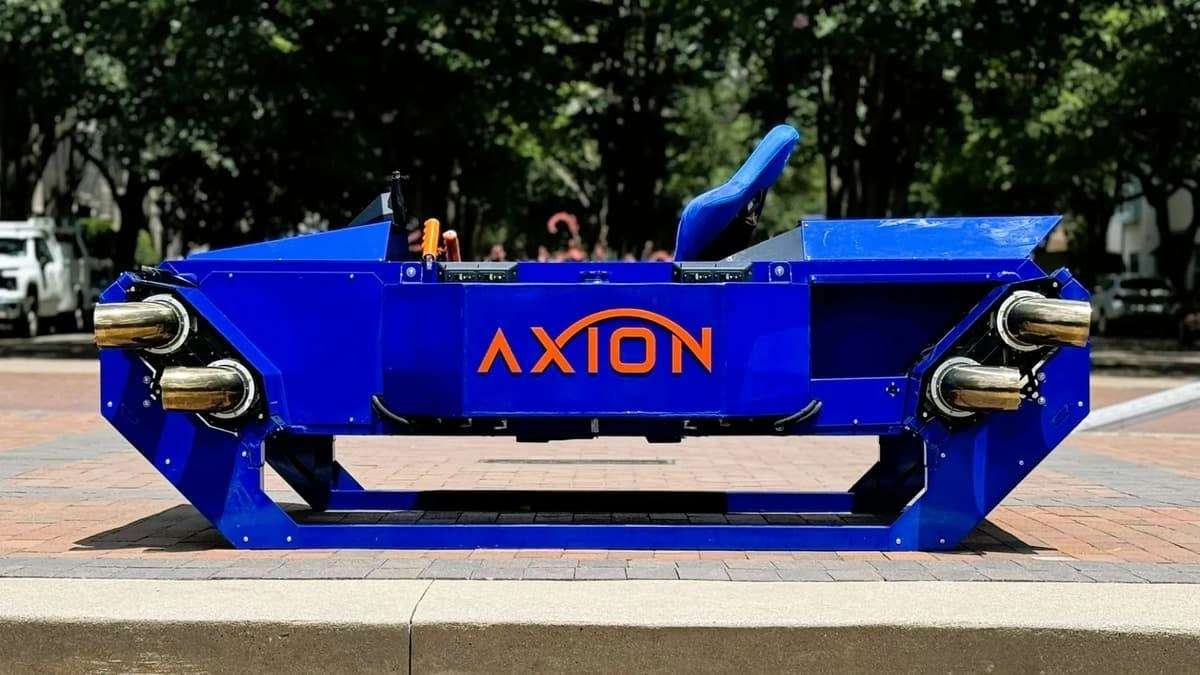
Axion: A Jet-Engine Powered Flying Microcar
A New Approach to Personal Air Mobility
FusionFlight has introduced the Axion, an innovative vertical takeoff and landing (VTOL) vehicle that challenges conventional designs in personal air transport. Distinct from typical drones or flying cars, the Axion eliminates the use of rotors entirely, instead employing eight independently swiveling jet engines. This compact aircraft weighs 150 kilograms when fully loaded and is engineered to carry a single occupant weighing up to 80 kilograms. It operates on diesel or kerosene fuel, marking a departure from the electric propulsion systems increasingly favored in the sector.
Performance and Operational Features
Each of the Axion’s eight vector-thrust jet engines generates 1,098 Newton-meters of torque, delivering substantial lift and providing critical redundancy; the craft can maintain flight even if one engine fails. The vehicle is capable of vertical ascent, hovering, and achieving speeds up to 362 kilometers per hour. However, its operational endurance is constrained by two 57-liter fuel tanks, limiting flight duration to approximately 15 minutes at maximum speed.
The cockpit is equipped with dual joysticks and a basic autonomous navigation interface, enabling pilots to input destinations for automated flight. Despite the aircraft’s engine noise reaching 105 decibels, its practical applications are notable, particularly in emergency contexts such as medical supply delivery, rescue missions, and transporting payloads up to 80 kilograms. FusionFlight is currently conducting early trials and anticipates opening orders soon, with a starting price set at $289,995.
Positioning Within a Shifting Mobility Landscape
The Axion emerges amid a rapidly evolving mobility industry, where established manufacturers are intensifying efforts toward electrification. Recent developments, including the departure of key sales executives from Tesla, underscore the sector’s volatility. Industry events like the 2025 Japan Mobility Show have highlighted uncertainties surrounding the pace of electric vehicle battery advancements and the growing emphasis on advanced air mobility solutions.
FusionFlight’s choice to utilize jet propulsion distinguishes the Axion from the expanding array of electric VTOL aircraft. However, this approach also presents challenges, as consumer preferences and regulatory frameworks increasingly prioritize cleaner and quieter electric technologies. Competitors such as Joby are advancing hydrogen-electric unmanned aircraft, signaling a broader shift toward sustainable air mobility platforms that may challenge or surpass traditional jet-powered designs.
Future Prospects and Challenges
As FusionFlight prepares to commercialize the Axion, it confronts both technical and market challenges amid the industry’s broader transition toward electrification and automation. The vehicle’s success will likely hinge on its ability to establish a foothold in specialized sectors such as emergency response and niche transport services, while adapting to evolving demands for efficiency, environmental sustainability, and integration within emerging mobility ecosystems.

Etihad Airways Suspends Airbus A380 Flights on Key Route

Aditya Birla Group Seeks Approval for Aircraft Leasing in GIFT City

Qatar Airways Highlights Innovation and Connectivity at Arabian Travel Market 2026

Hong Kong's Five-Year Plan Includes Andrew Fan's Aircraft Parts Processing Hub Proposal

ACIA Aero Leasing Delivers ATR72-600 to Air Nostrum

RTX Appoints Jill Albertelli as Head of Pratt & Whitney

TAT Technologies Joins Beyond Aero Hydrogen Aircraft Program

AURAK Study Highlights Barriers to Air Taxi Adoption in Emerging Economies

Xiamen Air Selects Altitude for 787 Maintenance at Heathrow

Etihad and Swissport Extend Global Partnership
