
KI-Erkenntnisse in konkrete Maßnahmen überführen

Trends
Categories
Boeing and Technion Advance Israeli Sustainable Jet Fuel Project
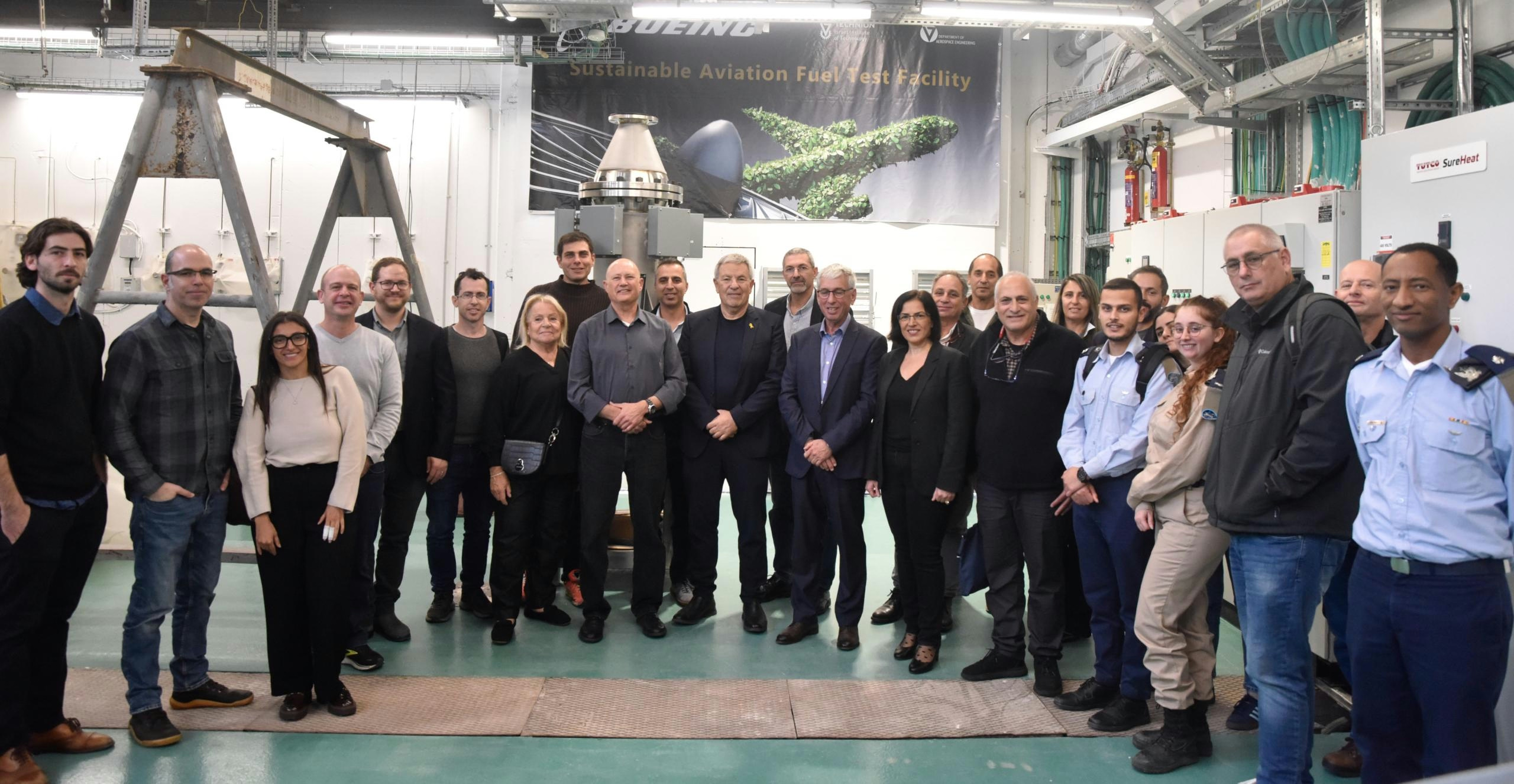
Boeing and Technion Advance Israeli Sustainable Jet Fuel Project
Boeing Global President Dr. Brendan Nelson visited the Technion–Israel Institute of Technology in Haifa on Monday, marking a pivotal moment in the collaborative effort to develop sustainable aviation fuel (SAF). The initiative, which began with feasibility studies, is now progressing into practical development aimed at producing cost-competitive “electrofuel” derived from green hydrogen and captured carbon dioxide.
Advancing Sustainable Aviation Fuel Innovation
During the visit, attention was focused on the Boeing–Technion SAF Innovation Center, established in 2023 to accelerate the development of SAF pathways that have the potential to reduce aviation emissions, enhance energy security, and stimulate a local innovation ecosystem. Boeing regards this project as a critical element of its broader decarbonization strategy, complementing its ongoing efforts to deliver fuel-efficient aircraft and support the sustainable growth of the civil aviation sector.
Dr. Nelson emphasized Boeing’s commitment to sustainability, stating, “In addition to delivering high-quality, fuel-efficient airplanes to our customers, Boeing works globally and regionally to enhance energy security, support the growth of the civil aviation industry, and create new economic opportunities through sustainable aviation fuel and other technologies.”
The Boeing delegation included Maj.-Gen. (res.) Ido Nehushtan, president of Boeing Israel, and Haggai Mazursky, head of the SAF project. They were received by Technion President Prof. Uri Sivan and senior leadership, who described the partnership as a national-scale endeavor linking academic research with industrial capabilities. Prof. Sivan underscored the significance of the collaboration, calling it “a historic collaboration of national importance for the State of Israel” and highlighting the trust placed in Technion researchers to pioneer cleaner fuel production technologies.
Focus on Electrofuels and Future Challenges
The SAF Innovation Center concentrates on the development of “electrofuels” produced through Power-to-Liquid (PtL) processes, which combine green hydrogen with captured carbon dioxide. The project’s next phase aims to transition from theoretical research to practical development, with the goal of achieving commercial-scale production at competitive costs. Under the leadership of Prof. Gideon Grader from the Wolfson Department of Chemical Engineering, the center engages 11 faculty members and numerous doctoral students in research areas including catalytic processes, combustion, safety, life-cycle analysis, and experimental fuel testing.
Despite the promise of this technology, significant challenges remain. The high cost of sustainable aviation fuel compared to conventional fossil fuels continues to be a major obstacle, as noted by industry leaders such as the CEO of TotalEnergies. Nevertheless, market conditions are evolving rapidly. Demand for SAF is increasing, with projections indicating substantial growth in the bio-based sustainable aviation fuel market. Additionally, global regulatory frameworks are becoming more supportive of SAF adoption, which may help narrow the cost disparity and accelerate its integration into the aviation industry.
Boeing faces competition from other aerospace manufacturers, notably Airbus, which currently leads in single-aisle aircraft sales and is advancing its own sustainability initiatives. Boeing aims to regain market share in the narrowbody segment and views sustainable aviation fuel as a critical component of its strategic approach.
Boeing’s relationship with Israel spans over 75 years, encompassing commercial partnerships with El Al, defense cooperation with the Israeli Air Force, and the integration of Israeli-made systems into Boeing products. The Technion-Boeing SAF initiative aligns with broader government-supported efforts to accelerate research and development in sustainable aviation fuels, positioning Israel as a potential leader in this emerging field.

Etihad Airways Suspends Airbus A380 Flights on Key Route

Aditya Birla Group Seeks Approval for Aircraft Leasing in GIFT City

Qatar Airways Highlights Innovation and Connectivity at Arabian Travel Market 2026

Hong Kong's Five-Year Plan Includes Andrew Fan's Aircraft Parts Processing Hub Proposal

ACIA Aero Leasing Delivers ATR72-600 to Air Nostrum

RTX Appoints Jill Albertelli as Head of Pratt & Whitney

TAT Technologies Joins Beyond Aero Hydrogen Aircraft Program

AURAK Study Highlights Barriers to Air Taxi Adoption in Emerging Economies

Xiamen Air Selects Altitude for 787 Maintenance at Heathrow

Etihad and Swissport Extend Global Partnership
