
KI-Erkenntnisse in konkrete Maßnahmen überführen

Trends
Categories
Boeing Close to Approval of 737 MAX Anti-Ice System Fix
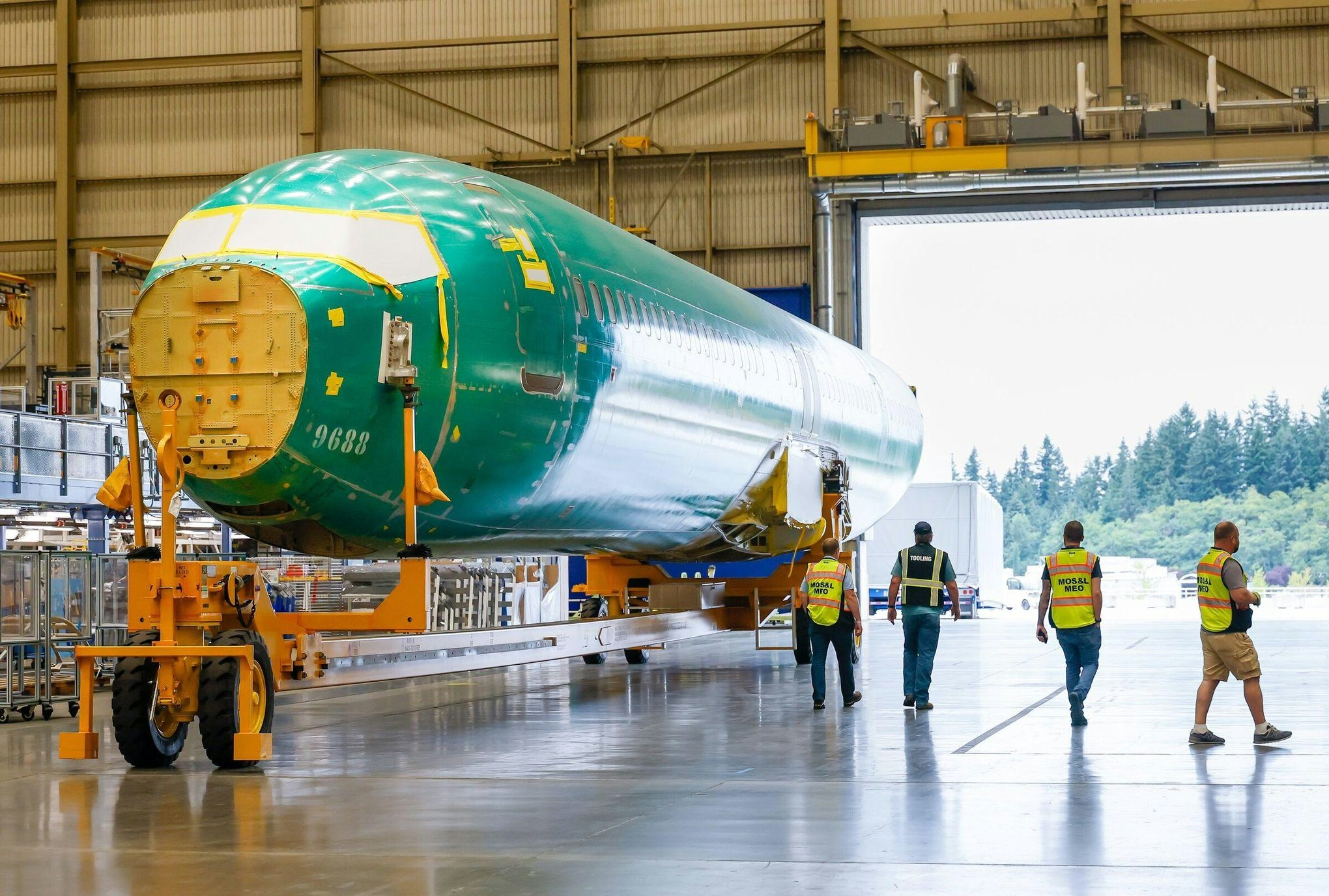
Boeing Nears Regulatory Approval for 737 MAX Anti-Ice System Fix
Boeing is approaching the final stages of obtaining regulatory approval for a crucial engine anti-ice system modification on its 737 MAX aircraft. This development is expected to clear the path for the long-delayed MAX 7 and MAX 10 variants to enter commercial service. The redesign addresses a critical flaw that could lead to engine overheating and potential failure, a key issue that has hindered certification of both the smallest and largest models in Boeing’s best-selling narrowbody family.
The U.S. Federal Aviation Administration (FAA) has indicated that it anticipates certifying the MAX 7 variant this summer. Boeing reports that all certification flight tests for the MAX 7 have been completed, with 95 percent of the required documentation submitted to the FAA. According to aviation analytics firm Cirium, Boeing has already produced approximately 30 MAX 7s and nine MAX 10s awaiting delivery. The MAX 10, which accounts for at least 28 percent of outstanding MAX orders, is nearing completion of its certification flight testing, with 98 percent of tests concluded ahead of the upcoming Farnborough Airshow. Chris Payne, Boeing’s vice president and general manager for 737 MAX development programs, stated, “We have two flight tests left, and we should be done real soon here.”
Delays, Technical Challenges, and Production Efforts
Certification of the MAX 7 and MAX 10 has been delayed by several years, allowing Airbus to strengthen its position in the competitive narrowbody market. Boeing’s certification process has become more stringent following two fatal crashes involving the MAX 8 in 2018 and 2019, as well as increased scrutiny after a mid-air cabin panel failure on an Alaska Airlines MAX 9 in January 2024.
The anti-ice system issue was first identified in 2021. While regulators allowed the MAX 8, 8-200, and 9 variants already in service to continue operations, certification of the MAX 7 and 10 was postponed pending a fix. The new solution, tested at GE Aerospace’s Ohio facility, not only mitigates the risk of engine overheating but also reduces engine noise and addresses fan flutter concerns. Mike Sinnett, Boeing’s senior vice president of product strategy and development, described the fix as “kind of win-win all around.”
The 737 MAX is powered by the LEAP-1B engine, produced by CFM International, a joint venture between GE Aerospace and France’s Safran. Boeing has indicated that most of the anti-ice system retrofit for the existing MAX fleet can be completed within a standard maintenance shift, although installation of new wiring is more complex. The company is coordinating with regulators to schedule these repairs during heavy maintenance intervals to minimize operational disruption for airlines.
To meet growing demand and reduce the delivery backlog, Boeing has inaugurated a new 737 production line in Everett, Washington, with plans to increase output to 52 aircraft per month. However, the FAA recently issued a directive addressing a separate overheating risk in the 737 MAX cabin, which may introduce additional certification and operational challenges.
The MAX 10 will also feature an updated flight crew alerting system, known as the enhanced angle-of-attack system. This upgrade responds to congressional safety mandates enacted after the MAX crashes, which resulted in 346 fatalities and a 20-month grounding of the aircraft. The new system is designed to simplify cockpit alerts in the event of a failed angle-of-attack sensor, reducing pilot workload during critical situations.
With regulatory approval for the anti-ice system fix imminent, Boeing is positioned to resume deliveries of the MAX 7 and MAX 10, marking a significant milestone in its efforts to regain competitiveness in the global single-aisle aircraft market.

Etihad and Swissport Extend Global Partnership

Sepehran Airlines B737 Returns to Mashhad After Tyre and Engine Issues

Etihad Deploys Widebody Fleet to Meet Strong Demand

Korean Air Finalizes $36.2 Billion Deal with Boeing

Australia’s RFDS Queensland Section Orders Six King Air 260Cs

Korean Air Finalizes Order for 103 Boeing Jets and Engines

Embraer E195-E2 Features Distinctive Engine Placement Among Regional Jets

What Passengers Can Expect on Boeing’s New 777X Jet

How Ethiopian Airlines Became Africa’s Leading Carrier Amid Gulf Competition

Joby Aviation Extends Autonomous Flight Capabilities with Cross-Country Tour
