
KI-Erkenntnisse in konkrete Maßnahmen überführen

Trends
Categories
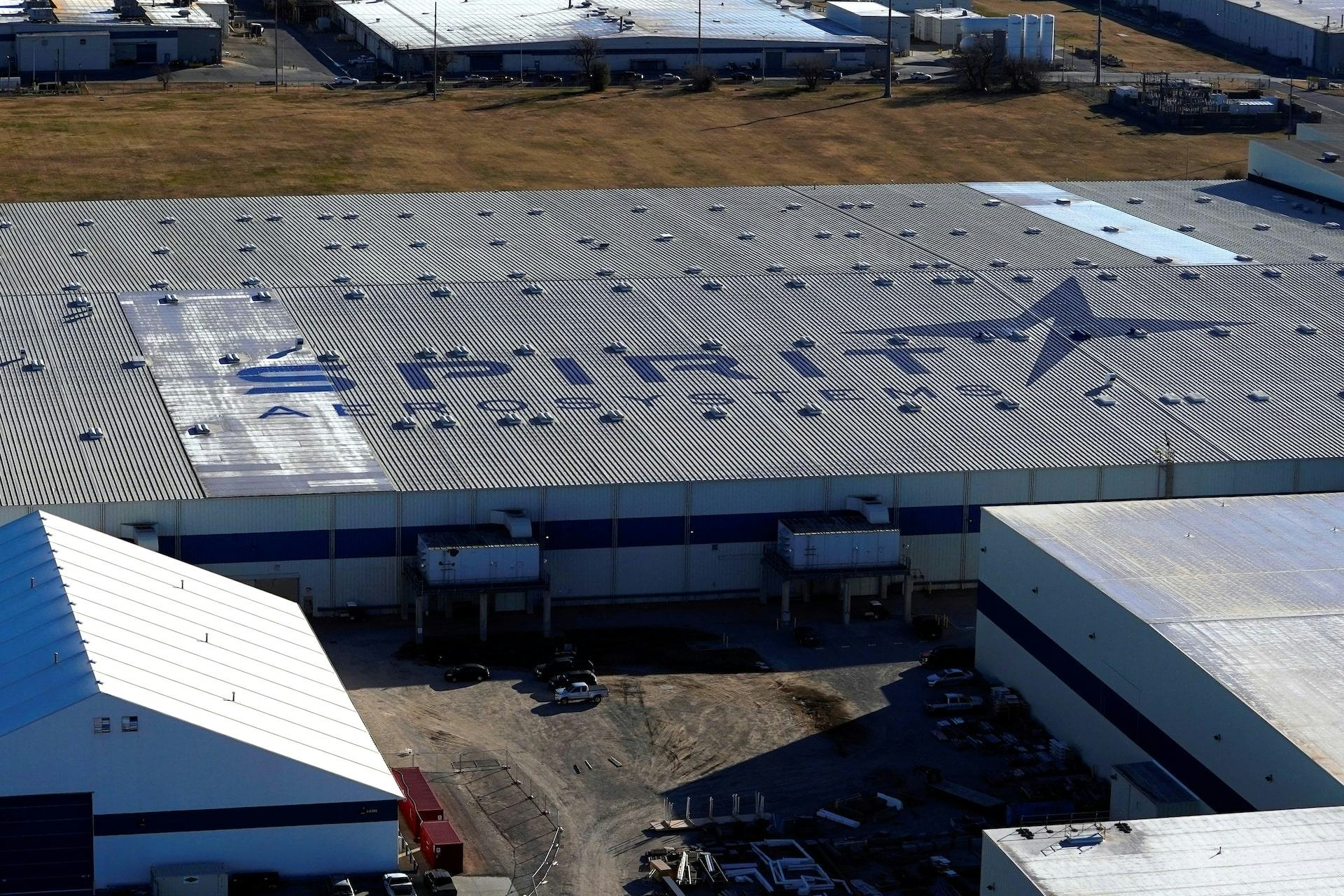
Boeing Finalizes Acquisition of Spirit AeroSystems, Enhancing Aviation and Defense Operations
Boeing Finalizes Acquisition of Spirit AeroSystems, Enhancing Aviation and Defense Operations
Boeing has completed its $4.7 billion acquisition of Spirit AeroSystems, marking a pivotal development in the aerospace sector and signaling a strategic realignment for the company. This transaction reunites Spirit AeroSystems with Boeing after two decades of independent operation, with the objective of strengthening Boeing’s commercial and defense manufacturing capabilities, improving quality control, and bolstering supply chain resilience.
Integration of Manufacturing and Defense Capabilities
The acquisition includes all Boeing-related commercial operations of Spirit AeroSystems, notably the production of fuselages for the Boeing 737 program and major structural components for the 767, 777, and 787 Dreamliner aircraft. Additionally, it encompasses fuselage production for military platforms such as the P-8 maritime patrol aircraft and the KC-46 tanker. This expanded capacity enhances Boeing’s ability to produce critical components across both its commercial and defense portfolios.
Kelly Ortberg, Boeing’s president and CEO, highlighted the strategic importance of the acquisition, emphasizing that it positions the company for sustained success by integrating essential manufacturing capabilities and expanding service offerings. The move addresses recent challenges related to production quality and supply chain disruptions by enabling Boeing to exercise greater control over its manufacturing processes through vertical integration.
Expansion of Aftermarket Services and Defense Operations
The acquisition also significantly impacts Boeing’s aftermarket services. Spirit AeroSystems, previously a major supplier of spare parts, will now allow Boeing to broaden its global maintenance, repair, and overhaul (MRO) operations. By internalizing these services, Boeing aims to provide more comprehensive support throughout the lifecycle of its aircraft, while strengthening its presence in the rotable, lease, and exchange markets.
A distinctive feature of the deal is the creation of Spirit Defense as a non-integrated subsidiary within Boeing’s Defense, Space & Security division. To prevent conflicts of interest and ensure continuity for defense customers, Spirit Defense will maintain independent governance and management, operating separately from Boeing’s core defense business. This arrangement guarantees uninterrupted support for defense clients while enabling Spirit Defense to leverage Boeing’s resources and enterprise functions.
Market Response and Industry Implications
The market reacted favorably to the acquisition, with Boeing’s stock experiencing a notable increase following the announcement. Industry analysts regard the move as a decisive effort to resolve ongoing production and supply chain issues, while reinforcing Boeing’s leadership position in the global aerospace industry.
Beyond its immediate effects on Boeing’s commercial and defense operations, the acquisition is anticipated to have wider ramifications for the aviation and tourism sectors worldwide. By consolidating key manufacturing and service capabilities, Boeing aims to deliver higher quality products and more reliable support, ultimately benefiting airlines, defense customers, and travelers globally.

Etihad Airways Suspends Airbus A380 Flights on Key Route

Aditya Birla Group Seeks Approval for Aircraft Leasing in GIFT City

Qatar Airways Highlights Innovation and Connectivity at Arabian Travel Market 2026

Hong Kong's Five-Year Plan Includes Andrew Fan's Aircraft Parts Processing Hub Proposal

ACIA Aero Leasing Delivers ATR72-600 to Air Nostrum

RTX Appoints Jill Albertelli as Head of Pratt & Whitney

TAT Technologies Joins Beyond Aero Hydrogen Aircraft Program

AURAK Study Highlights Barriers to Air Taxi Adoption in Emerging Economies

Xiamen Air Selects Altitude for 787 Maintenance at Heathrow

Etihad and Swissport Extend Global Partnership
