
KI-Erkenntnisse in konkrete Maßnahmen überführen

Trends
Categories
Boeing Marks 30 Years of the 777
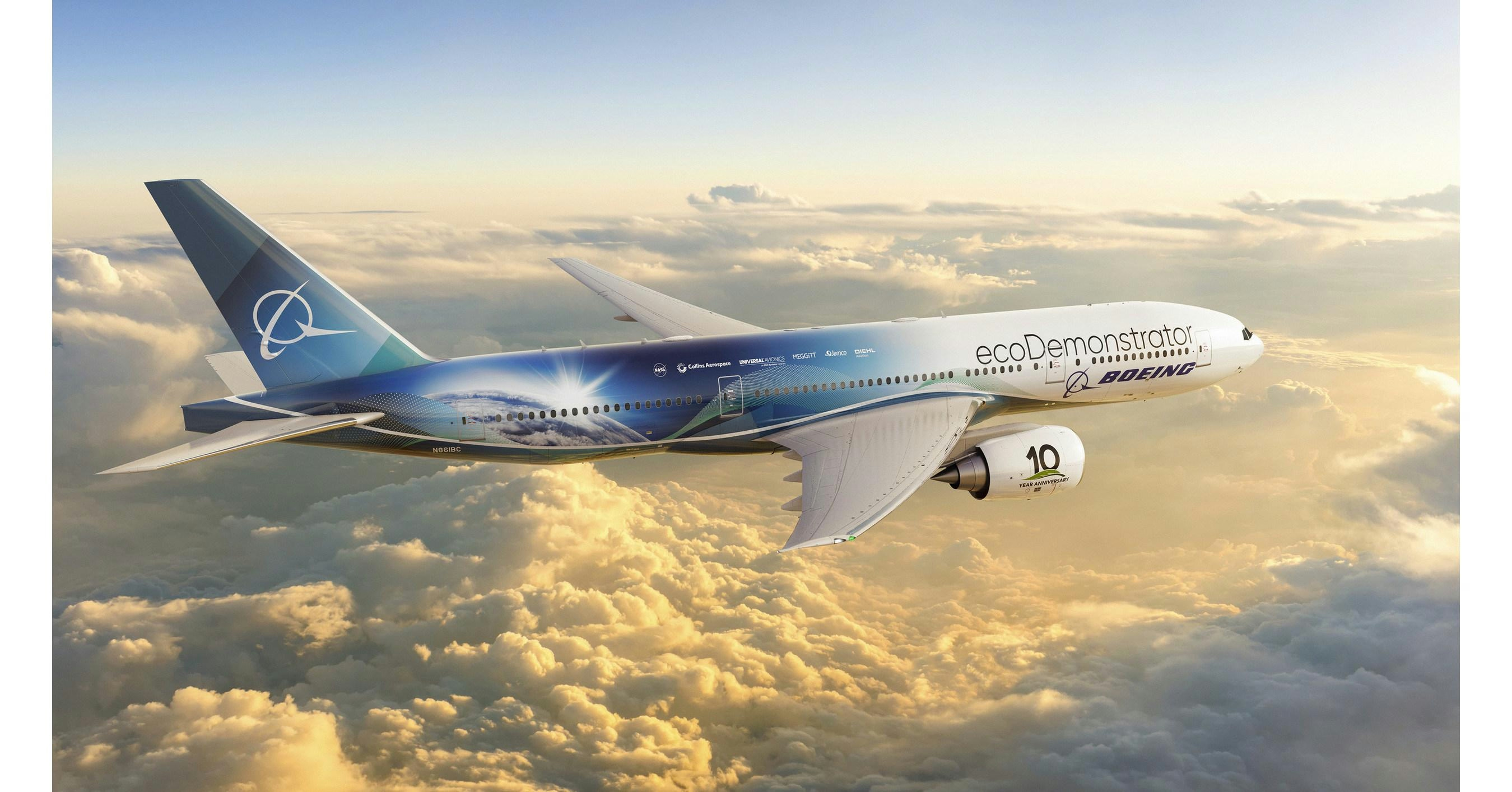
Boeing 777 Celebrates 30 Years Amid Industry Challenges
Boeing is commemorating the 30th anniversary of the 777, a landmark widebody aircraft that has become one of the most successful in aviation history. Since entering service with United Airlines in June 1995, the 777 has transported nearly four billion passengers and delivered over 1,750 aircraft to close to 100 customers worldwide. To mark this milestone, Boeing released a multilingual video featuring employees expressing gratitude to the aircraft’s diverse global customer base.
A Legacy of Innovation and Performance
The 777 program began with the original 777-200 model, followed by the stretched 777-300 and Extended Range (ER) variants. United Airlines operated the inaugural passenger flight—UA921 from London Heathrow to Washington Dulles—in May 1995, using the first delivered 777, dubbed “The Ship of the Future.” This pioneering airframe remained in service for nearly three decades before its recent retirement, underscoring the aircraft’s durability.
Over its three decades of operation, the 777 fleet has logged approximately 49 billion miles, equivalent to more than 237,000 round trips to the moon. The aircraft has set notable records, including the world’s longest non-stop flight without refueling: an 11,664-nautical-mile journey from Hong Kong to London in 2005. Today, nearly 1,350 777s remain active, with Emirates as the largest operator, fielding nearly 130 aircraft, predominantly the 777-300ER. This variant is the most popular, with over 830 deliveries, followed by the 777-200ER with 422 units.
Navigating Production Delays and Market Pressures
The 30th anniversary arrives amid significant challenges for Boeing. The next-generation 777X, initially scheduled for earlier delivery, is now seven years behind and is not expected to enter service until 2027. Production delays and quality control issues have impacted Boeing’s operational performance, prompting strategic initiatives to stabilize the program. Boeing’s stock has experienced volatility, trading around $189 per share as of December 2025, influenced by a substantial commercial backlog and ongoing efforts to streamline production.
In response, Boeing announced a $4.7 billion acquisition of Spirit AeroSystems, aiming to vertically integrate critical supply chain operations and enhance quality control. This move follows a $10.6 billion asset sale intended to strengthen cash flow and reassure investors. The company’s stock rallied recently on a 2026 cash-flow pledge, even as rival Airbus reduced its delivery targets amid its own production challenges.
Despite these headwinds, customer confidence remains robust. Emirates, the world’s largest 777 operator, has committed $41.4 billion to the 777X program while simultaneously expanding its Airbus fleet, highlighting sustained demand for advanced widebody aircraft.
The People Behind the Program
The 777’s enduring legacy is also reflected in the contributions of individuals and families involved in the program. The Kojima family, for example, has played key roles across engineering, sales, and flight testing. Their message of thanks, delivered in Japanese, symbolizes the global appreciation for an aircraft that has shaped commercial aviation over the past three decades.
As Boeing looks ahead to the future with the 777X, the company faces a complex landscape of celebration and challenge, striving to uphold the 777’s reputation for reliability and innovation in a rapidly evolving industry.

Etihad Airways Suspends Airbus A380 Flights on Key Route

Aditya Birla Group Seeks Approval for Aircraft Leasing in GIFT City

Qatar Airways Highlights Innovation and Connectivity at Arabian Travel Market 2026

Hong Kong's Five-Year Plan Includes Andrew Fan's Aircraft Parts Processing Hub Proposal

ACIA Aero Leasing Delivers ATR72-600 to Air Nostrum

RTX Appoints Jill Albertelli as Head of Pratt & Whitney

TAT Technologies Joins Beyond Aero Hydrogen Aircraft Program

AURAK Study Highlights Barriers to Air Taxi Adoption in Emerging Economies

Xiamen Air Selects Altitude for 787 Maintenance at Heathrow

Etihad and Swissport Extend Global Partnership
