
KI-Erkenntnisse in konkrete Maßnahmen überführen

Trends
Categories
Boeing Surpasses Airbus in August Deliveries, Ending a Streak Since 2019
Boeing Surpasses Airbus in August Deliveries, Ending a Streak Since 2019
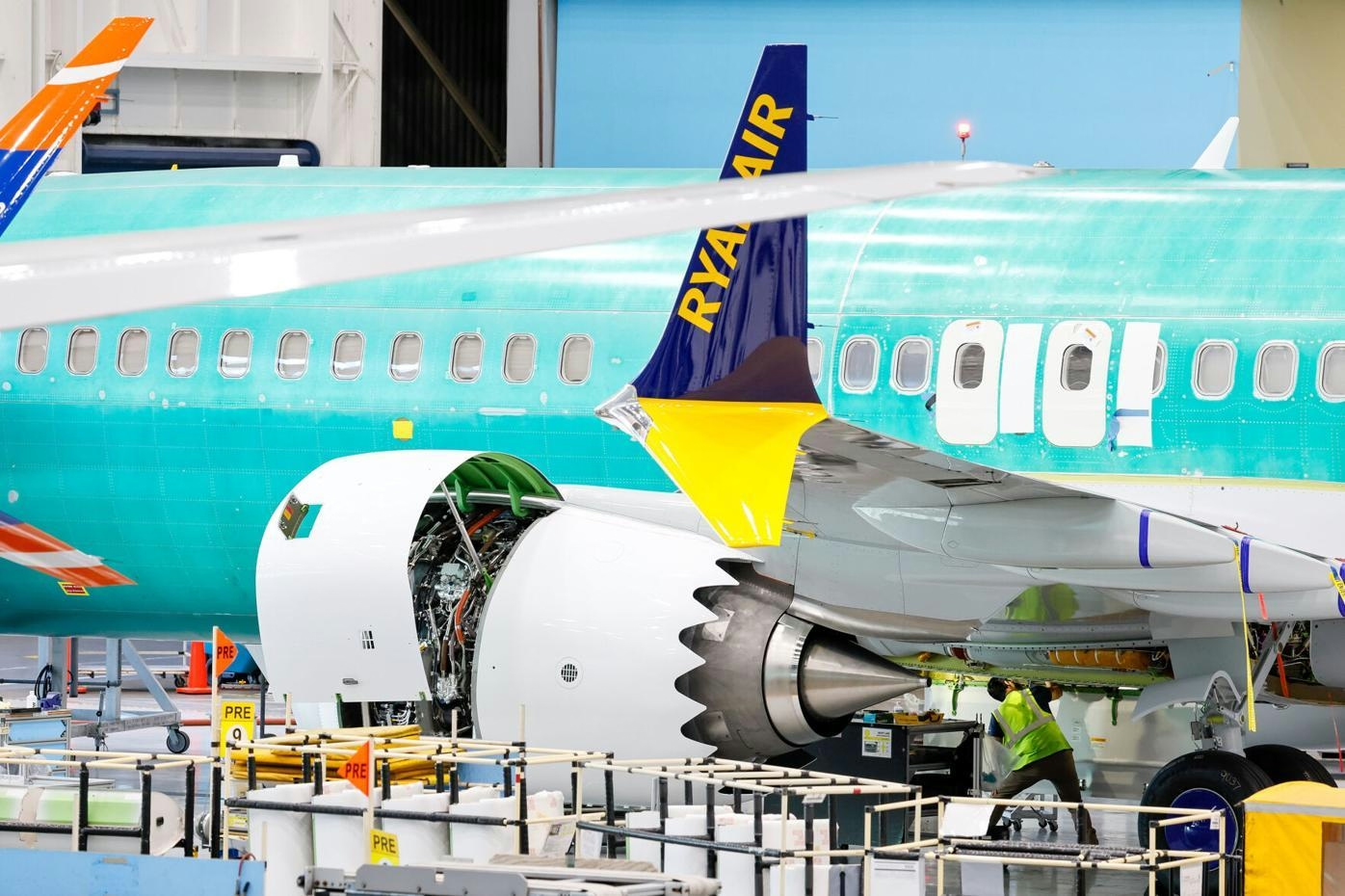
For the first time since 2019, Boeing has delivered more commercial aircraft in a single month than its European rival Airbus, marking a notable development in the ongoing competition between the two aerospace leaders. In August, Boeing handed over 63 aircraft, narrowly exceeding Airbus’s 58 deliveries. Although the margin is slim, this shift is significant given Boeing’s recent struggles with production delays, regulatory challenges, and the repercussions of two fatal 737 MAX crashes.
Recovery Amid Production Constraints
Boeing’s improved delivery figures in August come as the company continues to navigate a complex recovery process. Earlier this year, a door plug incident involving Alaska Airlines prompted the Federal Aviation Administration (FAA) to impose a production cap of 38 737 MAX jets per month. Despite this limitation, Boeing has managed to increase its output partly by reducing the backlog of previously manufactured 737 MAX and 787 aircraft that had accumulated during prior disruptions.
Conversely, Airbus faces its own set of challenges, primarily stemming from persistent engine supply constraints. Suppliers CFM International and Pratt & Whitney have struggled to meet demand, particularly affecting the production of the A320neo family. Airbus has publicly acknowledged that these engine delivery delays remain the principal bottleneck, forcing the company to revise downward its full-year delivery forecasts.
Industry Context and Market Implications
Since 2019, Airbus has consistently outperformed Boeing in both monthly and annual aircraft deliveries, expanding its lead during the 737 MAX grounding and the global pandemic. While Boeing’s August performance represents a reversal of this trend, industry analysts urge caution in interpreting a single month’s data. Delivery numbers often fluctuate due to factors such as customer scheduling preferences, financing arrangements, and strategic end-of-quarter pushes. Historically, Airbus tends to concentrate deliveries toward the end of each quarter, whereas Boeing’s delivery cadence has been less consistent amid its ongoing recovery efforts.
Boeing’s recent progress reflects a strategic emphasis on quality over quantity. Company leadership has indicated that any further increases in production rates will depend on demonstrable improvements in manufacturing discipline and quality control. The FAA’s production cap on the 737 MAX remains in place, limiting Boeing’s ability to accelerate deliveries despite robust global demand.
Continuing Challenges and Competitive Landscape
Despite these gains, Boeing continues to face scrutiny over engineering, manufacturing, and quality assurance issues, as highlighted by the Foundation for Aviation Safety. Market reactions remain mixed; some investors welcome Boeing’s financial recovery, while others remain cautious due to lingering safety and regulatory concerns. Airbus may leverage its reputation for reliability to attract customers who remain wary of Boeing’s recent difficulties.
The FAA’s recent approval of the Boeing 737 MAX type certificate could bolster Boeing’s market position, yet ongoing engine-related maintenance costs for airlines continue to temper industry sentiment. Additionally, the rise of China’s COMAC as a potential competitor to the Boeing-Airbus duopoly introduces new dynamics to the global aviation market, suggesting that the competitive landscape may undergo further significant changes in the near future.

Etihad Airways Suspends Airbus A380 Flights on Key Route

Aditya Birla Group Seeks Approval for Aircraft Leasing in GIFT City

Qatar Airways Highlights Innovation and Connectivity at Arabian Travel Market 2026

Hong Kong's Five-Year Plan Includes Andrew Fan's Aircraft Parts Processing Hub Proposal

ACIA Aero Leasing Delivers ATR72-600 to Air Nostrum

RTX Appoints Jill Albertelli as Head of Pratt & Whitney

TAT Technologies Joins Beyond Aero Hydrogen Aircraft Program

AURAK Study Highlights Barriers to Air Taxi Adoption in Emerging Economies

Xiamen Air Selects Altitude for 787 Maintenance at Heathrow

Etihad and Swissport Extend Global Partnership
