Bild

KI-Erkenntnisse in konkrete Maßnahmen überführen

Trage dich noch heute in die AeroGenie-Warteliste ein!

Trends

Categories

Boeing Unveils $300 Million 2026 787 Dreamliner VIP Edition
November 10, 2025By ePlane AI
Boeing Unveils $300 Million 2026 787 Dreamliner VIP Edition
0
0
Boeing 787 Dreamliner
Boeing Business Jets
VIP Aircraft

Boeing Unveils $300 Million 2026 787 Dreamliner VIP Edition

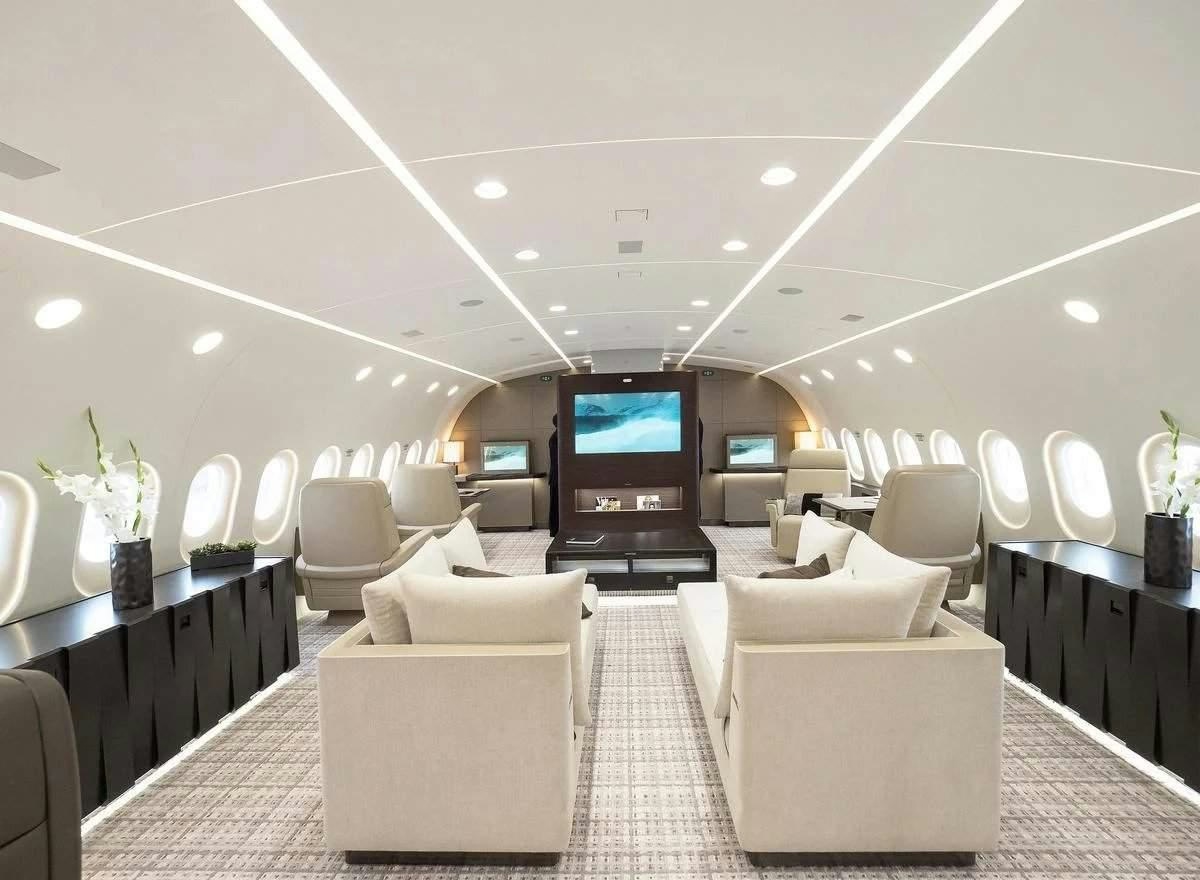
Boeing has introduced the 2026 787 Dreamliner VIP Edition, a $300 million private jet designed to redefine luxury air travel for billionaires, royals, and heads of state. Building on the success of the original 787 Dreamliner, launched in 2011 with its lightweight composite construction and 20% improved fuel efficiency, this new iteration transforms the proven 787-9 platform into an ultra-exclusive flying mansion.

Design and Performance

Developed by Boeing Business Jets (BBJ), the VIP Edition offers a remarkable combination of range, speed, and comfort. Powered by twin Rolls-Royce Trent 1000-TEN or GEnx-1B engines, the aircraft boasts a range of 9,800 nautical miles (18,150 km) and cruises at Mach 0.85, enabling nonstop flights between distant global cities such as New York and Sydney or London and Los Angeles. The spacious cabin, measuring 138 feet in length and nearly 19 feet in width, accommodates between 25 and 40 passengers in a fully bespoke environment. The cabin is pressurized to an altitude of 6,000 feet, enhancing passenger comfort on long-haul journeys.

Each jet is uniquely customized to the owner’s preferences by leading design firms including Greenpoint Technologies, Jet Aviation Basel, and Lufthansa Technik. John Dietrich, vice president of BBJ, described the aircraft as “the new frontier of private aviation—a jet that merges the safety and technology of a commercial airliner with the intimacy and comfort of a personal residence.” The interior prioritizes wellness, silence, and space, creating an environment more akin to a luxury spa than a conventional airplane.

Market Context and Challenges

The demand for wide-body VIP aircraft has surged by nearly 30% since 2020, driven by ultra-high-net-worth individuals seeking privacy and long-range mobility in the post-pandemic era. The 787 VIP Edition caters to this market by offering amenities comparable to a five-star hotel, with a focus on time and privacy as the ultimate luxuries. Amanda Ross, senior designer at Greenpoint Technologies, emphasized the importance of creating flying environments that prioritize these elements.

Despite its appeal, Boeing faces stiff competition from Airbus, which offers the A350 Private Jet, and Bombardier’s Global series, both targeting the same elite clientele. These rivals are expected to enhance their offerings in response to Boeing’s entry, potentially intensifying the race for innovation in the ultra-luxury private aviation sector. The substantial $300–350 million price tag also raises questions about economic feasibility, even among the wealthiest buyers, making the maintenance of impeccable quality standards essential.

Industry Outlook

Market indicators remain positive for Boeing. The company’s recent $1 billion investment in expanding 787 Dreamliner production in South Carolina signals strong demand for the platform, which underpins the viability of the VIP Edition. Furthermore, Boeing Business Jets’ introduction of turnkey services for VIP 747 owners reflects a broader industry trend toward comprehensive, high-end private aviation solutions.

With a customization timeline of 24 to 36 months and only a limited number of units expected to be produced, the 2026 Boeing 787 Dreamliner VIP Edition is positioned as a flagship in private aviation. It represents a fusion of engineering excellence, luxury, and exclusivity at 40,000 feet.

More news
US Pilot Hourly Pay Ranges from $90 for Regional to $465 for Widebody Flights

US Pilot Hourly Pay Ranges from $90 for Regional to $465 for Widebody Flights

US Pilot Hourly Pay Ranges from $90 for Regional to $465 for Widebody Flights The hourly pay for pilots in the United States varies widely, reflecting a complex career trajectory shaped by experience, seniority, and aircraft type. A first-year regional airline first officer can expect to earn between $90 and $110 per flight hour under current contracts. In stark contrast, a senior widebody captain at a major airline may earn upwards of $465 per hour. This substantial disparity underscores the multifaceted nature of pilot compensation, which evolves not only through annual raises but also through critical career milestones such as upgrading to captain, transitioning from regional to major carriers, and moving between aircraft categories. Pilot earnings are also highly sensitive to timing and career progression. Many pilots spend years accumulating flight hours before securing a position with an airline. Once hired, a regional first officer might advance to captain within approximately two years, though this promotion can be accompanied by a temporary pay reduction if the pilot moves to a major airline as a new first officer. From that point, seniority and aircraft assignments play a decisive role in shaping income potential. By the time a pilot attains the rank of senior widebody captain, their hourly compensation can be nearly five times that of a starting regional first officer. Regional Starting Pay Has Risen Sharply Entry-level pay for regional pilots has seen a marked increase in recent years, reflecting the industry's urgent need to attract and retain qualified personnel amid intense competition from major carriers. For instance, in 2026, SkyWest Airlines offers a first-year first officer rate of $92.73 per flight hour, while Endeavor Air provides $105.08. Most regional airlines now cluster their starting pay between $95 and $105 per hour. With a contractual guarantee of 75 flight hours per month following initial training, base annual earnings for regional first officers range from approximately $83,000 to $95,000, excluding additional flying hours, per diem allowances, bonuses, or other forms of compensation. This represents a significant shift from previous decades when regional first officers often earned less than $40,000 annually. The sharp rise in starting pay is driven by the operational necessity of retaining pilots rather than voluntary wage increases. For example, SkyWest’s pay scale increases from $92.73 in the first year to $98.08 by the third year, making regional flying a more financially viable entry point than in the past. Among regional carriers in 2026, first-year first officer hourly pay rates include $92.73 at SkyWest and Republic Airways, $105.08 at Endeavor Air, $99.00 at Envoy Air, and $102.00 at PSA Airlines. Major Pay Jumps and Industry Challenges The most significant increase in pilot compensation typically occurs upon upgrading to captain. Regional first officers often experience a shorter path to captaincy compared to their counterparts at major airlines, with promotions possible within 18 to 24 months depending on staffing levels and seniority. Despite the rise in regional pay, disparities across the aviation industry continue to affect pilot recruitment and retention. Military flight pay caps have remained stagnant for decades, making commercial airline careers increasingly attractive and intensifying competition for experienced pilots. In response, airlines frequently adjust pay scales and operational strategies to attract and retain talent while managing costs and maintaining service quality. Ongoing contract negotiations, such as those at Delta Air Lines, highlight the challenges of balancing pilot compensation demands with operational requirements. Scheduling disruptions and the need for competitive pay packages illustrate the evolving landscape of pilot remuneration in the United States, as both airlines and pilots navigate a market defined by opportunity and complexity.
NASA Chooses University Teams to Support Aviation Research

NASA Chooses University Teams to Support Aviation Research

NASA Selects University Teams to Advance Aviation Research NASA has announced the selection of four university teams to lead pioneering projects designed to shape the future of aviation. These initiatives, supported through the agency’s University Leadership Initiative (ULI), encompass a broad spectrum of research areas, including high-supersonic propulsion systems and low-noise flight trajectories for urban air mobility. The program offers students invaluable hands-on experience, enabling them to contribute directly to flight research aligned with NASA’s strategic aeronautics goals. Focus Areas and Strategic Objectives The chosen projects address key priorities within NASA’s aeronautics mission, such as the advancement of commercial high-speed aircraft, the development of innovative aviation tools, improvements in air traffic management safety and efficiency, and the integration of emerging air transportation modes into the national airspace system. Andrew Provenza, project manager at NASA’s Glenn Research Center, emphasized that these awards reinforce NASA’s commitment to aeronautics innovation. He highlighted that the teams will explore novel propulsion concepts for supersonic flight, revolutionary engineering approaches for aerospace system design and certification, and learning-enabled avionics tailored for advanced and urban air mobility platforms, all of which have the potential to enhance air traffic control modernization. The ninth round of ULI funding allocates approximately $30 million over multiple years, empowering universities to assemble research teams and pursue ambitious projects. This initiative not only cultivates the next generation of the U.S. aeronautics research workforce but also produces findings that could significantly influence the aviation industry. Faculty-led teams, comprising graduate and undergraduate students, frequently collaborate with other academic institutions, community colleges, and industry partners, while receiving guidance from NASA, the Federal Aviation Administration, and other relevant organizations. Challenges and Broader Impact Despite the promise of these projects, NASA and its university collaborators face several challenges. Securing adequate funding to sustain these complex research efforts remains a critical concern. Additionally, maintaining alignment between university research activities and NASA’s evolving strategic objectives requires ongoing coordination. The integration of new technologies into existing aviation systems introduces further complexity, necessitating meticulous management and collaboration across multiple stakeholders. The initiative’s influence extends beyond academia, as private aviation companies increasingly express interest in partnering with universities to leverage emerging innovations. This growing collaboration is expected to accelerate technological advancements in the sector. Furthermore, other government agencies and international organizations may establish similar programs to promote aviation research, intensifying competition for top aerospace talent among universities and private enterprises. Selected University Teams and Their Projects The University of Minnesota, led by Terrence Meyer, will undertake a four-year project focused on developing an adaptive supersonic combined cycle engine. This fuel-flexible propulsion system is designed to transition from a traditional jet turbofan to a ramjet engine, enabling supersonic cruise speeds of up to Mach 4 (over 3,000 mph). Stanford University has two selected projects. The first, led by Somil Bansal, aims to create avionics systems that incorporate machine learning with an emphasis on continuous safety reinforcement. This work seeks to facilitate the safe integration of AI-enabled avionics into the national airspace. The second project, under the direction of Juan Alonso, will develop a high-fidelity simulation framework to design noise-optimal flight trajectories for urban air mobility operations. This research addresses ambient noise concerns and supports the advancement of small aircraft operations within urban environments. Through these initiatives, NASA intends to drive innovation, bolster the nation’s aeronautics workforce, and sustain U.S. leadership in aviation research amid a rapidly evolving global landscape.
Hypersonic blast converts diamond to graphite, could aid defense armor

Hypersonic blast converts diamond to graphite, could aid defense armor

Hypersonic Blast Converts Diamond to Graphite, Paving Way for Advanced Defense Armor A pioneering manufacturing technique developed at Rice University promises to transform the future of defense armor by stabilizing diamond during thermal processing at relatively low pressures. This advancement results in a dense and resilient composite material, overcoming longstanding barriers in the production of diamond-based components. The findings, published in *Materials Today*, demonstrate how combining specific powder materials can unlock new possibilities for high-performance materials in extreme environments. Innovative Material Synthesis The research addresses a critical challenge in material science: while small diamond particles are inexpensive and readily produced, forming them into large, solid shapes has proven difficult. Conventional sintering methods, which rely on heat and pressure to fuse particles, often cause diamond to degrade into soft graphite unless subjected to extremely high pressures. This limitation restricts the scalability and practical application of diamond composites. To overcome this, the Rice University team engineered a multi-material blend by mixing fine diamond particles with cubic boron nitride, selected for its comparable physical properties, and incorporating cobalt as a binder to stabilize the mixture. Employing spark plasma sintering—a rapid process that simultaneously applies heat and pressure—they fused the powders into a dense, tough composite. The resulting material features diamond grains embedded within a continuous cubic boron nitride matrix, with cobalt distributed throughout. This structure renders the composite nearly impossible to machine, making it highly suitable for demanding aerospace and defense applications. Testing Under Extreme Conditions The mechanical resilience of the composite was evaluated through high-velocity collision experiments. Researchers subjected the material to impacts from tiny metal projectiles traveling at speeds exceeding seven times the speed of sound. The composite maintained its structural integrity under these hypersonic impacts. However, when exposed to larger projectiles at even higher velocities, the material fractured. Detailed analysis of the fracture surfaces, supported by molecular dynamics simulations, revealed that the extreme impact induced a rapid phase transformation of diamond into graphite—a process occurring within microseconds, in stark contrast to the slower, heat-driven conversion typically observed. Abhijit Biswas, the study’s first author, explained, “Extreme impact can drive diamond to graphite within microseconds, rather than through the slower heat-driven process we normally associate with this transformation.” This discovery provides new insight into diamond’s behavior under the most severe mechanical stresses. Implications for Defense and Industry The ability to manufacture tough, diamond-based composites without resorting to extreme pressures could enable large-scale production of advanced armor and aerospace components. Nonetheless, the hypersonic blast-induced conversion of diamond to graphite also introduces challenges that must be addressed to ensure the process is both efficient and cost-effective. The defense sector is already responding to these developments, with growing market interest in low-cost hypersonic weapons. Castelion’s recent $1 billion funding round to scale production exemplifies this trend, while competitors, such as South Korea, are investing in AI-driven defense technologies. Beyond defense, the broader market may also pivot toward alternative materials for battery manufacturing, capitalizing on the potential to convert waste carbon into graphite. As research progresses, the intersection of material science and defense innovation is poised to accelerate, with the diamond-to-graphite phase change at hypersonic speeds presenting both promising opportunities and significant challenges for the industry.
Achieving the AMES Rating in a Lockwood AirCam

Achieving the AMES Rating in a Lockwood AirCam

Achieving the AMES Rating in a Lockwood AirCam A Unique Path to a Rare Rating The Airplane Multi-Engine Sea (AMES) rating stands among the rarest and most memorable qualifications a pilot can earn. Unlike conventional multi-engine training, which typically occurs on paved runways in aircraft such as the Piper Seminole or Beechcraft Duchess, the AMES course offered by Sebring Aviation in central Florida takes place over open water. Here, pilots trade traditional trainers for the distinctive twin-engine AirCam, manufactured by Lockwood Aero, an aircraft originally designed for low-and-slow aerial photography over the Congo. The AirCam’s exceptional visibility, impressive short-water performance, and the challenge of operating a twin-engine aircraft on floats make it a unique platform for advanced seaplane training. Located at Sebring Regional Airport (KSEF), the program is open to pilots who hold at least a private pilot certificate, an unrestricted Airplane Multi-Engine Land (AMEL) rating, and a valid FAA medical certificate or BasicMed. This course is not intended for novices but rather for experienced aviators seeking to broaden their skills and gain exposure to a rarely encountered facet of aviation. Training Structure and Flight Experience The intensive three-day program combines ground instruction with practical flight training. The first day begins in the classroom under the guidance of instructor Yadiel Rios, who emphasizes understanding the rationale behind seaplane procedures rather than rote memorization. For example, when discussing anchoring techniques, Rios explains the critical importance of attaching the anchor line to the front of the float. Anchoring from the rear risks pulling the float under, increasing drag and creating hazardous conditions. This approach highlights that seaplane flying demands not only precise aircraft control but also the ability to read environmental cues, interpret water conditions, and make sound decisions in a dynamic setting. The subsequent two days focus on mastering seaplane fundamentals, including step taxiing, glassy-water landings, and asymmetric thrust maneuvers. Training culminates in a check ride conducted at the renowned Jack Brown’s Seaplane Base in Winter Haven, a fitting venue for this specialized certification. Pilots experience firsthand the AirCam’s remarkable performance, with a rotation speed of just 43 mph, allowing the aircraft to leap from water or land with agility and precision. This blend of technical challenge and exhilaration sets the AirCam apart from other training platforms. Industry Challenges and Technological Trends Achieving the AMES rating in a Lockwood AirCam occurs against a backdrop of broader challenges facing the aviation industry. The rising costs of advanced avionics and increasing cybersecurity threats pose significant concerns for operators and training providers. Additionally, the sector contends with growing interference to Global Navigation Satellite Systems (GNSS) and the obsolescence of legacy systems, which elevate lifecycle risks for both training and operational fleets. Simultaneously, the proliferation of advanced shoulder-fired missiles and integrated surface-to-air defense systems is driving rapid innovation in self-protection technologies. The industry is moving toward next-generation laser-based infrared countermeasures and advanced materials designed to reduce radar and thermal signatures. To address these evolving threats while managing costs, competitors are adopting modular, open-systems architectures that enhance defense capabilities and operational flexibility. Despite these complexities, the AMES course in the AirCam remains a distinctive opportunity. It combines rigorous training, technical mastery, and the unique thrill of flight over Florida’s lakes, offering pilots an unforgettable experience that reflects both the enduring appeal and the evolving landscape of modern aviation.
Oneworld on Digital Transformation and Passenger Experience in Airport Technology

Oneworld on Digital Transformation and Passenger Experience in Airport Technology

Oneworld Advances Digital Transformation to Enhance Passenger Experience in Airport Technology As airports and airlines accelerate the modernization of their technology infrastructure, collaboration and interoperability have become essential to delivering a seamless passenger experience. The aviation industry is increasingly integrating real-time data, digital services, artificial intelligence (AI), and cloud technologies to reduce friction, improve operational efficiency, and provide more personalized support—particularly for journeys involving multiple carriers and airports. In anticipation of the 20th anniversary FTE Global event in Dallas (September 8–10, 2026), Chris Gilliland, Director of Airport Experience at oneworld Alliance, alongside Jaron Millner, Senior Director of Digital and Innovation, shared insights on overcoming technology silos, enhancing cooperation between airports and airlines, and leveraging digital innovation to create a more connected passenger journey. Breaking Down Silos for a Connected Journey Gilliland is set to participate in a session titled “The airport tech stack of the future—transitioning away from legacy systems,” which will explore the evolution of airport technology architectures and strategies for modernizing infrastructure to achieve greater efficiency. The discussion will address the limitations of legacy systems, the decision to replace or integrate existing infrastructure, and the introduction of new solutions without increasing complexity or operational risk. It will also emphasize the importance of organizational change, skills development, and stakeholder alignment to ensure successful technology transformation while maintaining operational continuity. Many airports face the challenge of balancing modernization efforts with the constraints imposed by long-standing legacy systems. Gilliland highlights the passenger perspective, stating, “Customers want their journey to feel as smooth as if it were operated by a single airline—even if they are flying on two or three carriers.” Access to real-time data enables alliance members to identify potential risks to customer connections proactively, allowing them to mitigate disruptions and ensure passengers reach their destinations more efficiently. Aligning Stakeholders and Embracing Interoperability Oneworld, which unites airlines operating across hundreds of airports worldwide, recognizes that interoperability and common technology standards are critical to delivering a seamless passenger experience. Millner explains, “Our role is to facilitate seamless information exchange among members, so customers can enjoy consistent recognition, services, and benefits, as well as a smoother travel experience.” The alliance’s digital technology is designed to enable this unified digital experience for its members. Despite these efforts, aligning the diverse needs of stakeholders and integrating new technologies smoothly remain significant challenges. Maintaining operational efficiency amid rapid technological advancements requires clear business strategies and strong organizational alignment. Ram Kumar Narasimhan of EY underscores that successful digital transformation depends on well-defined strategies and effective collaboration. Competitive Landscape and Strategic Partnerships The ongoing digital transformation is reshaping the competitive landscape within the aviation sector. As oneworld and its members advance their digital initiatives, other alliances and independent airports are responding with accelerated investments in AI-driven solutions and enhanced passenger engagement strategies. Strategic partnerships, such as the recent collaboration between Tata Consultancy Services (TCS) and Vodafone, highlight the growing importance of alliances in driving AI-led digital transformation across the industry. As the aviation sector continues to evolve, oneworld’s commitment to dismantling technology silos, fostering collaboration, and embracing digital innovation positions the alliance to deliver a more connected and seamless passenger journey, setting new benchmarks for airport technology and customer experience.
CALC and HAECO Establish Aircraft Engine Maintenance Center in Hong Kong

CALC and HAECO Establish Aircraft Engine Maintenance Center in Hong Kong

CALC and HAECO to Establish Aircraft Engine Maintenance Center in Hong Kong China Aircraft Leasing Group Holdings Limited (CALC) and Hong Kong Aircraft Engineering Company Limited (HAECO) have formalized plans to create an aircraft engine quick-turn maintenance center in Hong Kong through a recently signed memorandum of understanding. This initiative represents a significant advancement for the city’s aviation industry, reinforcing its position as a key international aviation hub. Strategic Partnership and Industry Implications The collaboration brings together CALC, China’s largest independent aircraft operating lessor, and HAECO, a company with over five decades of engineering expertise in Hong Kong. CALC will contribute its comprehensive lifecycle service capabilities and a diverse fleet, providing a robust operational foundation for the new facility. HAECO’s globally recognized engineering proficiency and advanced maintenance infrastructure complement this, creating a partnership that leverages the strengths of both entities. Secretary for Transport and Logistics Mable Chan welcomed the announcement, emphasizing that the joint venture aligns with broader national strategies. The Transport and Logistics Bureau highlighted that the partnership supports the development of “new quality productive forces” as outlined in China’s 15th Five-Year Plan, injecting renewed momentum into Hong Kong’s aviation sector. The Bureau reaffirmed its commitment to fostering innovative projects that enhance the city’s competitiveness and facilitate expansion into international markets. Challenges Amid Global Supply Constraints The launch of the maintenance center occurs against a backdrop of ongoing challenges within the global aviation industry, particularly concerning the constrained supply of aircraft parts. Recent shortages, including those affecting critical components such as aircraft windows, have disrupted operations for manufacturers, repair facilities, and private jet operators alike. These supply chain difficulties underscore the complexities involved in servicing modern aircraft fleets and may intensify competition among maintenance providers. In this context, industry participants are likely to respond by bolstering their maintenance capabilities or securing exclusive supply agreements to safeguard their market positions. Furthermore, recent data indicating increased engine orders for CFM International suggests growing demand for reliable and timely engine servicing, which could further shape the competitive landscape. As CALC and HAECO advance their joint venture, their capacity to manage supply chain challenges and adapt to shifting market dynamics will be pivotal. The success of the new maintenance center will not only influence their operational outcomes but also contribute significantly to Hong Kong’s broader aviation ambitions.
Air Transat Partners with StratosX to Address Flight Disruptions Using AI

Air Transat Partners with StratosX to Address Flight Disruptions Using AI

Air Transat Partners with StratosX to Address Flight Disruptions Using AI Montréal-based startup StratosX has entered into a strategic partnership with Air Transat to deploy artificial intelligence technology aimed at managing flight disruptions more effectively. This collaboration, announced on Thursday, will see Air Transat implement StratosX’s X360 recovery platform, designed to optimize the rerouting of aircraft, crews, and passengers when unforeseen events disrupt schedules. The initiative comes amid escalating operational challenges and volatility within the airline industry. Leveraging AI to Enhance Operational Resilience StratosX’s X360 platform utilizes predictive modeling and generative AI, integrating seamlessly with an airline’s internal operations data to recommend the most efficient solutions for minimizing delays and associated costs. Joshua Goring, StratosX’s chief commercial officer, explained that the system moves beyond traditional reactive approaches, which often involve selecting the first workable solution during disruptions. Instead, the platform proactively identifies potential issues and suggests the quickest recovery paths, whether through rebooking passengers or reallocating crews. The aviation sector has recently faced significant turbulence due to unpredictable weather patterns, geopolitical tensions, and labor disputes. In the summer of 2025 alone, over 8.7 million Canadian passengers experienced flight disruptions, with a nationwide Air Canada strike cited as a major contributing factor, according to travel technology firm AirHelp. These disruptions have created a $60-billion USD challenge for airlines worldwide, further exacerbated by soaring fuel prices and rising operating costs. Air Transat’s Strategic Response to Industry Pressures Air Transat, which operates a fleet of more than 40 aircraft serving over 70 destinations, has not been immune to these pressures. The airline reported a net loss of $79 million in its most recent quarter, attributing the downturn to an “unprecedented industry-wide fuel crisis.” In response, Air Transat is actively seeking innovative solutions to maintain operational stability, manage elevated costs, and ensure compliance with regulatory requirements. According to Air Transat spokesperson Stéphanie Dussault, the X360 platform is being “codeveloped” with StratosX, allowing the airline to monitor aircraft, crew, and passenger experience simultaneously. Dussault emphasized the significance of collaborating with a Canadian company, highlighting the value of homegrown innovation within the aviation sector. Founded in 2023 by CEO Ghislain Gagné and COO Kaitlin Guarino, a former operations director at Southwest Airlines, StratosX has rapidly expanded to a team of approximately ten employees. The system is engineered to detect operational stress points—such as staffing shortages or adverse weather conditions—before they escalate into major disruptions. Feedback from Air Transat is expected to play a crucial role in refining the platform’s capabilities. Industry Implications and Future Outlook This partnership emerges at a time when airlines face heightened scrutiny from competitors and stakeholders alike. Rival carriers may respond by intensifying recruitment efforts for industry veterans or pursuing new technology collaborations. Meanwhile, aircraft leasing companies might adjust fleet strategies or pricing models to maintain competitiveness. These evolving market dynamics, coupled with investor confidence in StratosX’s potential to deliver operational improvements and financial returns, could influence both the startup’s growth trajectory and broader industry trends. As Air Transat and StratosX advance their collaboration, their efforts underscore the increasing importance of AI-driven innovation in enabling airlines to navigate an increasingly complex and competitive landscape.
Discover Airlines Introduces AI-Driven Storytelling for Families

Discover Airlines Introduces AI-Driven Storytelling for Families

Discover Airlines Introduces AI-Driven Storytelling Platform for Families Discover Airlines, in collaboration with Spafax, has launched StoryWonder, an innovative AI-powered storytelling platform aimed at enriching the travel experience for families. This new service, now accessible to Discover Airlines passengers, enables children to create personalized travel stories that accompany them throughout their journey, spanning over 50 global destinations. Enhancing Family Travel Through Personalization Families receive a link during online check-in, allowing them to begin crafting stories before departure. The platform is designed for children aged three to thirteen, with parents and children selecting characters, themes, languages, and travel destinations through a straightforward setup process. StoryWonder’s AI engine then generates a unique narrative featuring the child as the protagonist. These stories are available in three formats: audio, independent reading, or bedtime story. The interface supports five languages—German, English, Spanish, French, and Italian—while stories can be produced in eleven languages, catering to a diverse international audience. Sebastian Kaiser, Head of Product at Discover Airlines, highlighted the airline’s dedication to family-friendly innovation, stating, “We are delighted to offer an innovative digital product from Spafax and StoryWonder, especially for families and children flying with Discover Airlines, to enjoy destination-based stories before or during the flight as well as during their vacation.” Integration and Industry Context StoryWonder is fully integrated into Discover Airlines’ Customer Experience Platforms and Entertainment Guide. On long-haul A330 aircraft equipped with FlyNet connectivity, passengers can generate new stories during the flight. An integrated audio player with download functionality ensures that stories remain accessible offline throughout the journey. Developed by KB&B Family Marketing Experts, this marks the platform’s first comprehensive deployment with an airline. The launch arrives amid broader challenges within the travel industry regarding the adoption and scaling of AI technologies. The iTnews *State of Data & AI 2026* report identifies effective AI scaling as a significant obstacle for many organizations, including those in travel. Additionally, industry analyses by Skift point to ongoing structural power struggles, suggesting that established players may face competitive pressures as they seek to differentiate their offerings through AI-driven entertainment. Competitors are expected to respond with their own innovations as AI’s role in travel services continues to evolve. Investor sentiment toward AI in travel remains cautious, as reflected in the muted market response to Anthropic’s recent IPO. This reaction underscores the uncertainties and challenges confronting AI companies, even as demand for personalized digital experiences grows. Dimitrios Tsirangelos, Vice President of Business Development IFE Technology and Innovation at Spafax, remarked, “Every airline talks about improving the family travel experience, and with Discover Airlines we are actually doing it end to end. A child can create a story at home, listen to it onboard without a connection, and finish the adventure at their destination.” As Discover Airlines pioneers AI-powered storytelling for families, this initiative underscores both the opportunities and complexities involved in integrating advanced technology into the travel experience, potentially setting a new standard for the industry amid ongoing transformation.
Axinom Develops On-Board Cloud to Connect All Cabin Devices

Axinom Develops On-Board Cloud to Connect All Cabin Devices

Axinom Advances On-Board Cloud to Integrate All Aircraft Cabin Devices Fürth-based software developer Axinom has announced a major expansion of its On-Board Cloud platform, designed to unify cloud-managed services across the full spectrum of connected cabin devices. This includes everything from seatback screens and crew tablets to passengers’ personal electronic devices. The upgraded platform employs open standards such as ARINC 853 Cabin Secure Media-Independent Messaging (CSMIM), enabling seamless data exchange between devices from multiple manufacturers. Unifying Cabin Systems Through Open Standards As airlines increasingly demand greater control over digital passenger services, operational applications, and onboard data management, Axinom’s enhanced platform addresses a growing industry trend toward connected, software-defined cabins. The system supports a variety of applications, including predictive maintenance alerts for galley equipment, synchronized flight information across both passenger and crew devices, and cloud-based deployment of entertainment and retail services. Ralph Wagner, CEO of Axinom, emphasized the importance of a unified yet open platform. He noted, “A seatback screen, a crew tablet, the oven in the galley: these are all just devices running services, and there is no reason for each of them to sit in a separate system. But a unified platform is not enough by itself. It has to be open, so that devices from any manufacturer work together and any application can run, whether the airline built it or a third party did. That is how an airline takes back the decisions about what happens in its cabin.” Technical Challenges and Market Implications Integrating a diverse range of cabin devices while ensuring reliable connectivity across cellular, Wi-Fi, satellite, and ambient networks presents significant technical challenges. As airlines and cargo operators strive to deliver superior connectivity experiences, competition in the market is expected to intensify. Industry players are likely to enhance their own connectivity solutions in response, particularly as “always-on” connectivity becomes a critical differentiator in the passenger experience. The strategic importance of advanced connectivity in aviation is further highlighted by projections for the global cloud computing market, which is anticipated to grow from $905.33 billion in 2026 to $2.9 trillion by 2034. This rapid expansion underscores the pivotal role platforms like Axinom’s On-Board Cloud will play in shaping the future of in-flight digital services. Axinom plans to demonstrate its enhanced platform at the upcoming World Aviation Festival in Lisbon and the APEX FTE Expo Asia later this year, positioning itself at the forefront of the evolving connected cabin ecosystem.
Navy Funds Shield AI’s X-BAT Program as Air Force Holds Back

Navy Funds Shield AI’s X-BAT Program as Air Force Holds Back

Navy Commits $50 Million to Shield AI’s X-BAT VTOL Drone as Air Force Abstains The U.S. Navy has allocated approximately $50 million to Shield AI for the development of the X-BAT, an advanced AI-piloted fighter drone capable of vertical takeoff and landing (VTOL). This funding, confirmed in August 2026, originates from the Navy’s Rapid Capabilities Office and the Defense Innovation Unit (DIU) under the RIMES program. The Navy’s investment underscores its strategic interest in pioneering next-generation, ship-based uncrewed combat aircraft. In contrast, the U.S. Air Force has chosen not to participate in funding the X-BAT, instead maintaining its focus on its own Collaborative Combat Aircraft (CCA) program. The X-BAT Concept and Capabilities The X-BAT is a “tailsitter” drone designed to stand upright on its tail, ignite its afterburner, and lift off vertically before transitioning to horizontal flight. Developed by Shield AI, a San Diego-based company founded in 2015, the concept was unveiled in October 2025. The drone is powered by a single General Electric F110-class engine—the same engine family used in the F-16 fighter jet—integrated into a compact and lightweight airframe. This innovative design eliminates the need for traditional runways, catapults, or arresting wires, enabling flexible deployment from naval vessels or austere environments. Shield AI projects that the X-BAT will achieve a range exceeding 2,000 nautical miles and operate at altitudes above 50,000 feet. The company estimates a target unit cost of approximately $27 million. The drone’s compact size is notable; Shield AI claims that three X-BAT units can occupy the deck space typically required for a single legacy fighter aircraft. The first flight is scheduled before the end of 2026, although such timelines in defense development programs are often subject to change. Central to the X-BAT’s capabilities is Shield AI’s Hivemind autonomy software, which has demonstrated its effectiveness in previous tests, including flying the X-62A VISTA—a modified F-16—in a 2024 DARPA dogfight exercise against a human pilot. The X-BAT is intended to function either as a digital wingman supporting manned aircraft or as a fully autonomous strike platform capable of independent operation even in the event of lost communications. Challenges and Industry Competition Despite the Navy’s financial backing, Shield AI faces considerable challenges ahead. Securing further funding will be essential as the program progresses, given the substantial costs and technical complexities involved in developing a new class of uncrewed combat aircraft. The Navy’s interest in ship-based VTOL strike drones has attracted attention from major defense contractors, intensifying competition for future contracts in this emerging domain. Industry analysts remain cautious about the X-BAT’s technological maturity and readiness for operational deployment. The Air Force’s decision to withhold funding, opting instead to prioritize its CCA Increment 1 program with platforms such as the Anduril YFQ-44A and General Atomics YFQ-42A, may provide an opening for rival companies to advance their own VTOL drone initiatives within the Navy’s evolving requirements. As the X-BAT program advances, its ultimate success will depend not only on overcoming technical hurdles but also on Shield AI’s ability to navigate a competitive and rapidly changing defense market.
line










