
KI-Erkenntnisse in konkrete Maßnahmen überführen

Trends
Categories
Cathay Pacific Expands Long-Haul Routes Alongside Singapore Airlines, Korean Air, and Emirates
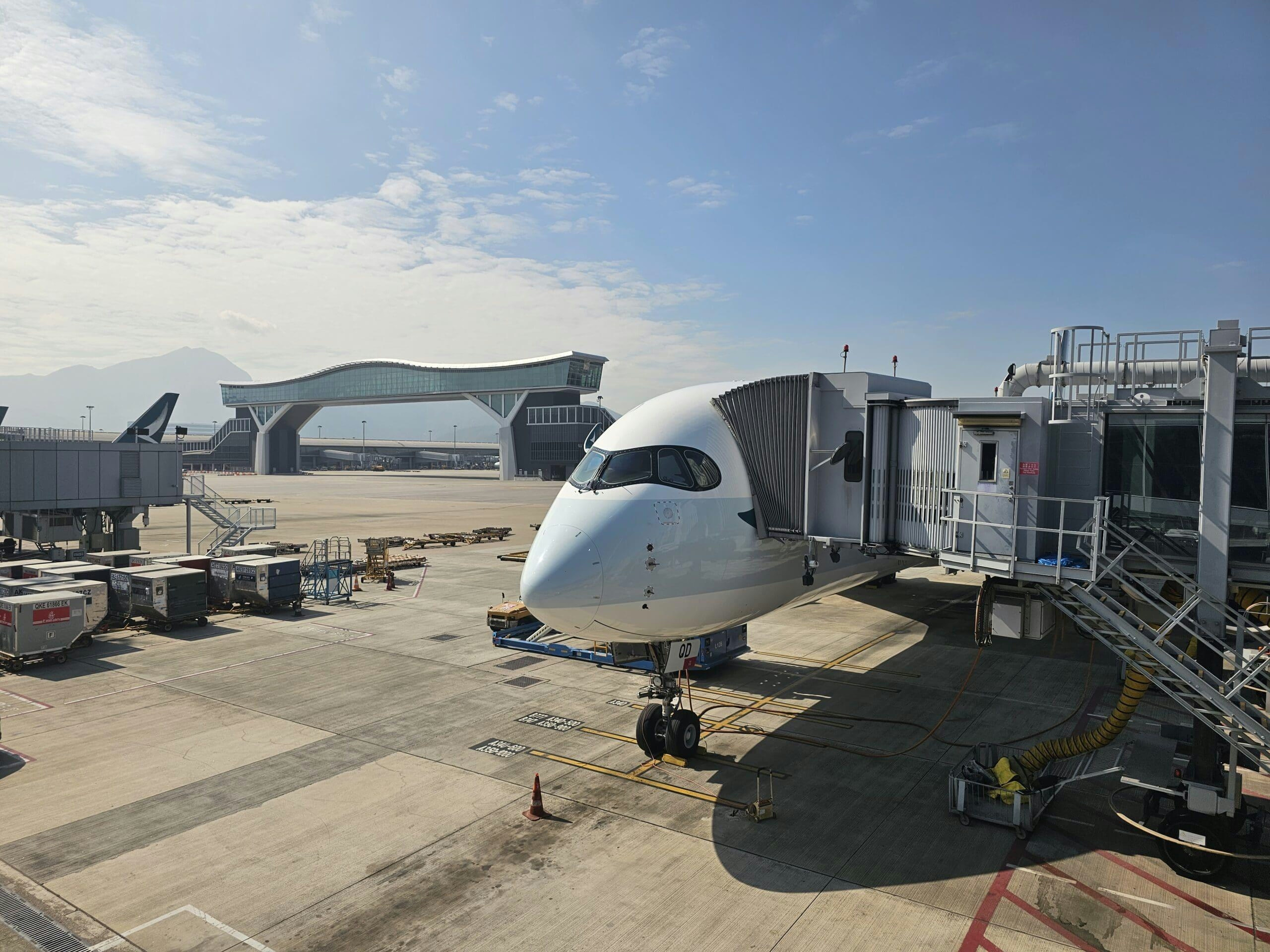
Cathay Pacific Expands Long-Haul Routes Alongside Singapore Airlines, Korean Air, and Emirates
Advancements in Long-Haul Aviation
Cathay Pacific, together with Singapore Airlines, Korean Air, and Emirates, is spearheading a significant expansion of long-haul air travel by enhancing their global networks with some of the most advanced aircraft in commercial aviation. Central to this development are the Boeing 777‑300ER and 777‑200LR models, both powered by the formidable 115,000 lbf GE90 engines, alongside the Airbus A350‑1000, which features the efficient Trent XWB engines. These aircraft are instrumental in strengthening connectivity across Asia, North America, Europe, and the Middle East.
The Boeing 777‑300ER and 777‑200LR have established themselves as essential components of long-haul fleets due to their large passenger capacity, fuel efficiency, and ultra-long-range capabilities. The GE90 engines, recognized as the most powerful turbofans currently in service, enable these planes to operate direct, non-stop flights over vast distances, thereby reducing travel times and enhancing convenience for travelers. Meanwhile, the Airbus A350‑1000 introduces advanced technological features, improved fuel economy, and elevated passenger comfort, further raising the standards of long-haul travel.
Impact on Global Connectivity and Industry Challenges
This modernization of fleets is driving growth in both tourism and international business by facilitating more flexible and efficient transpacific and intercontinental routes. Airlines are increasingly deploying these aircraft on high-demand corridors, minimizing the need for stopovers and making distant destinations more accessible. Consequently, global tourism is witnessing a resurgence as travel becomes more seamless and appealing.
Nevertheless, this expansion is unfolding amid considerable challenges within the aviation sector. The ongoing crisis in the Middle East has contributed to rising fuel prices, which in turn have led to fare increases across the industry. Cathay Pacific has responded by increasing its capacity and reporting profit growth, yet the volatility of fuel costs remains a significant risk to sustained profitability. Other carriers are similarly adjusting their strategies, with capacity expansions and fare hikes anticipated as they seek to offset escalating operational expenses.
Despite these obstacles, the commitment to expanding long-haul networks remains resolute. By investing in next-generation aircraft and adapting to evolving market conditions, Cathay Pacific, Singapore Airlines, Korean Air, and Emirates are positioning themselves at the forefront of global aviation. Their efforts underscore a future in which cutting-edge technology and enhanced passenger experience coexist, even as the industry navigates a complex and rapidly shifting economic environment.

Etihad Airways Suspends Airbus A380 Flights on Key Route

Aditya Birla Group Seeks Approval for Aircraft Leasing in GIFT City

Qatar Airways Highlights Innovation and Connectivity at Arabian Travel Market 2026

Hong Kong's Five-Year Plan Includes Andrew Fan's Aircraft Parts Processing Hub Proposal

ACIA Aero Leasing Delivers ATR72-600 to Air Nostrum

RTX Appoints Jill Albertelli as Head of Pratt & Whitney

TAT Technologies Joins Beyond Aero Hydrogen Aircraft Program

AURAK Study Highlights Barriers to Air Taxi Adoption in Emerging Economies

Xiamen Air Selects Altitude for 787 Maintenance at Heathrow

Etihad and Swissport Extend Global Partnership
