
KI-Erkenntnisse in konkrete Maßnahmen überführen

Trends
Categories
Comparing the Fan Diameters of the GE90 and Rolls-Royce Trent XWB Engines
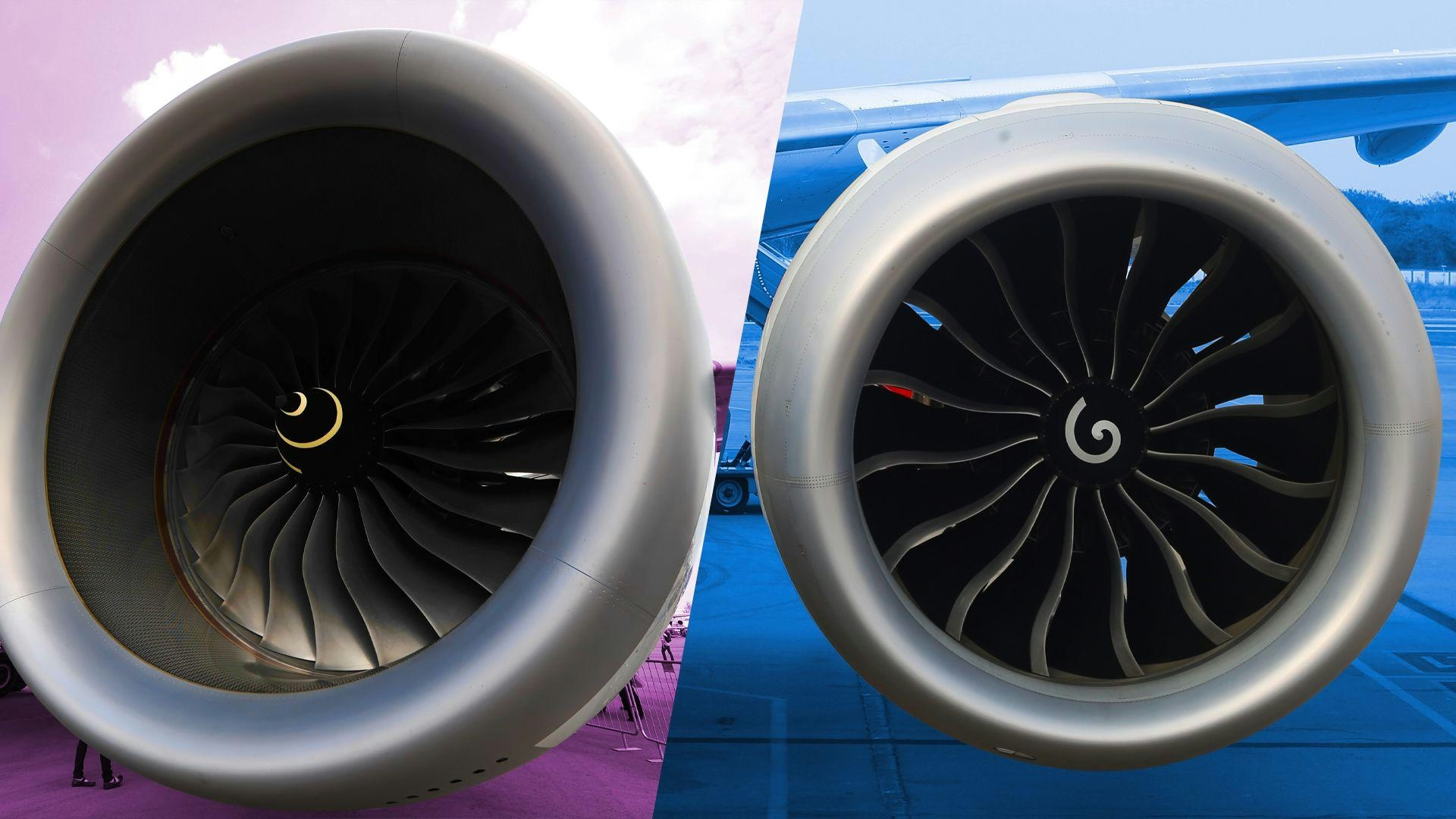
Comparing the Fan Diameters of the GE90 and Rolls-Royce Trent XWB Engines
The scale of modern commercial jet engines is most striking when viewed from beneath the wing of a widebody airliner. As airlines increasingly demand greater fuel efficiency and face stricter environmental regulations, engine manufacturers have pushed the limits of fan diameter and bypass ratio, fundamentally influencing the design of today’s long-haul aircraft. Among the most notable examples are the General Electric GE90 and the Rolls-Royce Trent XWB, which represent distinct engineering philosophies that have shaped both performance capabilities and market competition.
Physical and Performance Differences
Central to this comparison is a significant physical disparity in fan diameter. The GE90-115B, which powers the Boeing 777-300ER, features an imposing 128-inch (325 cm) fan diameter. By contrast, the Rolls-Royce Trent XWB, designed for the Airbus A350, has a fan diameter of 118 inches (300 cm). This 10-inch (25.4 cm) difference means the GE90’s fan is approximately 8.5% larger, a variation with substantial implications. To put this in perspective, the entire core of a Boeing 737 engine could fit within the GE90’s intake cowling.
This size difference is not merely aesthetic. The GE90’s larger fan enables it to generate record-breaking thrust, reaching 127,900 pounds-force (568.9 kN) during certification and maintaining a commercial service rating of 115,300 pounds-force (512.9 kN). The Trent XWB, meanwhile, delivers maximum thrust ranging from 84,000 to 97,000 pounds-force (373.7 to 431.5 kN). The greater fan diameter of the GE90 allows for higher mass airflow and power output but also requires specialized wing mounting on the 777 to ensure adequate ground clearance.
Market Impact and Strategic Responses
These engineering decisions have influenced the competitive dynamics within the widebody engine market. The larger fan diameter of the GE90 has contributed to General Electric’s significant market share advantage, particularly in the Boeing 787 segment, where GE engines power approximately two-thirds of the in-service fleet, representing a 67:33 split over Rolls-Royce. In response, Rolls-Royce has concentrated on incremental efficiency improvements, exemplified by the Trent XWB-84 Enhanced Performance (EP) variant. This upgrade offers an average 1.8% reduction in fuel burn, translating to annual savings of around $450,000 per aircraft—an important factor for airlines focused on operational costs.
Despite these advancements by Rolls-Royce, GE’s market dominance remains pronounced. Strategic partnerships, such as its collaboration with Emirates to develop advanced engine repair capabilities, have further reinforced its position. Meanwhile, Rolls-Royce continues to emphasize the operational savings and compact design of its engines, targeting airlines that prioritize fuel efficiency and reduced emissions.
The difference in fan diameter between the GE90 and Trent XWB thus extends beyond mere measurements; it encapsulates divergent approaches to propulsion technology, efficiency, and market strategy. As engine manufacturers continue to innovate, these choices will play a pivotal role in shaping the future of widebody aircraft and the competitive landscape of the global engine industry.

Etihad Airways Suspends Airbus A380 Flights on Key Route

Aditya Birla Group Seeks Approval for Aircraft Leasing in GIFT City

Qatar Airways Highlights Innovation and Connectivity at Arabian Travel Market 2026

Hong Kong's Five-Year Plan Includes Andrew Fan's Aircraft Parts Processing Hub Proposal

ACIA Aero Leasing Delivers ATR72-600 to Air Nostrum

RTX Appoints Jill Albertelli as Head of Pratt & Whitney

TAT Technologies Joins Beyond Aero Hydrogen Aircraft Program

AURAK Study Highlights Barriers to Air Taxi Adoption in Emerging Economies

Xiamen Air Selects Altitude for 787 Maintenance at Heathrow

Etihad and Swissport Extend Global Partnership
