Bild

AeroGenie — Ihr intelligenter Copilot.

Fragen Sie alles. Analysieren Sie alles. Handeln Sie sofort.

Trends

Categories

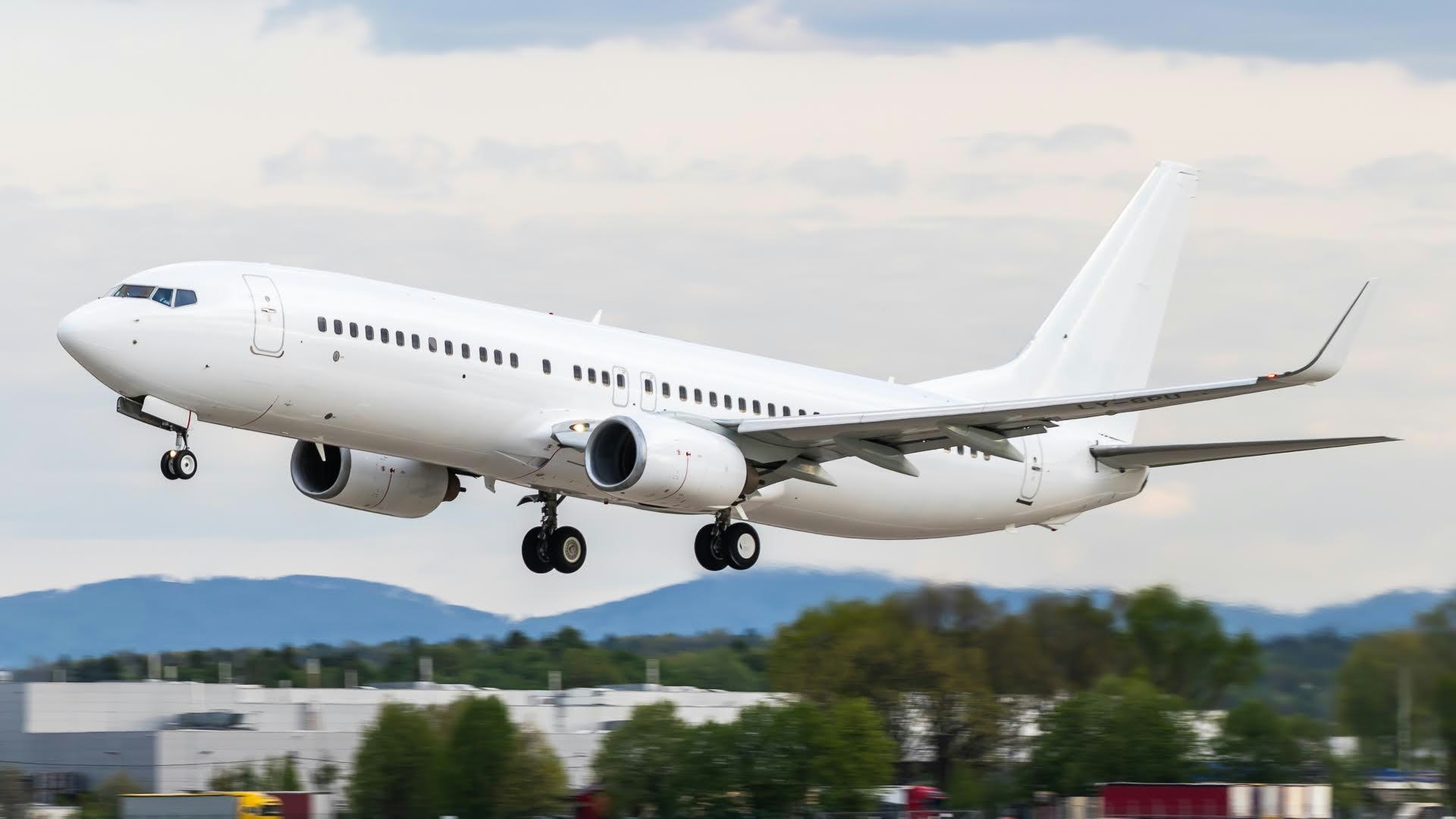
DAE Leases Two Boeing 737-8 Jets to Tajikistan’s Somon Air
January 26, 2026By ePlane AI
DAE Leases Two Boeing 737-8 Jets to Tajikistan’s Somon Air
0
0
Dubai Aerospace Enterprise
Boeing 737-8
Somon Air

DAE Leases Two Boeing 737-8 Jets to Tajikistan’s Somon Air

Dubai Aerospace Enterprise (DAE) has finalized lease agreements to provide two Boeing 737-8 aircraft to Somon Air, the national carrier of Tajikistan. This transaction marks Somon Air as a new client for the global lessor and is intended to support the airline’s fleet modernization and network expansion efforts. The addition of these aircraft will enable Somon Air to introduce new routes and improve operational efficiency.

Strategic Partnership and Industry Context

Firoz Tarapore, CEO of DAE, expressed enthusiasm about the partnership, emphasizing the company’s commitment to supporting Somon Air’s growth. He highlighted the significance of this agreement as a foundation for a deeper future relationship. DAE, recognized as one of the world’s largest aircraft lessors, currently owns, manages, or has commitments for approximately 750 aircraft, including 237 Boeing jets. The company continues to expand its fleet in response to sustained demand from airlines seeking modern aircraft without the financial burden of direct ownership.

Abdulkosim Valiev, CEO of Somon Air, welcomed the lease agreements, noting that the new Boeing 737-8 jets will bolster the airline’s network expansion and operational capabilities. The deal arrives amid a highly competitive aircraft leasing market, where major players such as AerCap and GECAS remain active. DAE’s decision to lease modern Boeing aircraft to Somon Air may intensify competition, potentially prompting rival lessors to reevaluate their pricing and fleet strategies to maintain market share.

Market Dynamics and Future Implications

The broader leasing market is influenced by Boeing’s strong performance in aircraft deliveries and new orders, including recent significant contracts with Delta Air Lines and EVA Air. This momentum in Boeing’s order book is likely to affect the leasing landscape as companies like DAE adapt to evolving airline preferences and heightened competition. The agreement with Somon Air underscores the ongoing demand for fuel-efficient, modern aircraft and reflects shifting strategies among lessors and airlines as they navigate a rapidly changing aviation environment.

More news
Airbus Says US-China Trade Tensions Impact Aircraft Production

Airbus Says US-China Trade Tensions Impact Aircraft Production

Airbus Highlights Impact of US-China Trade Tensions on Aircraft Production Airbus has issued a stark warning regarding the escalating trade tensions between the United States and China, emphasizing the tangible and immediate damage these disputes are causing to its global operations and financial performance. Chief Executive Officer Guillaume Faury described the current geopolitical environment as an unprecedented crisis for the aerospace sector, stressing that the consequences are no longer hypothetical but are actively disrupting production. Disruptions in Supply Chain and Production The European aerospace giant operates a complex production network with key facilities in Toulouse, France, and Tianjin, China. This network has been significantly affected by U.S. protectionist measures and ongoing trade disputes. Faury informed employees that export restrictions, licensing controls, and protectionist policies have already interfered with the movement of essential components such as engines and avionics. These disruptions have caused logistical delays and financial strain across multiple Airbus programs. Airbus’s final assembly lines in China are particularly vulnerable to interruptions in the cross-border flow of parts. Even a single delayed or blocked subcomponent can halt deliveries, increase costs, and necessitate costly rescheduling across various assembly sites. The company’s extensive supply chain, which depends on suppliers from both the U.S. and China, has been further strained by export freezes and regulatory challenges, undermining the steady supply of parts for jets assembled in China. Faury acknowledged that these challenges have compelled Airbus to adjust its operations, including reducing delivery targets due to issues such as flawed fuselage panels. Despite these setbacks, the company has managed to uphold its financial objectives, partly through progress in cost-cutting initiatives. However, persistent delays in engine deliveries and quality-related problems—including software glitches and defective fuselage components—have complicated production schedules and required continuous operational adjustments. Strategic Response and Financial Implications The CEO emphasized the necessity for internal resilience, operational discipline, and supply-chain robustness to navigate the current environment. He called for solidarity and adaptability among Airbus teams, noting that geopolitical decisions are increasingly influencing factory-level outcomes. To mitigate future risks, Airbus is pursuing supplier diversification and greater flexibility in production planning, while also prioritizing self-reliance and organizational restructuring. Trade frictions have directly impacted Airbus’s cash flow by delaying aircraft handovers, which in turn postpones payments. In 2025, Airbus delivered 793 aircraft, an increase from 766 the previous year, but many deliveries were backloaded due to engine supply constraints. These delayed deliveries have elevated inventory levels and working capital requirements, exerting pressure on free cash flow. Management has cautioned that further disruptions related to export controls could exacerbate financial challenges by necessitating additional production re-planning. As Airbus prepares for its next narrowbody development cycle, the company remains cautious, balancing the need for investment with the imperative to maintain delivery reliability. While leadership remains confident in Airbus’s capacity to adapt, Faury underscored that sustained self-reliance, disciplined execution, and ongoing restructuring will be essential to safeguarding profit margins and financing future aircraft programs.
Newbow Aerospace Opens Facility and Signs Airline Contracts

Newbow Aerospace Opens Facility and Signs Airline Contracts

Newbow Aerospace Expands UK Operations and Secures Major Airline Contracts Newbow Aerospace has commenced 2026 by inaugurating a new production facility in the United Kingdom and securing several significant contracts for airline ground support equipment (GSE). This expansion follows a record year marked by substantial growth and new business acquisitions. The company has effectively doubled its manufacturing capacity with the opening of a 4,000-square-foot fabrication plant in the West Midlands, located adjacent to its headquarters and existing dual-unit production site. This strategic investment is designed to enhance the production of GSE trailers and service carts, enabling Newbow to meet rising demand from both domestic and international clients. To support this increased output, Newbow has expanded its workforce by recruiting additional welders and fabricators, thereby reinforcing its skilled manufacturing team. The company’s order book for 2026 has been strengthened by a major contract with Iberia, a new customer, which includes the initial production of 16 wheel and brake trailers. These units are scheduled for delivery in the coming months to airports across Spain, where they will support Iberia’s long-haul Airbus A350-900 fleet. Strengthening Domestic and International Partnerships Within the United Kingdom, British Airways’ Line Maintenance operation at London Gatwick has selected Newbow to supply several trailers tailored for its Airbus A320 and Boeing 777 aircraft. Furthermore, Newbow has entered into a new general trading agreement with Jet2, commencing with the provision of tyre inflation tooling and pressure gauges, alongside associated servicing and calibration services. On the international front, Newbow is witnessing growing interest from maintenance, repair, and overhaul (MRO) providers and airlines in Saudi Arabia. This follows the establishment of its first Middle East sales and service partnership in 2025 with GGAS Aviation Services, a company specializing in maintenance products and aviation consultancy. This partnership marks a significant step in Newbow’s efforts to expand its footprint in the Middle Eastern aerospace market. Navigating Industry Challenges Amid Expansion Newbow’s expansion occurs amid increasing complexity within the aerospace sector. The company faces potential challenges related to heightened U.S. airspace management issues, driven by the rising frequency of private space launches. These developments may lead to increased regulatory scrutiny and operational disruptions for aerospace manufacturers. In response, competitors may seek to enhance their own capabilities or form strategic alliances to address shared concerns regarding airspace management. Additionally, broader industry dynamics such as geopolitical volatility and intensifying competition within the airline sector—as exemplified by Korean Air—could impact Newbow’s market positioning. As the company scales up production and secures new contracts, it must maintain agility in adapting to evolving regulatory, operational, and competitive pressures that continue to shape the global aerospace landscape.
Saudi Arabia Advances Aviation with Riyadh Air’s Digital Transformation and In-Flight Connectivity

Saudi Arabia Advances Aviation with Riyadh Air’s Digital Transformation and In-Flight Connectivity

Saudi Arabia Advances Aviation with Riyadh Air’s Digital Transformation and In-Flight Connectivity Saudi Arabia is making significant strides in aviation innovation through Riyadh Air’s strategic collaboration with Neo Space Group (NSG), aimed at transforming the in-flight experience with cutting-edge digital connectivity. This partnership will equip Riyadh Air’s Airbus A321 fleet with NSG’s Skywaves® technology, enabling passengers to access high-speed internet at cruising altitudes of 35,000 feet. The enhanced connectivity will allow travelers to stream content, communicate, work, and remain productive throughout their flights, marking a notable advancement in both passenger satisfaction and operational efficiency. Enhancing Passenger Experience and Operational Efficiency The integration of Skywaves® technology is central to Riyadh Air’s vision of becoming the world’s first digitally native airline. The system delivers connectivity speeds of up to 300 Mbps, supported by NSG’s HBC+ hardware and the Thinkom Ka2517 antenna, which is already installed on more than 1,700 aircraft worldwide. This robust infrastructure ensures that passengers enjoy an online experience comparable to that on the ground, whether for business or entertainment purposes. Beyond improving the passenger experience, the advanced connectivity system is expected to enhance operational performance. Real-time data sharing and improved communication among crew members will facilitate more efficient flight operations and decision-making processes. The Skywaves® system utilizes SES’s Open Orbits™ network, which combines the speed advantages of Medium Earth Orbit (MEO) satellites with the extensive coverage of Geostationary Orbit (GEO) satellites. This hybrid satellite approach guarantees reliable broadband connectivity even over remote areas such as deserts and oceans. Challenges and Market Implications Despite the promising outlook, Riyadh Air’s digital transformation faces several challenges. The airline must invest heavily in advanced technology infrastructure and ensure seamless integration with existing systems. Additionally, scaling operations to meet anticipated demand introduces further complexity. As the in-flight connectivity market evolves rapidly—particularly within the business jet sector—Riyadh Air will need to maintain continuous innovation to sustain its competitive advantage. The airline’s advancements are likely to prompt increased competition from established carriers and technology providers, who may accelerate their own digital initiatives and forge new partnerships to enhance in-flight services. This competitive landscape highlights the strategic importance of Riyadh Air’s commitment to technological excellence. Alignment with Saudi Arabia’s Vision 2030 The partnership between Riyadh Air and Neo Space Group aligns closely with Saudi Arabia’s Vision 2030, which aims to establish the Kingdom as a global hub for technology and world-class aviation services. By setting new standards in digital transformation and in-flight connectivity, Riyadh Air is not only elevating the passenger experience but also reinforcing Saudi Arabia’s leadership role in the future of aviation.
SkyWorks and LuminArx Launch $1 Billion Aviation Lending Platform

SkyWorks and LuminArx Launch $1 Billion Aviation Lending Platform

SkyWorks and LuminArx Unveil $1 Billion Aviation Lending Platform SkyWorks Holdings and LuminArx Capital Management have announced the launch of SkyLight Aero Finance Holdings DAC (SkyLight), a new financing platform designed to provide up to $1 billion in secured debt to the global commercial aviation sector. The platform will focus on underwriting loans and finance leases secured by commercial aircraft and engines, drawing on SkyWorks’ extensive expertise in aviation asset management alongside LuminArx’s proficiency in flexible capital solutions. Jeff Craine, Chief Financial Officer of SkyWorks, described the initiative as a natural extension of the company’s longstanding support for airline and lessor clients. He emphasized that SkyLight aims to deploy capital prudently while delivering attractive, risk-adjusted returns. “Our goal is to build a durable lending platform that supports the evolving needs of airlines, lessors, and investors worldwide,” Craine stated, highlighting the sustained demand for flexible, asset-based financing in the sector. Navigating a Competitive and Evolving Market SkyLight enters a commercial aviation financing market marked by increasing competition and dynamic shifts. Established players such as Castlelake have already secured significant capital, with Castlelake’s aviation lending platform managing $1.8 billion. The introduction of SkyLight is expected to intensify competition, potentially leading to lower interest rates for airlines seeking financing. This environment may also encourage existing lenders to pursue strategic partnerships or acquisitions to bolster their market positions. The launch coincides with a period of financial turbulence within the aviation industry, characterized by recent failed merger attempts and a surge in financing activity. These developments reflect the sector’s evolving landscape and underscore the growing demand for innovative, asset-based lending solutions. By combining SkyWorks’ technical and asset management capabilities with LuminArx’s capital markets experience, SkyLight aims to establish a scalable and disciplined lending business. The platform’s emergence aligns with broader trends in aviation finance, where adaptability and access to capital are increasingly vital for airlines and lessors navigating a rapidly changing environment. As SkyLight begins operations, its ability to differentiate itself and respond to the shifting needs of the global aviation market will be critical to its success.
Falko Secures $672 Million for Fund II

Falko Secures $672 Million for Fund II

Falko Secures $672 Million Financing for Regional Aircraft Fund II Falko, a prominent aircraft lessor and asset manager specializing in the 50 to 150-seat aircraft segment, has successfully closed a $672 million financing facility for its Falko Regional Aircraft Opportunities Fund II (Fund II). Completed in December 2025, the transaction will be used to refinance existing debt and, once fully drawn, will be secured against a portfolio of 68 aircraft. Financing Details and Market Context The facility was arranged by a consortium of leading financial institutions, including Citibank, N.A., Deutsche Bank AG New York Branch, Goldman Sachs Bank USA, Bank of America, N.A., and the Royal Bank of Canada, all of which served as Structuring Agents and Mandated Lead Arrangers. Matt Kensit, Falko’s Head of Asset Finance, expressed satisfaction with the outcome, highlighting the strong interest from the banking community as a testament to the robustness of Falko’s platform, the quality of its portfolio, and lender confidence in the regional aircraft sector. This successful financing round comes amid a highly competitive investment environment, where securing substantial funding has become increasingly challenging. Heightened market competition, evolving regulatory scrutiny, and the ongoing demand for effective commercialization strategies have all influenced the fundraising landscape. Recent trends across various sectors indicate significant funding rounds, reflecting both investor appetite and the dynamic nature of capital markets. Implications for the Aviation Finance Sector Falko’s achievement is likely to attract further investor interest in aviation-focused funds and may encourage competitors to intensify their fundraising efforts or reassess their strategic approaches. Since its establishment in 2011, Falko has raised over $3.5 billion in debt financing through bank and asset-backed securities markets, solidifying its reputation as one of the most established specialists in the regional aircraft sector.
Pablo Air Receives Investment from Korean Air to Develop Swarm AI Drone Technology

Pablo Air Receives Investment from Korean Air to Develop Swarm AI Drone Technology

Pablo Air Secures Strategic Investment from Korean Air to Advance Swarm AI Drone Technology Pablo Air, a South Korean startup specializing in swarm AI aviation and defense platforms, has received a strategic investment from Korean Air, marking a pivotal development in the advancement of next-generation unmanned aerial vehicle (UAV) technology and aviation maintenance, repair, and overhaul (MRO) capabilities. The partnership was formalized on January 23 at Korean Air’s Seosomun headquarters in Seoul, where both companies signed a strategic investment agreement aimed at the joint development and commercialization of swarm AI autonomous flight systems and MRO inspection drones. Korean Air’s investment underscores its confidence in Pablo Air’s expertise in swarm AI flight algorithms, integrated control platforms, and UAV design. These technologies are regarded as highly competitive for future drone operations and broader aviation applications. This agreement builds upon a memorandum of understanding signed in October 2024, which laid the groundwork for collaborative development of swarm AI technology across both defense and civilian sectors, including aircraft MRO. The new investment transitions the partnership from planning to tangible technology and business initiatives, positioning both companies to lead in the rapidly evolving UAV market. Innovation and Challenges in Swarm AI Drone Development The collaboration between Pablo Air and Korean Air has already yielded promising results. Their jointly developed AI swarm drone-based aircraft exterior inspection system, InspecX, recently received the CES 2026 Innovation Award in the Drones category, highlighting the global scalability and technological strength of their solution. Despite these achievements, Pablo Air faces significant challenges in commercializing swarm AI drone technology. Regulatory hurdles remain a major obstacle, as evolving aviation laws and drone operation standards could delay deployment. The integration of advanced AI systems into existing aviation infrastructure also presents complex technical challenges. Moreover, the market for AI-driven drone technology is becoming increasingly competitive. Established players such as XTI Aerospace and companies in the agricultural drone sector are likely to accelerate their own development efforts or pursue new strategic partnerships in response to Pablo Air’s progress. Investor skepticism persists due to the speculative nature of AI technology and volatility in the broader tech IPO market, where companies like SpaceX, Anthropic, and OpenAI are attracting attention with potential public offerings. Despite these headwinds, Pablo Air has achieved notable milestones. It is the first Korean company to reach Level 4 (High Swarming) in the five-stage swarm coordination technology spectrum and has conducted multiple military demonstrations in realistic combat environments, validating the technology’s operational readiness. Beyond defense applications, Pablo Air is expanding into aviation inspection, industrial safety, and civilian drone solutions. Youngjoon Kim, Chairman and Founder of Pablo Air, emphasized the significance of the investment, stating, “This strategic investment from Korean Air—the company’s first in a technology startup—signifies that Pablo Air’s swarm AI technology has progressed beyond the R&D phase to become operationally viable in actual aviation and defense industry settings. Through close collaboration with Korean Air, a global aviation industry leader, we will create new industrial value in next-generation UAVs and aviation drone sectors.” As the global competition for advanced drone technology intensifies, the partnership between Pablo Air and Korean Air positions both companies at the forefront of innovation, while also highlighting the challenges and competitive pressures shaping the future of the UAV industry.
Valo Air Taxi Debuts in NYC Ahead of 2028 Certification

Valo Air Taxi Debuts in NYC Ahead of 2028 Certification

Valo Air Taxi Debuts in NYC Ahead of 2028 Certification Vertical Aerospace’s Valo electric air taxi made its public debut in New York City, marking a significant milestone in the company’s pursuit of transforming urban air mobility. The demonstration highlighted the Valo’s capability to complete short transfers—such as the seven-minute journey from Manhattan to JFK Airport—while operating with near-silent efficiency and a range of approximately 100 miles. These features are tailored to meet the demands of dense urban environments. Vertical Aerospace aims to secure certification by 2028, a process that will involve navigating complex regulatory requirements from both the Federal Aviation Administration (FAA) and UK aviation authorities. Significance of the New York Showcase The New York debut underscored not only the technical advancements of the Valo air taxi but also the critical infrastructure partnerships necessary to support airport connectivity and future urban routes. This demonstration arrives amid growing interest from investors and city planners in urban air mobility solutions, particularly in major metropolitan areas such as Sydney, Melbourne, and Brisbane. In these cities, similar airport transfer routes could play a vital role in alleviating road congestion and enhancing transportation efficiency. Despite the promise, the path to commercial viability remains challenging. Regulatory approval is a significant hurdle, requiring extensive testing, rigorous safety validation, and sustained engagement with aviation authorities. Market adoption is expected to be gradual, with initial users likely to be high-net-worth individuals. Broader public acceptance and affordability may take longer to materialize. Media previews of the New York experience serve as a gauge of public readiness, but widespread adoption will ultimately depend on factors such as pricing, convenience, and regulatory clarity. Competitive Landscape and Industry Dynamics Valo’s entry into the market occurs amid intensifying competition within the advanced air mobility sector. Established players in aviation, autonomous vehicles, and traditional taxi services may perceive electric air taxis as a disruptive force. Aerospace manufacturers like Embraer are simultaneously expanding their commercial and executive aircraft portfolios, which could divert attention and resources away from dedicated air taxi services. The responses of these incumbents will likely influence the pace and trajectory of adoption in this emerging market. EVTL Stock: Market Performance and Financial Fundamentals Shares of EVTL, which track Vertical Aerospace, recently traded near US$5.75, within a 12-month range of US$2.76 to US$7.60. The stock exhibits a high-beta profile, with the 50-day moving average at US$5.40 and the 200-day average at US$5.22. Recent trading volume stands at 1.12 million shares, below the 1.90 million average. Year-to-date, the stock has declined by 3.77%, though it has gained 18.35% over the past three months. Technical indicators reveal an RSI of 66.6, approaching overbought levels, and an MFI of 84.6, signaling stretched conditions. The ADX at 27.1 indicates a firm trend, with the price near the upper Bollinger Band at US$6.55 and an ATR of 0.45 reflecting elevated volatility. This technical setup suggests a risk of near-term pullback, while maintaining a medium-term uptrend. From a fundamental perspective, EVTL remains pre-revenue, reporting a negative earnings per share of -48.88 and a negative price-to-earnings ratio. The current ratio stands at 0.55, with cash per share at 0.98 and free cash flow per share at -0.79. The company’s book value per share is negative, underscoring ongoing dilution and funding risks. Investors should anticipate continued capital requirements as flight testing and certification efforts intensify. Analyst consensus includes five Buy ratings and an average Buy score of 4.0, although quantitative models lean toward a Sell recommendation. The next critical milestone is the earnings update scheduled for March 18, 2026, when management is expected to provide further insight into the company’s cash runway and program progress. Investment Outlook For Australian investors, the prospect of Valo-style airport transfers in major cities presents a compelling opportunity, albeit one that remains highly speculative. Regulatory frameworks are still in development, and urban planners are only beginning to evaluate potential vertiport locations. Should certification be achieved by 2028, EVTL could benefit from local trials and route authorizations. However, significant risks persist, including regulatory, competitive, and funding challenges. Consequently, EVTL is best regarded as a speculative satellite holding within a diversified portfolio, warranting close monitoring of regulatory developments, competitive dynamics, and financial health.
Aeroflot Sustains Traffic and Market Share in 2025

Aeroflot Sustains Traffic and Market Share in 2025

Aeroflot Sustains Traffic and Market Share in 2025 Navigating a Challenging Aviation Landscape In 2025, the Aeroflot Group successfully maintained its position as a leader in Russian aviation, demonstrating resilience amid a rapidly changing global airline industry. The Group, which includes Aeroflot, Rossiya, and the low-cost carrier Pobeda, transported 55.34 million passengers, marking a slight year-on-year increase of 0.1%. This performance aligned with key operational targets and underscored the Group’s ability to sustain strong passenger traffic despite external challenges. Domestic routes continued to form the core of Aeroflot’s operations, accounting for 76% of total traffic with 41.96 million passengers. Meanwhile, international traffic grew by 5.2% to 13.38 million passengers, contributing to a balanced fare structure that helped keep Russian flights competitively priced. Revenue passenger kilometers (RPK) increased by 3.4% to 154.09 billion, while available seat kilometers (ASK) rose 2.7%. The Group achieved a record seat load factor of 90.2%, an exceptional figure for a network carrier, driven by intensive aircraft utilization and enhanced in-house maintenance capabilities. Total fleet utilization exceeded one million flight hours, reflecting an average annual growth rate of 8.9% since 2023. Operational Highlights and Market Position The flagship Aeroflot airline carried 29.5 million passengers, experiencing a modest 1.8% decline primarily due to the transfer of Moscow-St. Petersburg “Shuttle” flights to Rossiya and other external operational factors. Despite this, Aeroflot’s RPK expanded by 6.0% to 99.9 billion. The Group preserved a 41.8% market share, even as Russian carriers collectively faced a nearly 3% decline in traffic and foreign airlines increased their presence to capture 24.8% of the market. Aeroflot’s adaptability was evident in its efforts to mitigate disruptions related to aircraft acceptance and operational challenges. Aeroflot’s network in 2025 encompassed approximately 290 routes across 64 Russian cities and 19 countries, with major hubs located in Moscow, St. Petersburg, Krasnoyarsk, and Sochi. The Group advanced its strategy to develop routes bypassing Moscow, which now represent 62% of the network. Regional connectivity was further strengthened through the expansion of the flat-fare program from five to nine cities in the Far East and the introduction of a new discount program for children aged 2 to 12, which served over 2.2 million young passengers. Market Developments and Industry Context Significant market developments included the reopening of Gelendzhik and Krasnodar airports, with 12 new routes launched from Krasnodar and expanded service to Sanya, China. Passenger traffic to China surged by more than 30%, surpassing one million travelers. The Group’s fleet comprised 352 aircraft, including three under wet-lease agreements, and notably, three Boeing 747s were restored to service. Aeroflot’s performance unfolded against a backdrop of intensified competition and consolidation within the global airline industry. In 2026, major international carriers such as Delta and United Airlines are prioritizing profitability, while low-cost competitors continue to exhibit high price sensitivity. Demand for premium travel is rising, particularly in Asia, Europe, and North America, according to the International Air Transport Association. Concurrently, industry consolidation is accelerating, with significant mergers planned by Air France-KLM, Lufthansa Group, Korean Air, and Alaska Airlines. Korean Air has also highlighted increased competition and geopolitical volatility as factors that may affect carriers like Aeroflot. Looking ahead to 2026, Aeroflot aims to maintain passenger volumes and achieve positive financial results, with a continued strategic emphasis on the domestic Russian market amid evolving global dynamics.
Electric Air Taxis Set to Change Urban Travel in New York City

Electric Air Taxis Set to Change Urban Travel in New York City

Electric Air Taxis Set to Revolutionize Urban Travel in New York City New York City is on the cusp of a transformative shift in urban transportation as electric air taxis prepare to offer an alternative to congested streets and overcrowded subways. Vertical Aerospace recently unveiled its all-electric air taxi at Pier 76, showcasing a vision of rapid, sustainable travel above the city. The company’s aircraft is designed to complete the journey from Manhattan to John F. Kennedy International Airport in just seven minutes, with fares estimated at approximately $300. Eddie Moulton, a senior systems technician at Vertical Aerospace, emphasized the company’s commitment to affordability, stating, “The market’s for everyone. We’re aiming to build this as cost effective as possible.” Industry Developments and Strategic Moves Joby Aviation, a leading competitor in the emerging air taxi market, is expanding its presence both in New York and internationally. The company recently acquired Blade Air Mobility’s passenger operations for $125 million, a move that grants Joby access to established infrastructure and a loyal customer base. This acquisition positions Joby advantageously as it approaches the final stages of certification with the Federal Aviation Administration (FAA). JoeBen Bevirt, Joby’s CEO, highlighted the strategic benefits of this deal, noting, “With access to the infrastructure they have secured and the loyal customer base they have developed, we will be in the best possible position to launch our quiet, electric aircraft as soon as certification is secured.” These developments are part of a broader pilot program for air taxis initiated by an executive order during the Trump administration. Demonstration flights in New York have attracted significant public interest, offering a tangible preview of a future where urban commuters can bypass ground-level congestion by taking to the skies. Challenges and Competitive Landscape Despite the promising advancements, the widespread adoption of electric air taxis faces considerable challenges. Regulatory approval remains a critical hurdle, alongside concerns about safety and the integration of these new vehicles into New York’s existing transportation network. The traditional taxi industry has expressed skepticism, wary of the potential disruption to their established business models. Meanwhile, competitors such as Waymo continue to advance autonomous vehicle technology, presenting alternative visions for the future of urban mobility. Industry analysts suggest that incumbent transportation providers may adapt their services to either complement or compete with air taxis, intensifying competition in the sector. Political factors also play a significant role in shaping the trajectory of electric air taxis. Joby Aviation’s financial connections to Silicon Valley donor Reid Hoffman have sparked speculation about possible regulatory challenges, although the company asserts it enjoys bipartisan support. The recent appointment of Michael Thompson, a donor to Elon Musk’s America PAC, to Joby’s board is widely viewed as a strategic effort to navigate the complex political environment. As innovation in urban mobility accelerates, exemplified by forecasts presented at events like CES 2026, New Yorkers are witnessing the realization of what was once considered science fiction. Rob Wiesenthal, CEO of Blade, expressed optimism about the sector’s future, stating, “It’s crystal clear from their progress on certification to the successful demonstration flights in New York and Dubai that this is the best possible home for our fliers, our team and our partners.” Electric air taxis offer the promise of faster, quieter, and more sustainable travel across the city’s skyline. However, the coming years will be crucial in determining how effectively these airborne vehicles can be integrated into the complex urban fabric of New York City.
Airbus Trade Risks Alter Aviation Outlook for 2026

Airbus Trade Risks Alter Aviation Outlook for 2026

Airbus Trade Risks Alter Aviation Outlook for 2026 Rising Geopolitical Tensions Challenge Airbus’s Global Operations The global aviation industry is confronting a period of significant uncertainty as trade risks surrounding Airbus increasingly influence strategic decisions across the sector. At a recent senior leadership briefing held at Airbus headquarters in Toulouse, executives emphasized that trade disruptions have evolved from temporary obstacles into a structural challenge, fundamentally reshaping the processes of aircraft design, manufacturing, and delivery worldwide. Airbus, a cornerstone of the international aviation ecosystem, depends heavily on an extensive network of cross-border suppliers, harmonized regulations, and stable trade agreements. However, these critical foundations are under mounting pressure amid escalating geopolitical tensions, particularly due to U.S. protectionist policies and intensifying trade disputes between the United States and China. Despite reporting strong financial results and progress in cost reduction efforts, Airbus’s CEO has cautioned employees about the necessity of adapting to these shifting geopolitical realities. Fragility of the Interconnected Aviation Industry Commercial aviation has long been a symbol of globalization, with aircraft programs spanning multiple continents and drawing on expertise and resources from diverse regions. Yet, Airbus’s exposure to trade risks has highlighted the vulnerability inherent in this interconnected model. Each aircraft consists of millions of components sourced globally, rendering production highly susceptible to customs delays, regulatory divergence, and diplomatic instability. In 2025, Airbus delivered 793 aircraft, marking a 3.5% increase over the previous year and surpassing Boeing’s 600 deliveries, which saw a late-year surge. Despite these achievements, market sentiment remains cautious, especially in regions such as Latin America and the Caribbean, where airlines face growing uncertainty and difficulty in anticipating future disruptions. Supply Chain Pressures and Industry Implications The aerospace supply chain, already complex and finely calibrated, is experiencing intensified strain from trade-related disruptions. Rising costs associated with customs delays, export controls, and regulatory fragmentation are placing significant pressure on manufacturers, with smaller suppliers particularly vulnerable. Many of these suppliers operate on narrow margins and rely on just-in-time delivery models. Prolonged instability threatens to accelerate consolidation within the supply chain, reduce competition, and hinder innovation, ultimately increasing costs for both manufacturers and airlines. Strategic Reorientation Amid Trade Challenges For Airbus and its industry peers, trade risks have transitioned from peripheral concerns to central elements of strategic planning. Given that aircraft development involves decades-long commitments and substantial capital investment, stability is paramount. A senior strategist at Airbus remarked that trade-related disruptions have reached a level where they influence decisions previously considered insulated from political and regulatory shifts. This development underscores the seriousness of the current environment. Airlines and Policymakers Adjust to New Realities Airlines worldwide are revising fleet acquisition and growth strategies in response to delivery delays and rising costs, which are disrupting operations and financing. The impact is particularly pronounced for carriers in emerging markets, where uncertainty elevates borrowing costs and restricts access to new aircraft, potentially slowing expansion in regions with high demand. Within Europe, discussions around industrial resilience and strategic autonomy have intensified. Policymakers are seeking ways to protect key industries while preserving the openness that has historically driven aerospace success. Coordination with international partners is viewed as essential to prevent regulatory fragmentation that could compromise safety standards, delay certification processes, and erode Europe’s competitive position. As trade risks continue to reshape the aviation landscape, the industry faces a critical test of its capacity to adapt and maintain resilience in the coming years.
line










