
KI-Erkenntnisse in konkrete Maßnahmen überführen

Trends
Categories
Delhi-NCR Air Taxi Plan Reviewed to Reduce Travel Time
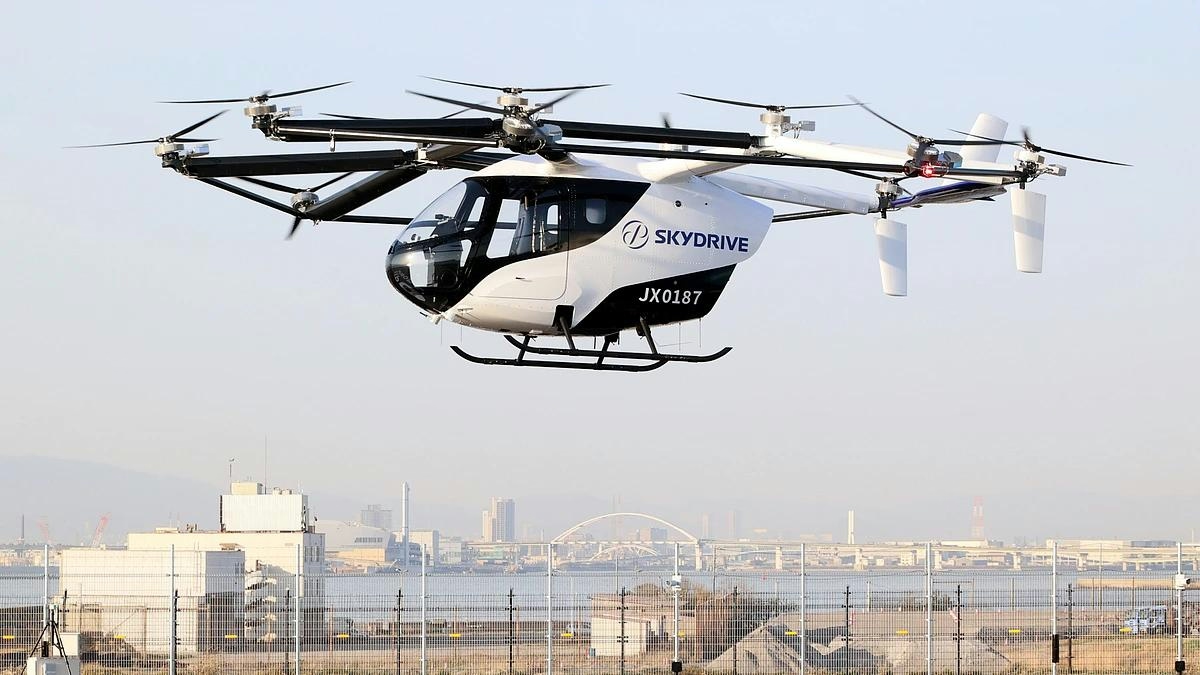
Delhi-NCR Air Taxi Plan Reviewed to Reduce Travel Time
Evaluating the Feasibility of an Air Corridor
The Confederation of Indian Industry (CII) has released a report assessing the viability of establishing an air corridor connecting Gurugram, Connaught Place in central Delhi, and the forthcoming Noida International Airport at Jewar. This proposed route targets some of the most congested areas within the National Capital Region (NCR), where daily road traffic frequently extends travel times to as long as two and a half hours. The air taxi initiative aims to dramatically reduce this journey to under 30 minutes, offering a swift alternative to the region’s heavily burdened road networks.
The report, titled “Navigating the Future of Advanced Air Mobility in India” and launched by Civil Aviation Minister Rammohan Naidu Kinjarapu, positions Advanced Air Mobility (AAM) as a transformative solution for urban transportation challenges. It advocates for the creation of a pilot corridor for air taxis, which could enable India to circumvent traditional infrastructure constraints, alleviate urban congestion, and establish itself as a global leader in next-generation mobility technologies. Central to this vision is the deployment of electric vertical take-off and landing (eVTOL) aircraft, which promise a clean, high-speed alternative to conventional road and rail travel. This approach aligns with India’s Net-Zero 2070 objectives by promoting zero-emission technology.
Industry Challenges and Market Dynamics
Despite the promising outlook, the implementation of the air taxi corridor faces significant hurdles. The sector is marked by intense competition among key players such as Archer Aviation and Joby Aviation, both of which are engaged in ongoing litigation over trade secrets. This legal dispute highlights the competitive and potentially contentious environment surrounding regulatory approvals and market entry. Archer Aviation’s recent attempt to dismiss Joby’s lawsuit underscores the complexities that could delay the regulatory process and affect the pace at which new entrants can establish operations.
These industry dynamics are likely to influence market responses to the Delhi-NCR air taxi plan. As companies vie for first-mover advantage, regulatory challenges and legal conflicts may impede the timely rollout of air taxi services in India. Furthermore, the broader aviation sector is contending with external pressures, including geopolitical uncertainties and intensified competition. Industry leaders such as Korean Air have issued warnings about potential difficulties ahead, reflecting a cautious outlook for the sector.
Prospects for Advanced Air Mobility in India
Despite these obstacles, the CII report maintains an optimistic stance on the potential of advanced air mobility to revolutionize urban transport in India. By significantly reducing transit times and lowering emissions, the proposed air taxi corridor could provide a high-impact solution to the chronic congestion that plagues the NCR. The realization of this vision, however, will depend on effectively navigating the regulatory landscape and addressing the competitive challenges inherent in this emerging industry.

Etihad Airways Suspends Airbus A380 Flights on Key Route

Aditya Birla Group Seeks Approval for Aircraft Leasing in GIFT City

Qatar Airways Highlights Innovation and Connectivity at Arabian Travel Market 2026

Hong Kong's Five-Year Plan Includes Andrew Fan's Aircraft Parts Processing Hub Proposal

ACIA Aero Leasing Delivers ATR72-600 to Air Nostrum

RTX Appoints Jill Albertelli as Head of Pratt & Whitney

TAT Technologies Joins Beyond Aero Hydrogen Aircraft Program

AURAK Study Highlights Barriers to Air Taxi Adoption in Emerging Economies

Xiamen Air Selects Altitude for 787 Maintenance at Heathrow

Etihad and Swissport Extend Global Partnership
