Bild

AeroGenie — Ihr intelligenter Copilot.

Fragen Sie alles. Analysieren Sie alles. Handeln Sie sofort.

Trends

Categories

Delta Air Lines’ Fleet Expansion and Valuation Following Airbus and Boeing Orders

February 5, 2026By ePlane AI
Delta Air Lines’ Fleet Expansion and Valuation Following Airbus and Boeing Orders
0
0
Delta Air Lines
Airbus Orders
Boeing Widebody Aircraft

Delta Air Lines Expands Fleet with Major Airbus and Boeing Orders Amid Industry Competition

Delta Air Lines (NYSE: DAL) has announced substantial new aircraft purchases from both Airbus and Boeing, marking its first direct Boeing widebody order since 2008. These acquisitions are a cornerstone of Delta’s strategy to expand and modernize its international widebody fleet, reinforcing its long-haul and global operations for the foreseeable future.

The timing of these investments coincides with Delta’s efforts to manage operational disruptions caused by Winter Storm Fern, underscoring the airline’s commitment to enhancing both capacity and reliability. The new aircraft commitments are expected to significantly influence Delta’s route planning, fuel efficiency, and maintenance strategies, thereby shaping the airline’s international profile in the years ahead.

Delta’s fleet expansion occurs amid intensifying competition within the U.S. airline industry. Major carriers such as American Airlines, United Airlines, and Southwest Airlines are also increasing their widebody fleets. Notably, United Airlines is scheduled to receive 20 Boeing 787 aircraft in 2026, representing the largest annual widebody delivery to a U.S. passenger carrier in nearly four decades. This competitive landscape highlights the strategic importance of Delta’s fleet decisions as it seeks to maintain and grow its market share.

Market response to Delta’s announcements has been favorable. The airline projects first-quarter revenue growth of 5 to 7 percent in 2026, driven by strong demand from both consumer and business travel sectors. Meanwhile, the broader aircraft manufacturing industry is experiencing shifts, with Airbus maintaining dominance in single-aisle sales while Boeing faces pressure to regain its position in the narrowbody segment.

Valuation and Investor Considerations

Delta’s current share price of $70.86 stands approximately 13 percent below the consensus analyst target of $81.89. According to Simply Wall St, the stock trades at a 42.3 percent discount to its estimated fair value, indicating potential undervaluation. Despite this, recent price momentum has been modest, with a 1.3 percent decline over the past 30 days following the fleet announcements.

Investors should consider several key factors. The large Airbus and Boeing widebody orders will play a pivotal role in shaping Delta’s long-haul and international earnings mix. The airline’s price-to-earnings ratio of 9.18 is slightly below the industry average of 9.65, while analyst price targets remain above the current share price. However, earnings are forecasted to decline by an average of 0.6 percent annually over the next three years. Additionally, heavy aircraft commitments, ongoing operational challenges, and weather-related disruptions such as Winter Storm Fern could impose financial and operational pressures.

Delta’s aggressive fleet modernization, set against a highly competitive industry and evolving manufacturer dynamics, will be critical to its future international reach and profitability. Investors are advised to monitor developments in aircraft deliveries, fuel costs, and load factors relative to forecasts, as well as how the airline navigates competitive pressures and operational risks.

More news
Crestone Funds LEAP-1B Engines for Arajet

Crestone Funds LEAP-1B Engines for Arajet

Crestone Funds LEAP-1B Engines for Arajet Amid Industry Shifts Crestone Air Partners has completed pre-delivery payment (PDP) financing alongside a sale and leaseback arrangement for four CFM LEAP-1B engines with Dominican Republic-based carrier Arajet. This transaction represents Crestone’s first engagement in PDP financing and marks its entry into next-generation engine assets, thereby expanding the firm’s capabilities across the aircraft lifecycle. Supporting Arajet’s Fleet Expansion The financing deal is designed to underpin Arajet’s ongoing fleet growth and engine operations, while simultaneously providing Crestone with a stable, long-term contracted cash flow. Istvan Jambor, Vice President of Fleet at Arajet, highlighted the importance of reliable capital partners in scaling the airline’s operations. He noted that Crestone demonstrated a clear understanding of Arajet’s financing requirements and delivery timeline, structuring a solution tailored to the airline’s expansion strategy. Kevin Milligan, CEO of Crestone Air Partners, underscored the significance of the agreement, emphasizing the company’s ability to offer flexible financing solutions across the asset lifecycle. He welcomed Arajet as a new airline partner and described the deal as a pivotal step in Crestone’s expansion into next-generation engine assets. Industry Context and Challenges The LEAP-1B engines, which power Boeing’s 737 MAX family, are recognized as the latest generation of fuel-efficient narrow-body technology. As airlines worldwide seek to modernize their fleets and enhance operational efficiency, demand for these engines is expected to increase, particularly in light of Boeing’s plans to ramp up 737 MAX production. However, the industry is contending with significant challenges. Supply chain constraints and potential delays in engine availability have surfaced, partly due to CFM’s imposition of a capped life limit on a critical LEAP-1B component. Southwest Airlines has publicly expressed concerns regarding these limitations, warning of possible delivery delays. Such issues pose risks for both lessors and operators as they strategize fleet growth and maintenance schedules. Market dynamics are also evolving amid heightened demand for GE Aerospace’s LEAP engines, placing pressure on suppliers and competitors alike. Engine manufacturers including Rolls-Royce and Safran are closely monitoring these developments and may adjust their strategic approaches in response to shifting market conditions. Preparing for Maintenance Demands The maintenance, repair, and overhaul (MRO) sector is proactively preparing for the anticipated increase in LEAP-1B-powered aircraft. New facilities, such as Lufthansa Technik’s engine MRO shop in Calgary, are being established to support the expanding Boeing 737 MAX fleet. These developments aim to ensure operators have access to essential maintenance services as the number of next-generation engines in service continues to grow. Crestone’s investment strategy, which centers on engine leasing, remains a foundational element of its platform. By extending its focus to include the latest generation of engine technology, the company is positioning itself to navigate both the opportunities and challenges presented by a rapidly evolving aviation landscape.
Uruguay Receives First Super Tucano Aircraft

Uruguay Receives First Super Tucano Aircraft

Uruguay Receives First Super Tucano Aircraft Embraer has delivered the first two A-29 Super Tucano aircraft to the Uruguayan Air Force (FAU), marking a pivotal advancement in the country’s efforts to modernize its aerial capabilities. This delivery forms part of a broader fleet renewal program aimed at enhancing the FAU’s operational readiness, with a particular emphasis on airspace surveillance and border protection. Comprehensive Modernization Package The contract, finalized at the end of 2024, encompasses not only the aircraft but also mission equipment, integrated logistics support services, and a flight simulator. This comprehensive package is intended to enable the FAU to fully exploit the operational potential of the new aircraft. The A-29 Super Tucano is widely regarded as a global leader in its class, having been adopted by 22 air forces worldwide and accumulating over 600,000 flight hours. Its reputation for performance, versatility, and cost-efficiency continues to attract interest from nations seeking to upgrade their air forces. The aircraft is capable of executing a broad spectrum of missions, including advanced pilot training, close air support, air patrol, interdiction, Joint Terminal Attack Controller (JTAC) operations, armed intelligence, surveillance and reconnaissance (ISR), border surveillance, air escort, and counter-drone activities. Its robust design allows operation from unpaved runways and in austere environments with minimal infrastructure. Additionally, the Super Tucano’s reduced maintenance requirements and low life-cycle costs contribute to its enduring value. Challenges and Regional Implications Despite these advantages, Uruguay faces several challenges in integrating the Super Tucano into its fleet. Ensuring that pilots and ground crews receive adequate training will be essential for the effective operation and maintenance of the aircraft. The transition to such advanced platforms often demands significant investment in human resources and technical support. The delivery has also attracted attention within the international defense market. Embraer’s success with the A-29 may stimulate increased interest from other countries considering similar fleet upgrades. In response, competing aircraft manufacturers are expected to intensify efforts to promote their own advanced combat aircraft to potential buyers who might otherwise consider the Super Tucano. Uruguay’s acquisition occurs amid a period of heightened activity in the global defense sector. Recent major arms deals, including India’s extensive defense package and Indonesia’s procurement of Dassault Rafale fighters, are reshaping regional security dynamics. The introduction of the Super Tucanos in Uruguay adds a new dimension to this evolving landscape, potentially influencing defense strategies and procurement decisions across Latin America and beyond. As Uruguay begins operating its new Super Tucanos, the focus will remain on integrating the aircraft into its defense framework while addressing the operational, training, and strategic challenges inherent in such a significant modernization effort.
Has AAR's Stock Risen Excessively Amid Aviation Supply Chain Optimism?

Has AAR's Stock Risen Excessively Amid Aviation Supply Chain Optimism?

Has AAR's Stock Risen Excessively Amid Aviation Supply Chain Optimism? AAR Corp.'s recent surge in share price has sparked debate over whether its current valuation accurately reflects the company's underlying fundamentals. The stock closed at $114.63, marking gains of 0.9% over the past week, 9.1% in the last month, and an impressive 35.7% year to date. Over longer horizons, AAR has delivered returns of 78.3% over one year, 112.5% over three years, and 168.0% over five years. This robust performance has been largely driven by renewed investor interest in aviation and aerospace supply chain firms, buoyed by the global rebound in air travel and rising demand for aircraft maintenance and parts. Valuation Concerns Amid Strong Price Performance Despite the strong market performance, a detailed examination of AAR’s valuation metrics suggests a more cautious outlook. A recent analysis indicates that AAR scores only 1 out of 6 on key valuation criteria for being undervalued. The Discounted Cash Flow (DCF) model, a widely respected method that estimates the present value of future cash flows, projects an intrinsic value of approximately $62.32 per share for AAR. This figure stands roughly 84% below the current market price, signaling a potential overvaluation. The model incorporates analyst forecasts that anticipate free cash flow improving from a $36 million loss over the past twelve months to an estimated $132 million by 2030, yet even these optimistic projections do not justify the current share price. Further scrutiny of the price-to-earnings (P/E) ratio reinforces these concerns. AAR’s P/E ratio currently sits at 47.55 times earnings, significantly exceeding the Aerospace & Defense industry average of 42.65 times. This premium valuation implies that investors are pricing in substantial future growth or reduced risk, but it also narrows the margin for error should the company fail to meet these elevated expectations. External Challenges and Market Dynamics Beyond valuation, AAR faces a range of external challenges that could affect its future performance. Persistent supply chain disruptions remain a critical issue, with factors such as tariffs, trade uncertainties, labor shortages, rising material costs, and volatile freight markets continuing to pressure margins and complicate operations. These challenges have been underscored by recent reports from KPMG, highlighting the fragility of global supply chains in the aerospace sector. Competitive pressures are also intensifying. The outgoing chief of the Association of Asia Pacific Airlines (AAPA) has noted increased investment by competitors in the aerospace industry, which may heighten rivalry and impact AAR’s market position. Meanwhile, market sentiment remains buoyed by positive developments such as the U.S.-India trade agreement and strong quarterly results from industry peers like Palantir. These factors have contributed to a generally optimistic atmosphere in the sector, potentially overshadowing the ongoing risks related to supply chain constraints and competitive dynamics. While AAR’s stock has clearly benefited from favorable industry trends and investor enthusiasm, multiple valuation models suggest that the shares may be trading well above their intrinsic value. Coupled with persistent supply chain challenges and rising competition, investors are advised to carefully consider whether the recent rally leaves limited upside potential and exposes the stock to greater downside risk at current levels.
Qatar Airways Unveils New Innovations and Sporting Partnerships

Qatar Airways Unveils New Innovations and Sporting Partnerships

Qatar Airways Unveils New Innovations and Sporting Partnerships Qatar Airways is embarking on a transformative journey to redefine luxury air travel through a series of innovative advertising campaigns scheduled to run on YouTube from November 2025 to January 2026. Moving away from conventional destination-focused marketing, the airline’s latest efforts emphasize immersive experiences, cutting-edge technology, and prominent sporting partnerships. These initiatives are designed to reinforce Qatar Airways’ standing as a leader in premium air travel. Advancing In-Flight Technology and Connectivity At the heart of the new campaigns lies Qatar Airways’ significant investment in state-of-the-art technology. The airline has outfitted its fleet with high-speed Starlink internet, providing passengers with unparalleled connectivity while cruising at altitude. This technological leap is complemented by the integration of Google’s artificial intelligence tools, which tailor entertainment options and streamline the overall in-flight experience. The “Sky Studio Challenge” campaign, filmed aboard an Airbus A350, vividly illustrates these advancements, showcasing how passengers can seamlessly work, stream, and stay connected throughout their journey. These enhancements are particularly targeted at business travelers and digital nomads who require dependable internet access on long-haul flights. By prioritizing digital connectivity and personalized services, Qatar Airways positions itself as a forward-thinking carrier attuned to the evolving demands of modern travelers. Commitment to Luxury and Culinary Excellence Luxury remains a cornerstone of Qatar Airways’ brand identity. The new advertisements highlight collaborations with acclaimed chefs, including celebrity pastry chef Antonio Bachour, whose gourmet desserts exemplify the airline’s dedication to exceptional in-flight dining. The flagship A380 aircraft features prominently in the campaign, with its spacious cabins, premium amenities, and attentive service underscoring the airline’s commitment to delivering an exclusive travel experience across all classes. Expanding Sporting Partnerships and Travel Promotions In addition to technological and luxury advancements, Qatar Airways is expanding its reach through high-profile sporting partnerships and new travel promotions, including collaborations with Travelmarvel. These initiatives aim to attract a broader spectrum of travelers and strengthen the airline’s global presence within the sports and leisure sectors. Navigating Challenges and Market Dynamics Despite these ambitious developments, Qatar Airways faces several challenges. Sustaining the high standards of its digital initiatives—such as the QVerse Island experience in Fortnite—and ensuring consistent quality of onboard Starlink connectivity will be essential. The airline must also address potential cost pressures associated with maintaining its technological edge. Market observers are expected to scrutinize the feasibility and longevity of these innovations, while competitors may respond by accelerating their own digital and technological enhancements. The success of Qatar Airways’ sporting partnerships and travel promotions will largely depend on its ability to generate sufficient traveler interest and engagement. Looking Ahead Qatar Airways’ latest campaigns mark a strategic shift toward experience-driven branding that integrates luxury, technology, and global partnerships. As the airline confronts the challenges of upholding its high standards and responding to competitive pressures, its commitment to innovation and passenger satisfaction remains central to its vision for the future of air travel.
Aviation Event Highlights Growing Demand for Mechanics

Aviation Event Highlights Growing Demand for Mechanics

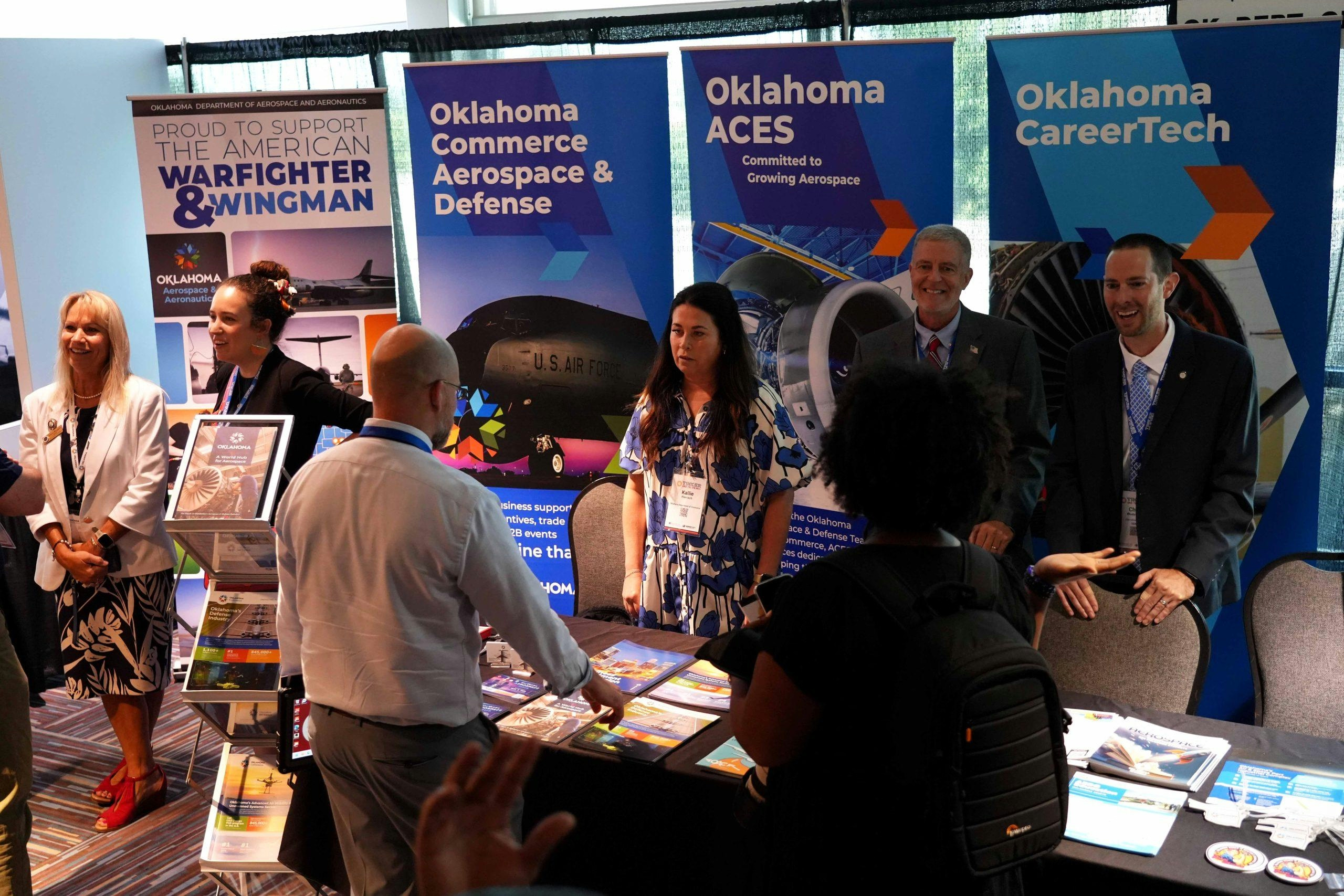
Aviation Event Highlights Growing Demand for Mechanics Rising Demand Amid Industry Challenges The Pittsburgh Institute of Aeronautics (PIA) School for Aviation Maintenance will host a public career exploration event on February 21 at 11 a.m. at its Hagerstown campus, located at 14516 Pennsylvania Avenue. The event aims to spotlight the pressing need for skilled aviation mechanics in response to a nationwide labor shortage affecting the sector. The aviation industry is currently facing a highly competitive labor market, with a significant demand for qualified mechanics. According to PIA, 90% of its Hagerstown graduates find employment, with regional employers such as Piedmont Airlines, FlightCheck, Spirit Airlines, STS Line Maintenance, and Amentum Defense actively recruiting talent. Industry analyses further emphasize the scale of the challenge. The Aviation Technical Education Council’s latest Pipeline Report highlights an increase in new aviation mechanics; however, the rate of entry is expected to fall short of demand by 2028. Boeing’s Technician Outlook for North America projects a need for 123,000 new technicians through 2042. Compensation, Training, and Industry Response The Bureau of Labor Statistics cites a median annual wage of $79,140 for aircraft mechanics and avionics technicians. Graduates from PIA typically begin their careers with salaries ranging from $52,832 to $63,648, presenting an accessible pathway into the field with comparatively lower student debt than traditional four-year degrees. In response to workforce shortages, the aviation industry is increasing investment in training programs and strengthening partnerships with educational institutions. Employers are enhancing training and development initiatives, offering competitive compensation packages, and collaborating with training providers to maintain a steady influx of qualified mechanics. The Maintenance, Repair, and Overhaul (MRO) market is also expanding, generating additional opportunities for aftermarket providers to support both new and aging aircraft. Shifting Perceptions and Future Workforce Needs Recent surveys reveal a notable shift in attitudes toward trade careers, with 47% of young adults expressing interest in such paths. This change reflects a growing appreciation for the specialized skills aviation technicians acquire, which are vital across various sectors including corporate and commercial aviation, military operations, MRO, aircraft manufacturing, cargo transport, medical evacuation, drone technology, and aerospace. Despite this positive trend, meeting the increasing demand for skilled mechanics will require ongoing training and upskilling to keep pace with rapid technological advancements within the industry. Event Information The upcoming event will provide attendees with campus and hangar tours, detailed information about PIA’s 16-month aviation maintenance program, interactive demonstrations, and opportunities to engage with faculty and current students. Enrollment at PIA remains open year-round, subject to admissions criteria. Interested individuals can obtain further information by calling 800-444-1440 or visiting www.pia.edu.
Airbus Reports Engine Delays Affecting A320 Deliveries

Airbus Reports Engine Delays Affecting A320 Deliveries

Airbus Reports Engine Delays Affecting A320 Deliveries Supply Chain Challenges and Production Impact Airbus has disclosed that persistent engine supply issues from Pratt & Whitney are significantly impeding its efforts to increase deliveries of the A320 family aircraft. In its 2025 annual results, the European aerospace leader explicitly attributed the shortfall to Pratt & Whitney’s “failure to commit to the number of engines ordered by Airbus,” which has prevented the company from achieving its target of 75 A320 deliveries per month. Despite reporting a 6% rise in revenues to €73.4 billion ($86.6 billion) and delivering a total of 793 aircraft in 2025, Airbus CEO Guillaume Faury acknowledged that supply chain disruptions, particularly the shortage of engines, continue to constrain production rates. Airbus now anticipates reaching its goal of delivering between 70 and 75 A320 aircraft per month only by the end of 2027, with stabilization at the 75-per-month rate expected thereafter. The company’s annual statement devoted considerable attention to delivery rates, with Faury employing notably direct language to single out Pratt & Whitney for its role in the delays. In contrast, Airbus adopted a more measured tone when addressing challenges with other suppliers, such as Spirit AeroSystems, which supports the A220 program. Broader Industry and Financial Context The engine delays are part of wider supply chain difficulties facing Airbus, exacerbated by geopolitical tensions, trade disputes, and recent engine recalls. These factors have complicated the company’s ability to maintain delivery schedules and safeguard its market position in an intensely competitive global aviation sector. Nevertheless, Faury described 2025 as a “landmark year” for Airbus, highlighting a 33% increase in adjusted EBIT to €7.13 billion ($8.41 billion) compared to the previous year. The company also expanded its workforce by 5%, growing from 156,921 employees at the end of 2024 to 165,294 by the close of 2025, while its net cash position improved by 4% year-on-year. Faury emphasized that Airbus’s diversified portfolio, which includes Defence and Space as well as Helicopters, has enabled the company to gain momentum in other sectors despite challenges in commercial aircraft production. He also noted progress in forming a new global industrial space entity in collaboration with other firms. Outlook and Industry Implications Airbus’s public criticism of Pratt & Whitney highlights the severity of the engine supply problem and signals ongoing uncertainty surrounding the A320 program’s production ramp-up. The company’s capacity to manage these supply chain and geopolitical challenges will be crucial as it strives to meet rising demand and maintain its leadership position in the commercial aviation market.
ePlane to Develop Electric Air Taxi Digital Twin with NVIDIA Omniverse

ePlane to Develop Electric Air Taxi Digital Twin with NVIDIA Omniverse

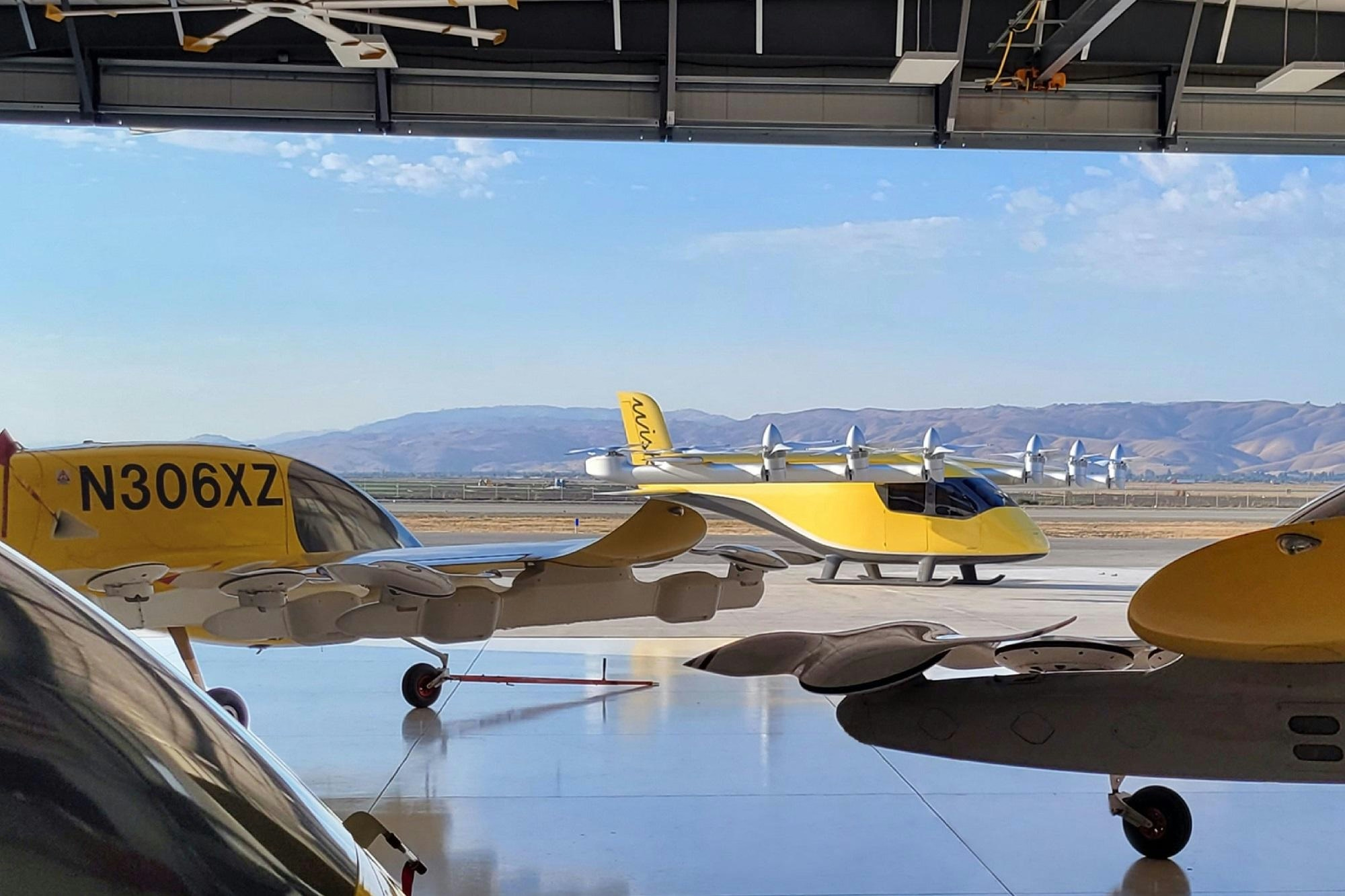
ePlane to Develop India’s First Electric Air Taxi Digital Twin with NVIDIA Omniverse Pioneering Aerospace Simulation in India Chennai-based deeptech startup The ePlane Company has announced an ambitious project to develop India’s first electric air taxi by creating a high-fidelity digital twin of its e200x electric Vertical Takeoff and Landing (eVTOL) aircraft. This initiative leverages NVIDIA Omniverse libraries to enable precise aerospace simulation, allowing engineers to model complex aerodynamic interactions, sensor responses, and flight scenarios with unprecedented accuracy. The project aims to establish a new benchmark for aerospace innovation within the country. Central to this effort is the integration of the NVIDIA IGX platform as the onboard computing system. This platform will consolidate critical applications and multiple sensors, including cameras and radars, to facilitate advanced data fusion, decision-making, and visualization algorithms. Prof. Satya Chakravarthy, Founder and CTO of The ePlane Company, emphasized the broader vision behind the project: “We are not just building an aircraft; we are building an ecosystem. Collaborating with NVIDIA allows us to blur the line between the digital and the physical. By validating our flight operations suite in NVIDIA Omniverse, we are effectively pushing the limits of the aircraft thousands of times in simulation so that we never have to in reality. This level of rigor is what defines sovereign aerospace capability.” Enhancing Safety and Operational Efficiency The use of a physics-accurate digital twin is expected to significantly enhance both safety and operational efficiency, particularly in the emerging domain of Urban Air Mobility (UAM). Pilots operating in urban environments require heightened situational awareness, and the digital twin will serve as a predictive analytics engine that mirrors the real aircraft’s configuration. This capability will enable the anticipation of maintenance needs before failures occur, thereby reducing downtime and improving reliability. Despite the promise of this technology, the project faces considerable challenges. Regulatory frameworks for certifying eVTOL aircraft remain under development in India and globally, posing a major hurdle for the deployment of electric air taxis. Additionally, ensuring the digital twin’s accuracy in replicating real-world performance is critical, as any discrepancies could compromise safety and reliability. Competitive and Market Challenges The competitive landscape for electric air taxis is intensifying, with global players such as Joby Aviation and Archer Aviation actively pursuing regulatory approvals and customer commitments. Recent developments, including Joby’s financial disclosures and Archer’s legal actions against Joby, highlight the urgency and complexity of bringing these aircraft to market. These dynamics may drive further investment and innovation across the sector. Market skepticism persists regarding the feasibility and timeline for widespread electric air taxi deployment, especially in light of previous delays within the industry. While the integration of advanced simulation technologies like NVIDIA Omniverse offers significant advantages, it also introduces technical challenges and requires substantial investment in high-performance computing infrastructure. Real-time, physics-based simulations demand top-tier GPUs and robust HPC resources, adding to the project’s complexity and cost. Nonetheless, The ePlane Company’s collaboration with NVIDIA represents a significant advancement for India’s aviation sector. This partnership has the potential to open new frontiers in aerospace innovation and digital engineering, with implications for regulatory approaches and competitive strategies in the rapidly evolving urban air mobility market.
Airbus Aims for Record Commercial Aircraft Deliveries in 2024

Airbus Aims for Record Commercial Aircraft Deliveries in 2024

Airbus Aims for Record Commercial Aircraft Deliveries in 2024 Ambitious Targets Amid Strong Demand Airbus is poised to achieve a record number of commercial aircraft deliveries in 2024, buoyed by robust demand across all segments of its business. Chief Executive Guillaume Faury has described 2025 as a pivotal year for the company, underscoring strong order activity and solid financial results in the latest annual report. In 2025, Airbus secured 1,000 gross orders for commercial aircraft, with net orders—after cancellations—totaling 889 planes. The company delivered 793 aircraft during the year, while profits rose by 23 percent to 5.2 billion euros (approximately $6.1 billion). Looking forward, Airbus aims to deliver around 870 commercial aircraft in 2026, reflecting its confidence in sustained market growth. Challenges in Supply Chain and Market Competition Despite these optimistic projections, Airbus faces significant challenges in meeting its delivery targets for 2024. One of the primary obstacles is securing firm commitments from key engine suppliers, notably Pratt & Whitney. Delays in engine deliveries have already forced Airbus to temper its ramp-up forecast for the A320neo family, a cornerstone of its growth strategy. These supply chain issues coincide with airlines worldwide seeking more fuel-efficient aircraft to expand their fleets amid rising passenger demand. The competitive landscape in the commercial aircraft sector is intensifying. Boeing, Airbus’s principal American rival, is striving to restore production to pre-pandemic levels and is expected to increase efforts to reclaim market share in the narrowbody segment. Meanwhile, Embraer is concentrating on boosting sales of its E2 jets rather than launching new aircraft programs, aiming to consolidate its market position. Industry Dynamics and Regulatory Developments Broader industry dynamics are also evolving. Recent legislative initiatives in the US Senate aim to increase transparency in the Federal Aviation Administration’s certification processes for electric air taxis and advanced air mobility aircraft. Although these measures do not directly affect traditional commercial aircraft, they may influence regulatory standards and market expectations across the aviation sector. Despite these headwinds, Airbus remains confident in its growth trajectory, supported by sustained demand and a strong order backlog. The company’s performance in 2025 and its ambitious delivery targets for 2024 and beyond will be closely monitored as the global aviation industry continues its recovery and transformation.
FSC 47 Components in Aerospace Supply Chains

FSC 47 Components in Aerospace Supply Chains

FSC 47 Components in Aerospace Supply Chains In the intricate domain of aviation and aerospace procurement, Federal Supply Class (FSC) 47, which encompasses pipe, tubing, hose, and fittings, holds a critical position. These components are essential to maintaining the integrity of aircraft hydraulic, pneumatic, and fuel delivery systems, thereby ensuring safety, pressure stability, and operational efficiency. The adoption of standardized National Stock Numbers (NSNs) facilitates the precise cataloging and global distribution of these vital parts, supporting accuracy in maintenance and procurement throughout the aerospace industry. Historical Evolution and Engineering Significance The development of aviation fluid transfer systems has undergone significant transformation, evolving from the rudimentary metal pipes used in early aircraft to the highly engineered tubing systems found in modern jets. The exigencies of World War II highlighted the necessity for more reliable flexible hoses and fittings, prompting innovations that now enable aerospace systems to endure extreme pressures and temperatures. Defense supply documentation emphasizes that “Federal Supply Group 47 products are designed to make joints as strong as the pipe,” reflecting their indispensable role in ensuring aircraft reliability. Importance of FSC 47 in Aircraft Maintenance Hydraulic hoses, rigid tubing, and aerospace fittings are integral to several critical aircraft systems, including flight control hydraulics, engine lubrication channels, pneumatic braking systems, and fuel transfer assemblies. Even minor defects in these components can jeopardize aircraft safety, underscoring the importance of standardized classification systems such as FSC and NSN in aviation logistics. These systems provide a framework that enhances the reliability and traceability of components essential to aircraft operation. Key Subcategories of FSC 47 The FSC 47 classification is divided into several key subcategories. Rigid pipe and tubing (FSC 4710) are employed in structural fuel lines, engine cooling, and pressure-resistant assemblies, requiring corrosion resistance and precise manufacturing tolerances. Flexible hose assemblies (FSC 4720) are vital in areas subject to vibration or movement, such as landing gear hydraulics and environmental control systems, where their flexibility helps prevent stress fractures. Aerospace fittings and connectors, including compression fittings and specialized couplings, ensure leak-proof and reliable connections that are critical for maintaining system safety. Fasteners and System Integrity Fasteners, though often overlooked, play a crucial role in securing tubing systems within aerospace applications. Proper fastening is essential to prevent fluid leaks, pressure drops, and structural fatigue, reinforcing the principle that “precision fastening is as critical as the fluid line itself.” The integrity of these fasteners directly impacts the overall reliability and safety of fluid transfer systems in aircraft. Supply Chain Challenges and Industry Response The supply chain for FSC 47 components faces increasing challenges. Rising certification standards require more rigorous testing and documentation, while limited availability of feedstock and selective teardown sourcing constrain supply. Market dynamics have led to heightened scrutiny and increased demand for materials used in legacy engines. In response, competitors are undertaking strategic realignments to mitigate disruptions and manage rising input costs. Additionally, geopolitical conflicts, cybersecurity threats, and fluctuations in raw material prices further complicate procurement and production processes. These challenges have driven companies to innovate in sourcing, certification, and risk management, alongside investing in advanced materials and corrosion protection technologies to meet the evolving demands of the aerospace sector. Community and Ongoing Developments The aviation and engineering communities continue to engage in active discussions regarding trends, maintenance practices, and technological advancements. Platforms such as Vocal Media provide forums for professionals to share insights and developments, fostering collaboration and knowledge exchange within the industry. Conclusion FSC 47 components—including rigid tubing, flexible hoses, and precision fittings—remain fundamental to the safe and efficient operation of aircraft fluid systems. As supply chain complexities intensify, a thorough understanding of this classification system is essential for procurement professionals and engineers, ensuring that aerospace systems uphold the highest standards of safety and reliability.
Airbus Lowers 2024 Delivery Target Amid Rising Boeing Competition

Airbus Lowers 2024 Delivery Target Amid Rising Boeing Competition

Airbus Lowers 2024 Delivery Target Amid Rising Boeing Competition Airbus has revised its commercial aircraft delivery target for 2024, now anticipating the delivery of 870 aircraft, a figure below analyst expectations of approximately 880. This downward adjustment reflects the increasing competitive pressure from its American rival, Boeing, which is demonstrating signs of recovery after several challenging years. Intensifying Competition with Boeing Boeing’s resurgence is highlighted by its recent delivery and order statistics. In January 2026, Boeing delivered 46 aircraft and secured 103 net orders, significantly outpacing Airbus, which reported 19 deliveries and 49 net orders during the same period. This shift underscores Boeing’s aggressive efforts to regain market share in the narrowbody segment, intensifying the rivalry between the two aerospace giants. Supply Chain Challenges Impacting Production Despite strong demand for commercial aircraft, Airbus continues to face substantial supply chain difficulties, particularly related to engine availability. CEO Guillaume Faury identified ongoing issues with engine supplier Pratt & Whitney as a critical constraint on production capacity. He stated, “They are telling us they will not be able to deliver the number of engines that we were expecting,” further describing the situation as “unsatisfactory” with fewer engines available than required for 2026. Faury noted that the shortfall from Pratt & Whitney is significant and cannot be easily compensated by other suppliers. Airbus’s other engine provider, CFM, is also unable to increase deliveries beyond its current commitments for the year. Consequently, Airbus is considering enforcing its contractual rights with Pratt & Whitney, a move that could potentially lead to legal proceedings if a mutually agreeable resolution is not achieved. RTX, the parent company of Pratt & Whitney, has not responded to requests for comment. Market Reaction and Outlook The combination of supply chain disruptions and renewed competition from Boeing has adversely affected Airbus’s stock performance, with shares declining by 6.2% following the announcement, pushing the stock into negative territory for 2026. As Boeing continues to recover and secure new orders, Airbus faces the dual challenge of satisfying robust market demand while managing persistent supplier constraints. This evolving dynamic signals a more competitive environment ahead for the world’s leading aircraft manufacturers.
line