
KI-Erkenntnisse in konkrete Maßnahmen überführen

Trends
Categories
DGCA Directs Boeing Fuel System Inspections Following Air India Crash Report
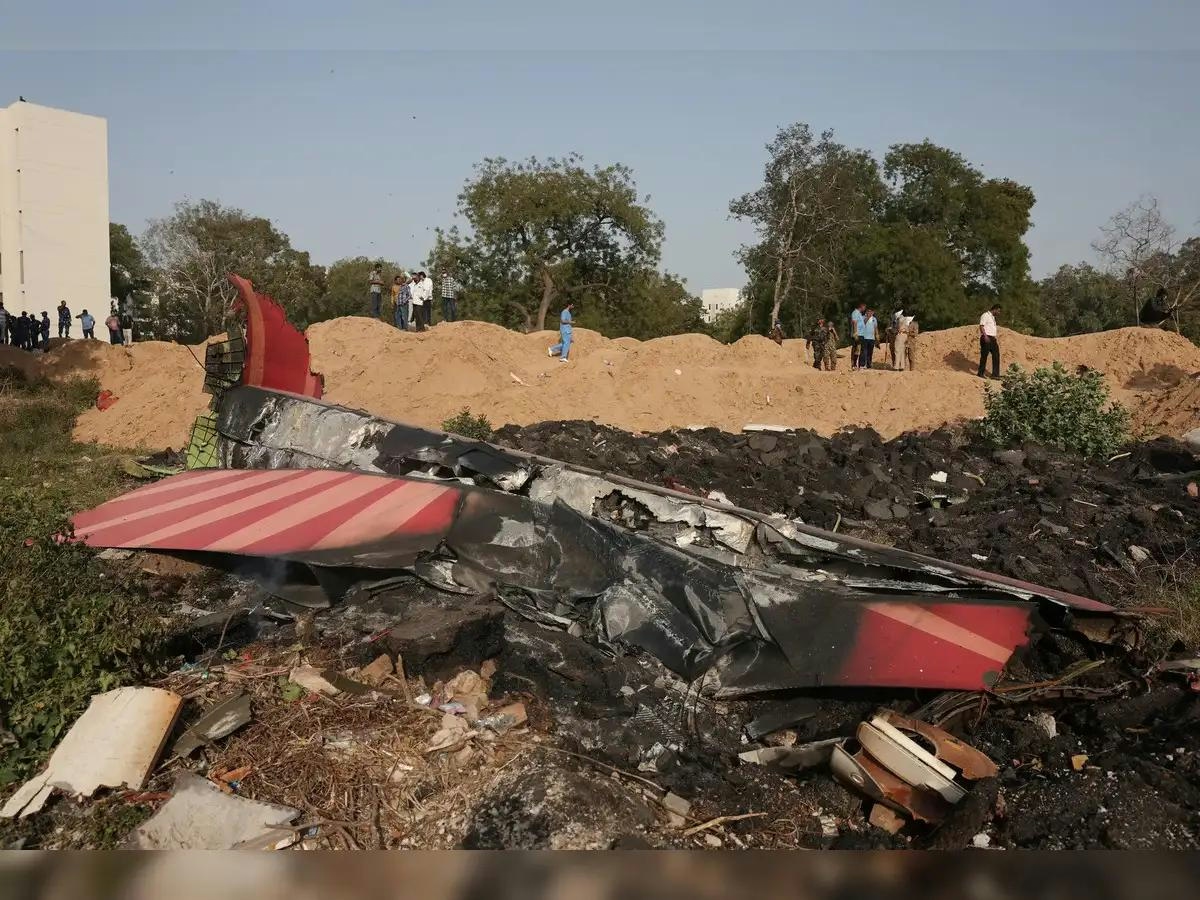
DGCA Directs Boeing Fuel System Inspections Following Air India Crash Report
Immediate Regulatory Response to Preliminary Findings
India’s Directorate General of Civil Aviation (DGCA) has issued a directive requiring airlines to conduct urgent inspections of the fuel switch locking systems on Boeing aircraft. This action follows the release of a preliminary report by the Aircraft Accident Investigation Bureau (AAIB) concerning the crash of an Air India Boeing 787-8. The report revealed that fuel supply to both engines was interrupted within a second of each other shortly after takeoff, raising critical questions about the underlying cause of the accident.
The DGCA’s order highlights intensified scrutiny of Boeing’s fuel control switches amid ongoing safety concerns. While the Federal Aviation Administration (FAA) and Boeing have maintained that the fuel switch locks are reliable and safe, the Indian regulator’s decision underscores the necessity for thorough safety verifications. Inspections conducted so far across Air India’s Boeing 787 fleet have not identified any significant safety defects, according to the DGCA.
Industry and Market Reactions
Airlines have approached the DGCA’s directive with caution, emphasizing the importance of comprehensive safety checks as investigations proceed. The response within the aviation sector has been varied; some competitors have reaffirmed their commitment to stringent safety protocols, while others have concentrated on operational adjustments to minimize disruptions during the inspection process.
Implementing the DGCA’s mandate presents logistical challenges due to the size and complexity of airline fleets. Nonetheless, the regulator has stressed that these inspections are vital to sustaining public confidence in the safety of air travel.
Market participants have reacted with uncertainty, closely monitoring developments as the investigation unfolds. The preliminary finding that both engines lost fuel supply almost simultaneously has deepened the mystery surrounding the Air India crash, prompting renewed calls for a detailed review of Boeing’s fuel system design and operational procedures.
Commitment to Safety and Transparency
As the investigation continues, the DGCA has reaffirmed its dedication to passenger safety and transparency. The regulator has assured the public that all necessary measures are being implemented to address potential risks and prevent similar incidents in the future.

Etihad Airways Suspends Airbus A380 Flights on Key Route

Aditya Birla Group Seeks Approval for Aircraft Leasing in GIFT City

Qatar Airways Highlights Innovation and Connectivity at Arabian Travel Market 2026

Hong Kong's Five-Year Plan Includes Andrew Fan's Aircraft Parts Processing Hub Proposal

ACIA Aero Leasing Delivers ATR72-600 to Air Nostrum

RTX Appoints Jill Albertelli as Head of Pratt & Whitney

TAT Technologies Joins Beyond Aero Hydrogen Aircraft Program

AURAK Study Highlights Barriers to Air Taxi Adoption in Emerging Economies

Xiamen Air Selects Altitude for 787 Maintenance at Heathrow

Etihad and Swissport Extend Global Partnership
