
KI-Erkenntnisse in konkrete Maßnahmen überführen

Trends
Categories
Do the Boeing 747 and 767 Use the Same Engine?
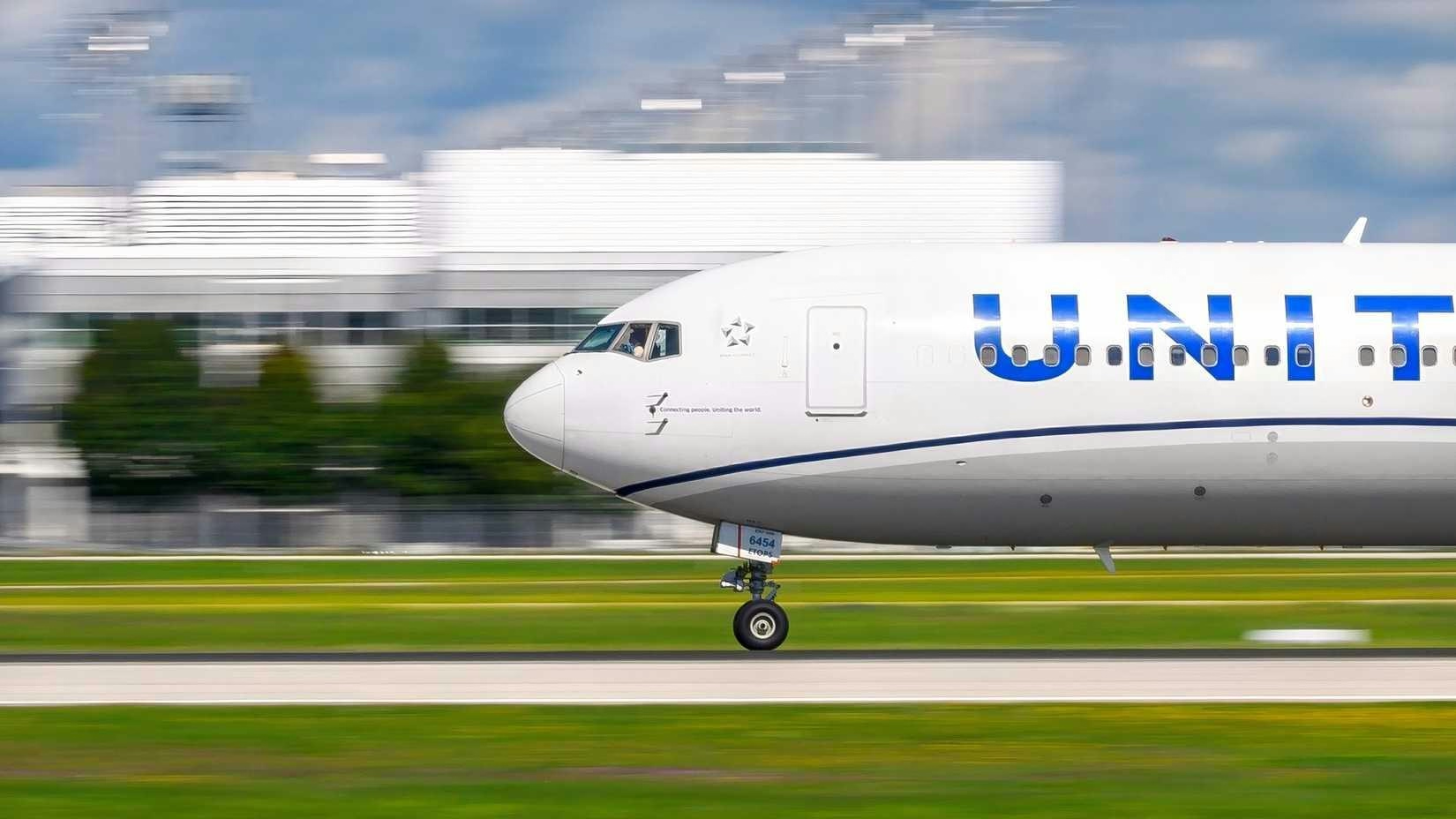
Do the Boeing 747 and 767 Use the Same Engine?
At first glance, it may seem improbable that the Boeing 747 and 767 share the same engine, given their distinct roles and configurations. The 747, a four-engine long-haul flagship, contrasts sharply with the 767, a more efficient twin-engine widebody designed for medium to long-haul routes. Nonetheless, the question arises frequently among aviation enthusiasts, primarily because both aircraft have been associated with the Rolls-Royce RB211 engine family. To clarify whether these two jets truly share an engine, it is essential to examine the design, certification, and adaptation processes of modern aircraft engines.
Shared Engine Family, Distinct Variants
Both the Boeing 747 and 767 have, at various times, been equipped with engines from the Rolls-Royce RB211 family. This commonality originates from Rolls-Royce’s development of the RB211 as a scalable engine platform rather than a single, uniform design. For instance, variants of the RB211-524 powered later models of the Boeing 747, including the 747-400, while closely related RB211 variants were also certified for use on the Boeing 767.
However, this does not imply that the two aircraft use identical engines. Each RB211 variant was specifically engineered to suit the particular aircraft it powered, with differences in thrust ratings, control systems, and installation requirements. Although the core design and engineering philosophy remained consistent, the final engine configurations were customized to meet the unique performance and certification demands of each airframe. In essence, the 747 and 767 share an engine family but not a single, interchangeable powerplant.
Engine Design Philosophy and Adaptation
The ability of an engine family like the RB211 to serve multiple aircraft types is rooted in the development approach of large commercial engines. Instead of designing entirely new engines for each aircraft, manufacturers often create a common core that can be adapted for various applications. This modular strategy reduces development costs, simplifies certification processes, and enhances reliability for operators.
In the case of the RB211, Rolls-Royce employed a modular architecture that allowed key components, such as the engine core, to be shared across different variants. This design flexibility enabled the RB211 to power both the 747 and 767, albeit in configurations tailored to the specific requirements of each aircraft.
Contemporary Engine Usage and Operational Roles
Despite their shared heritage with the RB211 family, the Boeing 747 and 767 do not typically operate with the same engines today. The 747 is most commonly powered by engines such as the Rolls-Royce Trent 900 or the General Electric GE90, reflecting advances in engine technology and the aircraft’s evolving operational profile. Conversely, the 767 generally employs General Electric CF6 or Pratt & Whitney PW4000 engines, choices that align with its efficiency and versatility.
The 767’s adaptability is further demonstrated by its use in specialized roles, including Coulson Aviation’s Very Large Airtanker (VLAT) program, where its fuel efficiency and operational flexibility are critical assets. This underscores the aircraft’s continued relevance in diverse aviation sectors.
Conclusion
While both the Boeing 747 and 767 have utilized engines from the Rolls-Royce RB211 family, they do not share the same, identical engine. Each aircraft employs a variant specifically tailored to its operational needs, exemplifying the broader industry trend toward modular engine design. Today, the two aircraft are powered by different, more advanced engines, reflecting the ongoing evolution of commercial aviation technology.

From Flight Operations to Aircraft Maintenance, How AI Is Reshaping Aviation Safety
SWISS Reshapes Network Amid Airbus A220 Engine Issues in Geneva

How AI Is Transforming Global Aviation by Monitoring Every Flight

Boeing 777X Component Fails During Test Flight from Hawaii
Astral Aviation Begins Delivery of 100 Tons of Humanitarian Aid
IndiGo Approves Up to $450 Million Aircraft and Engine Acquisition via IFSC Unit
Airports Express Concerns Over Electric Aircraft
New Nigerian Leasing Firm Aims to Lower Costs for Domestic Airlines

PySAF Converts Bio-Crude into Jet Fuel

Leonardo Launches New Helicopter Hub in the UK
