
AeroGenie — Ihr intelligenter Copilot.

Trends
Categories
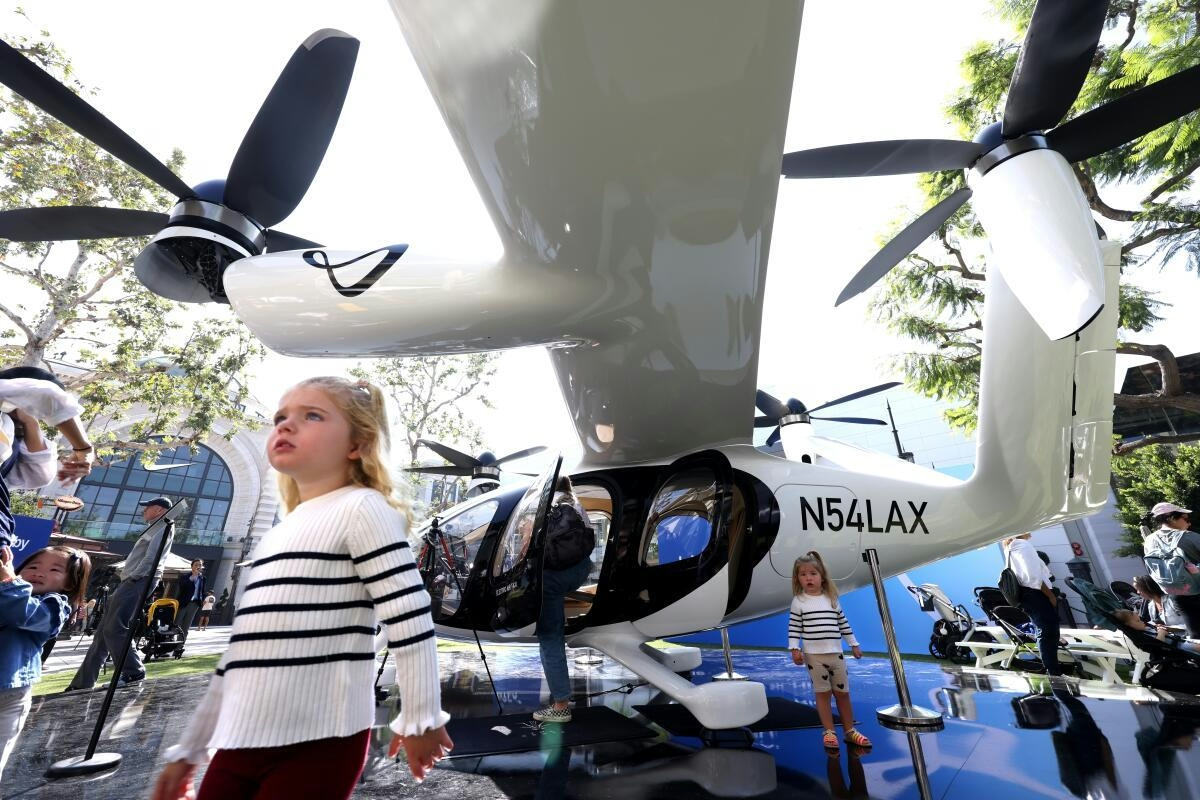
Electric Air Taxis to Begin Service in 26 U.S. States
Electric Air Taxis to Begin Service in 26 U.S. States
Electric air taxis are poised to transition from futuristic concept to operational reality as the United States embarks on extensive testing across 26 states. The Federal Aviation Administration (FAA) has authorized pilot programs under the three-year Advanced Air Mobility & eVTOL Integration Pilot Program, enabling electric vertical takeoff and landing aircraft (eVTOLs) to commence trial flights. This initiative marks a significant step toward integrating these innovative vehicles into the national transportation infrastructure.
Understanding Electric Air Taxis
Electric air taxis are battery-powered aircraft capable of vertical takeoff and landing, similar to helicopters but distinguished by quieter operation and zero emissions during flight. Their design eliminates the need for traditional runways, allowing them to serve short, on-demand routes in congested urban environments or connect regional hubs efficiently. These vehicles can transport passengers or cargo, offering a versatile solution to urban mobility challenges.
Industry Leadership and Market Competition
Prominent companies such as Archer Aviation, Beta Technologies, Joby Aviation, and Wisk are at the forefront of this emerging sector. These firms are collaborating with municipal agencies and state transportation departments as part of the FAA-approved pilot projects. For instance, Joby Aviation has conducted demonstration flights in New York City, while the Port Authority of New York and New Jersey is actively testing air taxi routes originating from Manhattan. In Texas, the Department of Transportation is exploring regional connections between Dallas, Austin, San Antonio, and Houston.
The competition to lead this nascent market is intensifying, with companies vying not only for technological innovation but also for regulatory approval and strategic government partnerships. Recent legal disputes, including a countersuit between Archer and Joby involving allegations of concealed Chinese affiliations and fraud, underscore the high stakes and competitive tensions within the industry. Market responses remain cautious as these companies position themselves to capitalize on the U.S. government’s efforts to incorporate air taxis into the broader transportation network.
National Program Scope and Potential Benefits
The FAA selected eight proposals from more than 30 submissions nationwide, ensuring a wide geographic distribution that facilitates testing across varied terrains and weather conditions—from dense urban centers to remote rural areas. While some states focus on passenger transport, others are prioritizing cargo delivery, emergency response, and automated taxi operations.
Electric air taxis offer several notable advantages. Environmentally, they produce zero emissions during flight, presenting a cleaner alternative to conventional cars and helicopters. They promise significant time savings by reducing journeys that typically take an hour to as little as 15 to 20 minutes in congested areas. Economically, the sector is expected to generate thousands of jobs spanning manufacturing, operations, and the development of vertiports. Additionally, these aircraft can enhance emergency services by providing rapid medical transport and urgent cargo delivery, particularly in hard-to-reach locations. Designed to integrate with existing public transit systems, electric air taxis also have the potential to support the development of smarter, more connected urban environments.
Challenges and the Road Ahead
Despite the promising outlook, substantial challenges remain. All eVTOL vehicles must undergo rigorous FAA certification, and current initiatives are limited to pilot programs aimed at establishing safety standards and regulatory frameworks. The ongoing legal disputes and fierce competition among industry leaders add layers of complexity as the sector advances toward commercial viability.
As electric air taxis prepare to take flight across 26 states, the coming years will be critical in determining the pace and extent to which this innovative mode of transportation becomes embedded in everyday American life.

American Airlines Reduces Airbus A321XLR Order, Issues $1 Billion in Bonds for New Aircraft

Global Travel Trends for 2026: AI, Sustainable Aviation, and the Growing Adventure Retiree Demographic

Can AI Replace Air Traffic Controllers?
LATAM Chooses Rolls-Royce Trent Engines for Three Boeing 787s After Previous Issues
Merlin Secures $80 Million in PIPE to Advance Autonomous Flight Development
New Drone Technology Enhances Aircraft Paint Maintenance
China Southern Places $21 Billion Order for Airbus Jets Amid Boeing Delays
Rolls-Royce and easyJet Complete Hydrogen Engine Test
A More Efficient Method for Timing Piston Engines

NARTP and Digital Twin Consortium Partner to Develop Multi-Agent AI Digital Twins for Aviation
