
KI-Erkenntnisse in konkrete Maßnahmen überführen

Trends
Categories
Embraer E195-E2 Features Distinctive Engine Placement Among Regional Jets
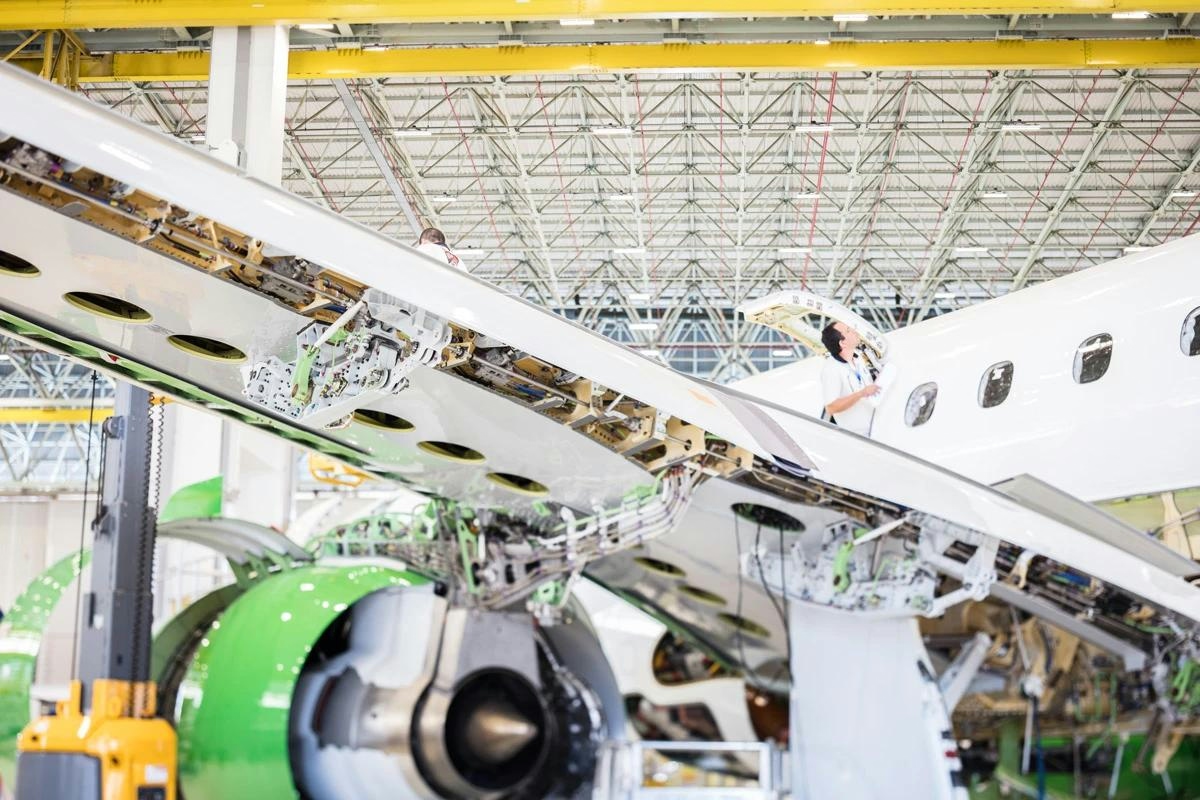
Embraer E195-E2 Features Distinctive Engine Placement Among Regional Jets
Innovative Engineering for Larger Engines
The Embraer E195-E2 distinguishes itself in the regional jet market through its innovative engine placement, necessitated by the integration of two Pratt & Whitney PW1900G geared turbofan engines. These engines feature a 73-inch (190 cm) fan diameter and a bypass ratio of 12:1, significantly larger than the General Electric CF34-10E engines used on the first-generation E195, which had 52-inch (132 cm) fans and a bypass ratio of 5.4:1. The adoption of such large engines presented a considerable engineering challenge, particularly given the aircraft’s low ground clearance.
To accommodate the larger powerplants, Embraer undertook a comprehensive redesign of the wing, landing gear, and gear retraction system. The wing was reshaped with an upward bend inboard, creating a gull-wing configuration that raised the engine pylons. The landing gear was extended by 20 inches (51 cm) compared to the original E195, ensuring sufficient clearance during takeoff and landing. Rather than employing a single wing design across the E2 family, Embraer developed three bespoke wings, with the E195-E2’s wing boasting one of the highest aspect ratios in its class. Its wingspan measures 115 feet (35.1 meters), only marginally shorter than the larger Airbus A320neo, and features raked wingtips to enhance aerodynamic efficiency.
Efficiency and Performance Gains
The decision to equip the E195-E2 with larger fans was deliberate and central to Embraer’s performance objectives. Luis Carlos Affonso, Embraer’s Senior Vice President of Engineering, emphasized that the engines are “extremely large for the size of the aircraft.” Larger fans move greater volumes of air at lower velocities, which improves fuel efficiency and reduces noise. The PW1900G’s bypass ratio of 12:1—more than double that of the previous generation—contributes to a 25% reduction in fuel consumption per seat and delivers the lowest noise signature among narrowbody jets currently in production.
Integrating these engines beneath a low-fuselage aircraft required more than technical innovation. The original E195’s landing gear and wing configuration provided adequate clearance for the smaller CF34 engines, but the new 73-inch fans would have been perilously close to the runway during critical phases such as takeoff rotation. Embraer’s redesign addressed these concerns, ensuring both safe ground clearance and optimal aerodynamic performance.
Market Challenges and Commercial Prospects
Despite the engineering advancements embodied in the E195-E2, Embraer faces significant challenges in a highly competitive regional jet market. Established manufacturers such as Airbus, Boeing, and China’s COMAC continue to vie aggressively for market share. Airbus executives have acknowledged the intensity of this competition, and industry responses to Embraer’s expanded E-Jet program have been mixed. While some airlines have shown interest in the new model, others remain cautious, carefully evaluating the aircraft’s advantages against competitive pricing and technological innovations offered by rivals.
Moreover, Embraer must navigate the financial risks inherent in developing a larger single-aisle aircraft within an already saturated market. The company’s ability to balance its engineering innovations with economic realities will be critical as it seeks to expand its footprint and secure orders for the E195-E2.
The distinctive engine placement of the Embraer E195-E2 underscores the manufacturer’s engineering capabilities, yet its commercial success will ultimately depend on how effectively Embraer contends with the pressures of a fiercely contested regional jet sector.
What Passengers Can Expect on Boeing’s New 777X Jet
Joby Aviation Extends Autonomous Flight Capabilities with Cross-Country Tour

Strengthening Europe's Aviation Supply Chain Amid Uncertainty
He 111Z Zwilling: Twin Fuselages, Five Engines, One Pilot
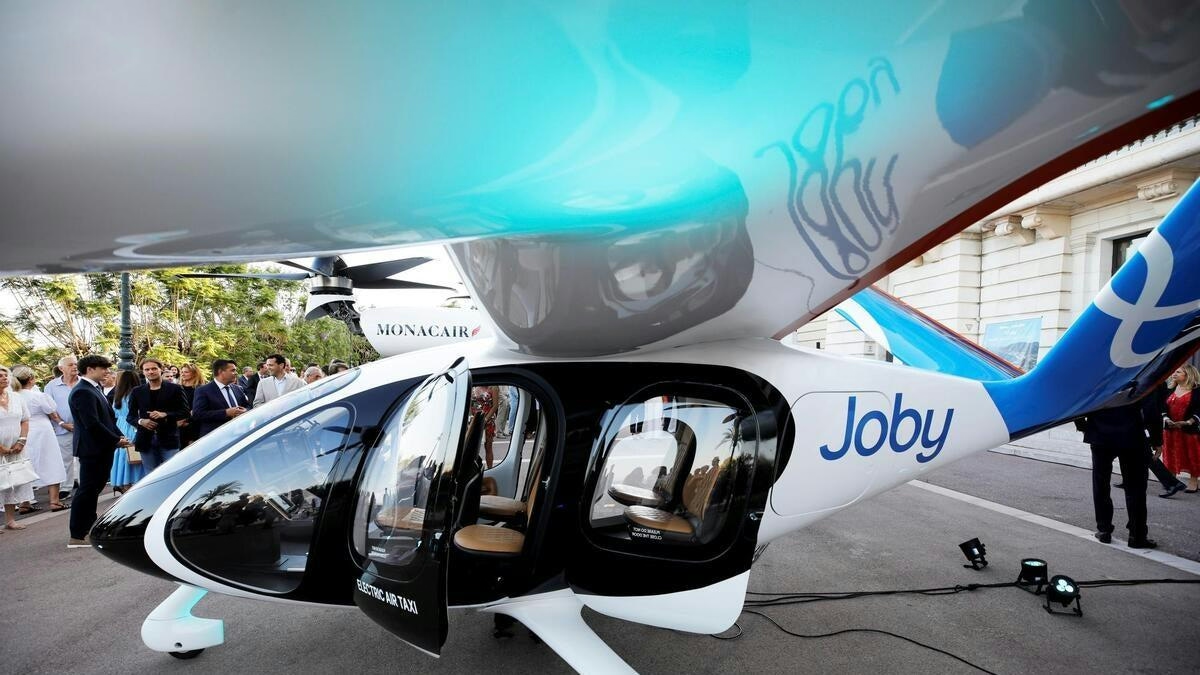
Monacair Plans Electric Air Taxi Service Between Monaco and Nice by 2029

Somalia’s Starsky Aviation Plans International Expansion

Precision and Care Essential in Aerospace Coating Applications

Drukair Chooses LEAP Engines for Five Airbus Aircraft
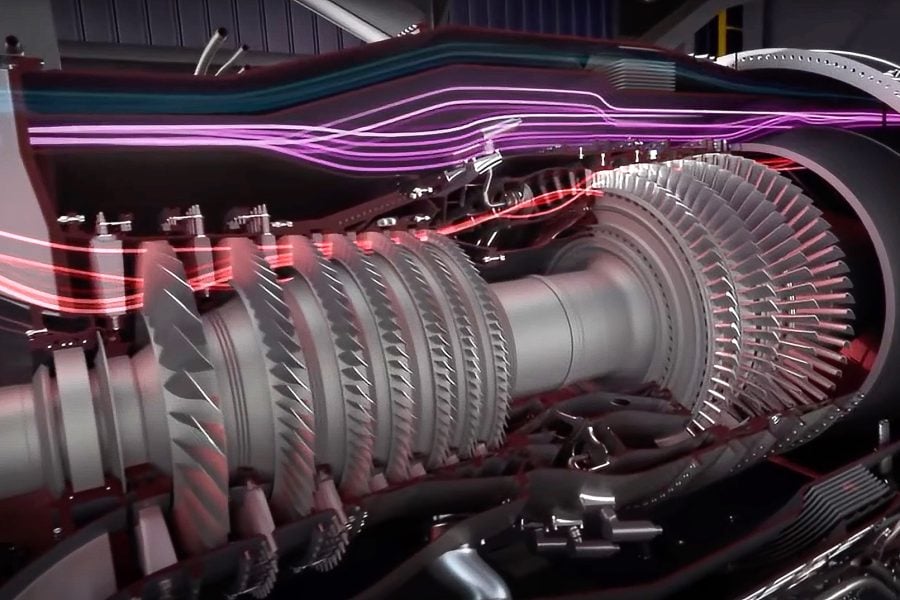
GE Aerospace Advances XA102 Adaptive Cycle Engine Toward Assembly for U.S. Air Force Combat Aircraft

Russia Tests Air Taxis with Passenger Flights Possible in 2-3 Years
