
KI-Erkenntnisse in konkrete Maßnahmen überführen

Trends
Categories
Enhanced Trent XWB-97 Engine Deployed in the Middle East
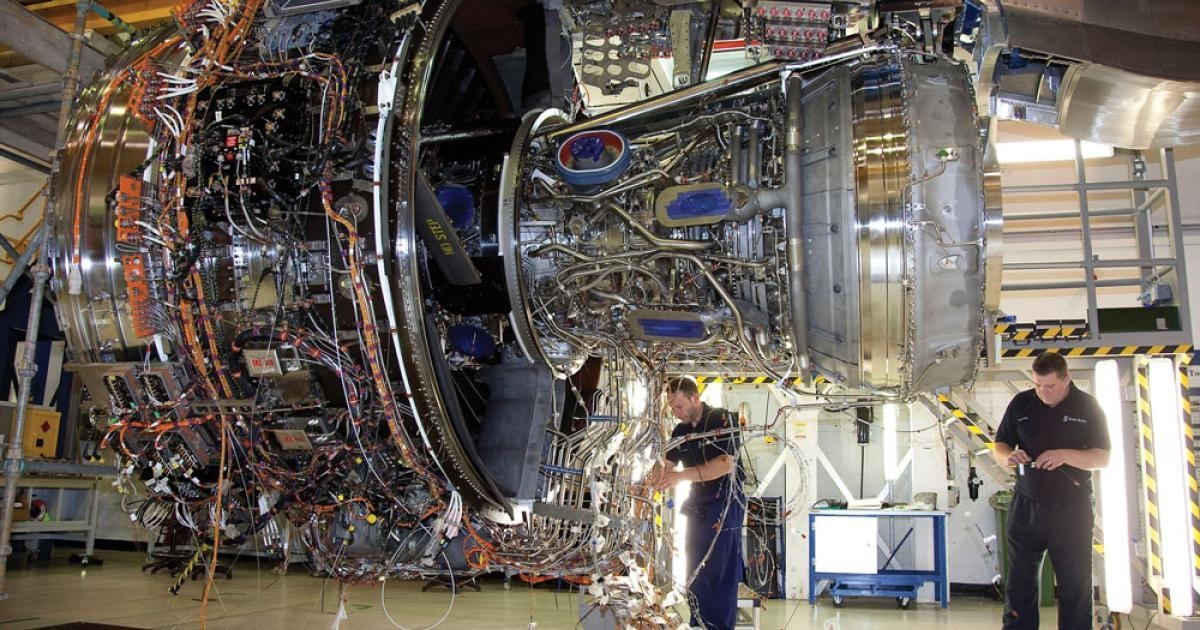
Enhanced Trent XWB-97 Engine for Middle Eastern Operations
Rolls-Royce’s Trent XWB-97 engine, renowned as the company’s highest-thrust and hottest-performing powerplant, faces significant operational challenges in the extreme climate of the Middle East. With an increasing number of airlines operating routes through this region, engineers have concentrated efforts on improving the engine’s durability to withstand the harsh environmental conditions characteristic of the area.
Addressing Environmental Challenges
A major concern for the Trent XWB-97 in the Middle East is the accumulation of desert sand and mineral dust, particularly prevalent at altitudes between 15,000 and 20,000 feet. Engine damage predominantly occurs during take-off and climb phases, when the engine operates at peak temperatures. According to Rory, an engineer at Rolls-Royce, dust particles are drawn into the engine core during these critical flight stages, where they are fragmented and subsequently melt onto the hot turbine blades. This molten substance, identified as Calcium Magnesium Alumino Silicate (CMAS), infiltrates the spaces between turbine blade components as they expand and contract with temperature fluctuations. Over time, this infiltration erodes the thermal barrier coating, resulting in increased maintenance requirements and greater aircraft downtime.
Innovative Coating Technology
In response to these challenges, Rolls-Royce has developed and rigorously tested a novel coating for the Trent XWB-97’s turbine blades. This advanced layer, composed of gadolinium zirconate, interacts with CMAS to increase its viscosity, thereby inhibiting its penetration into the blade material. This innovation significantly extends the lifespan of the thermal barrier coating, allowing for up to 30% longer intervals between maintenance cycles.
Rory emphasizes that the integration of this cutting-edge technology establishes a new benchmark for engine durability and efficiency in some of the world’s most demanding environments. Beyond enhancing the resilience of turbine blades against invasive particles, the improved coating also contributes to reducing operational costs for airlines by decreasing the frequency of maintenance and overhauls.
Industry Implications
Rolls-Royce’s advancement with the Trent XWB-97 underscores the company’s dedication to developing practical solutions for real-world aviation challenges. The initiative to produce more robust engines tailored for Middle Eastern conditions is prompting competitors to pursue similar technological innovations. This trend signals a broader industry movement toward enhancing engine durability to meet the demands of challenging operational environments.

Etihad Airways Suspends Airbus A380 Flights on Key Route

Aditya Birla Group Seeks Approval for Aircraft Leasing in GIFT City

Qatar Airways Highlights Innovation and Connectivity at Arabian Travel Market 2026

Hong Kong's Five-Year Plan Includes Andrew Fan's Aircraft Parts Processing Hub Proposal

ACIA Aero Leasing Delivers ATR72-600 to Air Nostrum

RTX Appoints Jill Albertelli as Head of Pratt & Whitney

TAT Technologies Joins Beyond Aero Hydrogen Aircraft Program

AURAK Study Highlights Barriers to Air Taxi Adoption in Emerging Economies

Xiamen Air Selects Altitude for 787 Maintenance at Heathrow

Etihad and Swissport Extend Global Partnership
