
KI-Erkenntnisse in konkrete Maßnahmen überführen

Trends
Categories
Eve Air Mobility Completes First Electric Hover Flight
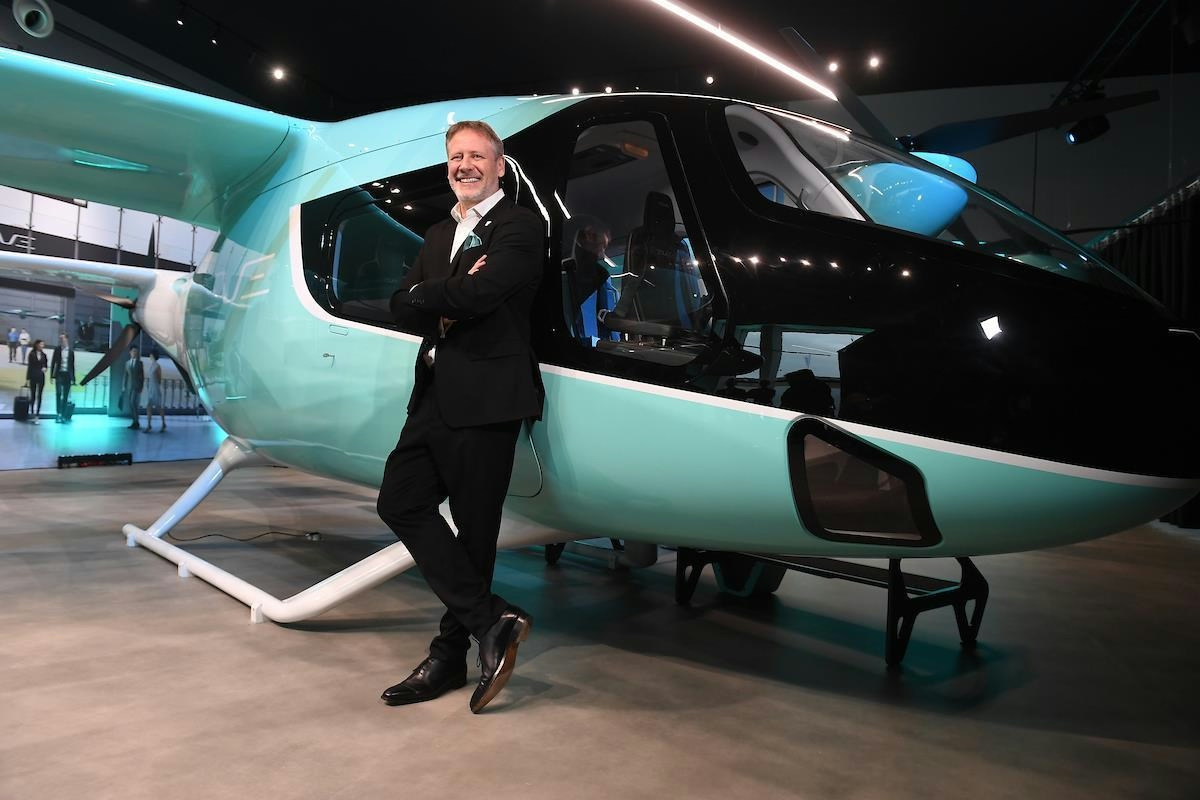
Eve Air Mobility Completes First Electric Hover Flight
A Landmark Achievement at Embraer’s Test Facility
On the morning of December 19, Eve Air Mobility reached a pivotal milestone when its all-electric air taxi prototype successfully completed its first hover flight at Embraer’s Gaviao Peixoto test facility in Brazil. The prototype ascended vertically to a height of 30 feet (10 meters) in a brief but significant demonstration, witnessed by company executives and engineers. This achievement represents the culmination of efforts since Eve’s spin-off from Embraer in October 2020.
Eve’s CEO, Johann Bordais, described the conditions for the flight as “just perfect,” highlighting the team’s patience in waiting for clear skies and minimal wind during Brazil’s rainy season. Unlike Embraer’s traditional manned test flights, this engineering prototype, which lacks an interior cabin, was remotely piloted. Bordais remarked on the unusual nature of this approach for Embraer test pilots, who are accustomed to being onboard during flights.
The flight marked several firsts for Embraer: the company’s inaugural all-carbon airframe, its first all-electric flight, and its first vertical takeoff. Bordais humorously noted the novelty of a flight where “the departure time is the same as the arrival.” The prototype hovered for 10 to 15 seconds before safely landing, following protocols established with Brazil’s National Civil Aviation Agency (ANAC).
Positioning in the Competitive eVTOL Market
Eve’s successful hover flight arrives amid intense competition in the electric vertical takeoff and landing (eVTOL) sector. While U.S.-based Joby Aviation has already completed hundreds of test flights, Eve’s accomplishment is viewed as narrowing the gap in the race to develop viable electric air taxis. Market reactions have been largely positive, with stakeholders expressing optimism about Eve’s progress. Responses from competitors have been mixed, with some acknowledging Eve’s advancements while others remain focused on their own development schedules.
Despite trailing some rivals in flight testing, Bordais emphasized that Eve remains committed to its own development timeline and certification goals. He stated, “We don’t look at the timelines of others. We look at what we need to do to certify a safe and reliable vehicle. We are on time with the schedule we gave ourselves and we gave to the market.”
Future Development and Technical Approach
Looking ahead, Eve plans to conduct approximately 30 additional test flights over the coming months, gradually expanding the flight envelope and working toward the critical transition to wingborne flight—a complex and technically demanding phase for any eVTOL program. The remotely piloted prototype is expected to undergo hundreds of flight tests as part of the ongoing development process.
Eve’s design distinguishes itself from some competitors by employing eight vertical rotors combined with a single aft-mounted pusher propeller for forward flight, rather than relying on tiltrotor mechanisms. The company also intends to build six production-conforming air taxi prototypes, with flight testing of these models scheduled to begin in early 2027.
While regulatory and technological challenges remain in scaling from prototype to production, the successful hover flight has provided a significant boost to employees, stakeholders, and potential customers. Bordais reflected on the achievement’s impact, stating it delivered “what you want for the employees, the stakeholders, shareholders and customers,” signaling a promising step forward in the commercialization of electric air taxis.

Etihad Airways Suspends Airbus A380 Flights on Key Route

Aditya Birla Group Seeks Approval for Aircraft Leasing in GIFT City

Qatar Airways Highlights Innovation and Connectivity at Arabian Travel Market 2026

Hong Kong's Five-Year Plan Includes Andrew Fan's Aircraft Parts Processing Hub Proposal

ACIA Aero Leasing Delivers ATR72-600 to Air Nostrum

RTX Appoints Jill Albertelli as Head of Pratt & Whitney

TAT Technologies Joins Beyond Aero Hydrogen Aircraft Program

AURAK Study Highlights Barriers to Air Taxi Adoption in Emerging Economies

Xiamen Air Selects Altitude for 787 Maintenance at Heathrow

Etihad and Swissport Extend Global Partnership
