
KI-Erkenntnisse in konkrete Maßnahmen überführen

Trends
Categories
FAA Approves 400-Mile Range Increase for Boeing 787 Dreamliner
FAA Approves 400-Mile Range Increase for Boeing 787 Dreamliner
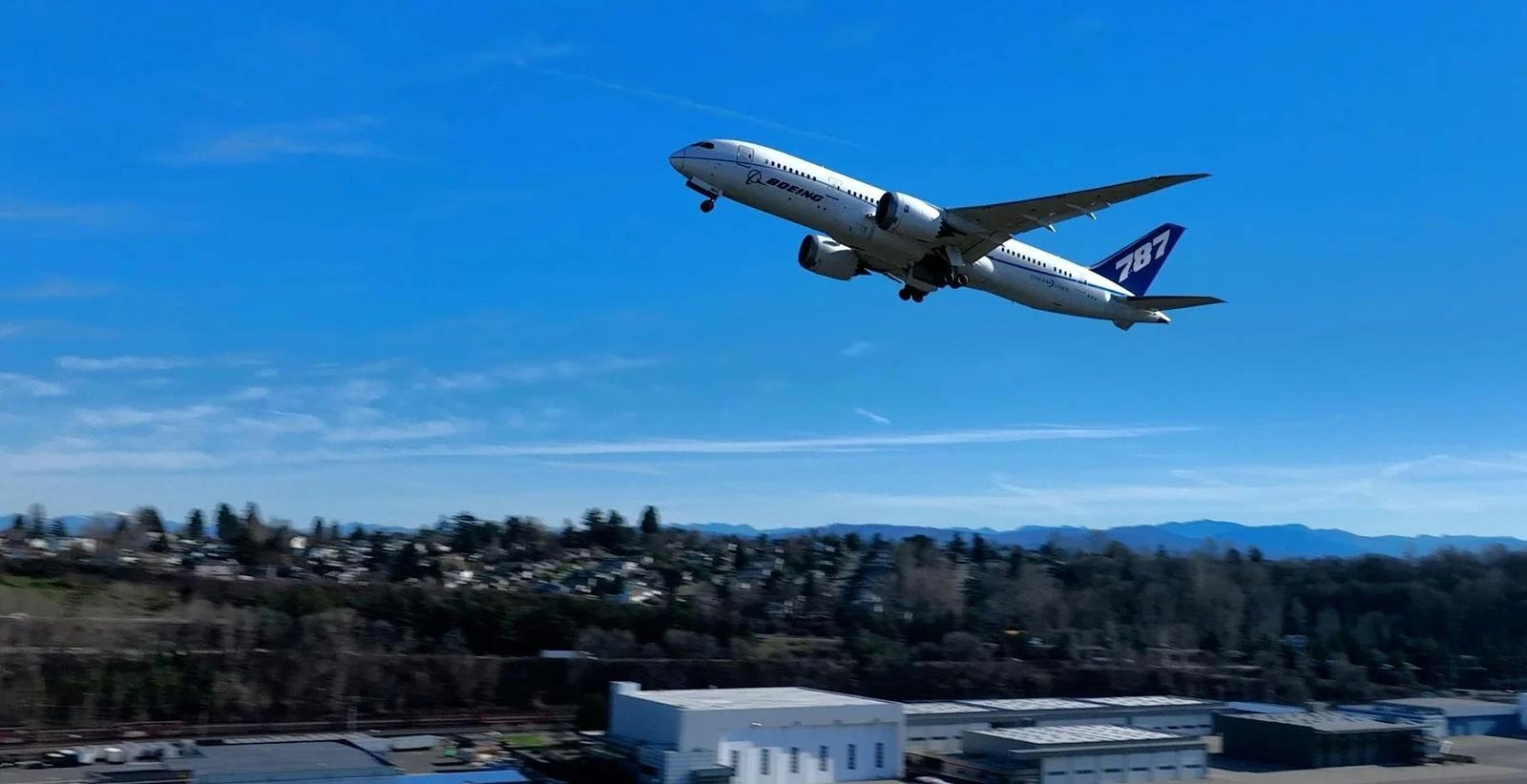
The Boeing 787 Dreamliner, the world’s best-selling widebody jetliner, has received Federal Aviation Administration (FAA) approval for a significant enhancement: a 400-mile increase in range enabled by a higher maximum takeoff weight (iMTOW). This upgrade allows the 787-9 and 787-10 variants to carry additional fuel, passengers, or cargo, thereby extending their operational reach on ultra-long-haul routes and providing airlines with greater flexibility.
Enhanced Capabilities and Early Adoption
The first Dreamliners incorporating these design improvements are currently advancing through ticketing and delivery processes with Boeing and the FAA. Air New Zealand, the launch customer for the 787-9, is poised to be among the initial operators of the upgraded aircraft. The airline regards the increased payload capacity as a critical factor in expanding its network, supporting trade, tourism, and connectivity for New Zealand. Baden Smith, Air New Zealand’s network strategy manager, emphasized the importance of the additional capacity, particularly for the carrier’s longest routes.
This upgrade is the result of structural refinements in the latest 787-9 and 787-10 models. Since December 2025, the 787-9 has been able to carry 10,000 pounds more than previous versions, while the 787-10’s capacity has increased by 14,000 pounds. John Murphy, the 787 chief project engineer, explained that these improvements were driven by airline feedback seeking greater operational flexibility.
Safety Oversight and Market Response
While the FAA’s approval marks a milestone, it is accompanied by heightened scrutiny. The agency has proposed that airlines conduct inspections of 787 aircraft for potential fatigue issues linked to manufacturing errors, specifically the presence of excessively large "shim gaps" between structural components. These gaps could cause fatigue cracks under high stress, prompting the FAA to recommend inspections to safeguard long-term airworthiness. Although this introduces additional operational considerations, the market and airlines have responded positively to the range extension.
The Dreamliner’s Impact and Boeing’s Challenges
Since its introduction in 2011, the Boeing 787 Dreamliner family has transformed global aviation by enabling more than 530 new non-stop routes and delivering approximately 25% greater fuel efficiency compared to older aircraft. This efficiency has allowed airlines to profitably serve both major hubs and niche destinations, adapting swiftly to changing demand patterns. Darren Holst, Boeing’s vice president, highlighted the Dreamliner’s adaptability as a key factor behind its widespread adoption, with over 1,200 units delivered to date.
Despite this positive momentum, Boeing continues to face challenges. The company is addressing issues related to premium class seats on the 787 and potential wiring flaws that have delayed deliveries of its 737 MAX jets. Competition remains intense, with Airbus securing new orders and Boeing achieving its highest monthly delivery total since 2018 by delivering 51 jets in February.
The iMTOW upgrade represents a further milestone for the Dreamliner, reinforcing its role as a cornerstone of modern long-haul fleets. As airlines such as Air New Zealand prepare to deploy the enhanced aircraft, industry observers will be closely monitoring how Boeing manages the opportunities and challenges that lie ahead.

Etihad Airways Suspends Airbus A380 Flights on Key Route

Aditya Birla Group Seeks Approval for Aircraft Leasing in GIFT City

Qatar Airways Highlights Innovation and Connectivity at Arabian Travel Market 2026

Hong Kong's Five-Year Plan Includes Andrew Fan's Aircraft Parts Processing Hub Proposal

ACIA Aero Leasing Delivers ATR72-600 to Air Nostrum

RTX Appoints Jill Albertelli as Head of Pratt & Whitney

TAT Technologies Joins Beyond Aero Hydrogen Aircraft Program

AURAK Study Highlights Barriers to Air Taxi Adoption in Emerging Economies

Xiamen Air Selects Altitude for 787 Maintenance at Heathrow

Etihad and Swissport Extend Global Partnership
