
KI-Erkenntnisse in konkrete Maßnahmen überführen

Trends
Categories
FAA Proposes Fix for 787 Engine Shutdown Risk
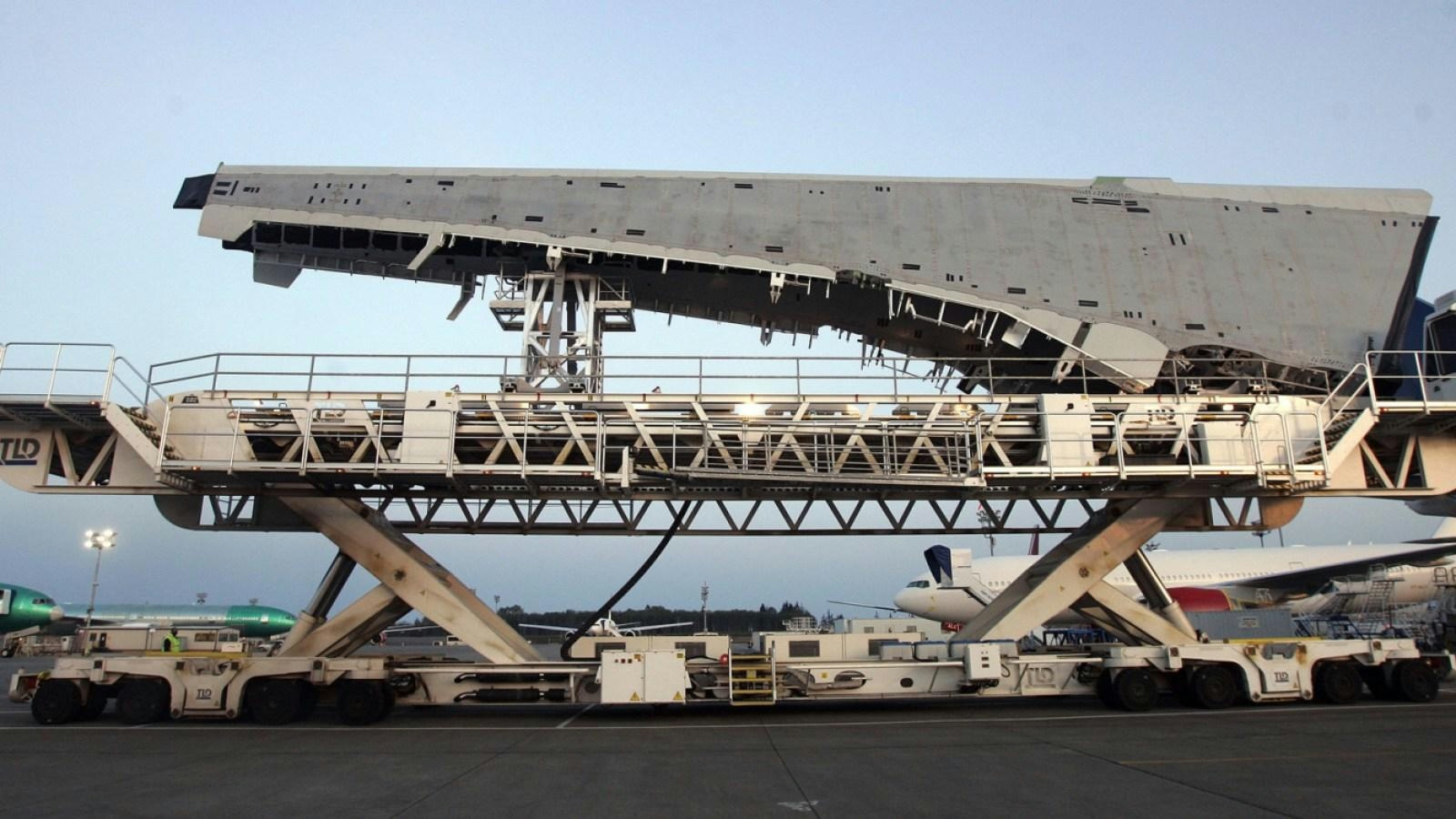
FAA Proposes Safety Enhancements for Boeing 787 Engine Components
The Federal Aviation Administration (FAA) has put forward a proposal mandating modifications to the fan cowls on certain Boeing 787 Dreamliner models. This initiative aims to mitigate the risk that debris from a catastrophic engine failure could damage critical components on the opposite engine, potentially leading to a dual engine shutdown during flight.
Scope and Technical Concerns
The proposed airworthiness directive (AD) specifically targets Boeing 787-8, 787-9, and 787-10 aircraft equipped with Rolls-Royce Trent 1000 engines. The FAA estimates that 22 U.S.-registered aircraft would be subject to the new requirements. The issue centers on the left fan cowl of the right engine, where Boeing’s investigation found that existing shielding does not adequately protect several oil lines from debris that could be released in the event of an uncontained rotor failure in the left engine. Such high-energy debris could strike the right engine, increasing the risk of both engines shutting down mid-flight.
Boeing reported this concern to the FAA and has developed a series of inspections and modifications to address the vulnerability. On February 19, 2026, the manufacturer issued a Special Attention Requirements Bulletin outlining the necessary steps for affected aircraft. Under the FAA’s proposal, operators would be required to review maintenance records or conduct physical inspections of the right engine’s left fan cowl to identify if one of three specific part numbers is installed. If confirmed, the fan cowl must be modified or replaced. Additionally, the proposal prohibits the installation of these affected fan cowls on aircraft that do not currently have them.
Regulatory and Financial Implications
The FAA estimates that the initial inspection or records review will require approximately three work hours per aircraft, with an estimated cost of $255 each, totaling around $5,610 for all 22 U.S. aircraft. However, the agency has not yet provided a cost estimate for the subsequent modification or replacement of the fan cowls.
This directive arises from a certification concern rather than any reported accident or in-service incident involving the 787. Federal certification standards mandate that transport category aircraft must be capable of safely completing a flight following an uncontained engine failure, including provisions for structural damage resulting from such events. The FAA’s proposed action seeks to ensure that the Boeing 787 continues to meet these stringent safety requirements.
Public comments on the proposal are being accepted through September 21, 2026. Following this period, the FAA will determine whether to issue a final airworthiness directive. Compliance timelines for any required modifications will adhere to the schedule specified in Boeing’s requirements bulletin once the rule is finalized.
While the proposal does not address competitor responses or broader market impacts, it underscores the FAA’s commitment to maintaining rigorous safety standards and the importance of public participation in the regulatory process.

Etihad Airways Suspends Airbus A380 Flights on Key Route

Aditya Birla Group Seeks Approval for Aircraft Leasing in GIFT City

Qatar Airways Highlights Innovation and Connectivity at Arabian Travel Market 2026

Hong Kong's Five-Year Plan Includes Andrew Fan's Aircraft Parts Processing Hub Proposal

ACIA Aero Leasing Delivers ATR72-600 to Air Nostrum

RTX Appoints Jill Albertelli as Head of Pratt & Whitney

TAT Technologies Joins Beyond Aero Hydrogen Aircraft Program

AURAK Study Highlights Barriers to Air Taxi Adoption in Emerging Economies

Xiamen Air Selects Altitude for 787 Maintenance at Heathrow

Etihad and Swissport Extend Global Partnership
